Coca-Cola: Expedition 206 Social Media Tour

In a first-of-its-kind undertaking, Coca-Cola is using a social media driven travel campaign to tap regular people as “Happiness Ambassadors”. The idea is to have them travel through 2010 and document the entire quest via blog posts, tweets, YouTube videos, TwitPics (quick photo updates), and other social media updates.

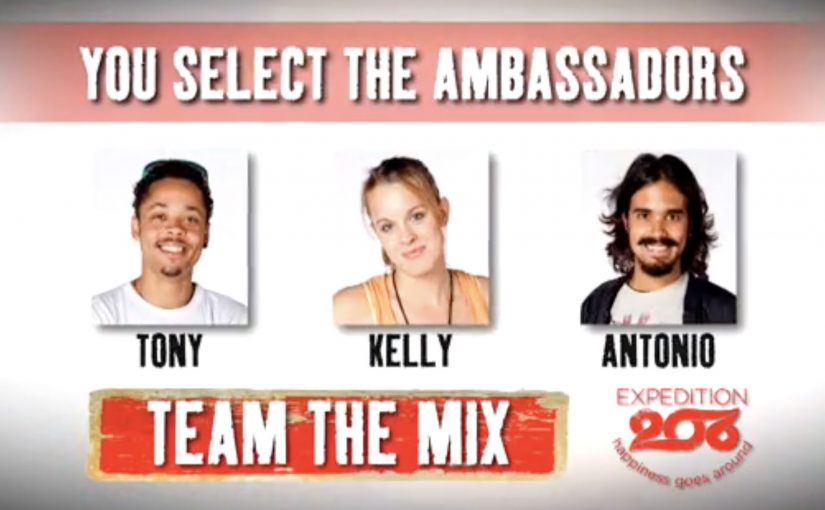
Currently there is a contest in progress to shortlist the brand ambassadors. Their mission is to find happiness in the 206 different countries that sell Coca-Cola products around the world.
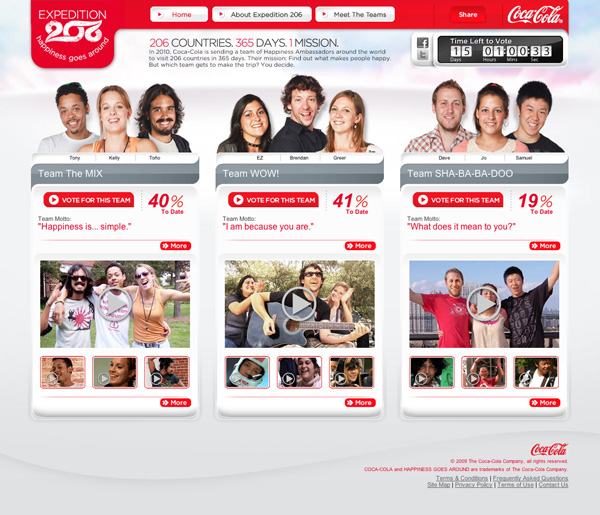
Coca Cola Expedition 206

The winning three-person team will begin their journey on January 1, 2010 and attempt to travel more than 150,000 miles in 365 days, visiting each of the 206 countries where Coca-Cola is sold. Their duty is to engage with local denizens and uncover what makes them happy. After that, they are to share their experiences online and complete tasks in each country as determined by online voters.

How the campaign is built

The mechanism is a clean loop: run an online selection process, send a small team into the world, and let the content trail become the campaign. The “media plan” is the itinerary. The “creative unit” is whatever the ambassadors publish that day. Because the itinerary forces daily encounters and updates, the campaign keeps generating fresh moments without needing a new ad concept each week.

In global FMCG marketing, social content performs best when it is tethered to a real-world mission that naturally generates stories.

The real question is how you design a mission that keeps producing episodes, while giving the audience lightweight control over what happens next.

Why it lands

This structure works because it turns a travel log into an episodic program, and the audience input keeps the next update relevant.

Extractable takeaway. Social media campaigns stay watchable when you design an ongoing mission with built-in episodes, then let audiences influence the next episode through lightweight participation like voting and challenges.

  • It turns reach into participation. People are not only consuming updates. They are voting, shaping tasks, and effectively co-authoring the journey.
  • It scales across formats without forcing a single channel. Blog for depth, tweets for pulse, video for emotion, and photos for proof. Each piece can travel on its own while still pointing back to the expedition.
  • It makes “happiness” concrete. Instead of treating happiness as an abstract brand word, it is framed as something you can go find, ask about, and document country by country.

Borrowable moves

  • Make the content agenda unavoidable. If the team must travel and meet people anyway, the story supply is baked in.
  • Use audience input as fuel, not a gimmick. Let voting shape tasks that create better moments, not just vanity engagement.
  • Define the “job” clearly. A simple role title like “Happiness Ambassador” makes the concept easy to repeat and easy to explain.

A few fast answers before you act

What is Expedition 206?

A Coca-Cola project that selects a small team to travel during 2010, visiting markets where Coca-Cola is sold and documenting what people say makes them happy.

Why “206”?

It refers to the number of countries and territories the campaign aims to cover, aligned to Coca-Cola’s global footprint.

What role does social media play here?

It is both the documentation layer and the distribution layer. The journey produces content. The content keeps the campaign alive between milestones.

Why add voter-determined tasks?

It converts passive following into participation and gives the audience a reason to return, because they can influence what happens next.

What makes this different from sending influencers on a trip?

The structure is more like a year-long episodic program with a mission and audience input, rather than a short sponsored travel series.
Coca-Cola: For Everyone

You watch the spot once, get the idea instantly, and understand why people keep calling it one of the best ads ever.

How the spot works

The spot works by taking a broad brand promise and expressing it through one clear, repeatable thought. That mechanism matters because simple emotional framing is easier to remember, easier to share, and easier to carry across markets without losing the brand.

In global consumer brands, this kind of work matters because the strongest campaigns have to stay legible across markets, cultures, and media without losing emotional clarity.

Why this kind of spot becomes “classic”

Here, “classic” does not mean old. It means the idea stays intelligible and emotionally relevant long after the first viewing. It earns that reaction by doing something deceptively hard. It keeps the idea simple, and it leaves space for the viewer to feel included without being instructed how to feel.

Extractable takeaway: When a brand commits to one inclusive idea and removes what dilutes it, the work travels further because more people can recognize themselves inside the message.

The real question is whether your brand can say something universal without turning it into something vague.

The strongest brand work is usually not the most complicated. It is the work that protects one sharp idea and trusts the viewer to finish it.

What the brand is really buying

The business value in this kind of work is not just admiration. It is broad recognizability, better recall, and a message that can travel across channels without needing a different explanation every time.

What this teaches brand builders

  • Make one promise. Clarity beats cleverness when you want memorability.
  • Design for everyone without flattening meaning. Universality works when it feels specific in emotion, not specific in audience segmentation.
  • Let the viewer do the last mile. The best work often invites completion in the viewer’s head.

A few fast answers before you act

What is “Coca-Cola: For Everyone”?

It is a Coca-Cola brand spot built around a broadly inclusive brand idea, and it is remembered for its simple, confident storytelling.

Why do people call ads like this “the best ever”?

People use that label when a spot feels timeless. The idea is easy to repeat, the emotion is easy to share, and the execution does not depend on short-lived trends.

What is the transferable lesson for marketers?

Build around one clear thought, then execute it with enough restraint for the viewer to recognize themselves inside the message.

How do you apply this without copying the creative?

Start with a universal human truth that fits your brand, then express it through one line of meaning and one strong creative device.

When does this kind of approach fail?

It fails when “for everyone” becomes a shortcut for saying nothing. Universal framing only works when the idea is still emotionally precise and clearly branded.

Coke Zero: Find Your Online Lookalike

A social experiment built on the “evil twin” feeling

If you have ever reckoned you have an evil twin somewhere else in the world, or that you were separated at birth but no one has got round to telling you, Coke Zero’s “worldwide social networking experiment” plays directly into that curiosity.

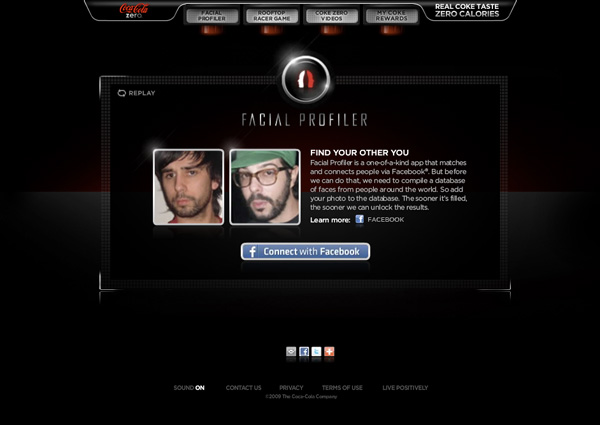
Coke Zero created a Facebook app called the “Facial Profiler” with one clear aim: find your online lookalike.

Coke Zero Facial Profiler App

The mechanic is simple and self-explanatory. You upload a photo to the database. Coke analyses the facial characteristics and attempts to find the nearest match from other uploaded images.

In global FMCG marketing, lightweight social utilities can turn personal identity-curiosity into mass participation with minimal friction.

Why it spreads without feeling like an ad

This works because the “reward” is social, not transactional. People want to see the result, they want to show friends, and they want friends to try it back, which increases the pool of uploaded images and improves the matching for everyone.

Extractable takeaway: If the output stays debatable instead of perfectly final, people replay, compare, and recruit others, which keeps the loop moving without needing incentives.

Where the brand message sits in the experience

The campaign does not argue product attributes head-on. Instead, it borrows the logic of the product proposition and turns it into a human metaphor: “close enough” can still be compelling.

The real question is whether your experience makes the proposition felt through participation, not explained through claims.

When the promise is hard to prove in the moment, translating it into an experience like this is a smarter route than piling on more copy.

The idea behind the campaign is: ‘If Coke Zero has the taste of Coke…is it possible that someone out there has your face?’.

Steal this loop for your next participation mechanic

A participation mechanic is the simple action-and-reward loop that gets people to join, share, and bring in others.

  • Start with a universal itch. Identity, comparison, and “who do I look like” is instantly legible in any market.
  • Make the first step frictionless. One upload, one result, immediate payoff.
  • Let the community improve the product. Every participant makes the experience better for the next one.
  • Encode the proposition in the mechanic. The “same taste” claim becomes a story people can experience, not just hear.

A few fast answers before you act

What is Coke Zero’s Facial Profiler?

It is a Facebook application that invites people to upload a photo and then returns the closest lookalike match from other uploaded images in the database.

How does the campaign mechanic work?

Participation creates the asset. Users contribute photos, the system compares facial characteristics, and the database grows with every upload, which increases the chance of finding a “near match”.

Why does this kind of idea get shared?

Because the output is personal and social. The result is fun to show, fun to debate, and it prompts friends to try it too, which naturally amplifies reach.

What is the business intent behind the experience?

To make the Coke Zero proposition memorable by translating “close enough to Coke” into a human analogy, so the brand message is felt through participation rather than explained through claims.

What is the most transferable lesson for digital campaigns?

Build a simple loop where the audience action creates the content, the content creates conversation, and the conversation recruits the next participant.