
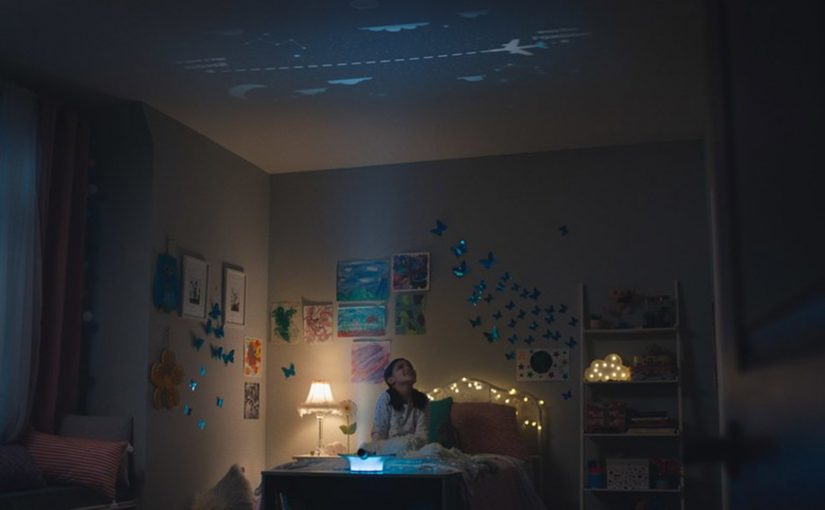
WestJet Flight Light

WestJet creates a small device with a big emotional job. WestJet Flight Light is a nightlight that uses live flight data to project a parent’s WestJet flight path onto a child’s bedroom ceiling, turning the wait into a visual, interactive countdown of hours and minutes until the parent returns.

In airlines and other service businesses, more brands move beyond selling a product and start designing convenience services that drive repeat usage and loyalty by solving real-life friction.

By convenience services, I mean a branded layer that uses operational data to make a recurring job easier for the customer.

Here, the friction is business travel. WestJet wants frequent travellers to pursue work opportunities without losing connection with the people waiting at home. Flight Light makes the journey feel present. Not abstract.

Why the concept works

The power is not the hardware. It is the experience design. A child’s instinct is to count down. Flight Light makes that countdown tangible and playful by projecting the route in the place where bedtime routines already happen, which turns waiting into anticipation.

Extractable takeaway: If you can turn operational data into a repeatable ritual in the customer’s real environment, you create loyalty that feels like care, not marketing.

The service logic

This is a brand service that behaves like a product. A brand service is a repeatable utility that makes the brand part of a real-life routine. Live flight data becomes a family connection layer. The airline becomes part of the at-home story, not just the transport provider.

The real question is whether your operational data can earn a role in the customer’s routines, not just inside your app.

Brands should treat data as experience material when it reduces anxiety or effort in a moment that already exists in the customer’s life.

Beta-testing and what it signals

WestJet says a prototype of Flight Light exists, with beta testing scheduled to begin later this year. That is the bridge between a cute concept and something that can be operated, supported, and scaled.

Borrowable moves from Flight Light

  • Start with a real-life routine. Bedtime already has attention and emotion. Place the experience there.
  • Use operational data as story material. Flight status becomes a shared narrative the family can follow.
  • Make the countdown visible. Turn “when are you home?” into a simple, comforting visual progression.
  • Design for repeat trips. The value compounds when the service works the same way every time the parent travels.

A few fast answers before you act

What is WestJet Flight Light?

A nightlight concept that uses live WestJet flight data to project a parent’s flight path onto a child’s bedroom ceiling as an interactive countdown to their return.

Who is it designed for?

Business travellers and frequent flyers with families, especially parents who travel regularly for work.

What is the core experience design move?

It turns live flight status data into a comforting, visible bedtime ritual that makes the trip home feel real and close.

What problem is it solving?

It reduces the emotional friction of business travel by making a parent’s trip home visible and countable during a child’s bedtime routine, instead of feeling distant and abstract.

Why is it a brand service, not just a gadget?

The value comes from turning live flight data into an at-home experience a family can reuse on every trip. The nightlight is the interface. The service is the connection layer.
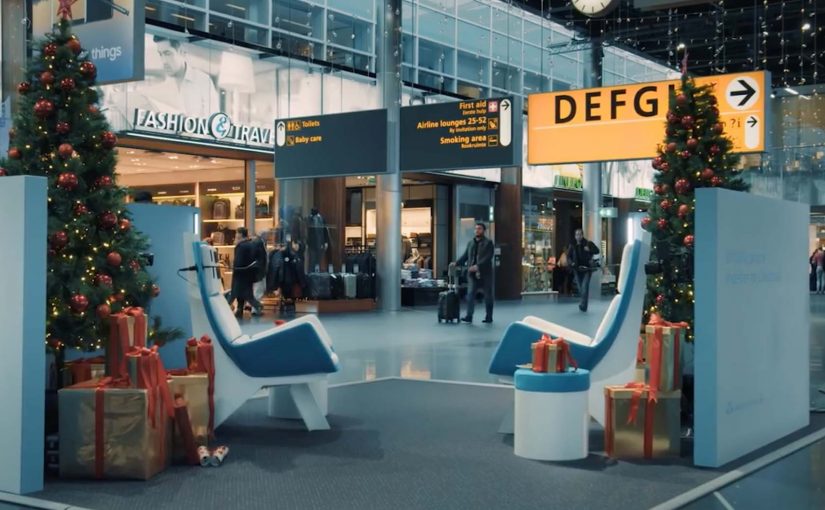
KLM Connecting Seats

Airports are crowded with people from different backgrounds. This Christmas, KLM brings them together with Connecting Seats. Two seats that translate every language in real time, so people with different cultures, world views, and languages can understand each other.

The experience design move

KLM does not try to tell a holiday message. It creates a small, human interaction in a high-friction environment. You sit down. You speak normally. The barrier between strangers is reduced by the seat itself.

By turning translation into the interface, the seat makes the first move feel low-risk, which is why the interaction reads as human rather than branded.

The real question is how you turn a crowded, anonymous moment into a safe reason for two strangers to interact.

In global travel hubs, social friction, not language, is what keeps strangers from talking.

Why this works as a Christmas idea

Christmas campaigns often rely on film and sentiment. This one uses participation. Here, participation means travelers completing the message by talking with a stranger, not passively watching a story. That is a stronger holiday move than another sentimental film. It makes connection visible and gives the brand a role that feels practical rather than promotional.

Extractable takeaway: If you want a brand to stand for connection, design a micro-interaction that reduces first-move risk, and let participants create the meaning.

The pattern to steal

If you want to create brand meaning in public spaces, this is a strong structure:

  • Start with tension. Pick a real-world tension people already feel (crowded, anonymous, culturally mixed spaces).
  • Add a simple intervention. Introduce a small change that shifts behaviour in the moment.
  • Let interaction carry the message. Let the interaction do the work, not a slogan.

A few fast answers before you act

What are KLM Connecting Seats?

Two seats designed to translate language in real time, so strangers can understand each other.

Where does this idea make sense operationally?

In airports and other transient spaces where people from different backgrounds sit near each other but rarely interact.

What is the core brand outcome?

A memorable, lived proof of “bringing people together,” delivered through an experience rather than a claim.

What makes this different from a typical holiday film?

It shifts the message from storytelling to doing. The brand creates the conditions for connection, then travelers complete the meaning through the interaction.

How can a non-airline brand use the same structure?

Find a public setting where strangers share waiting time, introduce a simple prompt that lowers the first-move risk, and let the interaction carry the message.

KLM’s Bonding Buffet

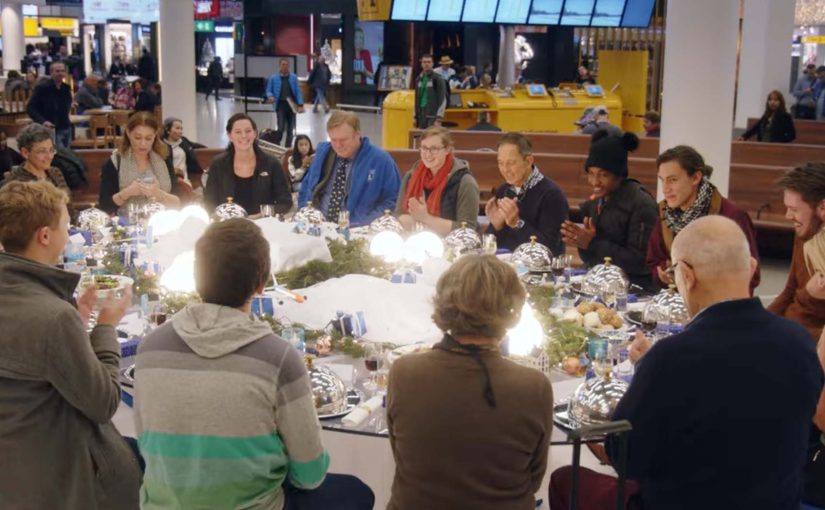
Airports can be lonely places, but Christmas is all about being together. So KLM sets up the Bonding Buffet at Amsterdam Airport Schiphol. A table with a full Christmas dinner sits 4.5 metres above the ground, clearly out of reach. The only way to bring it down is to cooperate.

The mechanic is beautifully simple. Travelers sit on the stools around the table. Each occupied seat lowers the table a little. When every seat is taken, the table is fully lowered and dinner can start. Here, “mechanic” means the rule that links each person sitting down to the table lowering.

In international airports, the fastest way to create togetherness is to make cooperation the only route to a shared reward.

As a result, people from over 20 different countries bond with each other, and the table injects some much-needed Christmas spirit into a busy airport.

The real question is how you design cooperation that feels natural in a place where everyone expects to keep to themselves.

Why this activation works so well

KLM does not “tell” people to connect. It designs a shared outcome that can only be achieved together, because the table only lowers when every seat is taken. The campaign turns a common airport truth. Waiting alone. Into a social moment with a clear reward. Engineered cooperation beats feel-good messaging every time.

Extractable takeaway: If you want strangers to connect, design a visible constraint that can only be resolved through cooperation, then reward the group immediately when they commit.

There are three tight design choices that make it land:

  • A visible constraint. The meal is there, but unreachable.
  • A cooperative mechanic. Everyone has a role. One seat at a time.
  • A shared payoff. The dinner only happens when the group commits.

The brand story is embedded in the experience

This is brand storytelling through behavior, not messaging. KLM positions itself as the airline that understands what travel feels like. Disconnected. Transitional. Sometimes lonely. Then it engineers a moment that flips the emotional state from isolation to togetherness.

The experience is also culturally portable. You do not need language to understand it. Sit down. Help lower the table. Eat together.

What to steal from this if you build live experiences

The transferable lesson is not “build a giant table.” The lesson is how to design bonding:

  • Make the goal obvious.
  • Make the mechanic collaborative, not competitive.
  • Make the payoff immediate and human.
  • Make it impossible to complete alone.

When those conditions are true, the social outcome becomes the content.


A few fast answers before you act

What is KLM’s Bonding Buffet?

It is a Christmas activation at Amsterdam Airport Schiphol where a dinner table starts 4.5 metres high and only lowers when travelers sit together on all seats.

How does the table come down?

Each person who sits on a stool lowers the table a bit. When every seat is taken, the table fully lowers and dinner begins.

Where does it take place?

KLM staged the Bonding Buffet at Amsterdam Airport Schiphol.

What human outcome is KLM designing for?

The activation is designed to help strangers bond, turning lonely transfer time into a shared Christmas moment.

Why is this a strong brand move?

KLM expresses its brand through an engineered experience that changes traveler behavior, not through slogans.