
Skip to content
SunMatrix Ramble

SunMatrix Ramble

Covering the best of Marketing and Digital Innovation since 2009

  • ABOUT
  • CONTACT

Categories

Tag: digital engagement

Nike NBA: NFC Jersey for Fan Access

Nike NBA: NFC Jersey for Fan Access

To provide a radical new fan experience, Nike and the NBA have unveiled the Nike NBA Connected Jersey, that via an iOS NikeConnect app provides the wearer an all-access pass into the world of their favorite team and players.

To enable this new experience each adult-sized Nike NBA Connected Jersey will now come with an embedded NFC chip that will launch real-time team and player content such as pregame arrival footage, highlight packages and top players favorite music playlists, all on the jersey owner’s mobile device.

Additionally during the season, a wealth of exclusive offers and experiences will also bring fans closer to the game they love.

The jersey becomes a digital key

This is a classic shift from product to platform. The jersey is no longer just merchandise. It is an authenticated access point that unlocks value over time.

  • Persistent identity. The NFC chip links the physical item to a digital experience layer.
  • Content as a benefit. Real-time clips, highlights, and playlists extend fandom beyond game day.
  • Lifecycle engagement. Season-long offers and experiences create reasons to return repeatedly.

Why NFC is the right interaction here

NFC is fast, familiar, and low-friction on mobile. It turns “launch the app” into “tap the jersey”. That matters, because fan engagement dies quickly when the steps feel like work.

The best connected products reduce steps. They make the physical object the interface.

In sports and entertainment merchandising, the strategic unlock is to turn ownership into authenticated access, so the product keeps earning engagement long after the purchase moment.

What this signals about the future of fan experiences

Connected merchandise can do more than push content. It can authenticate presence, segment offers, and reward loyalty in ways that are difficult to achieve through generic apps alone.

  1. Access becomes the differentiator. Not just ownership.
  2. Value becomes ongoing. Not one-time at purchase.
  3. The product becomes a channel. Not just a display of fandom.

What to take from this if you build connected products

  1. Start with a clear benefit. Content and access are the reasons to tap.
  2. Make activation effortless. Tap-based interactions beat long onboarding flows.
  3. Design for a season, not a moment. The experience must evolve over time to stay relevant.
  4. Use exclusivity carefully. The best offers feel earned, not gated for the sake of it.

A few fast answers before you act

What is the Nike NBA Connected Jersey?

It is an NBA jersey from Nike that includes an embedded NFC chip and works with the NikeConnect iOS app to unlock exclusive team and player content and experiences.

What does the NFC chip do?

It enables tap-to-launch access to real-time content such as pregame arrival footage, highlight packages, and player playlists on the owner’s mobile device.

Why is this a “radical” fan experience?

Because it turns a physical jersey into an access pass that can deliver evolving digital benefits throughout the season, not just at the moment of purchase.

What kinds of benefits can connected jerseys unlock?

Exclusive content, season-long offers, and closer-to-the-game experiences that reward fans for owning and engaging with the product.

What is the transferable lesson for brands?

If you can make a physical product an authenticated key to ongoing digital value, you can extend engagement well beyond the initial sale.
Posted on September 25, 2017February 3, 2026Categories Emerging Trends, Marketing Strategies, Mobile, Packaging, Power of OnlineTags connected products, digital engagement, fan experience, iOS, iOS NikeConnect app, mobile app, nba, NFC, Nike, Nike gear, Nike NBA Connected Jersey, Nike NFC, Nike Tap In, NikeConnect, sports marketing
VW Street Quest: Street View Becomes a Chase

VW Street Quest: Street View Becomes a Chase

Since 1951, South Africans have loved Volkswagen. In fact, you will probably find one on every street, road, highway and byway in the country. So Volkswagen, along with Ogilvy Cape Town, created an advergame that not only celebrated the impact Volkswagen has had on South African streets, but also kickstarted Volkswagen South Africa’s Facebook Page.

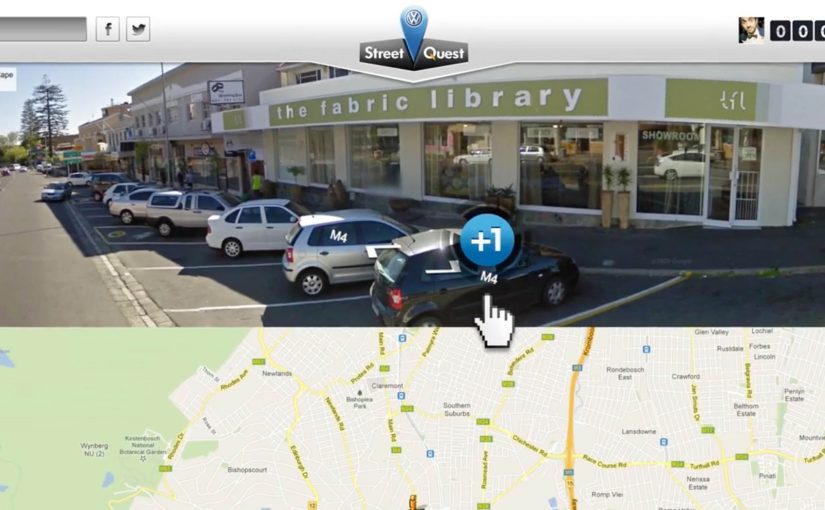
“Volkswagen Street Quest” is a Facebook challenge to find as many Volkswagens as possible on South African streets using Google Street View, wrapped in a custom-designed gaming interface.

When the map becomes the game board

The mechanism is a clever remix of a familiar tool. Google Street View already invites exploration. Street Quest turns that exploration into a scavenger hunt with a score. Players “pin” Volkswagens they spot. The more pins you collect, the higher you climb.

It is not a passive brand experience. It is active search, pattern recognition, and a dopamine loop. Find. Pin. Move on. Find again.

In social activation design, the most durable engagement comes from a simple repeatable loop that turns a brand claim into something people can verify themselves.

Why it lands: pride, competition, and proof

This works because the premise is culturally believable. Volkswagen is positioned as a constant on South African streets. The game invites people to prove it to themselves, and to others, one find at a time. The campaign turns brand ubiquity into a participatory claim.

Competition does the rest. The campaign ran for over four weeks, and the players with the most pins each week qualified for a real-life Street Quest challenge. Digital play becomes a gateway to a physical reward, which raises commitment and keeps the hunt from burning out after day one.

The intent: build a Facebook audience without begging for likes

The business intent is straightforward. Volkswagen South Africa wanted to kickstart its Facebook Page. Street Quest is an acquisition mechanic disguised as entertainment. Instead of asking people to “join the community,” it gives them something to do that naturally keeps them connected to the page over time.

That matters because community building is not about a single click. It is about repeat behaviour. A four-week structure creates that repetition.

What to steal from Volkswagen Street Quest

  • Use an existing behaviour. People already explore maps and Street View. Turn that into a structured challenge.
  • Make the brand claim playable. If you say “we are everywhere,” give people a way to verify it themselves.
  • Stretch the campaign over time. Weekly qualification builds a habit loop and keeps energy up.
  • Bridge digital to physical. Real-world challenges add stakes and legitimacy.
  • Lead with fun, not with follow. Audience growth becomes a byproduct of participation.

A few fast answers before you act

What is Volkswagen Street Quest?

It is a Facebook advergame where players use Google Street View inside a custom interface to find and pin Volkswagens across South African streets.

Why use Google Street View for an advergame?

Because it provides an endless, realistic game environment that feels authentic, and it leverages a behaviour people already understand: exploring streets on a map.

How did the campaign sustain interest for four weeks?

By running weekly rounds where top performers qualified for a real-life Street Quest challenge, keeping competition and motivation high.

What was the main business goal behind the game?

To kickstart Volkswagen South Africa’s Facebook Page by attracting participation and repeat visits without relying on generic “like us” messaging.

What is the key takeaway for social activations?

Build a game loop that makes the brand premise tangible, then structure it over time so people return and bring others with them.

Posted on October 23, 2012February 3, 2026Categories Emerging Trends, Marketing Strategies, Mobile, Power of Online, Social MediaTags Advergame, brand community building, Cape Town, digital engagement, facebook campaign, gamification, Google Street View, interactive advertising, Ogilvy, Ogilvy Cape Town, social media activation, South Africa, Street Quest, Street View, Street View Games, volkswagen, Volkswagen Google Street View Game, Volkswagen South Africa, Volkswagen Street Quest Game, Volkswagen Street View, VW
IOC: The Best of Us Challenge

IOC: The Best of Us Challenge

Fans vs athletes, turned into a social dare

The International Olympic Committee (IOC) is in the midst of “The Best of Us Challenge” where viewers are challenged to outdo their favorite athletes in wacky activities.

The Best of Us Challenge

At the above web site (www.thebestofuschallenge.olympic.org) viewers are encouraged to submit videos in hopes of not only besting the athletes, but also winning signed merchandise or a trip to the Vancouver Winter Olympics.

This campaign reaches out via various social media touch points such as Facebook, Twitter and YouTube.

How the mechanic earns participation

The mechanism is a clean loop. A famous athlete sets a challenge. The viewer responds with their own attempt on video. The best entries win prizes, and every new submission becomes fresh content that recruits the next participant.

In global sports and entertainment marketing, this kind of challenge format works because it gives the viewer a role beyond watching. The audience becomes the content engine.

Why it lands: competition plus “I can do that” energy

It is wacky by design. That lowers the barrier to entry, makes the attempts shareable, and keeps the tone inclusive. You are not trying to be an Olympian. You are trying to beat an Olympian at something ridiculous.

Examples that make the format instantly legible

Here are some of the challenges you will see:

Michael Phelps – Speed Putting

Rafael Nadal – Tennis Ball Pick Up Challenge

What to steal if you are building participation, not just reach

  • Make the “ask” performable. If people cannot picture themselves doing it, they will not submit.
  • Use a credible instigator. Known talent gives the challenge immediate context and legitimacy.
  • Reward the behaviour you want repeated. Prizes are less about value and more about giving submissions a reason.
  • Design distribution into the format. Every entry is content that naturally travels through personal networks.

A few fast answers before you act

What is “The Best of Us Challenge” by the IOC?

It is a participation campaign where viewers try to outdo famous athletes in playful challenges by submitting their own videos for a chance to win prizes.

What is the core mechanism that drives growth?

Athletes set challenges, viewers submit attempts, and the submissions become shareable content that recruits more participants across social channels.

Why do challenge formats work so well for sports brands?

They give the viewer a role beyond watching. Participation creates identity and social proof, and each entry functions as distribution.

What makes a participation “ask” actually performable?

It must be easy to picture, easy to attempt, and easy to film. If the audience cannot imagine doing it, they will not submit.

What is the most transferable takeaway?

If you want participation, design a simple loop where the audience becomes the content engine, and reward the behaviour you want repeated.

Posted on November 13, 2009February 3, 2026Categories Power of Online, Social MediaTags digital engagement, facebook, International Olympic Committee, International Olympics Committee, IOC, michael phelps, Olympics, participation marketing, rafael nadal, Social Media, Social Media Campaign, social media marketing, The Best of Us Challenge, tweets, twitter, User Generated Content, Vancouver Winter Olympics, You Tube
SunMatrix Ramble
The best of Marketing and Digital Innovation since 2009