
Kia Lie Detector

Kia Lie Detector

Most people in Belgium know that Kia gives a 7-year warranty on all its models. That is a good thing. But a lot of them also think 7 years sounds too good to be true, and that there must be a catch. That is a problem. If people do not believe your advertising message, regular advertising is insufficient.

So LDV United built a campaign designed to prove one simple point. Although it sounds unbelievable, the 7-year warranty is described as 100% true, with no catch.

Proof beats repetition

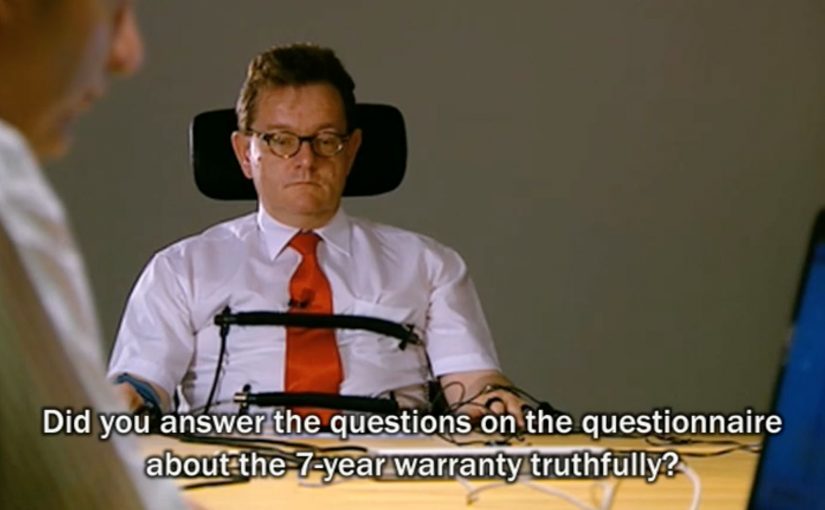
To prove the warranty was genuine, the campaign used a lie detector. Legal Connections, described as an official lie detector company, hooked up the CEO of Kia Motors to a polygraph. Consumers then asked him questions about the 7-year warranty during a live online session.

In European automotive markets, long warranties are a major purchase heuristic, and credibility becomes the real bottleneck when the claim feels “too good”.

The real question is whether the proof feels harder to fake than the doubt it is meant to kill.

Why the proof lands and spreads

The lie detector was not the whole campaign. It was the anchor. The stunt was communicated through newspaper ads, banners and a press release announcing that an actual CEO would undergo a live lie detector test. That structure is what turns a proof moment into earned media and word of mouth, meaning peer-to-peer sharing both online and offline. Because a polygraph is a culturally understood symbol of truth-testing, it reframed the warranty from “marketing claim” into “something we are willing to be challenged on, live”.

Extractable takeaway: When your promise is extraordinary, use a proof ritual. A proof ritual is a public, simple demonstration that invites challenge and feels hard to fake.

Recognition and reported impact

The work later picked up Cannes Lions recognition, listed as a Direct Bronze Lion for “Lie Detector”.

The campaign’s impact was reported via independent media company Scripta as:

  • Brand recognition: 42% (instead of 32% sector average)
  • Attribution: 73% (instead of 62% sector average)
  • Resulting in an Effectiveness Rating of 31% (instead of 20% sector average)
  • And last but not least: An impressive credibility of 80%

Steal this proof pattern for credibility gaps

A credibility gap claim is a promise people want to believe but suspect has a catch.

  • Identify the credibility gap early. If the promise sounds implausible, spend on proof, not frequency.
  • Choose a proof mechanic people already understand. Polygraph. Lab test. Public demo. Anything that signals “hard to fake”.
  • Make the proof interactive. Live questions beat scripted endorsements when trust is the objective.
  • Package the moment for pickup. Announce it like an event, so press and blogs have a clean story to carry.

A few fast answers before you act

What problem does the Kia lie detector idea solve?

It solves a credibility problem. When a benefit sounds too good to be true, people assume a hidden condition. The campaign is designed to remove that doubt by staging proof in public.

Why use a lie detector in advertising?

A polygraph is a widely understood truth ritual. Even if people do not treat it as perfect science, it signals confidence and willingness to be challenged in front of an audience.

What makes this more than a stunt?

The stunt is structured as a live, interactive Q&A, and it is distributed through paid announcements and PR. That combination turns a single moment into a story that can travel.

When should brands avoid “proof theatre” like this?

Proof theatre is staged proof that looks convincing but does not materially verify the claim. If the claim cannot withstand scrutiny, or if the proof method is likely to be seen as misleading or unsafe, the stunt will backfire. Proof mechanics only work when the underlying promise is clean.

What are better success metrics than views for credibility campaigns?

Measure belief and consideration shifts. Brand trust, message credibility, attribution to the correct benefit, and downstream intent signals are usually more meaningful than raw reach.
Nike: República Popular do Corinthians

Nike: República Popular do Corinthians

Corinthians celebrated its 100th anniversary in 2010. Nike’s response is not a one-off jersey drop or a polite tribute film. It is a whole new country.

“República Popular do Corinthians” reframes the club’s fanbase as a nation. With supporters reported in the tens of millions, the campaign leans into the idea that this “country” would outsize many real ones by population, and treats that as the brief.

Building a nation, not a slogan

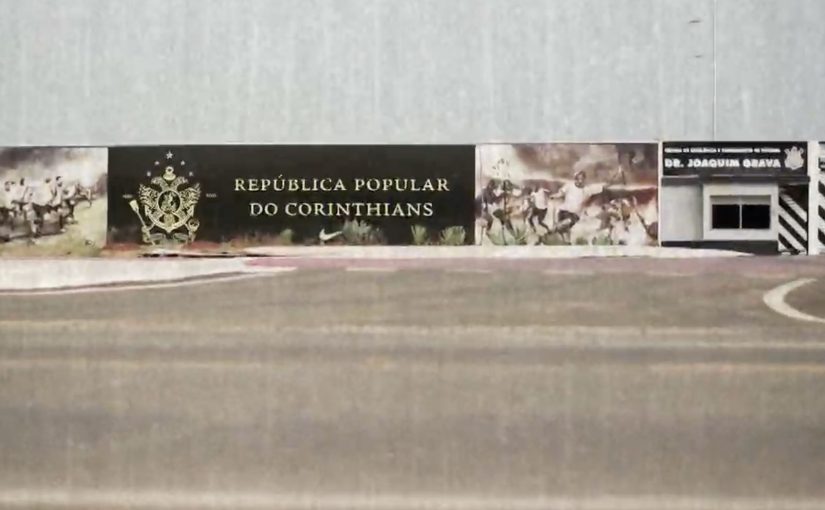
The mechanism is full institutional cosplay. That is, a deliberately official-looking build-out of symbols, rules, and institutions, executed with enough detail that it feels official. F/Nazca Saatchi & Saatchi São Paulo designs the assets a nation “needs”. A coat of arms. A flag. Documents. Legislation. Currency. Heroes. An embassy. Even a president.

In fan-led sports cultures, identity symbols and rituals often travel further than product messages because supporters use them to perform belonging in public.

Why it lands with 30 million people watching

This is a campaign that gives fans something to do, not just something to admire. The “country” frame turns fandom into citizenship, and citizenship invites participation. Collect the documents. Fly the flag. Use the language. Carry the identity. The real question is whether you have a community identity people already perform, or just an audience that only consumes.

Extractable takeaway: When your audience already behaves like a community, stop treating them like a segment. Give them a shared “operating system”. Symbols, rules, roles, and artifacts that let them express membership without needing the brand in the room.

It also sidesteps the usual anniversary trap. Instead of nostalgia-first storytelling, it builds a living structure fans can inhabit, which makes the celebration feel ongoing rather than commemorative.

The commercial intent hiding inside the romance

The emotional story is belonging. The business outcome is demand. A nation needs uniforms, badges, and visible markers of identity, and the campaign makes those markers socially meaningful.

The legacy write-up around the work describes substantial earned attention, including a reported figure of $7,800,000 in free media coverage. Separate from that media value claim, the campaign is also publicly associated with industry recognition, including being named “Idea of the Year” by the Saatchi & Saatchi network’s Worldwide Creative Board.

Stealable moves from the Corinthians “nation”

  • Build an identity kit. Go beyond a logo. Create artifacts people can carry, collect, and display.
  • Make participation the message. If it only works when watched, it is fragile. If it works when used, it spreads.
  • Design for self-propagation. Fans should be able to recruit other fans without a brand explanation deck.
  • Let the world “recognize” it. Embassies, documents, and rituals create the feeling of legitimacy, which is what turns a joke into a movement.

A few fast answers before you act

What is “República Popular do Corinthians”?

It is a Nike campaign that frames Corinthians supporters as citizens of a fictional nation, complete with national symbols and official-seeming artifacts, created to celebrate the club’s centenary.

What is the key mechanism that makes it memorable?

Completeness. Instead of one hero asset, it builds an entire identity system. Flag, documents, currency, roles, and an “embassy” that makes the nation feel legitimate enough to participate in.

Why does the “nation” metaphor work so well for sports fans?

Because fandom already behaves like identity. The nation frame gives supporters a structured way to express belonging, recruit others, and turn private loyalty into public signals.

How can a non-sports brand use this pattern without forcing it?

Start with a real community behavior you can amplify, then design a small set of artifacts and rituals that make participation easy. If people will not use it without you promoting it, simplify the kit until they do.

What is the smallest version of this you can ship?

Make one role feel real, then give it one symbol and one usable artifact. If people can adopt it without instructions, you have something that can spread without constant brand narration.

Norte: The Best Excuse Ever

Norte: The Best Excuse Ever

A night out with the boys usually needs an excuse, at least as the joke goes. Norte, a beer brand associated with northern Argentina, decides to turn that familiar line into a socially useful premise.

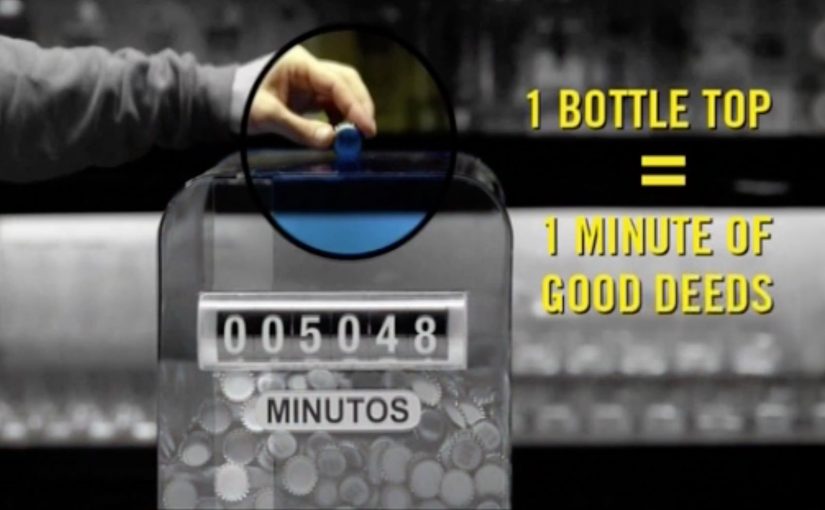
The idea is deliberately simple. For every Norte beer consumed at a bar, the brand donates one minute of time to practical community work, including fixing houses, maintaining parks, and repairing schools. Followers can monitor the donated minutes and the progress made through a dedicated website, which turns “we went for a beer” into a measurable counter of good deeds.

How the “minutes” mechanic works

The mechanic converts consumption into a visible unit of contribution. One beer equals one minute, then the brand performs the work and publishes progress so the audience can see the tally move. The counter is the proof, and the proof is the story people repeat.

In FMCG marketing, especially in categories tied to social rituals, converting a purchase into a transparent, trackable unit of public benefit can reframe indulgence as participation.

Why it lands

It removes the defensiveness from the behavior by giving it a credible upside. The campaign is not asking people to stop going out. It is redirecting the narrative from “pointless drinking” to “we contributed minutes.” The tracking layer matters because it reduces cynicism, since the audience can follow a concrete output rather than a vague promise.

Extractable takeaway: If your category has a guilt narrative, turn the core behavior into a quantifiable unit of visible impact, then publish progress often enough that people can use it as social proof.

What the brand is really trying to win

This is reputation as much as reach. Norte is positioning itself as the beer you can choose without needing to defend the choice later. The community work is the legitimacy, and the “best excuse” line is the social wrapper that helps the story travel.

The real question is whether a beer brand can turn a familiar excuse into a credible, repeatable proof of usefulness.

What to borrow from Norte’s minute logic

  • Make the unit understandable. A minute is easier to grasp than a donation percentage.
  • Design the proof before the film. A public counter and visible work outputs keep the idea credible.
  • Let the audience retell it in one sentence. “Every beer adds a minute” is built for word-of-mouth.
  • Guard the integrity. Transparency and follow-through matter more here than polish.

A few fast answers before you act

What is “The Best Excuse Ever” in one line?

A beer campaign where each Norte beer consumed converts into one minute of real community work, tracked publicly so people can see progress.

Why does the minute-based unit help?

It is concrete and easy to visualize. It also makes progress feel additive, so participation scales naturally with social occasions.

What makes this more credible than typical cause marketing?

The proof mechanism. A visible counter plus documented work outputs reduces the “donation fog” that often makes audiences skeptical.

What is the biggest risk with this approach?

If the brand cannot consistently deliver the promised work, the counter becomes a liability and the campaign reads as opportunism.

When does this model work best?

When consumption is already social and habitual, and the brand can operationally execute real-world outputs at the pace the campaign generates demand.