
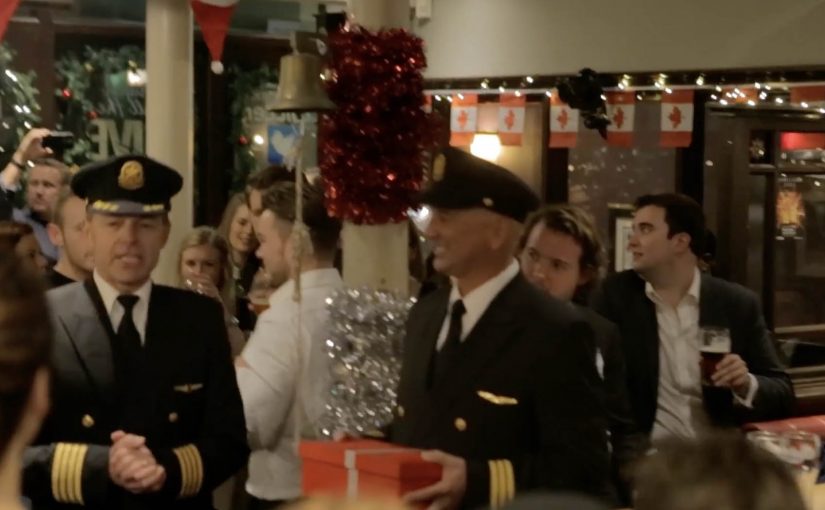
Air Canada: Gift of Home for the Holidays

It’s that time of the year again. This is my last and very Christmassy post for the year.

Since Christmas is the season of giving, Air Canada decided to spread a little love to unsuspecting Canadians at a local bar in London. Two Air Canada pilots talked to several Canadians about how they would not make it home this holiday season, and then announced they would be giving everyone in the bar a very special gift.

What happened next will make you wish you were there for this moment.

How the surprise is staged

The setup is intentionally low-key. Start with a real conversation in a normal place, then pivot to an unexpected announcement that turns empathy into action. The bar setting does the work of making it feel unproduced, and the pilots do the work of making it feel credible. That combination matters because low production cues reduce skepticism and make the reveal feel earned rather than engineered.

In travel brands, “getting home for the holidays” is one of the few emotional promises that translates across cultures without explanation.

Why this lands

This works because the tension is familiar and the payoff is immediate. You can feel the disappointment of not getting home, and you can feel the release when the gift arrives. The brand is not explaining values. It is demonstrating them through a human moment that people recognise as real. The real question is whether the emotion feels earned by the brand’s actual role. It does, because helping people get home is the airline promise in its most human form.

Extractable takeaway: If you want an emotional story to travel, start with a universally understood problem, keep the setup believable, and make the brand’s role an enabling action rather than a slogan.

What travel brands can borrow

  • Use a natural setting. Familiar environments lower skepticism fast.
  • Make the “turn” simple. Conversation, reveal, gift. No complicated mechanics.
  • Let real people carry the scene. Authentic reactions beat scripted lines.
  • Anchor to a seasonal truth. Holidays come with shared emotional stakes that do not need heavy copy.

Until 2015. Ramble over and out.


A few fast answers before you act

What is the core idea of this Air Canada holiday activation?

A surprise moment in a London bar where Air Canada pilots speak with Canadians about not making it home for the holidays, then reveal a special gift.

Why does the bar setting matter?

It makes the interaction feel everyday and believable, which strengthens the emotional payoff when the surprise lands.

What is the campaign really selling?

More than routes or fares, it sells reassurance. The feeling that the airline helps you get to the people that matter.

What is the transferable pattern for other brands?

Build a simple, credible setup around a universal tension, then resolve it with a concrete act that only your brand can enable.

What’s the biggest risk with “surprise and delight” campaigns?

If the setup feels staged or the brand role feels performative, the emotion collapses. Believability is the asset.
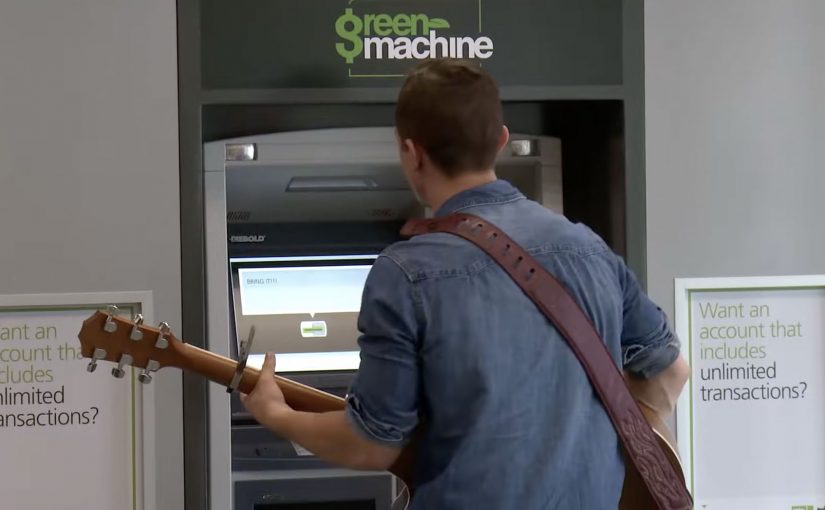
TD Canada Trust: Automated Thanking Machine

Start with the smile. Then design backwards

Start with the smile of your audience, then work back from there. That is the key to many of the marketing campaigns people actually share. Coca-Cola has done a great job with their various happiness campaigns, followed by WestJet’s Christmas campaign where they surprised passengers with gifts.

When an ATM stops being a machine

TD Canada Trust, for its “TD Thanks You” campaign, converts select ATM machines in Toronto, Montreal, Calgary and Vancouver into special Automated Thanking Machines. Twenty hand-picked customers are invited to test them.

The twist is that the ATM behaves like a person. It knows their name, talks back, and responds in ways a standard ATM never would. Then it escalates into the payoff: unexpected, genuinely personal gifts that feel tailored to the customer, not to the bank.

In retail banking and other trust-based categories, surprise-and-delight, meaning an unexpected human response inside a standard service moment, works best when it turns a routine transaction into personal recognition that feels operationally real.

The video is the distribution layer

The reactions are the asset. This is less about the ATM technology than about capturing the moment people realize a faceless institution is paying attention. The real question is how a trust-heavy brand makes gratitude feel personal without making it feel fake. As reported, the video has racked up millions of views in days because the story is instantly legible: a familiar interface becomes human, and the customer response does the persuasion.

Why it lands

Banks are trained to look serious, consistent, and slightly distant. This flips that expectation without abandoning credibility, because the setting stays “bank-real” and the interaction starts from a normal ATM flow. The experience also scales conceptually. Any service brand with a repetitive touchpoint can imagine doing a version of this.

Extractable takeaway: If your category is low-emotion or low-trust, pick a familiar moment, introduce one human signal that feels impossible in that context, then let the customer reaction carry the message.

What to steal from an ATM that says “thanks”

  • Use a familiar interface as the stage. The more ordinary the starting point, the bigger the perceived magic when it shifts.
  • Personalization beats scale. One moment that feels truly “for me” outperforms ten generic giveaways.
  • Escalate in steps. Name recognition. Conversation. Then reward. The ramp makes the payoff believable.
  • Design the filming around authenticity. A hidden-camera feel is part of the proof, even when the experience is planned.

A few fast answers before you act

What is TD’s “Automated Thanking Machine”?

It is a TD ATM adapted to greet and interact with select customers, then deliver surprise gifts as part of the “TD Thanks You” campaign.

Why does the ATM format work so well?

An ATM is the definition of impersonal service. Making it behave personally creates instant contrast and instant story value.

What’s the real mechanism behind the idea?

Not the screen. The mechanism is staged personalization at a routine touchpoint, captured on video, where real customer reactions become the proof.

What makes this shareable beyond banking customers?

The narrative is universal: a machine becomes human, then gratitude becomes tangible. You do not need product context to feel it.

How can another brand apply this without copying it?

Pick one repetitive customer moment, add one unexpected human signal, then reward the customer in a way that is clearly based on who they are, not who you want them to be.

WestJet: Christmas Miracle

A Christmas moment built for the worst part of travel

Airports during the holiday season are generally filled with tired, disgruntled people facing delays, lost luggage, and a long list of small mishaps. WestJet uses that exact setting to deliver a Christmas miracle at the point where people least expect anything good to happen. The baggage belt.

With the help of a virtual Santa Claus, the airline asks unsuspecting passengers waiting to board flights to Calgary from Toronto and Hamilton International Airports what is on their Christmas wishlists.

Then more than 150 WestJet employees play Santa’s elves, gathering personalized presents and delivering them to the Calgary airport before the passengers land. At baggage claim, the carousel brings the surprise to life and the travelers receive their holiday miracle.

The mechanic that turns “nice idea” into a real surprise

The work is not the Santa screen. The work is the fulfillment race. Capture wishes at the departure gate, buy the gifts immediately, clear logistics fast enough to beat a flight, and make the reveal happen at a single shared moment where everyone is already looking in the same direction.

That last detail matters. Baggage claim is a forced wait with a fixed focal point. When the surprise arrives there, the reaction is collective, contagious, and easy to film without feeling staged.

In service brands, the fastest way to earn trust is to transform a routine pain point into a visibly human act of care.

Why it lands

It respects the viewer’s skepticism. People are used to holiday messages. They are not used to holiday logistics that actually deliver. The story also stays legible even if you miss the setup. You see gifts on a baggage belt, you see genuine reactions, and you instantly understand the promise being made about the brand. The real question is not whether a holiday message can feel warm, but whether the brand can operationalize that warmth in a way people instantly believe.

Extractable takeaway: If you want surprise-and-delight to travel, design the reveal around a shared focal point, then make the fulfillment real enough that people would talk about it even without a camera.

Not their first airport Christmas

This is not WestJet’s first attempt at spreading airport Christmas cheer. The year before, the airline created a Christmas-themed flash mob, complete with dancing elves, right in the middle of an airport.

A final note to close the year

And with that, a very Merry Christmas and a Happy New Year. Here is a lovely remake of “Little Drummer Boy” by Pentatonix to bring this last Ramble of the year to a close.

What service brands should steal from WestJet’s reveal

  • Pick a moment everyone already shares. The best reveal locations are places where attention naturally converges.
  • Make the operational proof the message. The buying, wrapping, and delivery speed is the real differentiator.
  • Engineer one clean narrative arc. Ask. Fulfill. Reveal. React. Do not clutter it with subplots.
  • Let the audience do the advocacy. When people feel genuinely seen, they narrate it for you.

A few fast answers before you act

What is WestJet’s “Christmas Miracle” execution?

Passengers share their Christmas wishlists with a virtual Santa at the departure airport, then those gifts appear for them at baggage claim after landing, turning a routine airport wait into a shared surprise moment.

Why does baggage claim work as the reveal location?

It is a forced wait with a single focal point. Everyone is already watching the same place, so the surprise becomes collective and instantly memorable.

What is the core mechanic behind the campaign?

Real-time fulfillment. Capturing wishes is easy. Buying, wrapping, transporting, and staging gifts before the flight lands is the proof that makes the story credible.

What makes this more shareable than a typical holiday ad?

The reactions read as unmistakably real, and the narrative is simple enough to retell in one sentence without explanation.

What is the main lesson for other brands?

Transform a predictable pain point into a visible act of care, then design the reveal so it happens in a shared moment people naturally witness together.