
Coca-Cola: The Sing For Me Machine

Coca-Cola: The Sing For Me Machine

As part of its global “Open Happiness” campaign, Coca-Cola has set up interactive vending machines in various parts of the world. In Singapore, consumers could hug for a Coke. In Korea, they could dance for a Coke.

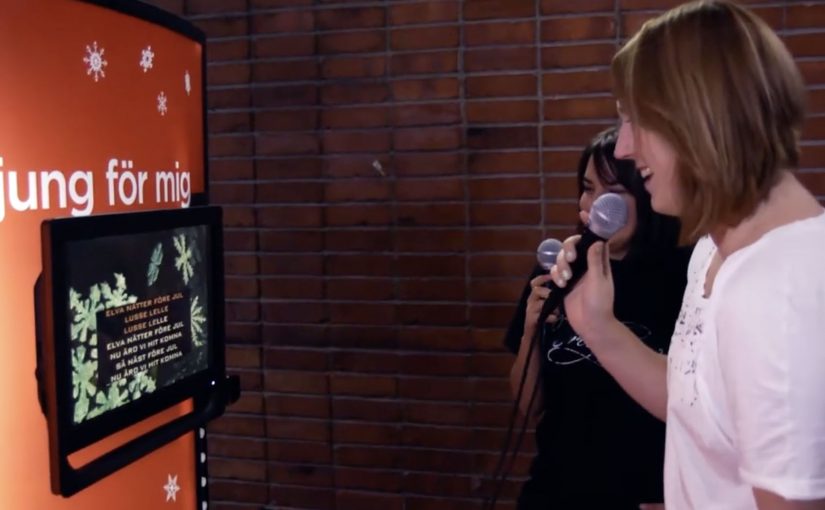
And now in Stockholm they can sing for a Coke. The vending machine has been placed at the Royal Institute of Technology with the sign “Sing For Me” in the front.

When sampling becomes a public performance

The mechanism is simple: the machine replaces money with a human gesture. That “gesture for reward” model means the action itself becomes the price of entry. Dance moves in one market. A song in another. The reward is immediate, and the moment is automatically social because other people can see it. That swap works because it turns a private purchase into a visible act, giving the crowd a reason to watch, react, and join in.

In global FMCG sampling and brand experience work, “gesture for reward” machines turn distribution into participation by design.

The real question is whether the action is easy enough to trigger participation without making people shut down in public. The smart part of this format is not the free Coke, but the public behavior it creates around the sample.

Why it lands

This works because it makes the brand promise legible without explanation. A vending machine is normally transactional and forgettable. A performance-triggered machine is a small event, and the crowd reaction becomes part of the product. The setting helps too. A campus is full of friends, cameras, and people willing to try a slightly silly thing in public.

Extractable takeaway: If you swap payment for a simple public action, you turn sampling into a story people can witness, film, and retell. That social proof travels farther than the product ever could on its own.

The machine is one of a number of Happiness Machines Coca-Cola has deployed around the world since 2009.

What to borrow from performance sampling

  • Pick one obvious trigger: the instruction must be understood in one glance.
  • Make the reward instant: the dispense moment is the emotional payoff.
  • Design for bystanders: the format should recruit a crowd naturally.
  • Localize the gesture: keep the same principle, but choose a culturally comfortable action.
  • Capture reactions: real laughs and hesitation are the proof that the idea works.

A few fast answers before you act

What is the “Sing For Me” machine?

It is a Coca-Cola vending machine that dispenses a free Coke when people sing to it, turning a product handout into a public, participatory moment.

Why does “sing for a Coke” work as a mechanic?

Singing is visible and socially contagious. Once one person does it, others gather, react, and often try it themselves.

How is this connected to the broader “Happiness Machine” idea?

It follows the same pattern: replace payment with a feel-good interaction, then let real reactions become the distribution layer.

Where does this format work best?

High-footfall environments with social density, like campuses, events, malls, and transit hubs, where bystanders quickly become an audience.

What is the biggest risk with performance-for-reward activations?

If the action feels embarrassing or culturally off, participation drops. The trigger must feel playful, safe, and easy to attempt in public.
Omote 3D: The 3D Printing Photo Booth

Omote 3D: The 3D Printing Photo Booth

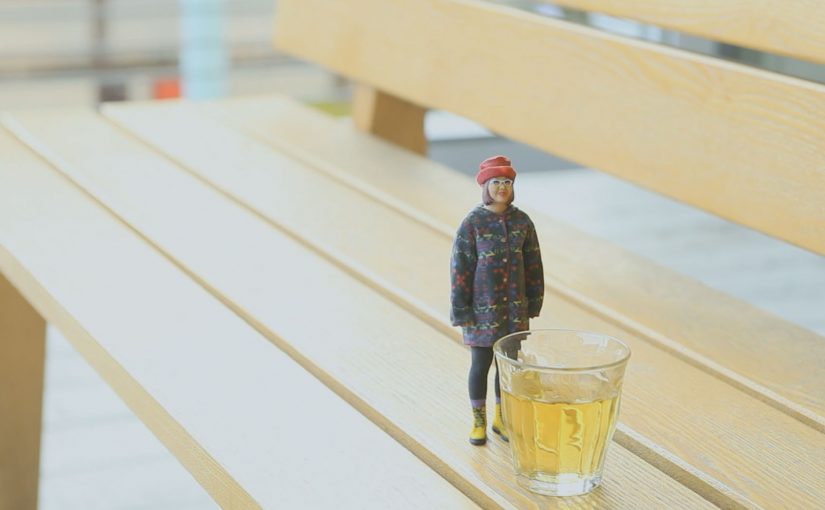
Ever wanted a life-like miniature action figure of yourself. Not a cartoon avatar, but a small, physical replica you can hold in your hand.

Omote 3D makes that possible by setting up what is billed as the world’s first 3D printing photo booth for a limited time at the Eye of Gyre exhibition space in Harajuku, Japan.

From November 24 through January 14, 2013, people with reservations can have their bodies scanned into a computer. Then, instead of a photograph, they receive miniature replicas of themselves.

The miniature replicas are available in three sizes. S (10cm), M (15cm) and L (20cm) for US$264, US$402 and US$528, respectively.

Why this “photo booth” feels like a shift

The mechanism is the message. A booth that normally captures a flat memory instead captures a 3D dataset, then materializes it into a keepsake. The output is not content you scroll past. It is content you place on a shelf.

Extractable takeaway: When you turn personalization into a physical object, it stops being content and starts being a keepsake.

Definition-tightening: this is not 3D “photography” in the traditional sense. It is full-body 3D scanning plus full-color 3D printing, packaged in a familiar photo booth ritual.

In consumer experiences where attention is scarce and products are increasingly interchangeable, turning personalization into a tangible object is a reliable way to earn talk value, meaning people have a reason to talk about it later.

The real question is whether your experience ends as something people display, not something they forget after the moment passes.

What makes it work as an exhibition idea

The booth turns the visitor into the exhibit. It also turns waiting and anticipation into part of the experience, because the “print” is a manufactured object, not an instant print strip. That shift makes the end result feel earned and premium.

Stealable patterns from Omote 3D’s booth

  • Use a familiar ritual as the wrapper. “Photo booth” is instantly understood, even when the technology is new.
  • Make the output physical. Physical artifacts extend the campaign life long after the pop-up closes.
  • Price by meaning, not by material. People pay for identity and memory, not for plastic and ink.
  • Gate with reservations when demand is the story. Scarcity plus scheduling can reinforce that this is special.

Additionally click here to see how Polskie Radio in Poland has used 3D printing technology to market their website.


A few fast answers before you act

What is Omote 3D’s 3D printing photo booth?

It is a pop-up booth that scans your body in 3D, then produces a full-color miniature figure of you instead of a standard photo print.

Why call it a “photo booth” if it prints a figure?

Because it borrows the familiar booth ritual. You step in, you get captured, and you leave with a keepsake. The technology changes, but the mental model stays simple.

How is the miniature created?

Your body is scanned into a 3D model, then the final figure is manufactured via 3D printing in full color and finished as a physical object.

What sizes are offered and what do they cost?

Three sizes are offered. 10cm, 15cm, and 20cm. The listed prices are US$264, US$402, and US$528, respectively.

What is the marketing lesson for brands?

Personalization becomes more valuable when it becomes tangible. A physical output turns novelty tech into an object people keep, show, and talk about.

Red Stripe Musical Extravaganza

Red Stripe Musical Extravaganza

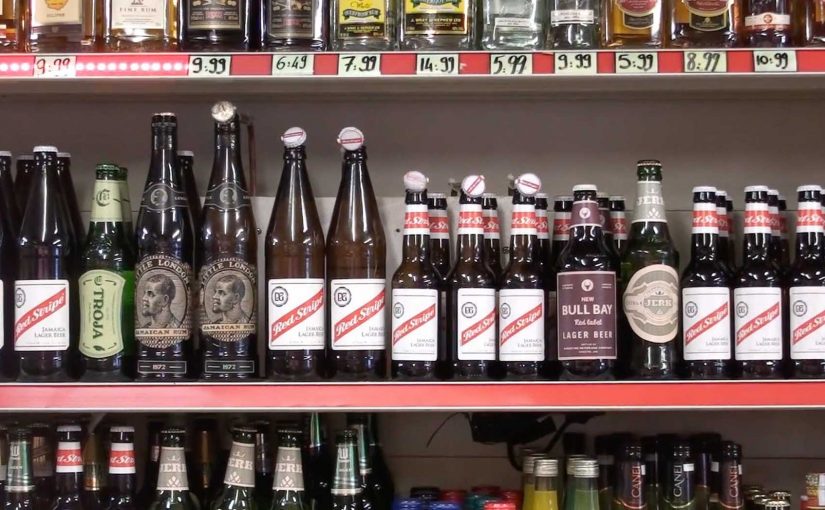
Red Stripe, a Jamaican lager brand, transforms an ordinary-looking East London corner shop into a singing, dancing musical extravaganza. Products across the shop turn into instruments that burst into a melody when a customer selects a Red Stripe. Noodle pots become maracas. Bottles turn into trumpets. Cans become xylophones.

To capture the surprise, 10 hidden cameras record customer reactions as the shop “comes alive.”

The real question is how you turn a routine purchase into a moment people want to retell and share.

This kind of retail theatre works best when the shopper triggers the show through a product choice, and the documentation is designed to scale the moment beyond the store.

The shop becomes the media

This is not a poster on a wall. It is the environment itself performing. The moment of selection triggers the show. The shelf becomes the stage.

That shift matters because it makes the brand moment inseparable from the act of buying. It is shopper marketing that feels like entertainment, not persuasion. Here, shopper marketing means designing the buying environment so the act of choosing the product creates the brand experience.

The trigger is the product choice

The smartest part is the mechanic. Nothing happens until the customer chooses the product. That makes the experience feel personalised, even though it is engineered. Because the trigger is the shopper’s own choice, the surprise reads as a reward, not a push.

It also makes the story instantly explainable. “When you pick up a Red Stripe, the shop turns into a band.”

If you can explain the trigger in one sentence and show real reactions, the activation comes with built-in distribution.

In retail and FMCG environments, the point-of-sale moment is where intent becomes action, and where a brand can earn attention without interrupting it.

Why hidden cameras make the idea travel

The in-store performance is powerful, but it is local. The video is what scales it. Real reactions signal authenticity, and the format becomes shareable proof that the stunt actually happens.

Extractable takeaway: If you want the idea to travel, design the filmed proof as part of the concept. Authentic reactions do the credibility work that polished edits cannot.

Steal the point-of-sale trigger

  • Trigger at the shelf. Make the point-of-sale moment the trigger, not the end of the journey.
  • Instrument the environment. Convert ordinary objects into a surprising behaviour, so the setting becomes memorable.
  • Film for scale. Capture genuine reactions, then let the video do the distribution work.

A few fast answers before you act

What happens in the Red Stripe Musical Extravaganza?

An East London corner shop turns into a musical performance. Shop items become instruments that play when a customer selects a Red Stripe.

What turns into instruments?

Noodle pots become maracas. Bottles become trumpets. Cans become xylophones.

How is it captured?

Ten hidden cameras record customer reactions.

What is the core mechanic that makes it work?

The product selection triggers the performance, so the “brand moment” happens at the exact point of purchase.