
Antarctica: Beer Breathalyzer

Antarctica: Beer Breathalyzer

Drinks giant Ambev aims to reduce drinking and driving in Brazil. Together with agency AlmapBBDO, it brings a unique Antarctica beer “breathalyzer” activation into bars to show young adults how alcohol affects judgement.

A bar experience that turns a warning into a reveal

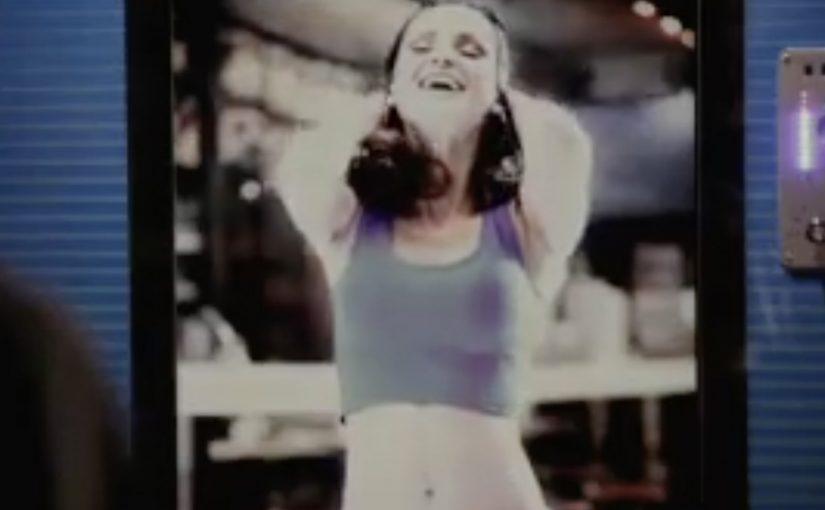
Video screens are placed in bars, and a friendly, normal-looking girl invites customers to take a breath test by breathing into the machine.

If the reading suggests they’re sober enough, the moment ends. If the machine detects alcohol, the on-screen character transforms into a gyrating, seductive “beauty” and the unit prints a discount voucher for a taxi company.

The mechanic: demonstrate impaired judgement, then offer the safer choice

The creative trick is to dramatize the very thing alcohol distorts: perception. By making the “wrong” reaction feel obviously wrong, the campaign turns a safety message into something people feel instantly, not something they are told to remember later.

The real question is how to interrupt the decision before someone leaves the bar thinking they are still fine to drive.

In nightlife contexts, responsible-drinking work is strongest when the safer alternative is offered at the exact decision point.

Why it lands: it replaces lecturing with a moment of self-recognition

Most anti-drink-driving communication relies on fear or shame. This execution uses surprise and self-awareness, then nudges the next best action without moralizing.

Extractable takeaway: For high-friction behavior change, pair a fast “mirror moment” (show me I’m not fit to decide) with an immediate off-ramp (make the safer option easy, discounted, and right there).

What to steal for your own safety or responsibility campaign

  • Put the intervention where the decision happens: bars, venues, exits, car parks, pickup points.
  • Make the insight experiential: one surprising reveal beats ten lines of copy.
  • Offer the alternative instantly: the voucher is the conversion mechanism, not a side benefit.
  • Keep the interaction short: fast participation increases uptake and social watching.
  • Design for talk value: if people describe it easily, it spreads beyond the venue.

A few fast answers before you act

What is the Antarctica Breathalyzer activation?

It is a bar-installed breath test experience that uses an on-screen transformation to illustrate impaired judgement, then prints a discounted taxi voucher when alcohol is detected.

Why does a taxi voucher matter in this context?

Because it converts awareness into action. The campaign does not just warn you. It gives you a practical way to avoid driving right now.

What is the behavioral insight behind the “transformation”?

Alcohol can distort perception and decision-making. The exaggerated change on screen is a fast metaphor designed to make that distortion obvious and memorable.

What’s the biggest risk in copying this idea?

Tone. If the execution feels mocking, sexist, or unsafe, it can backfire. The experience needs to motivate safer choices without humiliating participants.

How do you measure success for this kind of activation?

Participation rate per venue, voucher redemption rate, uplift in taxi usage during activation windows, and any local incident or enforcement indicators you can ethically and legally access.
T-Mobile: Angry Birds Live

T-Mobile: Angry Birds Live

Angry Birds, rebuilt at human scale

The strongest activations often take a screen-based behavior and make it public, physical, and shareable. T-Mobile’s Angry Birds Live is a clean example of that move.

Here, a live activation means an in-person brand experience designed to create a moment people want to film and share.

T-Mobile, together with Saatchi & Saatchi, capitalized on the Angry Birds fever with a viral video titled Angry Birds Live.

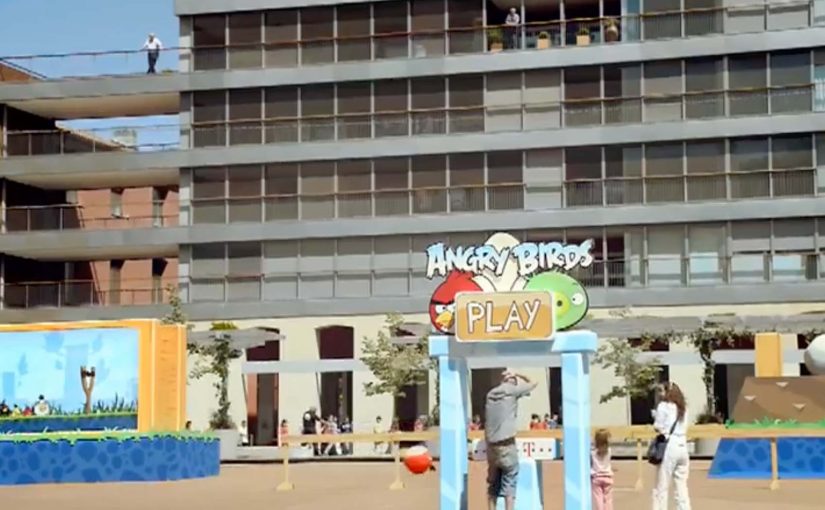
They built a human-scaled mockup of Angry Birds in a square in Barcelona. Lucky participants used the game on a smartphone to launch birds on their castle-smashing journey. The experience included authentic sound effects and exploding pigs, and the size of the crowd made it clear the spectacle worked.

How the smartphone became the controller for a real set

The mechanism was simple and instantly legible. The smartphone stayed the input device, but the output moved into the real world.

That pairing did two things at once. It kept the interaction familiar for participants, and it made the result visible for everyone watching. One person played. Everyone else experienced the payoff. Because the outcome was public, each tap created social proof in real time.

In mobile-first consumer marketing, keeping the input private but the payoff public is a fast way to turn play into social proof.

The real question is how you turn one person’s private input into a public payoff that many people can watch.

This pattern is worth copying when your interaction is familiar and the outcome is visibly consequential without extra explanation.

Why the spectacle pulled a crowd

People do not gather around an app. They gather around consequences.

Extractable takeaway: When you want a crowd, make the consequence public and immediate, not private and delayed.

Angry Birds already trained players to anticipate impact. By scaling the environment up and making destruction physical, the activation delivered the same emotional beat as the game, but with stronger social proof because it happened in front of a crowd.

What T-Mobile was really buying with this idea

The business intent was to borrow cultural momentum and convert it into attention that looked earned, not bought.

The activation created a story people wanted to film, share, and talk about. The brand got reach through the crowd, the recordings, and the viral video itself, rather than relying on a traditional media push alone.

What to steal for your next live activation

  • Move the payoff into public view. One participant can drive the action, but the outcome should entertain many.
  • Keep the interaction familiar. When the input is already known, more people are willing to step in.
  • Design for consequence. Sound, impact, and visible change make an experience watchable, not just playable.
  • Build for filming. If the best moments are obvious on camera, distribution happens naturally.

A few fast answers before you act

What was T-Mobile’s Angry Birds Live?

A live brand activation in Barcelona that recreated Angry Birds at human scale, with participants using a smartphone to launch birds at a physical set.

What was the core mechanism?

A familiar mobile game interaction controlled real-world outcomes, turning individual play into a public spectacle.

Why did it attract such a large crowd?

Because the results were physical, loud, and visible. People gathered around impact and consequence, not a screen.

What business goal did this support?

Capturing cultural momentum and converting it into earned attention, shareable content, and viral reach.

What is the main takeaway for brands?

Make one person’s action entertaining for many, and design the payoff to be obvious, physical, and easy to record.

Nike: República Popular do Corinthians

Nike: República Popular do Corinthians

Corinthians celebrated its 100th anniversary in 2010. Nike’s response is not a one-off jersey drop or a polite tribute film. It is a whole new country.

“República Popular do Corinthians” reframes the club’s fanbase as a nation. With supporters reported in the tens of millions, the campaign leans into the idea that this “country” would outsize many real ones by population, and treats that as the brief.

Building a nation, not a slogan

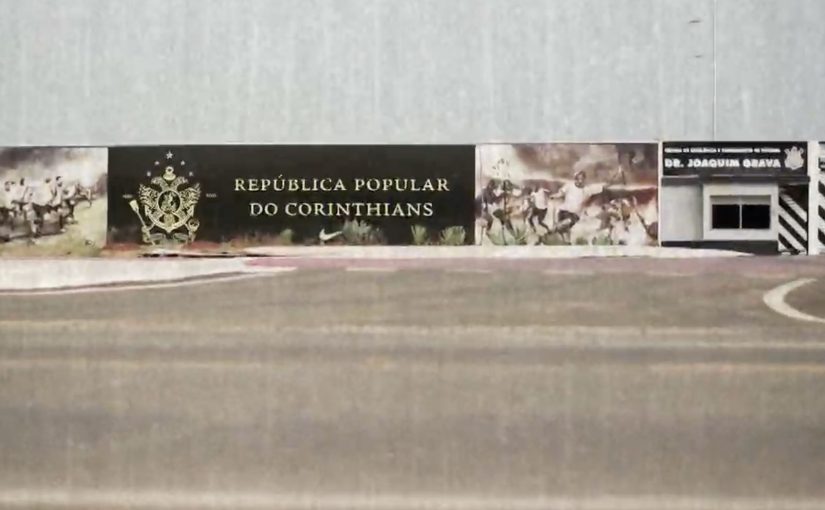
The mechanism is full institutional cosplay. That is, a deliberately official-looking build-out of symbols, rules, and institutions, executed with enough detail that it feels official. F/Nazca Saatchi & Saatchi São Paulo designs the assets a nation “needs”. A coat of arms. A flag. Documents. Legislation. Currency. Heroes. An embassy. Even a president.

In fan-led sports cultures, identity symbols and rituals often travel further than product messages because supporters use them to perform belonging in public.

Why it lands with 30 million people watching

This is a campaign that gives fans something to do, not just something to admire. The “country” frame turns fandom into citizenship, and citizenship invites participation. Collect the documents. Fly the flag. Use the language. Carry the identity. The real question is whether you have a community identity people already perform, or just an audience that only consumes.

Extractable takeaway: When your audience already behaves like a community, stop treating them like a segment. Give them a shared “operating system”. Symbols, rules, roles, and artifacts that let them express membership without needing the brand in the room.

It also sidesteps the usual anniversary trap. Instead of nostalgia-first storytelling, it builds a living structure fans can inhabit, which makes the celebration feel ongoing rather than commemorative.

The commercial intent hiding inside the romance

The emotional story is belonging. The business outcome is demand. A nation needs uniforms, badges, and visible markers of identity, and the campaign makes those markers socially meaningful.

The legacy write-up around the work describes substantial earned attention, including a reported figure of $7,800,000 in free media coverage. Separate from that media value claim, the campaign is also publicly associated with industry recognition, including being named “Idea of the Year” by the Saatchi & Saatchi network’s Worldwide Creative Board.

Stealable moves from the Corinthians “nation”

  • Build an identity kit. Go beyond a logo. Create artifacts people can carry, collect, and display.
  • Make participation the message. If it only works when watched, it is fragile. If it works when used, it spreads.
  • Design for self-propagation. Fans should be able to recruit other fans without a brand explanation deck.
  • Let the world “recognize” it. Embassies, documents, and rituals create the feeling of legitimacy, which is what turns a joke into a movement.

A few fast answers before you act

What is “República Popular do Corinthians”?

It is a Nike campaign that frames Corinthians supporters as citizens of a fictional nation, complete with national symbols and official-seeming artifacts, created to celebrate the club’s centenary.

What is the key mechanism that makes it memorable?

Completeness. Instead of one hero asset, it builds an entire identity system. Flag, documents, currency, roles, and an “embassy” that makes the nation feel legitimate enough to participate in.

Why does the “nation” metaphor work so well for sports fans?

Because fandom already behaves like identity. The nation frame gives supporters a structured way to express belonging, recruit others, and turn private loyalty into public signals.

How can a non-sports brand use this pattern without forcing it?

Start with a real community behavior you can amplify, then design a small set of artifacts and rituals that make participation easy. If people will not use it without you promoting it, simplify the kit until they do.

What is the smallest version of this you can ship?

Make one role feel real, then give it one symbol and one usable artifact. If people can adopt it without instructions, you have something that can spread without constant brand narration.