
Quilmes: Mitigol

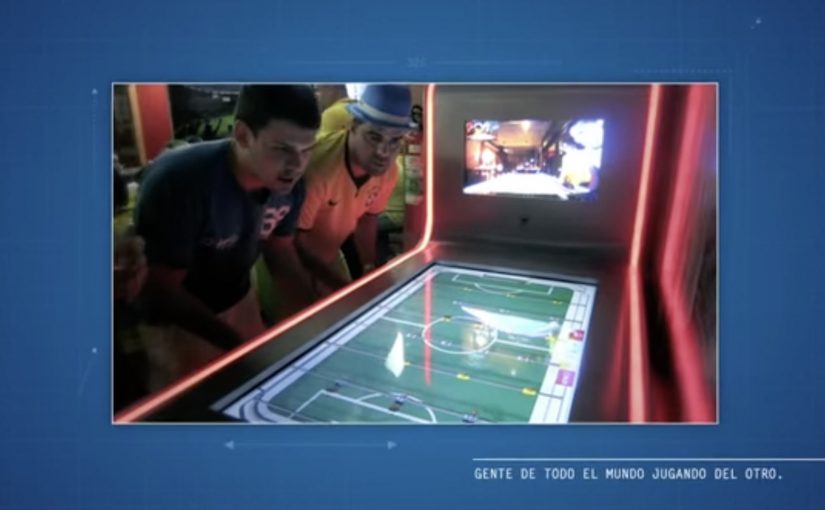
Quilmes and their agency +Castro reinvented the classic game of foosball. In its new version they enabled Argentinians and Brazilians to play each other in real time through a custom made digital foosball table.

Dubbed “Mitigol”, the activation turns foosball into a cross-border live match. One half of the table was placed in Argentina and the other half in Brazil. During the game, players could see their opponent via special in-built video cameras that further enhanced the real time experience of the game. As a prize, Quilmes gave away free beer.

How Mitigol works

The mechanism is a physical game with a digital bridge. A custom table syncs the ball and player movement across distance, while embedded cameras add face-to-face presence so it feels like a real match rather than a remote demo.

In sports and event-led marketing, shared-play installations can turn rivalry into participation because they give fans something to do together, not just something to watch.

Why it lands

This works because it makes a national rivalry tangible without needing a screen-first experience. Foosball already has competitive tension built in, so the cross-border connection raises the stakes instantly. The cameras then do the emotional work by proving the opponent is real, right now, reacting in real time.

Extractable takeaway: When you want “real time” to feel meaningful, do not rely on the word. Add one physical interaction that people already understand, then layer in live presence so the distance becomes the headline.

What Quilmes is really buying

The real question is how to turn passive rivalry into a shared act people want to join.

Beyond novelty, Mitigol is a closeness story. It borrows the energy of an event moment and converts it into a branded experience where the fan is the performer, not the spectator. The prize is just the nudge that keeps the line moving and the competition sharp.

What to steal from Mitigol

  • Start with a familiar game. If the rules are known, participation spikes.
  • Make distance visible. The split-table concept is the idea. Do not hide it.
  • Add live presence. Cameras or live feedback make “remote” feel human.
  • Reward the behavior you want. Small, immediate prizes keep throughput high.

A few fast answers before you act

What is Mitigol?

It is a custom foosball table experience that connects two locations so players in different countries can play the same match in real time.

Why split the table across Argentina and Brazil?

Because the physical split makes the cross-border rivalry concrete. It is instantly legible as “we are playing each other right now”.

What role do the built-in cameras play?

They add live presence and reaction, which makes the experience feel like a real opponent rather than a remote simulation.

What is the simplest way to copy the principle?

Take a familiar physical activity, connect it across distance with tight synchronization, then add a live human layer so the interaction feels personal.

What should you measure for an activation like this?

Participation volume, repeat play, dwell time, and how often spectators convert into players once they see it in action.
Nike Football: The Last Game

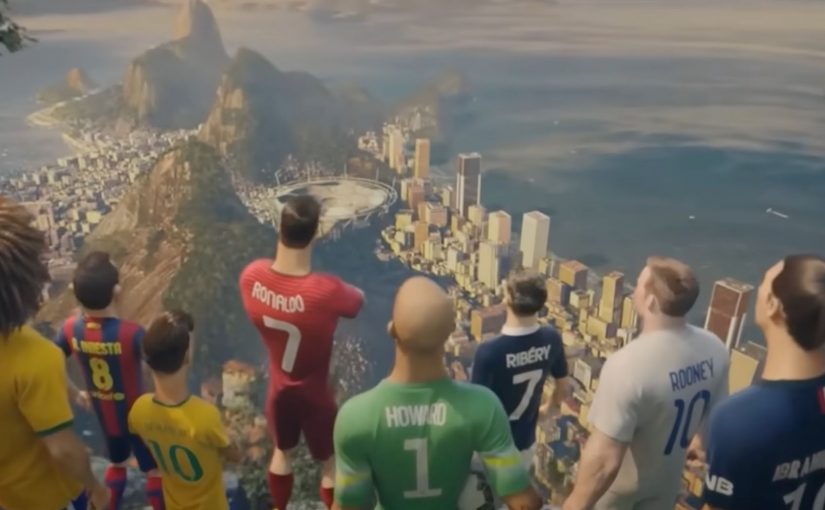
In a build up to the first match of the 2014 FIFA World Cup, Nike Football released a five minute animated film that features some of the world’s greatest footballers on a mission to save football from the hands of a villainous mastermind, The Scientist.

In a future where brilliant football has ceased to exist and the game has become almost extinct, Brazilian legend Ronaldo (O Fenómeno) decides enough is enough and goes on a mission to reignite the game with brilliant football with the help of a re-assembled group of the world’s most brilliant players.

In the final minutes of the film, Cristiano Ronaldo, Wayne Rooney, Neymar Júnior, Zlatan Ibrahimović, Andrés Iniesta, David Luiz, Franck Ribéry, Tim Howard and Ronaldo (O Fenómeno) are seen battling the “perfect” football clones in a winner take all match.

How the plot carries Nike’s platform

The film pits “brilliant football” against a future of optimized, risk-free play, so “Risk Everything” reads like a choice between creativity and extinction. Here, a brand platform means the recurring campaign idea that frames the work.

In global tournament marketing, this kind of work competes with entertainment, not other ads.

The real question is how you turn a tournament moment into a story people choose to watch and share, even when they do not care about the sponsor.

Why this story structure is so effective

By giving creativity a face (the players) and safety a face (The Scientist and his clones), the film turns an abstract brand message into a clear, watchable conflict.

Extractable takeaway: If your platform is an attitude, dramatize it as a choice with consequences, then let the audience feel the outcome instead of explaining it.

  • It turns a brand platform into a myth. “Risk Everything” translates naturally into a fight for football’s soul.
  • It uses a clear villain to sharpen the message. The Scientist represents control, safety, and sameness. The players represent creativity and individual brilliance.
  • It makes the product message implicit. You do not need to be told that creativity wins. You watch it win.

What marketers can take from “The Last Game”

When you have a cultural moment as big as the World Cup, the winning work often behaves like entertainment first. Nike built a mini-universe with stakes, characters, and a simple conflict. That gives the story a reason to be shared beyond football fans, and it gives the brand a clear point of view without sounding like advertising.

  • Lead with stakes. Make the outcome matter before you ask anyone to share.
  • Give the tension a face. A clear opponent sharpens what you stand for, and what you stand against.
  • Keep the product message implicit. Show the behavior you want to reward, then trust viewers to connect the dots.

A few fast answers before you act

What is Nike Football “The Last Game”?

It is a five-minute animated film released ahead of the 2014 FIFA World Cup where Ronaldo (O Fenómeno) and a group of top players try to save football from The Scientist and his “perfect” clones.

Who are the players featured in the final match?

Cristiano Ronaldo, Wayne Rooney, Neymar Júnior, Zlatan Ibrahimović, Andrés Iniesta, David Luiz, Franck Ribéry, Tim Howard and Ronaldo (O Fenómeno).

What is the core idea behind the villain “The Scientist”?

He represents a future of controlled, optimized, risk-free football. The film positions creative, brilliant play as the antidote.

Why does this work so well ahead of a tournament?

It amplifies the emotion people already bring to the World Cup and gives them a shareable story that feels like culture, not a commercial break.