
Hyundai Genesis: A Message to Space

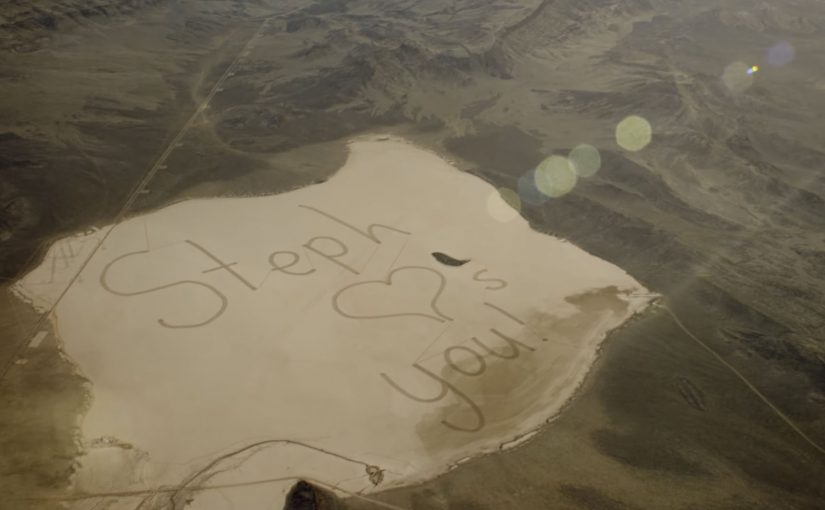
Eleven Hyundai Genesis sedans drive in formation across Nevada’s Delamar Dry Lake, not to show handling, but to write a sentence.

A 13-year-old girl from Houston, Stephanie, misses her astronaut father as he works aboard the International Space Station. Hyundai turns that human truth into a brand-scale gesture. The cars “draw” “Steph loves U” in tire tracks across the dry lake bed. The result is described as larger than one and a half Central Parks. It is also described as being certified by Guinness World Records as the world’s largest tire track image.

From choreography to a message you cannot ignore

The mechanism is straightforward and bold. Take a blank natural canvas. Assign each car a path. Choreograph the movement so the negative space becomes handwriting at a gigantic scale. Then validate the scale with a record body so the stunt becomes a fact people repeat, not just a film people watch.

In global automotive marketing, where products often feel interchangeable in feed-based media, a physical proof stunt creates memorability by turning precision into a story people can retell.

Why it lands

It works because the brand is not asking for attention. It is earning attention by doing something that only coordinated engineering and serious planning can pull off. The emotional hook is intimate, and the execution is absurdly large. That contrast creates instant share value, and it gives the Genesis name a halo of control and capability without needing to say it out loud.

Extractable takeaway: If you need breakthrough, build a single, verifiable act that scales a private human moment into a public artifact, and make the artifact the headline, not your messaging.

What the stunt is really selling

The real question is how to turn a private emotion into a public proof of brand capability without making the brand feel like the hero.

This is one of the rare brand stunts where scale sharpens the emotion instead of burying it.

On the surface, it is a daughter sending a message. Underneath, it is Hyundai demonstrating disciplined coordination. Eleven vehicles behaving like one pen. The brand promise becomes “we can execute the impossible precisely”, which is a stronger feeling than another round of luxury feature claims.

What to borrow from this precision stunt

  • Start with a real relationship. One clear human story beats a composite “target audience”.
  • Make the action the media. A physical artifact outlives the launch window and travels as proof.
  • Engineer a repeatable headline. A record, a scale comparison, or a singular first can carry the story.
  • Let meaning come from constraints. Fewer words. Bigger commitment. Higher credibility.

A few fast answers before you act

What is “A Message to Space”?

It is a Hyundai Genesis marketing stunt where 11 cars drive in formation to create a massive tire track message, “Steph loves U”, intended to be visible to a father on the International Space Station.

What is the core mechanism that makes it shareable?

A simple sentence rendered at extreme scale through choreographed driving, then amplified by third-party validation and a short film that captures the creation.

Why use a Guinness World Records angle?

Records reduce skepticism. They turn “big” into a named achievement people can cite, which helps the story travel beyond advertising audiences.

What is the biggest risk with this style of stunt?

If the human story feels manufactured, the spectacle becomes empty. The emotional truth has to lead, or the record becomes the only thing people remember.

What is one modern adaptation of the same pattern?

Create a single, verifiable public artifact that embodies your brand promise, then design the content around documenting the artifact, not explaining it.
Mercedes-Benz: Golf Ball Catch World Record

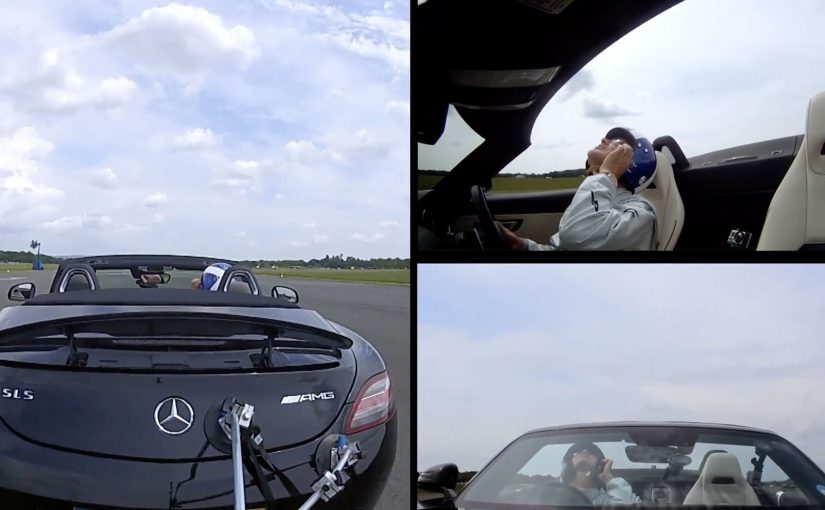
Mercedes-Benz recently uploaded a video of former Formula 1 driver David Coulthard and pro-golfer Jake Shepherd setting a Guinness World Record with a Mercedes-Benz SLS AMG Roadster.

To set the record, Coulthard caught a golf ball hit by Shepherd while driving. The ball was traveling at 178mph and was caught 275 metres from the tee, setting the record for the farthest golf shot caught in a moving car. At the time of posting, the video had already crossed the one-million-view mark within days.

A record attempt built on timing and trust

The mechanism is clean and measurable: a golfer launches a high-speed drive down a runway, a driver accelerates to meet its trajectory, and the open cockpit becomes the “catcher’s mitt”. If the car, speed, and timing are even slightly off, the attempt fails in a very visible way.

In performance-led automotive marketing, certified stunts turn engineering credibility into a piece of entertainment people want to pass on.

The real question is whether your proof is visible enough that the audience can judge it without trusting your narration.

Because you can clearly see whether it worked, the performance claim feels earned rather than explained.

Why it lands

It turns abstract performance into a single, replayable challenge with clear stakes, and then lets Guinness define what “success” means.

Extractable takeaway: World-record style stunts work as marketing when the measurement is simple, the failure mode is obvious, and third-party verification turns spectacle into credible proof.

It makes performance legible. Horsepower and handling are abstract until you attach them to a task with consequences. A moving catch at extreme speed is instantly understood.

It borrows external validation. The Guinness framing gives the clip a built-in reason to exist beyond “brand content”. It signals that this is not just a cool shot, it is a verified attempt with a defined outcome.

It is engineered for replay. The audience watches once for disbelief, then again for mechanics: speed, distance, and the exact moment the ball drops into the car.

Borrowable moves from the record attempt

  • Anchor the story to a number. Distance, speed, and a named record create instant stakes.
  • Make the “proof moment” unmissable. The catch is the single frame people share, and the decisive proof that the claim happened.
  • Use experts as the interface. Specialist talent makes the impossible feel attempted rather than faked.
  • Build the edit around clarity. Viewers should understand what success looks like before it happens.

A few fast answers before you act

What record did Mercedes-Benz, Coulthard, and Shepherd set?

The farthest golf shot caught in a moving car, using a Mercedes-Benz SLS AMG Roadster.

What were the headline numbers?

The drive was clocked at 178mph and was caught 275 metres from the tee.

Why does Guinness World Records matter here?

It provides an external definition of “success” and a trusted validation layer that separates a stunt from a simple brand claim.

What is the business intent behind a stunt like this?

To make vehicle performance feel tangible and memorable, while generating earned reach through a shareable “did you see that?” moment.

What is the most transferable lesson?

If you want proof to travel, wrap it in a single measurable challenge, show the decisive moment clearly, and keep the explanation simple enough to repeat.

KLM: Fly2Miami Dance Party

In the past couple of years, airlines like KLM, SAS, Lufthansa and Air China have pushed social media beyond “posting and promoting” by turning it into a stage for real-world moments.

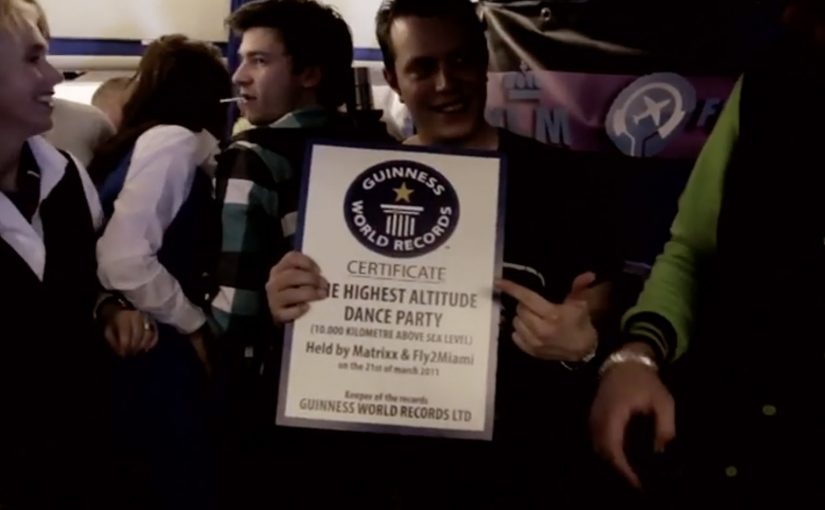
In its Fly2Miami campaign, KLM creates a wave of buzz by hosting a record-billed, meaning promoted as record-setting, in-flight dance party at 35,000 feet, tied to the launch of a new non-stop route from Amsterdam to Miami.

A route announcement that becomes a public challenge

It starts with KLM announcing the new service. Dutch DJ Seid van Riel and producer Wilco Jung tweet KLM asking if the inaugural flight can move up by a week so they can make a Miami music festival. KLM replies with a challenge: fill the plane, and KLM will reschedule. The flight sells out within hours.

How the mechanic works

Mechanically, KLM turns a scheduling request into a participatory social goal with a clear payoff. People do not just “like” the announcement. They help unlock the outcome by committing to seats, then join a one-off experience that can only happen because the flight exists.

In airline route launches, social stunts work best when they turn a schedule announcement into a shared story people can join.

Why it lands

The genius is not the party alone. It is the sequence: a believable trigger (a tweet), a public condition (fill the plane), a fast-resolution arc (sold out), then a payoff that photographs and travels. It works because the public condition turns individual bookings into visible momentum, making the payoff feel earned rather than bought. The campaign makes KLM feel responsive, playful, and culturally plugged in, without needing to shout about fares.

Extractable takeaway: When the condition is public and the payoff is inseparable from the product, participation becomes both demand and distribution, because people feel they helped make the outcome real.

What KLM is really buying

This is conversion disguised as entertainment. The “buzz” is a byproduct of a very practical outcome: a plane filled with the right kind of passengers, at the right time, with a story worth retelling. The real question is whether your stunt pulls demand forward inside the product, or just borrows attention for a day. By “retellability,” I mean how easily the story can be repeated accurately in one sentence and shared without extra explanation. If the Guinness claim is how it was billed, that label simply amplifies the retellability.

Route-launch moves worth copying

  • Start with a real trigger. A genuine request beats a manufactured “activation” premise.
  • Set one public condition. A simple target (fill the plane) creates momentum and accountability.
  • Make the payoff inseparable from the product. The experience must only be possible because your product exists.
  • Design for a tight story arc. Setup, challenge, resolution, payoff. No fluff.

A few fast answers before you act

What is Fly2Miami in one line?

A route launch turned into a Twitter-fueled “fill the plane” challenge, culminating in an in-flight dance party on the inaugural Amsterdam to Miami service.

What is the core mechanism?

A public conditional promise: if the community fills the flight fast enough, KLM changes the schedule and delivers a one-off onboard experience.

Why is the “sold out in hours” detail important?

Because it proves participation was real, not symbolic. It converts attention into bookings, then turns the bookings into a story.

What makes the challenge believable?

A condition that is simple to verify and directly tied to the product, like filling seats, keeps the story grounded and prevents it from feeling like a manufactured “activation.”

What is the transferable lesson for other brands?

Turn a product moment into a challenge with a clear condition and a tangible payoff, then let the audience do the distribution by earning the outcome.