
TV Viewing: Super Bowl Meets HoloLens

TV viewing is overdue for a real change

The TV viewing experience does not change drastically for years. Bigger screens, better resolution, smarter interfaces. But the core behavior stays familiar.

That is why sophisticated headsets like Microsoft HoloLens feel like a genuine breakpoint.

They do not just improve the screen. They change the environment around it.

Microsoft and the NFL re-imagine the Super Bowl

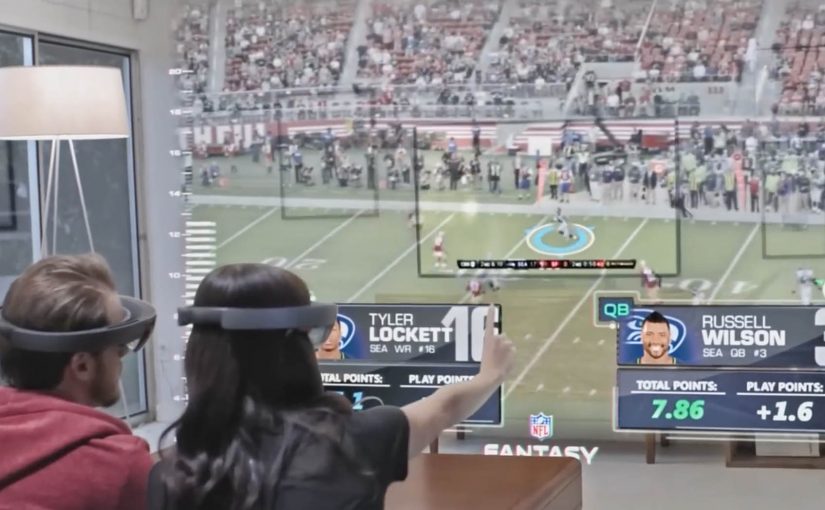
In a recently released video, Microsoft and the NFL re-imagine how a Super Bowl game could be watched with multiple friends and family members.

The scenario pushes beyond passive viewing. It turns the living room into an interactive layer, where the game experience becomes more immersive, more social, and more spatial.

By spatial, I mean the content is anchored to the room, not confined to the TV frame.

This is the kind of concept that makes the future of TV feel tangible.

In mass-market entertainment, the constraint is not what immersive concepts can show, but when consumer hardware becomes affordable, comfortable, and mainstream.

Why this lands for co-viewing

TV should prioritize co-viewing, meaning multiple people watching and reacting together in the same room, because a shared, spatial layer creates viewer control that a single rectangle cannot. The real question is whether you are designing for shared viewer control in the room, or just adding data overlays to a screen.

Extractable takeaway: When you move sports content into the room, design the experience around shared reference points, lightweight interaction, and conversation pacing, not around more screen real estate.

Immersive viewing is real. Consumer timing is not

The video shows how immersive TV watching can get. But Microsoft is not fast-tracking HoloLens for consumer consumption.

For now, only developers can order HoloLens, shipping this year.

No one knows when consumers get access, or when scenarios like this become a reality.

That uncertainty is part of the story. The vision is clear. The rollout timeline is not.

Steal these design cues for living-room sports

  • Design for the room. Treat the TV as one surface among many, then anchor the key moments and data where people naturally look and point.
  • Make co-viewing explicit. Support multiple viewers and viewpoints, so participation feels shared instead of “one person driving.”
  • Prototype for constraints. Assume headsets stay niche for a while, and test what still works when only one person has the device.

A few fast answers before you act

Is this still “TV” or something else?

It starts as TV content, but behaves more like a shared, spatial experience than a single screen.

What is the core shift headsets enable?

They move content off the rectangle and into the room, so viewing becomes environmental and interactive.

What is the biggest constraint right now?

Availability and consumer readiness. Until mainstream hardware adoption happens, this remains concept-led.

What should experience designers take from this?

Design for co-viewing and spatial context. Multiple people, multiple viewpoints, and shared interaction become first-class requirements.

What should you prototype first?

Prototype the simplest “shared moments” layer, so two to four people can compare and discuss the same play without anyone leaving the game flow.

Foxtel: The Alert Shirt

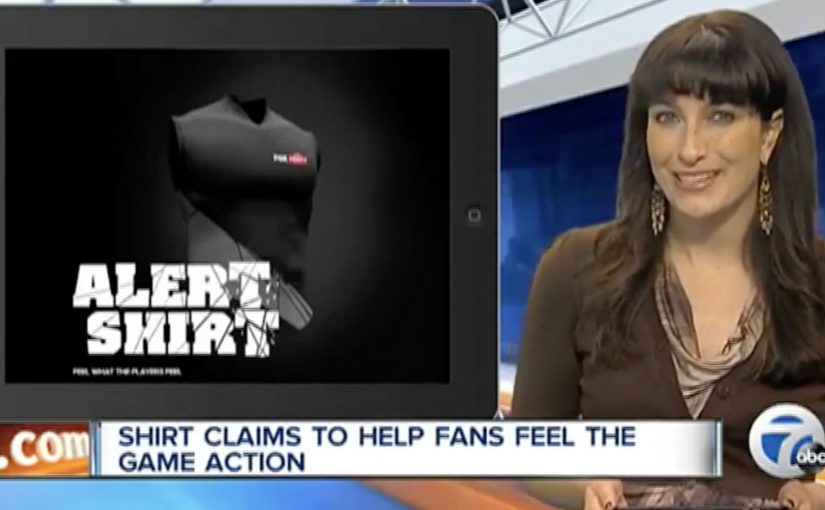
In September 2012, London fashion house CuteCircuit launched a wearable, sharable, programmable tshirt. Then in 2013, Durex Australia unveiled their wearable electronic underwear that allowed touch to be transferred over the internet. Now joining this growing trend of wearable electronic clothing is the Alert Shirt from Australian telecommunications company Foxtel.

Loyal Foxtel customers can use this special shirt to experience in real time some of the physical sensations their favorite players have on the field, including:

  • Pressure: A thumping heartbeat
  • Impact: The shock of a big hit
  • Adrenalin: An intense rush of blood
  • Exhaustion: Lungs burning with effort
  • Despair: A sudden sinking feeling

The data is transmitted via Bluetooth from smartphone app, and the shirt is powered by a lithium polymer cell battery.

From second-screen to second-skin

The mechanism is a clean translation layer. Live game moments are captured as data, the app receives them, and the shirt turns those signals into physical feedback. The experience is not about watching harder. It is about feeling the sport in parallel with the broadcast.

In subscription sports media, the strategic job is retention. The best fan experiences make the service feel like access to something you cannot get anywhere else.

Why it lands

This idea works because it turns fandom into a bodily cue, not just a viewing habit. It also frames “technology” as something you wear once, then forget. When it is working, the interface disappears and the sensation becomes the message.

Extractable takeaway: If you want to deepen engagement, do not add more features to the screen. Translate key moments into a new sensory channel that runs alongside the core experience, and make activation as close to effortless as possible.

What Foxtel is really testing

Beyond the spectacle, this is a trial of emotional stickiness. By emotional stickiness, the point is simple: give fans a stronger felt reason to come back for the live broadcast. The real question is whether that added intensity is strong enough to make Foxtel feel like the only place to experience the match properly. If the shirt can make a live match feel more intense at home, it creates a reason to watch live, to watch longer, and to choose the broadcast that supports the experience.

What sports broadcasters can steal from this

  • Design the sensation vocabulary. Map data to feelings in a way users can understand instantly.
  • Make the phone a bridge, not the destination. Use the app to pair and translate, then let the wearable carry the moment.
  • Keep the promise specific. Heartbeat, hit, exhaustion. Concrete signals beat vague “immersive” claims.
  • Build for live viewing. The value rises when timing is tight and the feedback feels synchronous.

A few fast answers before you act

What is the Foxtel Alert Shirt?

It is a connected shirt that receives live match signals via a Bluetooth smartphone app and converts them into physical sensations so fans can feel key moments in real time.

What problem does it solve for a broadcaster?

It makes the broadcast feel exclusive and more emotionally intense, which can support loyalty and repeat live viewing.

Why use physical sensations instead of more on-screen stats?

Because sensations do not compete with the main viewing experience. They add a parallel layer without asking the fan to look away.

What makes this kind of wearable feel credible?

Clear mappings between events and sensations, low setup friction, and tight timing so feedback feels connected to the moment.

How can another brand apply the pattern?

Choose a live experience with high emotion, capture a small set of meaningful signals, then translate them into a simple, repeatable sensory vocabulary.