
Volkswagen: Image Search SEO as an “Organic Ad”

When the “ad” is the search results page

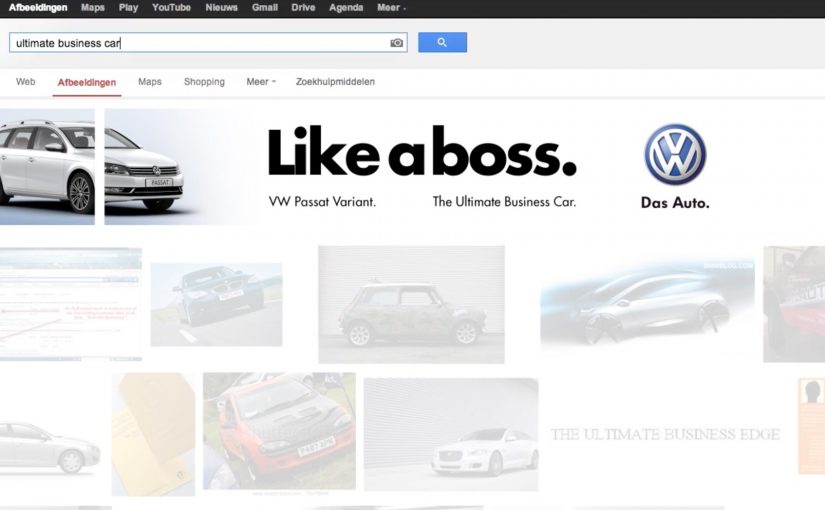
Everyday millions of people are searching for products and brands on Google. So in this latest example of search optimisation, SEA Team from UK created a search engine advertising campaign for Volkswagen which positioned the car in a unique “organic ad” created by optimising the first five individual URLs of a Google Image Search.

By “organic ad” here, I mean unpaid image results arranged to read like a single designed creative.

The campaign does feel realistic but when I searched for “ultimate business car”, I got only images from people posting about the campaign.

The hack: assemble a creative out of ranked tiles

The idea is essentially compositional SEO. By compositional SEO, I mean deliberately ranking separate assets so the grid reads as one coherent “ad.” You do not buy a placement. You engineer multiple image results so the interface itself becomes the creative. The medium is the interface people already trust.

In consumer brands and automotive marketing, this only holds when the search behavior is stable enough to be predictable.

Why it is both clever and fragile

It feels native because it lives inside an everyday behavior. Searching. But the moment the campaign becomes the story, the query gets polluted. That contamination is when coverage and commentary replace the normal mix of competing results.

Extractable takeaway: If your “creative” depends on organic authenticity, assume the interface will amplify attention first and destroy repeatability second.

What this is really trying to achieve

The real question is whether you can borrow organic credibility without turning the query into a PR artifact.

Borrow the credibility of organic results while delivering the impact of a designed creative. A brand moment that lives exactly where intent lives. It is clever, but I would not treat it as a repeatable acquisition lever.

Steal the container, not the banner

  • Use interface-level creativity. Sometimes the container is the canvas.
  • Plan for contamination. Once the stunt spreads, organic authenticity degrades fast.
  • Choose mechanics that survive attention. Pick queries where the effect can outlive press and copycats.

A few fast answers before you act

What was the Volkswagen “organic ad” concept?

A campaign that optimized the first five source URLs in a Google Image Search so the image grid formed a single Volkswagen creative.

Was this paid search?

No. The idea is to engineer multiple image results so the grid becomes the creative, rather than buying a placement.

Who created it?

The post credits SEA Team from the UK.

Why does it feel realistic at first?

Because it appears inside an organic search behavior and uses the familiar image-results interface as the placement.

What problem did the post observe when trying it later?

Searching for “ultimate business car” returned mostly images of people posting about the campaign, rather than a clean, normal-looking result set.
Happy Holiday Videos 2012: Agency Stunts

Welcome back. Hope everyone had a great holiday season. Now for a great start to 2013.

Taking off from my last post, here are a series of holiday action videos created by ad agencies around the world in their lead up to Christmas 2012. By “holiday action videos,” I mean greetings built around a simple interaction or trigger with a visible payoff.

Holiday greetings that behave like products

The mechanism across this set is consistent. Use the “holiday card” moment as permission to ship something people can experience, not just watch. A hacked player, a tweet-triggered donation, a synchronized “orchestra,” a physical gag product.

In global agency culture, the holiday card is a low-risk moment to test interactive mechanics and craft that can later show up in bigger client work.

Why this format keeps working

These pieces earn attention because they trade greeting-card sentiment for an observable action. The real question is whether your greeting demonstrates a capability people can experience, not just a sentiment they can scroll past. You should treat the holiday card as a tiny product launch, not a branded message. The viewer is not only receiving wishes. They are triggering something, learning something, or being surprised by a mechanism that is simple enough to retell.

Extractable takeaway: If you want something to travel during peak-season noise, design a one-step interaction with a visible payoff, and make the payoff describable in a single sentence. That is retellability, meaning a friend can summarize it in one sentence.

Maurice Lévy’s Digital Wishes by Publicis Groupe

Maurice Lévy, the chairman and chief executive of Publicis Groupe, traditionally records a holiday greeting-card video. This year, through a special deal with YouTube, Publicis modified the function buttons of the video player and embed tricks into what seems like another long, boring address by an ad industry veteran.

TwinterWonderland by 360i

To celebrate the arrival of the holiday season and provide assistance to those affected by Hurricane Sandy, 360i wanted to do something big. For every #TwinterWonderland tweet they received, 360i donated $5 to an aid organization helping with the post-Sandy cleanup effort.

25th Anniversary Holiday CompuCard by TBWA\TORONTO

To celebrate their 25th anniversary, TBWA\TORONTO brought in their digital expert from 1988, who then, through an e-card, tried to capture the spirit of their past along with their digital future.

Buzzed Buzzer by Havas Worldwide Chicago

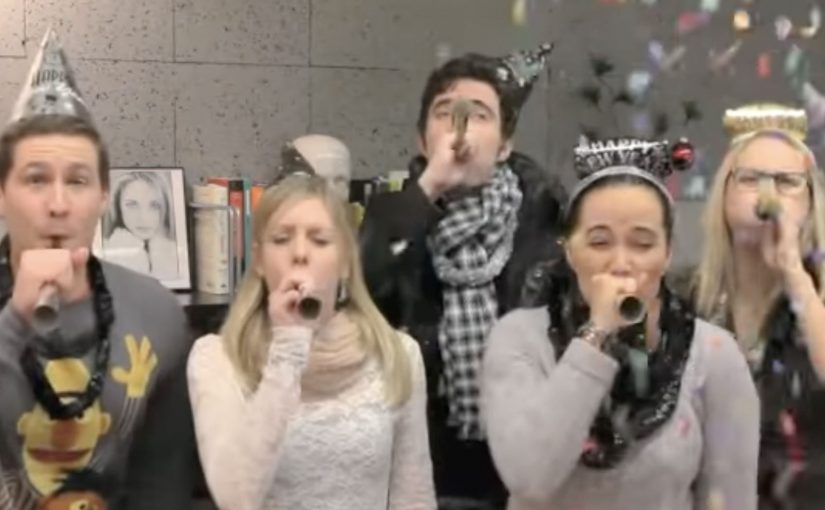
The first New Years Eve noise maker that only works when you’re drunk.

Christmas carol played on food by FullSIX Spain

To wish happy new year to customers and friends, FullSIX transformed typical Spanish Christmas food into a carol-playing piano.

Click here to watch video on the AdsSpot website.

The Snow Machine by Weapon7

Passers-by were invited to Tweet #snow to @thesnowmachine Twitter account. For every tweet received, the machine gave ten seconds of snow flurry. The event ran all day, was seen by thousands of people and generated over one thousand tweets.

Stealable patterns for next year’s greeting

  • Give the audience one trigger. One hashtag, one button, one simple mechanic.
  • Make the payoff visible. Something changes immediately, on-screen or in the real world.
  • Design for retellability. If the idea cannot be summarized in one sentence, it will not spread.
  • Let craft do the selling. Use the holiday excuse to demonstrate capability, not just sentiment.

A few fast answers before you act

What makes “holiday action videos” different from normal holiday ads?

They are built around a visible action or interaction. The greeting is the excuse. The mechanism is what people experience, talk about, and share.

Why do agencies use holiday cards as a playground for experimentation?

The stakes are lower and the audience is receptive, so it is easier to try unusual formats, technical tricks, and interactive mechanics that would be harder to justify elsewhere.

What is the common mechanism across the strongest examples?

One clear trigger and one clear payoff. A hacked player that surprises you, a tweet that causes a donation, a simple “instrument” that performs when activated.

How do you keep it from feeling like a gimmick?

Anchor the interaction in a human reward. Delight, generosity, togetherness, or a simple shared joke. Then keep friction low so the idea survives first contact.

How do you test retellability before you publish?

Ask someone outside the project to explain the idea back to you after a 10-second description. If they cannot say the trigger and payoff in one sentence, simplify the mechanic.

Red Stripe Musical Extravaganza

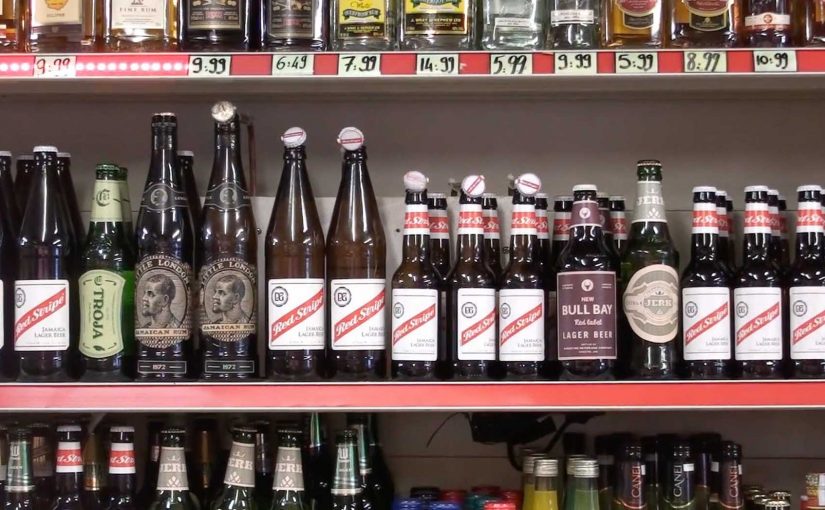
Red Stripe, a Jamaican lager brand, transforms an ordinary-looking East London corner shop into a singing, dancing musical extravaganza. Products across the shop turn into instruments that burst into a melody when a customer selects a Red Stripe. Noodle pots become maracas. Bottles turn into trumpets. Cans become xylophones.

To capture the surprise, 10 hidden cameras record customer reactions as the shop “comes alive.”

The real question is how you turn a routine purchase into a moment people want to retell and share.

This kind of retail theatre works best when the shopper triggers the show through a product choice, and the documentation is designed to scale the moment beyond the store.

The shop becomes the media

This is not a poster on a wall. It is the environment itself performing. The moment of selection triggers the show. The shelf becomes the stage.

That shift matters because it makes the brand moment inseparable from the act of buying. It is shopper marketing that feels like entertainment, not persuasion. Here, shopper marketing means designing the buying environment so the act of choosing the product creates the brand experience.

The trigger is the product choice

The smartest part is the mechanic. Nothing happens until the customer chooses the product. That makes the experience feel personalised, even though it is engineered. Because the trigger is the shopper’s own choice, the surprise reads as a reward, not a push.

It also makes the story instantly explainable. “When you pick up a Red Stripe, the shop turns into a band.”

If you can explain the trigger in one sentence and show real reactions, the activation comes with built-in distribution.

In retail and FMCG environments, the point-of-sale moment is where intent becomes action, and where a brand can earn attention without interrupting it.

Why hidden cameras make the idea travel

The in-store performance is powerful, but it is local. The video is what scales it. Real reactions signal authenticity, and the format becomes shareable proof that the stunt actually happens.

Extractable takeaway: If you want the idea to travel, design the filmed proof as part of the concept. Authentic reactions do the credibility work that polished edits cannot.

Steal the point-of-sale trigger

  • Trigger at the shelf. Make the point-of-sale moment the trigger, not the end of the journey.
  • Instrument the environment. Convert ordinary objects into a surprising behaviour, so the setting becomes memorable.
  • Film for scale. Capture genuine reactions, then let the video do the distribution work.

A few fast answers before you act

What happens in the Red Stripe Musical Extravaganza?

An East London corner shop turns into a musical performance. Shop items become instruments that play when a customer selects a Red Stripe.

What turns into instruments?

Noodle pots become maracas. Bottles become trumpets. Cans become xylophones.

How is it captured?

Ten hidden cameras record customer reactions.

What is the core mechanic that makes it work?

The product selection triggers the performance, so the “brand moment” happens at the exact point of purchase.