
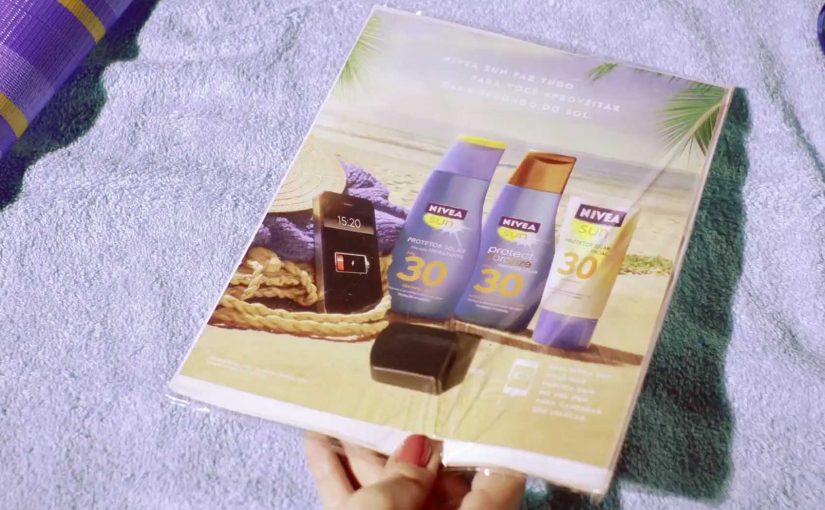
NIVEA: Solar Ad Charger

You are on the beach, your battery is dying, and the solution is sitting inside a magazine. NIVEA Sun and Draftfcb Brazil built a print ad insert with real solar panels and a USB port, so beachgoers could plug in and charge while staying in the sun.

The mechanism is the message. The ad is not “about” a product benefit. It behaves like one. Put it in sunlight, connect your phone, and it becomes a small piece of beach kit.

In consumer brand marketing, the most memorable activations turn a media placement into a useful object that fits a real moment of need.

The real question is whether you can make the medium do the job your copy normally tries to do.

This kind of utility-first work is worth copying because it earns attention by solving something small, fast, and real.

Everything in the context ties together cleanly. Sun. Beach. Sunscreen. Mobile phone. Solar charger. The usefulness makes the brand feel present without asking for attention, because the attention arrives naturally once the ad starts solving a problem.

When “print” becomes a product

This is a simple but important shift. The ad is no longer a container for persuasion. It is a container for utility. That makes the experience inherently shareable, because the story people retell is not “I saw an ad”. It is “I charged my phone with a magazine”.

Why this idea lands on a Brazilian beach

Beach time is long, bright, and social. It also creates a predictable friction point. Phones run out of battery, and leaving the spot to find power breaks the day. A solar-powered insert fits the environment and the behaviour, so the concept feels obvious in hindsight.

Extractable takeaway: When the environment already supplies the input, design the interaction so the payoff arrives with almost no explanation.

How to reuse the Solar Ad Charger pattern

  • Start with a real constraint. Battery anxiety is a better brief than “increase awareness”.
  • Let the medium carry the meaning. Solar charging in sunlight communicates the sun story instantly.
  • Make the interaction self-explanatory. A USB port is a universal instruction set.
  • Design for the “tellable moment”. A tellable moment is an interaction someone can retell in one sentence, without explaining the ad first.

A few fast answers before you act

What is the NIVEA Solar Ad Charger?

It is a magazine ad insert created for NIVEA Sun in Brazil that includes thin solar panels and a USB port, allowing readers to charge a phone using sunlight.

Why does this count as interactive advertising?

Because the viewer has to use it. The interaction is physical and immediate. Place it in sun, connect a cable, and the ad performs a function rather than only communicating a claim.

What makes the idea feel so “on brand”?

The utility is inseparable from the product context. Sunscreen is used in the sun. The charger also only works in the sun. The message and the mechanic are the same thing.

What is the main lesson for FMCG launches?

If you can turn a placement into a small, relevant tool, you shift from attention-seeking to value-giving. That typically increases recall, sharing, and positive brand association without needing complex explanation.

What is the most common pitfall with utility ads?

Overengineering. If it requires special setup, fragile components, or unclear instructions, people will not try it. Simple inputs and fast payoff matter more than novelty.
NIVEA: Deo Stress Test

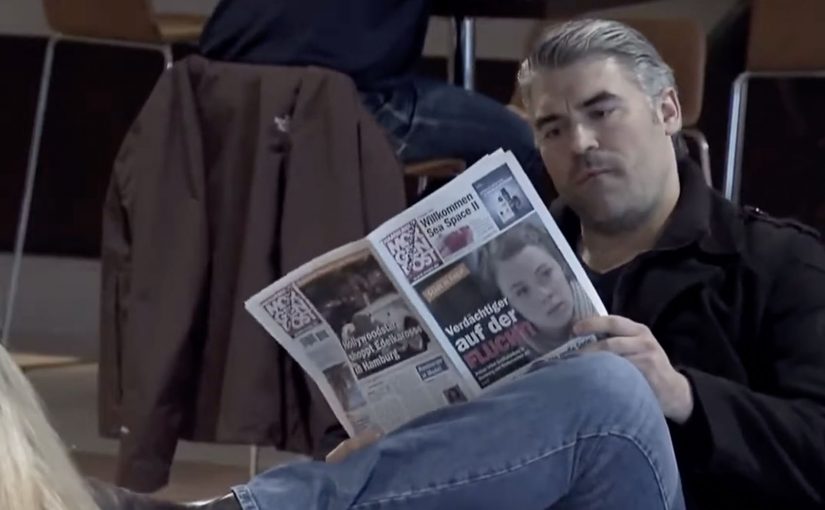
A woman waits in an airport lounge. A newspaper lands nearby. Her face is on the cover, framed as a dangerous suspect. Seconds later, a TV broadcast repeats the same “wanted” story. The room shifts. People stare. The pressure spikes.

This is the “Stress Test” prank used to launch NIVEA Deo Stress Protect in Germany. The set-up covertly photographs real passengers, then inserts their images into a rapid sequence of believable media moments. A fake front page. A fake news segment. A looming “security” approach. Then the reveal. The suitcase opens and the product appears as the punchline.

Prankvertising is a brand activation that creates a real-world surprise for unsuspecting participants, then packages the reaction as content. It is only worth doing when the prank is tightly controlled, the audience understands the logic, and the reveal cleanly connects the stress to the product promise.

Turning “stress sweat” into something you can feel

Stress-induced sweating is hard to demonstrate in advertising without sounding clinical. This campaign solves that with one blunt translation. Make stress visible. Make it public. Make it uncomfortable. Then position the deodorant as the relief valve.

In European FMCG launches, where functional claims are easy to ignore, a live stunt can turn a product benefit into a story people retell.

The real question is whether the stress you trigger is in service of the product truth, or just spectacle that turns the audience against you.

Why this landed, and why it drew criticism

The mechanism is instantly legible, so viewers stay for the reactions. But that same realism creates a risk. If the line between tension and harm feels too thin, the brand gets attention for the wrong reason. Trade coverage at the time noted both the viral momentum and the backlash, which is the trade-off with high-intensity stunts.

Extractable takeaway: When you use real-world tension to dramatize a benefit, the reveal has to resolve that tension fast, and make the product the clear relief.

Borrow the stunt without inheriting the downside

  • Anchor the stunt to a single product truth. Here it is stress. Everything in the sequence reinforces it.
  • Make the reveal unmissable. The product has to arrive as the resolution, not as an afterthought.
  • Design an ethical escape hatch. Keep the duration short, avoid escalating beyond what you can safely control, and ensure participants are cared for immediately.
  • Pre-plan the criticism. If you choose fear as a lever, you must be ready to justify it and explain safeguards.

A few fast answers before you act

What happens in the NIVEA Deo “Stress Test” airport prank?

Unsuspecting passengers are covertly photographed and then confronted with fake media outputs that portray them as “wanted”. The tension builds until the reveal introduces NIVEA Stress Protect as the relief and the message.

What product benefit is this trying to dramatize?

Stress-induced sweating. The activation makes stress feel immediate and physical, then frames the deodorant as protection in high-pressure moments.

Who created the campaign?

Trade write-ups commonly credit Felix & Lamberti (Hamburg, Germany), with production credits listed in trade write-ups. Labamba is also mentioned as a partner in some execution notes and case material.

Why do stunts like this go viral?

They compress a clear story into a few minutes. Viewers understand the situation instantly, then watch for human reactions and the reveal.

What is the biggest risk with prankvertising?

Brand damage from perceived cruelty or unsafe escalation. If the audience thinks you harmed people for clicks, the message flips from “clever” to “reckless”.

Flashmob Marketing Hits: April 2012

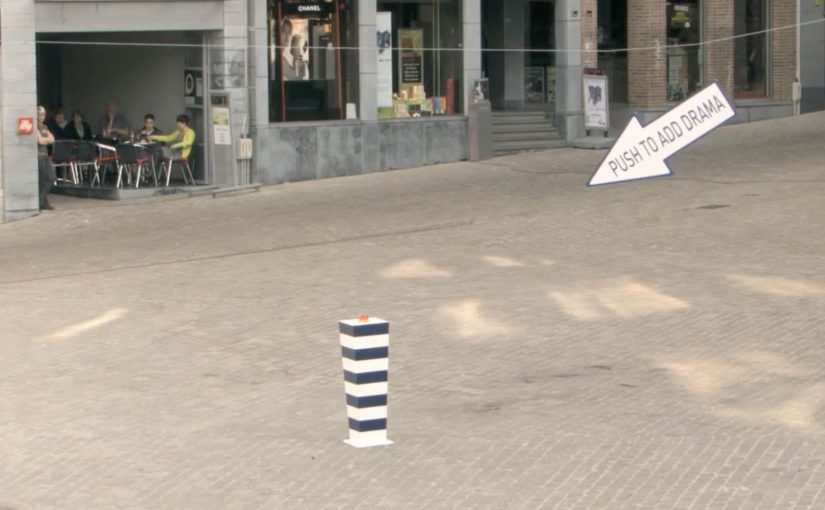
A big red push button sits in a quiet Flemish square. A sign says “Push to add drama”. Someone presses it, and the street turns into a live TV scene.

Flashmob marketing has been quite a fad in the last weeks. If you are unfamiliar with the concept, a flashmob is a large group of people who assemble suddenly in a public place, perform an unusual and pointless act for a brief time and then disperse. The whole act is normally recorded on video and then put on the web to generate more buzz.

Flash mobs can convert physical spectacle into shareable media without buying every impression. Here, “earned attention” means reach generated by people choosing to watch and share, rather than by paid placement.

Three street moments worth watching again

Daily dose of drama

To launch their new digital channel in Belgium, TNT placed a big red push button in a quiet Flemish square. A sign with the text “Push to add drama” invited people to use the button. And then the “ordinary day” collapses into staged chaos.

Why it lands: the invitation is frictionless, the payoff is immediate, and the viewer at home gets the same shock that the passer-by gets on the street.

The worst breath in the world

Tic Tac turns a simple “can you help me with directions” moment into social dread. A lost tourist asks for help in a busy square. Then, one person after another reacts as if the breath is so bad it triggers an apocalyptic chain reaction.

Why it lands: it weaponizes a universal fear, then exaggerates it so far that embarrassment becomes comedy. The crowd reaction becomes the story.

The Wouaaah Effect

For its Q10 Plus product, NIVEA in France creates a playful attention ambush on the streets of Paris. An unsuspecting woman tries a cream sample, walks on, and is suddenly met by a sequence of people lavishing her with attention.

Why it lands: it makes a product promise feel physical. The benefit is not “told”. It is acted out as a mini social fantasy.

Why the pattern behind the fad travels

The mechanism is simple. Create a one-line invitation, trigger a public spectacle, and film genuine reactions from the “mark” (the unsuspecting participant who triggers the stunt) and the bystanders. The distribution is the video, not the street corner. The street corner is the credibility engine because the live setting makes the reactions feel real, which makes the clip easier to share.

Extractable takeaway: If the trigger is simple and the payoff is instantly legible, real human reactions carry the persuasion when the video leaves the street.

In European consumer marketing teams trying to earn reach through social sharing, the street is only the proof point, not the media plan.

The real question is whether your spectacle earns a story people want to retell, or just a clip they scroll past.

What the brands are buying

These are not careful, message-heavy campaigns. They are attention accelerators. Flash mob-style stunts are worth doing only when the payoff embodies a brand promise you can show through human reactions. The business intent is to earn reach through surprise and shareability, then let the brand borrow the emotional afterglow of the moment.

How to steal the good parts without copying the gimmick

  • Start with a legible trigger. One button. One question. One sampling moment.
  • Design the escalation curve. The first five seconds decide if people stay for the next thirty.
  • Make reactions the hero. The crowd is your proof and your punchline.
  • Give the video a clean “retell”. If the concept cannot be explained in one sentence, it will not travel fast.

A few fast answers before you act

What qualifies as a flash mob in marketing terms?

A staged public action that appears spontaneous to bystanders, is filmed for real reactions, and is distributed primarily as a video asset to generate buzz.

Why do flash mob videos spread more than many traditional ads?

They feel like captured reality. The viewer gets surprise, spectacle, and social proof in the same clip, which makes sharing feel like passing on entertainment, not advertising.

What is the biggest creative risk with flash mob marketing?

People can read it as forced or manipulative. If the trigger feels like a trick, the audience turns on it and the brand takes the hit.

How do you keep a flash mob idea brand-relevant?

Make the payoff embody the brand promise. Drama for a drama channel, breath anxiety for mints, and attention for a beauty benefit are all direct translations.

What is the practical “steal” for marketers who cannot stage a street stunt?

Borrow the structure. A simple trigger, a clear escalation, and authentic human reactions, then build it for a format that you can execute safely and repeatedly.