
Castrol: Vuvu Lyza

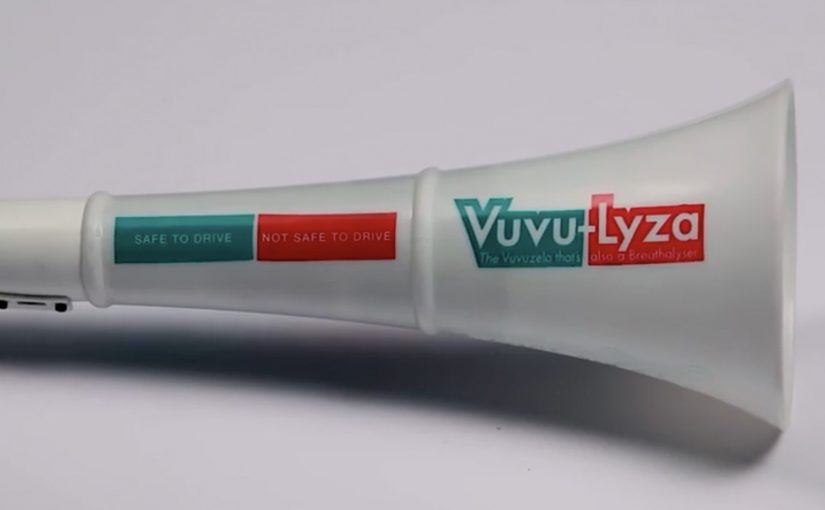
The breathalyser test is one of the most common ways to check alcohol levels, and it is also one of the most disliked. Castrol takes that friction point and fuses it with something fans actually enjoy using. The vuvuzela. The result is the Castrol Vuvu Lyza.

Positioned as a first-of-its-kind twist for South African drivers, the idea lets people enjoy the game and still make a safer call about getting home afterwards.

A safety tool disguised as fan gear

The core move is deliberately simple. Merge the breathalyser everybody hates with the vuvuzela everybody loves. The campaign turns a compliance moment into a ritual moment, by putting the test inside an object that already belongs in the match-day experience.

How the Vuvu Lyza works

After the game, drivers blow into the Vuvu Lyza like a normal vuvuzela. The breathalyser element then indicates whether they are above the legal drinking limit, described through an easy colour cue. Green means go. Red means no.

In road-safety communications, attaching a serious decision to a familiar social ritual can reduce resistance and increase follow-through.

Why this lands

This works because it removes the moral lecture and replaces it with a usable object. People do not feel policed. They feel equipped. The “hate” of a breath test is softened by the playfulness of fan culture, and the decision point becomes immediate, visible, and hard to rationalise away.

Extractable takeaway: If your message depends on behaviour change, hide the “compliance” inside an object people already want to use, then make the outcome binary and instantly readable.

What Castrol is really doing

Beyond awareness, this positions Castrol as a brand that shows up in everyday driving consequences, not just in engine performance claims. It also borrows the cultural loudness of football fandom to give road safety a shareable, talkable form.

The real question is how to get fans to self-check at the exact moment match-day emotion can override judgment.

What behaviour-change campaigns can steal

  • Merge pain with pleasure. Put the disliked behaviour inside a loved object or ritual.
  • Make the decision binary. One clear signal beats a nuanced message at the point of action.
  • Design for post-event reality. Build for the moment people actually make risky choices.
  • Let the object carry the story. A physical device is easier to demonstrate, film, and retell than a warning.

A few fast answers before you act

What is the Castrol Vuvu Lyza?

It is a vuvuzela adapted to include a breathalyser, intended to help drivers make a safer decision about driving after drinking.

How does it tell you if you should drive?

You blow into it, and the device indicates whether you are above the legal drinking limit using a simple colour signal described as green for go and red for no.

Why combine a breathalyser with a vuvuzela?

Because the vuvuzela is culturally familiar and fun, which lowers resistance to the breath test moment and makes the safety behaviour easier to adopt.

What’s the core campaign message?

Enjoy the game, then make a clear, safer call before getting behind the wheel.

What’s the biggest risk with this kind of activation?

If the device is not trusted, or the signal is unclear, the behavioural promise collapses. The tool has to feel reliable and instantly understandable.
Cape Town Tourism Facebook Holiday

Cape Town Tourism wanted to promote the unexpected side of Cape Town. All the small communities, never-heard of places and unearthed gems that can’t be found on Trip Advisor, Lonely Planet, Expedia, or even Google.

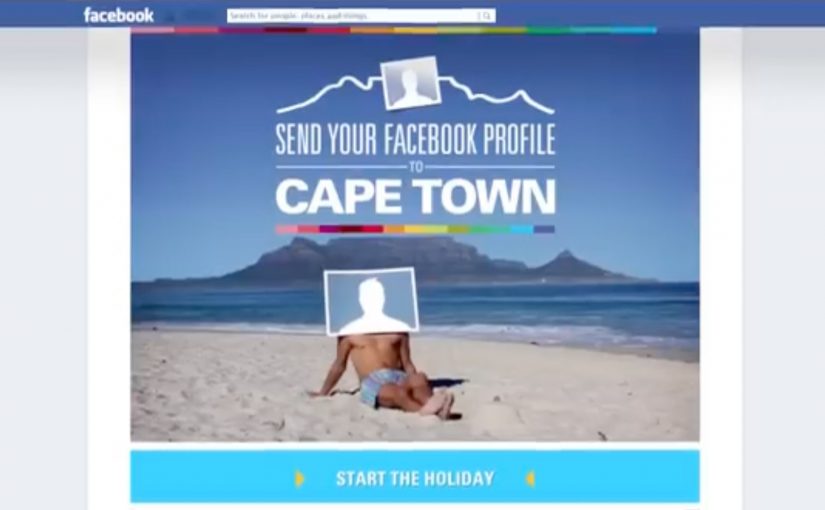
Since everyone could not be sent to Cape Town, people were allowed to send their Facebook profiles instead. Through a Facebook app users were given a virtual, tailor-made Cape Town holiday that exposed them to all the unexpected places. A few lucky winners even got to experience their Facebook profile’s holiday for themselves.

Why this idea fits tourism marketing right now

This is a smart twist on an old travel problem. Most destination marketing ends up showcasing the same highlights, using the same guidebook shorthand. Here, the hook is the opposite. The campaign is built around what standard lists miss, and it uses a person’s own Facebook profile as the input to make the recommendation feel personal. This is the right strategy for destination marketing because it turns generic discovery into personal discovery. That matters because using a person’s own profile as the input makes the destination feel more relevant before any trip is booked.

Extractable takeaway: When the audience becomes the input, discovery feels less like promotion and more like a recommendation built around personal relevance.

The pattern to steal is simple

For tourism brands trying to move beyond the same predictable shortlist, the challenge is making discovery feel personally relevant. The real question is how to make overlooked places feel worth exploring before someone ever books. If you want people to care about a place, product, or experience, give them a way to picture themselves inside it. This campaign does that in a very direct way. It takes something people already maintain daily, their Facebook profile, and turns it into a personalized route into discovery.

It also helps Cape Town Tourism promote the long tail. By long tail here, that means the lesser-known communities and hidden gems that do not show up in the usual places. Those places can finally get airtime because the experience is not optimized for the “top ten.” It is optimized for relevance.

A similar proof point from last year

Similarly last year, Obermutten a little and lovely mountain village from Switzerland was put on the world map through a very simple Facebook campaign. Check that out here.

What to steal for destination marketing

  • Let the audience be the input. Using a Facebook profile as the starting point makes the output feel personal, not promotional.
  • Sell the long tail, not the postcard. A personalised route gives “small communities and hidden gems” a real chance to surface.
  • Create an output people can compare. “Your Cape Town holiday” invites sharing because it is inherently personal and discussable.
  • Add a real-world payoff for a few. A small number of winners makes participation feel consequential, not just entertaining.

A few fast answers before you act

What is the Cape Town Tourism Facebook Holiday campaign?

It is a destination marketing idea that used a Facebook app to turn a user’s Facebook profile into a virtual, tailor-made Cape Town holiday.

What problem was Cape Town Tourism solving?

They wanted to promote the unexpected side of Cape Town. Smaller communities and hidden gems that are not easily found on mainstream travel platforms and guidebooks.

How did the Facebook profile app work at a high level?

Users submitted their Facebook profiles through the app, and the experience generated a personalized “holiday” that surfaced unexpected places based on that profile.

What made it shareable?

The user is part of the idea. The output is framed as “your” Cape Town holiday, which naturally invites comparison and conversation.

What is the broader takeaway for digital marketers in 2013?

Personal data can be turned into a story engine. When the audience becomes the input, relevance increases and discovery moves beyond the same predictable highlights.