
Coca-Cola: Cheer-O-Meter

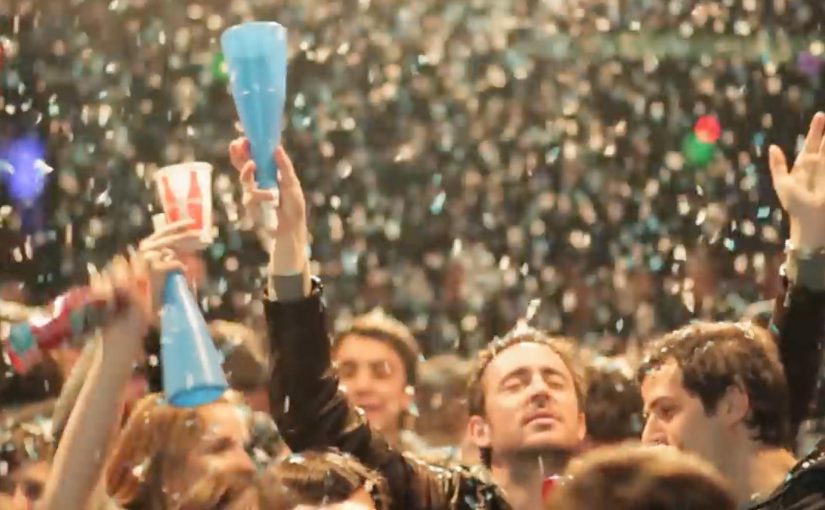
To promote the excitement around Copa America 2011, OgilvyAction worked with Coca-Cola to set up a giant screen in downtown Buenos Aires for fans to watch their favorite teams and provide unconditional cheer to the Argentinean National Team. But there was a catch. Sound sensors were installed to keep the screen on and if the fans stopped cheering, the screen would go blank.

The real question is whether you can make the crowd’s participation the switch that powers the experience.

Why this activation hits

The mechanic is brutally simple. Your cheering is not just encouraged. It is required. Here, an activation is a live brand experience that changes what the crowd can see based on what they do. Because the screen can die, the crowd self-organizes to keep the volume up, which makes “support” feel like a shared responsibility. In sports sponsorship and live-event marketing, conditional access is one of the fastest ways to turn spectators into participants.

Extractable takeaway: If you want participation, make it the required input for a real reward, and show the consequence instantly.

  • Clear rule. Cheer to keep the screen alive.
  • Immediate feedback loop. The crowd sees the consequence in real time.
  • Social amplification built in. People around you become part of the control system.

What marketers can reuse from the idea

This is a strong example of “participation as the power source”. Instead of adding a gimmick on top of the match, the match itself becomes the reward for participation. It also turns a brand message into a behavior, which tends to travel further than a tagline.

  • Make participation the power source. Tie the experience to an audience action instead of adding a side-gimmick.
  • Keep the reward “core”. Use the thing people already want as the payoff, not a separate prize.
  • Show consequences instantly. A visible feedback loop lets the crowd adjust behavior without instructions.

If participation does not change anything in the moment, it will read as decoration, not interactivity.


A few fast answers before you act

What is the Coca-Cola “Cheer-O-Meter”?

It is a live fan-screen activation in Buenos Aires for Copa America 2011 where sound sensors kept the match on screen only while fans kept cheering.

How did the sound-sensor mechanic work?

The cheering volume acted as the trigger. If it dropped too low, the screen went blank, pushing the crowd to keep the energy up.

Why is this effective as a brand experience?

Because it converts brand participation into a simple, memorable rule with instant consequences, and it makes the crowd feel responsible for the outcome.

What is the transferable pattern?

Create one clear rule, attach it to a real reward, then deliver immediate feedback so the audience understands their impact in the moment.
The Creative Ransom: Domain Hijack Job Hunt

In May 2010 an aspiring creative from the USA used Google to play upon the vanity of some top American creatives and land himself interviews and eventually a job.

Then in July 2011 a Dutch creative team created “The Twitter Hustle” to land a job with a big agency in the Netherlands.

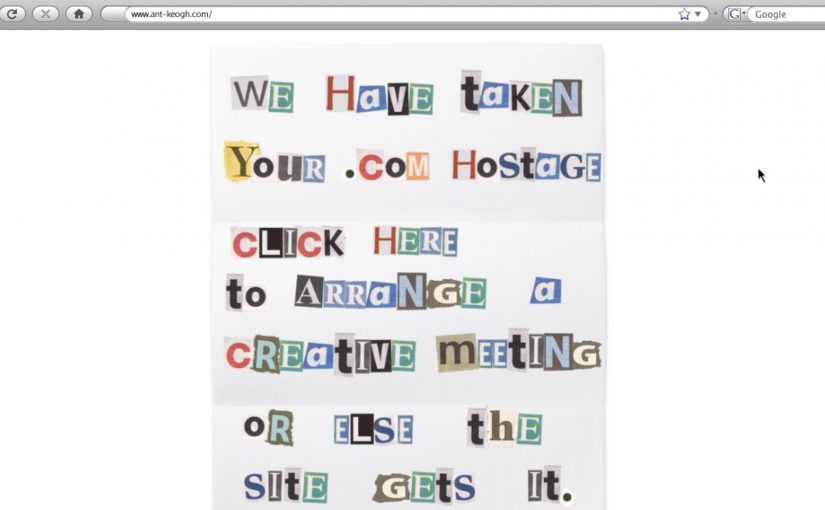
Now an Aussie creative team consisting of Andrew Grinter and Lee Spencer-Michaelsen take the job hunt to the next level. Their approach is to stand out from the crowd by buying domain names matching top creative directors in Melbourne, then sending ransom notes that point each target to their “hostage” URL.

The daring move gets them interviews. They are reported to have worn ski masks to those interviews, and still managed to get hired. The duo are also reportedly working for DTDigital, a division of Ogilvy Melbourne.

Ransom as a résumé

The mechanism is engineered interruption. First, choose a tiny list of people who can actually say “yes”. Next, buy the unclaimed name domains that would naturally belong to them. Then send a physical ransom note that forces a single action. Type the URL. When they land, the “ransom page” is really a portfolio pitch, personalised through the director’s own name.

In creative industry hiring markets where inbox outreach gets ignored, targeted disruption works when it is unmistakably personal and immediately resolves into craft.

Why it gets meetings

This is high-wire theatre with a simple psychological hook. You cannot half-notice your own name on a domain. The note creates curiosity and a tiny sense of urgency, and the landing page converts that spike of attention into proof of creative thinking.

Extractable takeaway: If you need decision-maker attention, design a one-to-one interruption that is impossible to confuse with spam, then make the first click deliver immediate evidence of your value.

The line between bold and dumb

There is a reason this one divides opinion. “Ransom” framing and identity-adjacent tactics can feel aggressive, even if the domains were available to buy. The stunt works as a story because it is extreme. That also makes it easy to copy badly.

The real question is whether the stunt creates enough admiration for the thinking before the intimidation becomes the headline.

What to steal without copying the threat

  • Steal the targeting. Make a short list of the only people who matter, and design for them.
  • Steal the personalisation. Use a bespoke hook that cannot be forwarded without losing its power.
  • Steal the proof-on-click. The first interaction should instantly demonstrate craft, not promise it.
  • Drop the menace. Keep the theatre, remove the coercion. Surprise beats intimidation.

A few fast answers before you act

What is “The Creative Ransom”?

A self-promotion job hunt where a Melbourne creative duo buys domain names matching senior creative directors, then uses ransom-style notes and landing pages to force a portfolio view and secure interviews.

What is the core mechanism?

Highly targeted interruption plus extreme personalisation. The target’s own name becomes the channel, and the landing page becomes the pitch.

Why does it work as a piece of communication?

It compresses a full narrative into one action. Open note. Type URL. See personalised page. The story is instantly retellable.

What should I copy from this, safely?

Copy the focus on a tiny list, the one-to-one hook, and the immediate proof of ability. Avoid coercive framing and anything that could be read as a threat.

What is a modern equivalent?

A personalised experience that appears exactly where a decision-maker already looks, then delivers unmistakable proof in seconds. Think bespoke microsites, tailored prototypes, or targeted creative drops, without the intimidation layer.

Forever Wild: YouTube Interventions

You click a trending video for a quick distraction, and suddenly the content you came for is interrupted by a stark message about rhino poaching. The contrast is the point. It forces you to notice what you normally scroll past.

Forever Wild, described as a no-budget anti-poaching initiative, wanted to make the illegal rhino horn trade feel urgent and push people to sign a petition intended for the US Congress. Ogilvy Cape Town responded with “YouTube Interventions”, remixing the format of popular videos so viewers looking for frivolous entertainment were confronted with the cost of their online attention.

A “YouTube intervention” is a deliberate disruption of an existing video viewing pattern. Instead of asking people to search for a cause film, the campaign inserts a cause message into what people are already watching, then uses that interruption to drive a clear action.

In global digital culture, the scarcest resource is attention, and the most effective cause work often borrows distribution from the very platforms that usually dilute serious messages.

The campaign’s urgency is framed through a common warning at the time, that rhinos could disappear within roughly a decade if poaching continued to escalate. Whether the viewer is convinced or sceptical, the interruption makes the question unavoidable. What are you spending your time on, and what does that choice enable?

The real question is whether you can borrow attention without breaking trust.

Why hijacking “silly” videos is the strategy

This idea does not compete for attention on merit alone. It piggybacks on attention that already exists. By choosing trending videos, the campaign meets people where their behaviour already is, then flips the emotional tone fast enough to create discomfort, reflection, and action.

Extractable takeaway: If you can’t buy reach, borrow an existing attention stream, then earn the right to ask for action with sharp contrast and a clear next step.

What the intervention format does better than a PSA

A normal PSA is easy to avoid. You skip it, scroll past it, or never choose it in the first place. An intervention changes the default. The viewer is already in viewing mode, already committed to watching something, and the disruption creates a brief window where a petition ask can actually land.

This is a better default than a traditional PSA when your biggest constraint is distribution, not storytelling.

Recognition that helped the idea travel

The work was described as being recognised in awards circuits in the period, including a Clio Awards shortlist and a Loeries medal for media innovation, which helped amplify the case beyond the initial view counts.

Practical steals from the intervention format

  • Borrow existing distribution. Put the message inside an attention stream people already trust and use.
  • Make the action immediate. Interruption without a clear next step is just shock.
  • Keep the device simple. The format should be explainable in one sentence.
  • Use contrast intentionally. Comedy or fluff next to crisis creates cognitive friction, and friction creates memory.

A few fast answers before you act

What are “YouTube Interventions” in this campaign?

They are remixed versions of trending videos that insert a rhino-poaching message into the viewing experience, then direct viewers to sign a petition.

Why target people watching frivolous content?

Because that is where volume lives. The campaign uses the audience’s existing behaviour and turns it into a moment of confrontation, rather than hoping people will seek out a serious film.

What problem does this solve for no-budget causes?

Distribution. Instead of paying for reach, the campaign borrows reach from content that is already spreading.

How does this avoid feeling like generic “shock advertising”?

By tying the disruption to a specific action. The message is not only “this is terrible”, it is “sign here”, with the interruption acting as the attention gate.

What is the biggest risk with intervention-style tactics?

Backlash. If the disruption feels deceptive or manipulative, viewers reject the message. The creative has to be transparent about why it is interrupting and what it wants people to do.