
Lacta: Love Messages on Real Bars

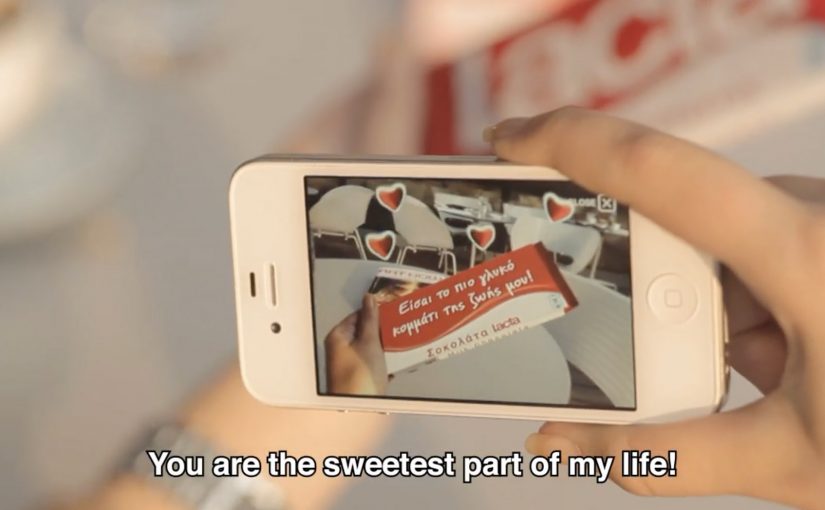
OgilvyOne Athens created another innovative campaign for Lacta Chocolate. This time, people write their own love messages and see them appear on real Lacta bars through an augmented reality mobile app.

The twist is that the message is not “published” online first. It is revealed on the physical product when the receiver scans the wrapper with the app, which turns a simple bar of chocolate into a personalized moment.

Click here to view some of the past Lacta Chocolate campaigns that are equally innovative.

How the AR message reveal works

The mechanism is a clean three-step loop. The sender composes a message in the app and chooses who it is for. The receiver is prompted to use the app too, then scans a Lacta bar to reveal the hidden message in augmented reality. Because the reveal depends on scanning the product, the experience is designed to connect emotion and purchase in the same gesture.

In FMCG gifting categories where love and ritual drive preference, adding a personal reveal layer can create differentiation without changing the core product.

Why it lands

It modernizes a familiar behavior, writing something personal on a gift, without losing the physicality of giving chocolate. The message feels private and earned because it only appears when the recipient holds a real bar in their hands and chooses to reveal it. That makes the brand’s role feel like an enabler of intimacy, not an interruption. That works because the product scan turns anticipation into part of the gift, which makes the interaction feel more meaningful than a standard message.

Extractable takeaway: If you want personalization to drive both attention and sales, tie the reveal to a physical trigger. Make the digital layer unlockable only through the product, so the magic moment and the transaction reinforce each other.

What Lacta is really optimizing for

The real question is how to make personalization pull product demand instead of floating as a nice digital extra.

This is built to turn gifting into repeatable behavior. One person sends a message, another person downloads the app, then the product becomes the key that unlocks the experience. That creates a loop that can scale through relationships rather than through media weight alone.

The strongest strategic choice here is keeping the chocolate bar as the gate to the experience, not just the branded wrapper around it.

What to steal for your own packaging-led digital work

  • Use the pack as the trigger. If the wrapper is the marker, the product stays central.
  • Make the reveal the reward. The moment of discovery is what people remember and retell.
  • Keep the steps simple. Create, send, scan. Anything more complex reduces participation.
  • Design for reciprocity. The best gifting mechanics invite the receiver to respond, not just consume.

A few fast answers before you act

What is the core idea of this Lacta campaign?

An AR mobile app that lets people write a love message that only appears when the recipient scans a real Lacta chocolate bar.

Why does tying the reveal to the physical bar matter?

It keeps the product as the gateway to the experience, so personalization supports purchase rather than replacing it.

What is the main emotional benefit versus a normal digital message?

The message feels more intimate because it is hidden and revealed in a physical moment, not broadcast in a feed.

Why not publish the message online first and then link to the product?

Because that would make the product secondary. Here, the chocolate bar is the access point, so the physical gift remains central to the experience.

What is the biggest execution risk with AR-on-pack ideas?

Friction. If install, scanning, or recognition is unreliable, the magic becomes disappointment. The reveal has to work fast and consistently.
Marmite: Bringing Home the Kiwis

A centenary gift that tastes like home

Sanitarium Marmite is a Kiwi staple and a national icon of 100 years. Today, one in five Kiwis live abroad. Many of these 600,000 Kiwis miss their Marmite, as it is hard to get overseas.

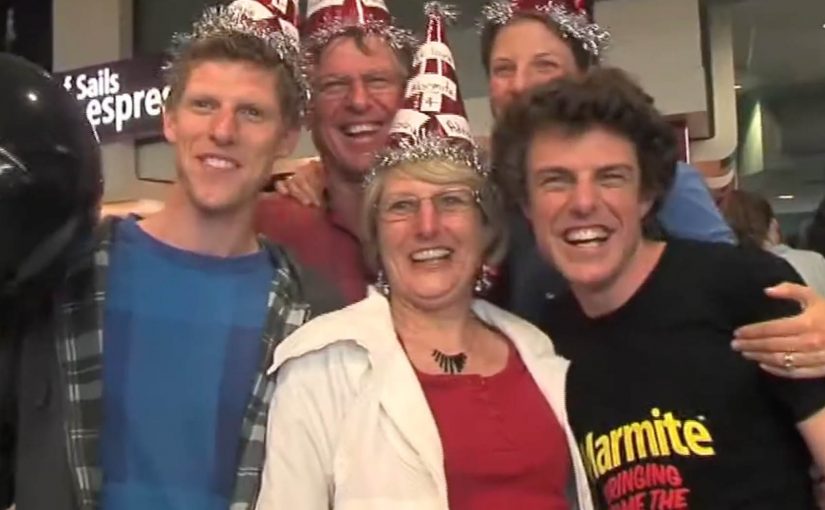
So to commemorate its 100th year in New Zealand, Ogilvy Auckland launched a contest which reunited long-lost Kiwis with their homeland and everything they love about it, including Marmite.

The mechanic: one-way tickets as a proof of intent

All the interested candidates had to do was tell the Marmite judges what makes them, or their loved ones, a deserving candidate to avail one of the 100 one-way free air tickets from anywhere in the globe. The one-way ticket is the proof of intent, because it commits the brand to the reunion, not just a symbolic gesture.

A diaspora is the portion of a country’s people living overseas, often staying emotionally tied to “home” through food, language, sport, and ritual.

Marmite’s “Bringing Home the Kiwis” is a centenary contest that offered 100 one-way flights to bring overseas New Zealanders back home, using the return itself as the campaign’s emotional centerpiece.

In small countries with a large diaspora, local brands can act as a bridge by enabling a real reunion.

Why it lands: it makes nostalgia actionable

Most “homesickness” marketing stays symbolic. This one turns longing into logistics. The prize is not merchandise. It is presence. That is why the story travels. It is instantly understandable, and emotionally high-stakes without feeling manufactured.

Extractable takeaway: When the emotion is separation, the strongest brand move is a mechanism that creates presence, not another object that points to it.

The business intent behind the generosity

The brand is buying disproportionate meaning. Marmite becomes a shorthand for “home,” and the campaign demonstrates it through a gesture people talk about long after the winners land.

It also solves a real friction point in the insight. If the product is hard to get abroad, then “bring them back” is a bolder way to dramatize what the brand represents.

This is the right kind of generosity when your brand promise is “home” and your audience’s friction is distance.

The real question is whether you are willing to make your positioning physically true for a small number of people, rather than symbolically true for everyone.

Nice idea, but it is clearly in the same family as “bring them home” diaspora campaigns, including JWT Argentina’s 2009 effort, titled “Bring Home the Argentinians”.

What to steal if you want a diaspora idea that is more than a slogan

  • Use a prize that embodies the insight. Flights beat gift packs when the emotion is separation.
  • Keep entry simple, but make the stories rich. Let candidates supply the narrative energy.
  • Build a clear number hook. “100 for 100 years” is easy to remember and retell.
  • Make the payoff visible. Arrivals and reunions are the credibility layer, not a voiceover.

A few fast answers before you act

What is Marmite’s Bringing Home the Kiwis campaign?

It is a centenary contest that offered 100 one-way flights from anywhere in the world to bring overseas New Zealanders back home. People nominate themselves or loved ones with a short story, tying the brand to the emotional idea of “home”.

Why does the “one-way ticket” prize work so well?

Because it turns nostalgia into logistics. The reward is presence, not merchandise, so the brand promise feels demonstrated rather than advertised.

Why is “100 for 100 years” a smart structure?

It is a simple number hook that is easy to remember and retell. It also makes the generosity feel purposeful instead of arbitrary.

What is the real business intent behind the generosity?

Marmite buys disproportionate meaning and becomes shorthand for “home,” while dramatizing a real friction point. It is hard to get abroad, so the campaign makes “home” the centerpiece.

What makes the story travel beyond New Zealand?

The payoff is visible and universal. Arrivals and reunions act as the credibility layer, so the idea works as a story, not just a claim.

What should other brands copy from this pattern?

If your positioning is emotional, make the mechanic physical. Choose a prize that embodies the insight, keep entry simple, and let real people supply the narrative energy.

Zonacitas.com: Singles Finder App

“Love is out there. If we get organized, there’s plenty for all.” That is the simple provocation behind the Singles Finder App built for Zonacitas.com, a major Argentinian dating portal.

Buenos Aires is often described as a nightlife-heavy city with thousands of bars, discos, and pubs. That abundance creates a practical problem for singles. Where do you go tonight if your goal is to actually meet someone?

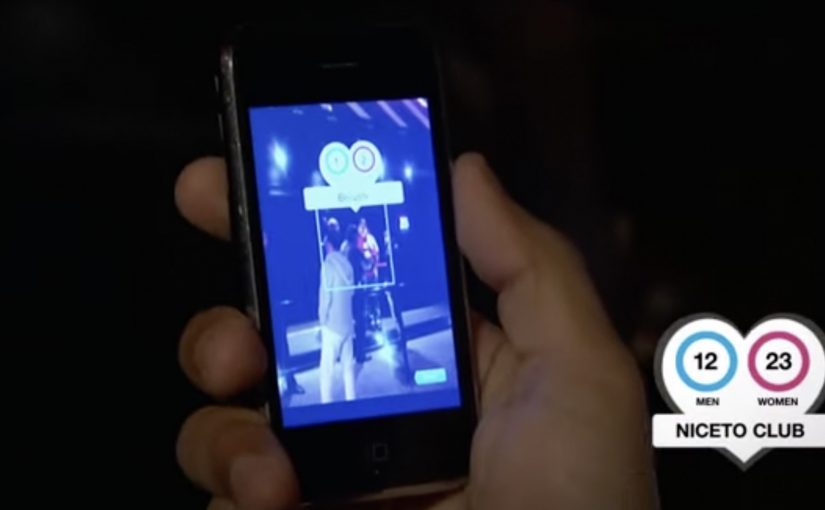
Singles Finder reframes the decision as information. It is described as a free iPhone app that shows the number of single prospects in each location, so users can choose where to go before they go.

Turning nightlife into a searchable index

The mechanism is straightforward. The app surfaces venue-level counts of single men and women, letting users compare options and pick the spot with the best odds for their intent, rather than relying on guesswork or luck.

In big-city nightlife ecosystems, the winning consumer experience is often the one that reduces uncertainty about where to invest your next two hours.

Why it lands

This works because it respects the real barrier. The hardest part is not downloading a dating app. It is deciding where to show up in the physical world. The real question is where you can increase the odds before you leave home.

Extractable takeaway: When your category depends on offline outcomes, shift the product value from “matching” to “decision support,” meaning a clear, comparable signal that helps people pick where to go before they leave. Help people choose where to go, not just who to message.

What Zonacitas.com is really buying

As positioning, it moves the brand from “dating portal” toward “nightlife utility.” As behavior, it encourages planning and repeat usage. As marketing, it turns a crowded, emotional category into a rational promise you can explain in one sentence. This is a stronger bet than competing on endless profiles and messaging alone.

Takeaways for location-driven products

  • Make the choice easier, not louder. Reduce the decision space with a simple comparison signal.
  • Shift value upstream. Solve the problem before the user commits time and money to a night out.
  • Design for “before I leave home.” The best moment is pre-decision, not mid-venue.
  • Keep the promise legible. A count is clearer than a vibe.

A few fast answers before you act

What is the Singles Finder App?

It is a Zonacitas.com mobile app concept that shows how many single prospects are in each nightlife location, helping users decide where to go before they head out.

Why is the “count per venue” mechanic persuasive?

It turns an emotional, uncertain choice into a comparable signal. Users can pick a venue based on odds rather than guesswork, which feels immediately useful.

What problem does this solve that typical dating portals do not?

It addresses the offline planning step. Instead of focusing only on profiles and messaging, it supports the real-world decision of where to show up tonight.

Who is this best for?

It is best for people facing many similar nightlife options and a time-bound goal. The value is reducing randomness in the “where do we go” decision.

How should the promise be explained in one line?

Explain it as “help me choose where to go tonight.” The clearer the decision it supports, the faster users understand why it is useful.

What should a brand measure for an activation like this?

App opens during peak nightlife hours, venue search and comparison behavior, downstream check-ins or venue visits where available, and retention driven by repeat planning on future nights.