Heineken Departure Roulette En Route

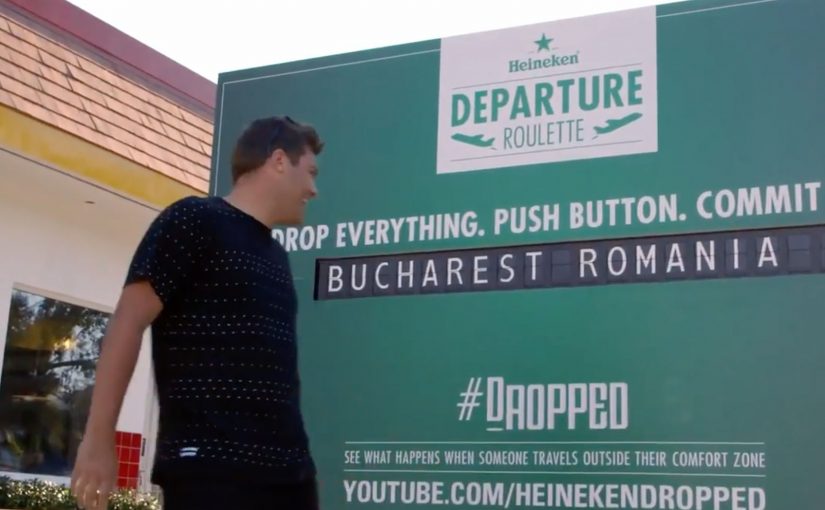
Heineken spots the tweets. Then they make them real. People watch the original Departure Roulette stunt and post the inevitable line on Twitter: “I’d press the button.” Heineken takes that public intent seriously. They track down a few of the people who tweet about wanting to play. Then they offer them the chance to play Departure Roulette on the spot. Real time, real commitment, no rehearsal.

If you want the backstory first, the original Departure Roulette activation sets the frame: a physical roulette board at JFK Terminal 8. One red button. Press it and you accept a new destination immediately. Read about the original here.

What “En Route” gets right: it turns social intent into action

The smartest part of this follow-up is not the surprise. It is the mechanism. Heineken treats social conversation as a live signal of willingness, not just commentary. People are no longer reacting to a brand story. They are pulled into it.

It rewards declared intent in public

A tweet is a lightweight commitment. Heineken upgrades it into a real decision. The gap between “I would” and “I did” becomes the content.

It closes the loop from earned media to owned experience

The original stunt earns attention. The follow-up re-enters the stream where that attention lives. Social becomes a trigger for a real-world activation, not just a distribution channel.

It stays consistent with the campaign’s core promise

Departure Roulette is about spontaneity and courage. The follow-up keeps the same proposition, just delivered to a different moment and audience.

How to reuse this pattern without copying the stunt

  1. Define the “press the button” moment. Pick one unmistakable action that proves intent.
  2. Listen for explicit triggers, not vague sentiment. Look for “I would,” “I want,” or “If you did this I’d…” rather than likes alone.
  3. Respond fast enough that it feels connected. If the follow-up arrives too late, it reads like a promotion, not a story.
  4. Make the commitment real, but safe. Build constraints on timing, eligibility, logistics, and consent.
  5. Capture the decision, not just the reward. The moment of choice is the asset. The prize is the justification.

What to measure beyond views

  • Intent volume. How many people explicitly say they would do it.
  • Conversion rate. Percentage of selected participants who actually commit when approached.
  • Time-to-response. How quickly you move from trigger to activation.
  • Amplification quality. Replies and quote-posts that debate “would you do it,” not just “nice video.”
  • Brand linkage. Whether the audience repeats the core idea (spontaneity, adventure), not just the prank.

Risks and guardrails that matter

  • Consent and privacy. Do not approach people in a way that feels extractive. Keep it clearly opt-in.
  • Safety and duty of care. High-stakes travel stunts need hard boundaries, support, and contingencies.
  • Credibility. The offer must be unquestionably real, or the story collapses into suspicion.
  • Operational readiness. The logistics are the product. If ops fail, the story turns.

A few fast answers before you act

What is Departure Roulette En Route in one line?

It is a social-powered follow-up where Heineken turns “I’d press the button” tweets into a real-world chance to do exactly that.

Why does it spread?

Because it stages a high-stakes, relatable decision in public: keep your plan, or choose the unknown.

What is the reusable strategy?

Treat public intent as a trigger for action. Then deliver a real experience that proves the brand promise.

What is the minimum viable version for a brand without travel budgets?

Reward declared intent with an immediate upgrade: surprise access, exclusive drop, instant appointment, or fast-track service.

Where does this go wrong fastest?

When it feels like surveillance, or when the logistics do not deliver on the promise.
Nike Football “My time is now”

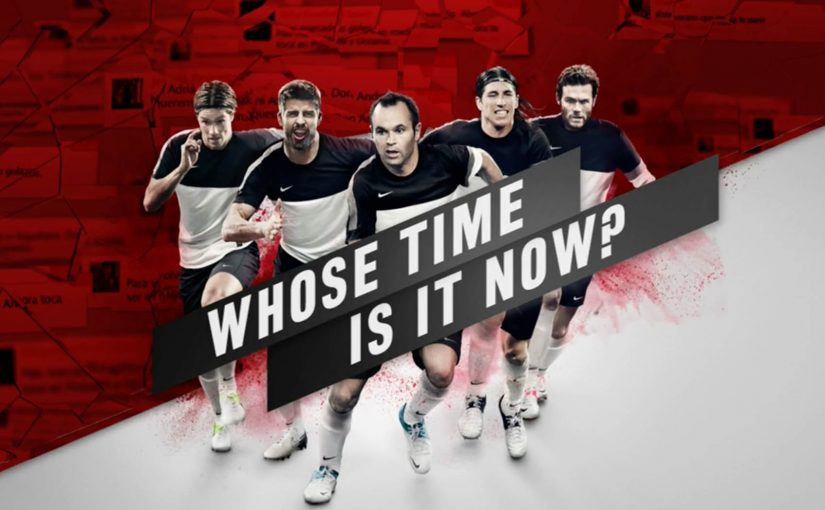
In Puerta del Sol, Madrid’s epicenter, a huge Nike “static” banner behaves like a live scoreboard. As Euro 2012 conversations spike, the face on the banner changes. Each day, the Spanish player who dominates social chatter becomes the protagonist on the canvas. Two fan messages appear alongside him, selected from submissions flowing in through Nike’s Facebook experience.

The idea in one line

Turn real-time social conversation into real-world status. Then make “My Time Is Now” visible, in public, every day.

What Nike and DoubleYou build during Euro 2012

Nike works with DoubleYou on a real-time social media monitoring campaign focused on Spanish national-team players. The system tracks mentions and engagement across Facebook and Twitter, then turns that data into a live ranking.

Fans see the leaderboard through a custom Facebook app integrated into Nike Football Spain. The ranking updates continuously, creating a daily “who owns the moment” race that mirrors what is happening on the pitch.

How it works

Step 1. Capture the conversation in real time

The activation monitors references to players across Twitter and Facebook.

Step 2. Translate the conversation into a live ranking

Inside the Facebook experience, the campaign visualizes comments and produces an automatically updated ranking of who is generating the most conversation, refreshed minute by minute.

Step 3. Publish the result into the physical world

Each day, the player who “capitalizes” the most social conversations becomes the ambassador of Nike’s message “My Time Is Now” on the large-format placement in Puerta del Sol. A static billboard turns into an interactive billboard because it is connected to the live social pulse.

Step 4. Let fans write onto the execution

From the app, fans also submit messages linked to the player of the day. Nike selects two of those messages and publishes them next to the player on the banner.

Why this is more than “social listening”

This is not monitoring for reporting. It is monitoring as a publishing engine.

  • The social layer has consequence. The ranking determines who gets heroed publicly.
  • The physical layer gives the digital behavior weight. People do not just see a number in an app. They see a player crowned in the center of Madrid.
  • The loop is fast enough to feel like sport. The leaderboard updates continuously, so fans experience momentum, not a static end-of-day recap.

The line that makes the whole thing sticky

At the end, the leading player is set to bear Nike’s message of “My Time Is Now”.

And the player is…


A few fast answers before you act

What is the campaign in one sentence?

A real-time social monitoring system ranks Spanish players by conversation volume and makes the top player the daily face of a live billboard in Puerta del Sol.

Where do fans see the ranking?

In a custom Facebook app integrated into Nike Football Spain.

What makes this different from a normal “second screen” mechanic?

The data output is not just a dashboard. It changes a public, real-world media placement and publishes user messages alongside the hero player.

What is the repeatable pattern for brands?

If you can connect live signals to live publishing, you turn attention into status. That is how “real-time” becomes culturally meaningful.

Volkswagen #Polowers: Tweet-Powered Race

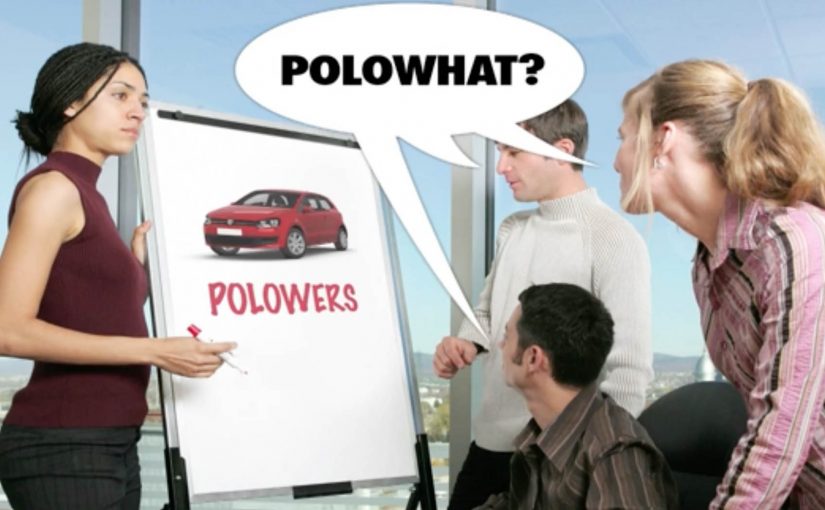
Volkswagen Polo is one of the most desired cars amongst the youth of Spain. To make a big entry DDB Spain created a Tweet based race that would make VW Polo the most trending topic on Twitter for that day.

A special hashtag #Polowers was created in order to give a name to the VW Polo Followers. Then to generate conversation amongst the Polowers a race was setup where each tweet took the follower to the first position.

When the Polo stopped at one of the 5 designated stops, the follower in the first position at that time would win a prize, iPad, Denon Ceol music system, Leica D-Lux 5 camera, VW Bike and eventually the grand prize VW Polo itself.

In terms of results, the campaign generated more than 150,000 tweets in 8 hours after launching, at a rate of 5 tweets per second and reached more than 10% of Twitter’s total audience in Spain. It also became the leading Top 10 trending topic and generated a record breaking amount of traffic to Polo’s product section on Volkswagen.es.

Last year Mercedes-Benz had created a tweet based race that had real life cars fueled by tweets. Check out that campaign here.

Why this mechanic works

This is a clean real-time loop. Tweeting is the action. Rank is the feedback. Prizes are the incentive. The “race” gives people a reason to keep going, because every new tweet can change the leader.

  • Identity creates belonging. #Polowers turns followers into a named group.
  • Progress is instant. One tweet changes position immediately.
  • Time pressure drives volume. Five stops create multiple “now” moments.
  • Reward cadence sustains momentum. Smaller prizes build toward the grand prize.

What to take from this if you run social campaigns

  1. Design a loop that explains itself. If the rule fits in one sentence, participation scales.
  2. Make the scoreboard the content. Rankings create a story people want to influence.
  3. Use milestones. Stops and deadlines create peaks instead of a flat timeline.
  4. Measure beyond buzz. Here the campaign also drove traffic to the Polo product section, not just tweets.

A few fast answers before you act

What was Volkswagen #Polowers?

It was a tweet-based race in Spain where participants used the #Polowers hashtag, and tweeting moved them into first position in a live competition for prizes and a chance to win a VW Polo.

How did the prize mechanic work?

When the Polo stopped at one of five designated stops, the follower in first position at that moment won a prize. The grand prize was a VW Polo.

What were the reported results?

More than 150,000 tweets in 8 hours, around 5 tweets per second, reaching more than 10% of Twitter’s total audience in Spain, plus Top 10 trending status and record traffic to Volkswagen.es Polo pages.

Why did the hashtag matter?

#Polowers gave the community a name and made participation visible, searchable, and easy to join.

What is the transferable lesson?

If you turn a simple action into a live competition with clear milestones and meaningful rewards, social participation can compound quickly.