
Dortmund Concert Milk: Taste the Season

Konzerthaus Dortmund has world-class acoustics and artists, but it still faces the familiar challenge. Most people do not automatically choose classical music. For the 2010/2011 season, Jung von Matt was asked to pull more of the “not naturally interested” public into the hall.

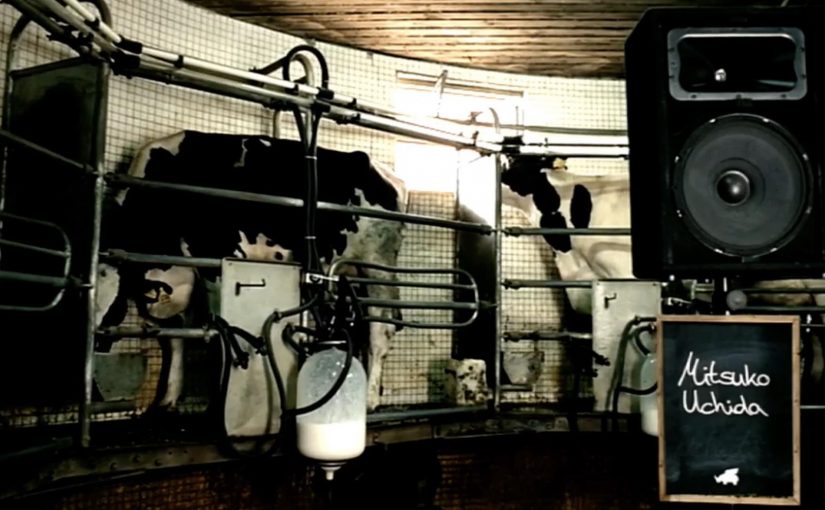
The solution makes the promise literal. Let people experience music with their sense of taste. The campaign leans on the often-cited idea that cows produce more milk when exposed to classical music, so selected works from the new season were played to cows. The milk was then sold in shops as Dortmund Concert Milk, offered in nine varieties, with each bottle carrying information about the season.

How “Konzertmilch” turns a program into a product

The mechanic is a clean chain. Take repertoire from the upcoming season. Route it through a surprising production setting. Package the output as a retail product that people can encounter in everyday shopping, with the concert hall story printed on the bottle. The milk becomes both a sampling metaphor and a distribution channel for the season narrative. That works because the product format carries the concert hall story into low-pressure moments where curiosity is easier than commitment.

In German cultural institutions, campaigns often have to earn attention from people who do not self-identify as classical-music audiences.

Why it lands

It collapses distance. “Great acoustics” is hard to imagine if you are not already a fan, but “taste the music” is instantly legible. The cow premise gives the idea a folklore-like stickiness, and the retail format makes the campaign feel less like advertising and more like something you discover.

Extractable takeaway: When your category benefit is experiential but hard to preview, build a proxy people can physically encounter in daily life. Then let packaging carry the story and the call-to-action.

What the activation is really optimizing for

This is designed to create first contact with non-attenders. The real question is how to make a concert hall feel low-friction before anyone commits to a ticket. This is smart audience-growth work because it uses everyday retail to make the first step feel casual rather than elite. Retail shelves provide scale, repetition, and social permission. Buying a bottle is a low-risk way to engage with a concert hall brand, and the printed season information turns that impulse into a next step.

What to steal for your own audience growth

  • Translate the promise into a sensory shortcut. If people cannot imagine the experience, give them a proxy they can touch, taste, or keep.
  • Ship the story as packaging. A bottle label can do the work of a brochure, but in a context where people actually read it.
  • Use “varieties” to signal curation. Multiple flavors create collectability and invite comparison, which increases repeat exposure.
  • Make the concept easy to retell. If the whole campaign fits into one sentence, it travels further than the media plan.

A few fast answers before you act

What is Dortmund Concert Milk in one sentence?

A retail activation where cows listen to selected works from Konzerthaus Dortmund’s season, and the resulting milk is sold as “Konzertmilch” in multiple varieties with season info on the bottle.

Why does this help a concert hall reach non-attenders?

Because it moves the brand out of the venue and into everyday life, using a low-commitment product encounter to spark curiosity about the season.

What is the key creative move?

Turning an intangible promise, “experience music”, into a concrete proxy people can literally consume, and then using that proxy to carry the program message.

What is the main risk when copying this approach?

If the novelty overwhelms the cultural offer, people remember the gimmick but not the program. The packaging and narrative must keep pointing back to the season.

Does the cow premise need to be scientifically proven for the idea to work?

No. The campaign works at the level of curiosity and retellability, but the bottle story still has to keep leading people back to the concert season rather than leaving them with only the stunt.
Levi’s: Soundwash

You pick a Levi’s Square Cut style, choose a music genre, then “Soundwash” the jeans, meaning you pair the selected cut with a music mix through a washing-machine-style interface. The idea gives young audiences a new way to express themselves by turning denim selection into a brand and music experience, not just a purchase.

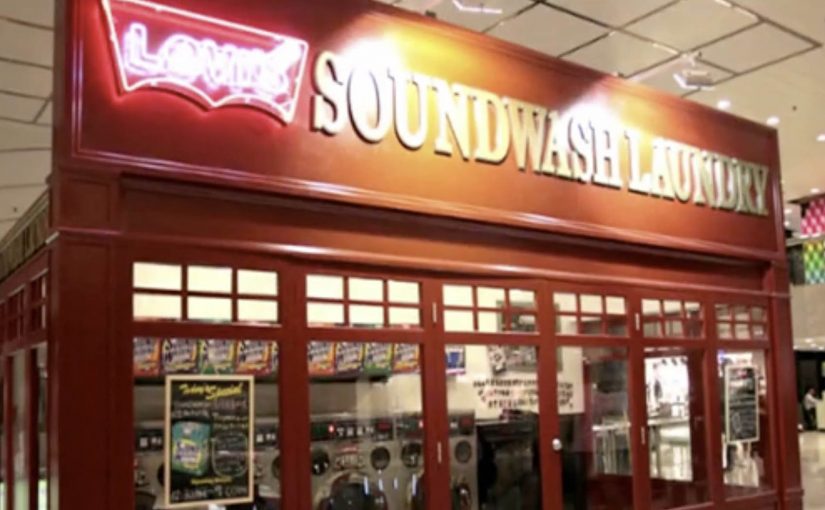
TBWA\TEQUILA Hong Kong and Levi’s Hong Kong developed Soundwash for the Square Cut collection featuring five new styles of jeans. Soundwash runs as a multi-dimensional interactive experience that lets the audience choose their favourite jeans style and then “Soundwash” the jeans to their favourite style of music, including rock, hip hop and Cantopop, across multiple platforms.

Creatively, Soundwash rediscovers the authenticity of the classic American laundry and collides it with cutting-edge music styles to create a distinct brand experience using a Soundwash “machine”. The concept is supported by limited edition packaging and gift accessories, a Soundwash Laundry pop-up store in high traffic Tsim Sha Tsui, a branded iPhone game app, a website, and an online viral video featuring local music band Mr.

A laundromat you can control with music

The mechanism is a tight participation loop. Start with a product choice, then translate that choice into sound. Shoppers select a Square Cut style, then pick a music mix to “Soundwash” it, using the Soundwash “machine” as the interface that makes the metaphor feel physical and real.

In youth fashion markets where denim is a social signal and music is identity language, interactivity works best when it lets people express taste choices in public, not just consume a message in private.

Why it lands

This works because it turns a collection launch into something you can play with. The laundry metaphor makes the experience instantly legible, and the music layer makes it personal. You are not only choosing jeans, you are choosing a vibe, then “performing” that choice through the machine, the pop-up, and the shareable formats.

Extractable takeaway: If you want a product line to feel like culture, build one repeatable interaction that lets people express taste, then extend it across retail, packaging and mobile so the same idea shows up wherever the audience moves.

How the app makes it competitive

The Soundwash iPhone app includes a game where friends can compete to see who can Soundwash the most jeans in 30 seconds. The top scorer of each week receives a pair of Levi’s Square Cut jeans, which turns the app from a novelty into a reason to return and to challenge others.

The real question is whether the campaign can turn one moment of playful customization into a repeatable social behavior that keeps the collection in circulation.

Levi’s makes the right call by using the app to extend the same interaction rather than treating mobile as a separate stunt.

Steal the denim-and-music playbook

  • Turn selection into performance. Make the act of choosing feel like self-expression, not decision fatigue.
  • Use one clear metaphor. “Laundry” is a simple frame that supports multiple touchpoints without explanation.
  • Build a retail anchor. A pop-up makes the digital idea feel tangible and photogenic.
  • Add a competitive loop. Time-boxed play plus weekly rewards creates repeat usage and social pull.

A few fast answers before you act

What is Levi’s Soundwash?

A Levi’s Hong Kong Square Cut activation that combines denim and music. People choose a style, then “Soundwash” it to a music mix via an interactive machine and supporting digital experiences.

What is the core mechanism?

Product choice plus music choice, expressed through a “Soundwash machine” interaction, then extended into a pop-up, packaging, app, website, and a viral video featuring local music band Mr.

Why use a laundromat metaphor?

Because it is instantly understood and visually rich. It makes the experience feel physical, and it gives the campaign a consistent world across touchpoints.

What role does the iPhone app play?

It adds competition and repeat engagement through a 30-second game format, plus weekly rewards that encourage people to come back and challenge friends.

What is the most reusable lesson here?

When you are selling self-expression, design one simple interaction that makes taste visible, then let that interaction travel across retail, digital, and social formats.

WWF: Augmented Reality Tiger T-Shirt

A retail AR gut-punch for WWF’s Siberian tiger

This is a great piece of Augmented Reality for WWF aimed at raising awareness around the plight of the Siberian tiger, created by Leo Burnett Moscow.

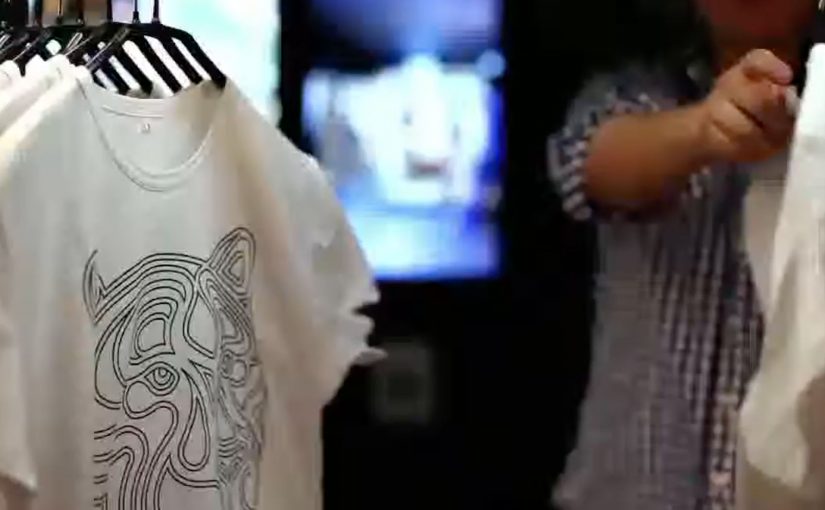
WWF printed thousands of tiger t-shirts and distributed them online and to key stores in Moscow featuring specially placed AR video mirrors that would instantly activate the AR experience the moment a tiger t-shirt was detected. An AR video mirror is a camera plus screen installation that overlays digital effects on your live reflection in real time. And at that moment, the experience became quite graphical to anyone wearing the t-shirt, complete with bullet wounds, huge amounts of blood and sound effects to match it.

How the “video mirror” mechanic does the heavy lifting

The setup is simple. Put the message on the body. Put the trigger in the store. Put the reveal in a mirror people already trust as “truth”.

An AR video mirror is a camera plus screen installation that shows your live reflection while overlaying digital effects in real time. In this case, the mirror detects the tiger shirt and then renders the simulated injuries and audio as if they are happening to you. Because the overlay is pinned to your live reflection, the reveal feels immediate, which is why the message hits before you can distance yourself from it.

In retail environments and public spaces, AR activations work best when the interaction is instant, unmistakable, and socially visible to bystanders.

Why the experience lands so hard

It converts an abstract cause into a first-person moment. You do not just look at an endangered animal. You temporarily “become” the target.

Extractable takeaway: If you want awareness to stick, bind the reveal to a trusted routine and reduce viewer control, so the audience feels the story in their own reflection before they can rationalize it away.

The intent behind making it graphic

The creative choice forces attention and memory. A polite AR overlay would be easy to ignore. A visceral one is harder to dismiss and more likely to be retold, especially when friends are watching from behind you.

The real question is whether the shock serves the story or becomes the story.

Graphic AR is a valid tool only when the cause is unmistakable and the reveal points back to it within seconds.

Design moves to borrow from this AR mirror

  • Use a frictionless trigger. Detection happens automatically. No app download. No QR hunt. No instructions.
  • Choose a culturally “trusted” surface. Mirrors feel like evidence, which makes overlays feel more real than a phone screen effect.
  • Make the message social. The bystander view matters. People react together, and that reaction becomes the spread mechanism.
  • Design the reveal as a single sentence. “This is what it feels like to be hunted.” If the concept cannot be repeated instantly, it will not travel.

A few fast answers before you act

What is the core idea of the WWF tiger t-shirt AR campaign?

It uses an AR video mirror to detect a tiger t-shirt and instantly overlay a graphic “poaching” simulation on the wearer, turning awareness into a first-person experience.

Why use an AR mirror instead of a mobile AR app?

The mirror removes friction and makes the moment public. Everyone nearby sees the same reveal at the same time, which increases impact and sharing.

What makes this activation effective as cause marketing?

It translates a distant problem into a personal reaction. The wearer feels shock and vulnerability, and that emotional spike improves recall and conversation.

What are the key components if you want to replicate the mechanism?

You need a clear trigger (the shirt), a camera plus screen “mirror” setup, real-time overlay rendering, and a reveal that communicates the message in seconds.

What is the main risk with shock-based AR experiences?

If the graphic content overwhelms the cause, people remember only the stunt. The message has to be explicit enough that the emotional reaction points to the intended story.