
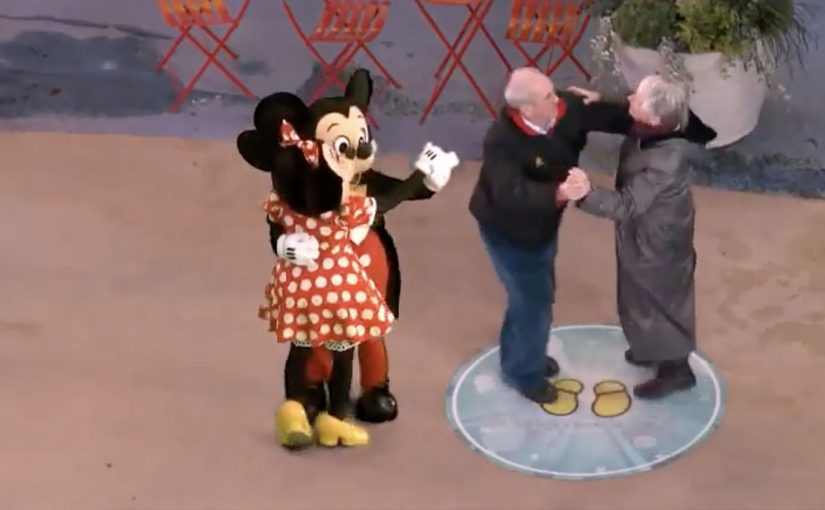
Disney: Mickey Mouse brings magic to NYC

You step into the Disney Store in Times Square and suddenly you are “in” a Disney moment. A live screen blends you into a scene and Mickey appears alongside you, reacting in real time as the crowd watches.

Disney Parks uses the installation to celebrate Mickey Mouse’s 83rd birthday this month, turning a store visit into a small piece of theatre that people naturally photograph and share.

The mechanism is straightforward. A live camera feed captures guests, then an augmented reality layer places Disney characters and effects into the scene so it looks like the magic is happening around you, not only on a separate screen.

In flagship retail environments, live augmented reality installations convert foot traffic into shareable content by making the store itself behave like media.

The real question is whether the experience makes bystanders feel like they are watching a story, or watching a demo.

Disney is also using a Twitter hashtag #DisneyMemories to track the experiences at Times Square and the campaign, so the physical moment has a simple, searchable social trail.

Why this lands in Times Square

Times Square is already a stage. The installation does not fight the noise with more noise. It creates a personal moment inside the noise, where the viewer becomes part of the story. That shift from watching to participating is what earns the stop-and-stare crowd.

Extractable takeaway: In a loud environment, the winning move is not bigger spectacle. It is giving each guest a personal, camera-ready moment the crowd can understand instantly.

Hashtag as a lightweight amplification layer

The hashtag is not the idea. It is the plumbing. It lets Disney connect hundreds of individual “I was there” posts into one visible stream, without asking people to learn a new platform or download anything beyond what they already use.

The same live AR pattern shows up elsewhere

This style of live augmented reality is showing up more often in brand-led events, because it creates instant participation without complex instructions. You have already pointed to similar executions from National Geographic and Lynx, where the screen becomes a “portal” and the audience becomes part of the scene.

What to steal for your own live-event experience

  • Make the first second readable. People should understand what is happening from across the room.
  • Design for bystanders. The crowd experience matters, because the crowd is the distribution engine.
  • Attach one simple social handle. A hashtag or keyword is enough when the moment is already worth sharing.
  • Keep the tech invisible. The audience should remember the feeling, not the hardware.

A few fast answers before you act

What is the Mickey Mouse Times Square augmented reality installation?

It is a live in-store experience at the Disney Store in Times Square that places guests into a real-time scene with Disney characters using an augmented reality layer on a live camera feed.

Why does this work as a retail activation?

Because it turns a store visit into a participatory moment. People do not just browse. They become part of a scene worth filming and sharing, which extends reach beyond the store.

What role does #DisneyMemories play?

It creates a single social thread for many individual posts, helping Disney track and aggregate the shared experiences without adding friction to the in-store moment.

How is this different from a typical photo booth?

The difference is live spectacle. The experience is designed to be watched by a crowd in real time, so bystanders become part of the energy and the story travels further.

What is the most common failure mode for live AR event installs?

Confusion and delay. If people cannot instantly understand what to do, or if the experience queues too long, the crowd dissolves and the social output drops sharply.
Mammogram Tags: What a Person Can Miss

A lingerie purchase. A beep at the exit. A message you cannot ignore

A woman buys a bra in a busy H&M store in central Warsaw. She heads for the exit. The security gate beeps, like it does when something is wrong, and everyone turns their head.

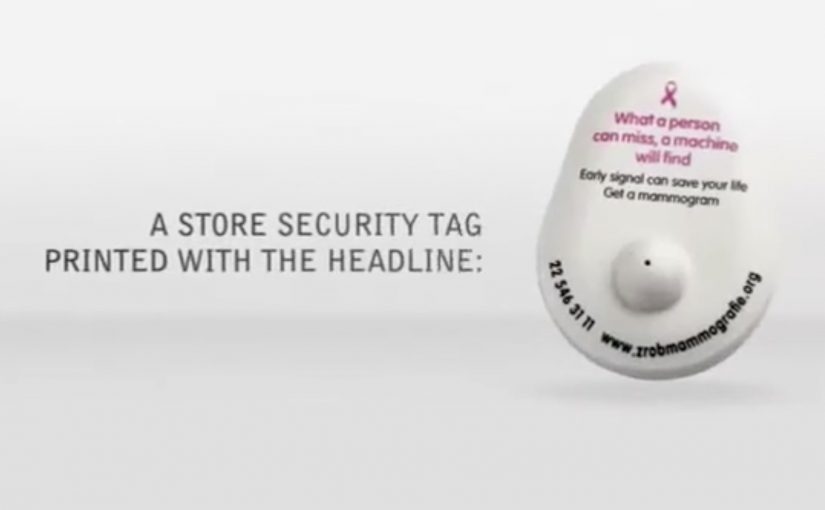
Then the twist lands. The “problem” is not theft. It is a special tag added to the purchase, designed to trigger the gate and force a second look at what you are carrying, and what you might be missing.

How it works: a mammogram metaphor built into the store’s own infrastructure

Most women know breast self-examination, and many see it as “good enough”, even if they do it irregularly. The Polish Federation of Cancer Survivors wanted to disrupt that assumption with a simple line. “What a person can miss the machine will find”. The aim was to get more women to sign up for regular mammogram scanning. Here, screening mammography refers to an imaging test designed to detect abnormalities that manual self-examination can miss.

The mechanic explains itself. A shop assistant adds the special tag to a bra purchase. The gate beeps on the way out. The tag copy then connects the feeling of “something is wrong” to the idea of early detection, and provides a fast path to book a mammogram appointment.

In mass retail and FMCG environments, point-of-sale public health activations work best when they use an existing habit and environment cue, then translate it into a single, unavoidable moment of attention.

Why it lands: it turns “I already check” into doubt, without lecturing

This is not a scare poster. It is a physical interruption at the exact moment a woman is already thinking about bras and bodies. Because the beep creates instant relevance and social visibility, the tag message lands as an explanation and next step, not a lecture. This is the kind of retail nudge worth copying because it uses friction to prompt action without shaming the customer.

Extractable takeaway: When you can borrow an existing “something is wrong” cue and attach a single booking step, you can convert attention into action without fear-based messaging.

The intent: change behaviour, not just awareness

The campaign targets a specific behavioural gap. Women believed self-checks were sufficient, so they delayed or skipped mammograms. This activation reframes the choice as a capability gap. humans miss things. machines catch them.

The real question is whether your activation turns a moment of attention into a booked appointment.

The initiative was supported by the Federation of Amazonki, the Ministry of Health and the Oncology Center in Warsaw. H&M hosted the action because it naturally reaches a wide age range, from teenagers to women in their fifties and sixties.

What to steal if you are designing a health nudge in retail

  • Use a familiar signal. The security gate beep already means “pay attention”. You borrow that meaning instantly.
  • Make the explanation self-contained. The tag is the media unit. No staff briefing needed to “sell” it.
  • Choose the moment with maximum relevance. Bra shopping is context. The message becomes harder to dismiss.
  • Design the next step to be frictionless. The tag points to how to book, while motivation is highest.

In the campaign write-up at the time, the team reported 330 tags given away in 2 days, 1,650 unique visitors to the site, and a 10% lift in phone calls versus the pre-action period. It also described a longer tail effect when women later heard similar beeps in other stores.


A few fast answers before you act

What is Mammogram Tags: What a Person Can Miss?

It is a Polish breast cancer screening activation where a special retail tag on a bra purchase triggers a store security gate beep, then explains why mammography can detect what self-checks may miss and how to book screening.

How does the in-store mechanic work?

A shop assistant adds a special tag to the bra purchase. When the customer exits, the security gate beeps. The tag reveals the message and directs the customer to the next step to book a mammogram.

Why use a store security gate as the medium?

The beep is a built-in attention trigger with public visibility. It creates an instant “stop and look” moment that the campaign reframes into a health reminder without needing a lecture.

What behavior change is the campaign trying to create?

It targets the belief that self-examination is “good enough” and nudges women toward regular screening mammography by positioning detection as a machine advantage, not a personal diligence test.

What is the campaign’s key message in plain language?

Humans can miss signs. Imaging can find abnormalities earlier. Do not rely on self-checks alone if screening is available.

What results were reported in the campaign write-up?

The write-up reported 330 special tags distributed in 2 days, 1,650 unique visitors to the site, and a 10% lift in phone calls versus the pre-action period.

Budweiser: Ice Cold Index

Weather obsession turned into a price lever

Few cultural triggers are as universal as the weather. Budweiser used that everyday obsession to turn attention into action at the pub.

Irish people have always been fascinated by the weather, but their interest is set to reach new heights this summer with the launch of the Budweiser Ice Cold Index.

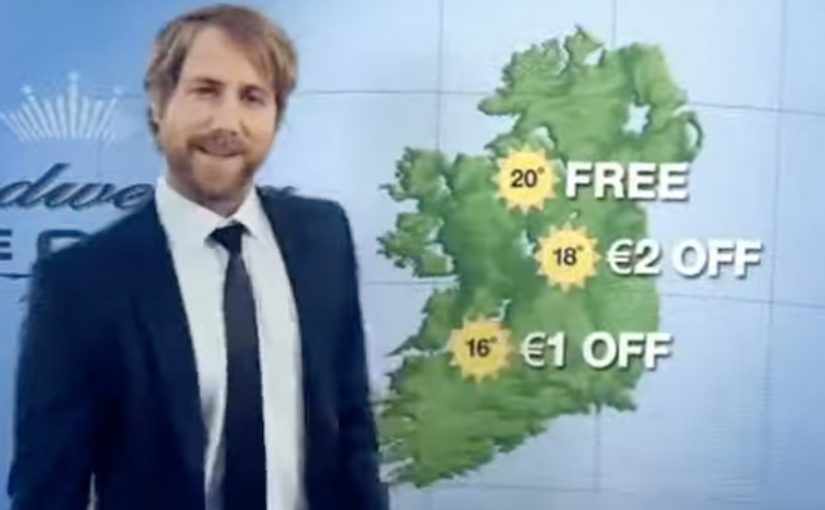
The Budweiser Ice Cold Index app is set to show you the local weather, then spit out redemption codes for free or discounted beer at nearby participating pubs. The higher the temperature, the less you will pay for your pint.

How the Ice Cold Index mechanic worked

The mechanism is simple. Combine three inputs into one immediate reward: location, temperature, and a redeemable code.

The app checks local weather. It then generates a redemption code tied to nearby participating pubs. Price sensitivity is built into the rule set. As temperature rises, the customer’s price drops. This is dynamic pricing in its simplest form: a discount rule that updates automatically based on a measurable condition.

That turns “checking the weather” into “moving into the selling space”.

The real question is how you turn a daily habit check into a measurable step toward purchase without it feeling like a random coupon drop.

Linking price to an external context signal beats arbitrary discounting, because the offer explains itself in one line.

In Irish on-trade activations, weather-linked rules can make a pub choice feel like a natural, talkable next step.

Why the offer feels timely, not forced

It lands because it connects to a real moment of intent. Warm weather increases thirst and increases pub footfall. The offer arrives at exactly the time the customer is already considering a drink.

Extractable takeaway: If you can anchor an incentive to a shared, observable condition, you reduce explanation friction and increase redemption because the context does the persuading.

It also feels fair and transparent. The rule is easy to understand. Hotter day equals cheaper pint. That clarity reduces skepticism and makes the incentive feel like a natural extension of the context.

The business intent behind linking price to temperature

The intent is to convert ambient interest into measurable behavior.

By tying discounts to local conditions, the brand creates a reason to choose a participating pub now, not later. It also encourages repeat checking and repeat visits, which is where loyalty accrues in practice.

This app literally moves people into the selling space, provides refreshment, and so it should gain some loyalty points with customers as well. Too bad it is only in Ireland.

Steal these moves from the Ice Cold Index

  • Attach the incentive to a context signal. Weather is a shared trigger that makes offers feel relevant.
  • Use a rule people can explain in one sentence. Clarity increases trust and redemption.
  • Move people into the selling space. The best mobile incentives reduce distance between intent and purchase.
  • Design for repeat behavior. If the offer updates with conditions, customers have a reason to come back.

A few fast answers before you act

What is the Budweiser Ice Cold Index?

A mobile app concept that shows local weather and generates redemption codes for discounted drinks at nearby participating pubs, with discounts increasing as temperature rises.

What was the core mechanism?

Dynamic pricing driven by weather conditions, delivered through location-aware redemption codes for nearby pubs.

Why does tying price to temperature work?

Because it aligns with real-world demand. When it is warmer, people are more likely to buy a cold drink, and the offer feels timely rather than random.

What business goal does this support?

Driving footfall to participating pubs, increasing redemption rates, and encouraging repeat engagement through an offer that changes with conditions.

What is the transferable takeaway?

Use a shared context trigger to make incentives feel natural, then deliver a simple, redeemable action that moves people into purchase.