WestJet over the years has passionately given back to their guests with various unimaginable experiences.
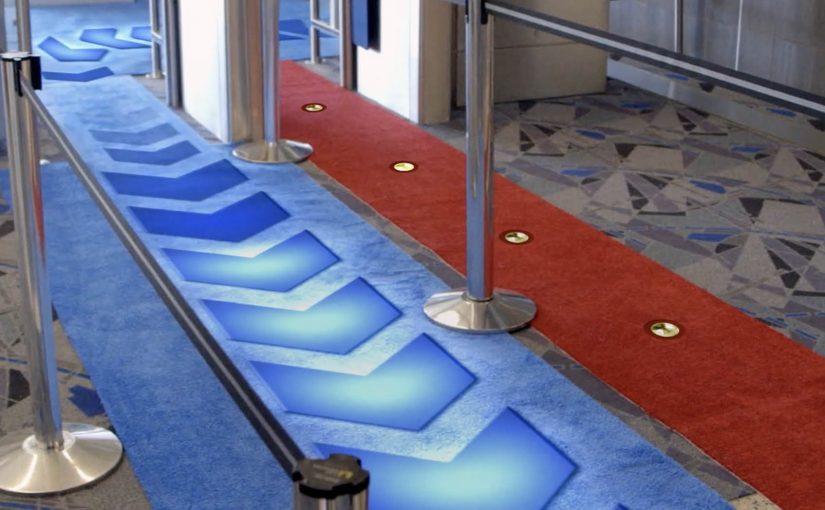
Now in their latest campaign targeting Toronto to Las Vegas bound WestJet guests, they got Las Vegas comedian Carrot Top to offer guests a special walk down the red or blue carpet. Those who chose to walk down the red carpet continued on their vacation as they had originally planned. Those who chose the blue carpet went with Carrot Top on an action-filled experience that included a stunning acrobatic display, a world-class DJ, a private airplane hangar, showgirls, and VIP access to the best of the city.
A choice mechanic that turns boarding into a story
The mechanism is a fork in the road with immediate consequences. Here, the choice mechanic is a designed decision point where one visible choice changes the path and the story. You are offered a simple choice, red or blue, with no time to overthink it. The red path is “normal”. The blue path is “something is happening”, and the reveal escalates quickly once the choice is made.
In travel and service brands, surprise upgrades work best when they are structured as a clear decision point that people can instantly explain to someone else.
Why it lands
This works because it gives guests a feeling of control while still delivering surprise. That mechanism works because a visible fork creates ownership before the surprise arrives, which makes the payoff feel earned rather than random. The blue carpet is not a random selection. It is a self-chosen leap into the unknown, which makes the outcome feel more personal and more shareable. The red carpet also matters, because it preserves contrast and keeps the twist believable.
Extractable takeaway: If you want a surprise to travel, wrap it in a simple choice. Choice creates ownership, and ownership turns a brand moment into a story people repeat accurately.
The business intent behind the spectacle
This is a loyalty play disguised as entertainment. It reinforces the idea that flying can include delight, not just transport. It also creates a strong piece of proof that WestJet treats guests as people, which is the kind of narrative that outperforms feature lists in crowded travel categories.
The real question is whether a service brand can turn a routine travel moment into a story guests want to retell.
What travel brands can steal from this
- Use a binary choice: two paths create instant tension and clear storytelling.
- Reward curiosity: let the “brave” option unlock the best outcome, then show why.
- Escalate fast: once the choice is made, deliver the first payoff immediately to lock attention.
- Make it filmable: design reveals that work from a handheld camera in real environments.
- Anchor to a destination truth: Las Vegas is already a promise of spectacle. The upgrade simply makes that promise feel real early.
A few fast answers before you act
What is the WestJet “Ultimate Las Vegas Upgrade”?
It is a surprise experience for Toronto to Las Vegas travelers where guests choose a red or blue carpet. Red continues as normal. Blue triggers a curated VIP Las Vegas experience led by Carrot Top.
Why use a red vs blue choice?
Because it is instantly understandable, it creates viewer control, and it gives the story a clean structure with contrast between normal and extraordinary.
What makes this effective airline marketing?
It makes service tangible. Instead of claiming “we care”, the brand demonstrates it through a memorable experience that guests can share and retell.
What is the reusable pattern for other brands?
Create a simple decision point in a real customer journey, then attach an escalating surprise to one path so customers feel they opted into the moment.
What is the biggest risk with this format?
If the reveal feels confusing or staged, the audience disengages. The choice must feel real, the payoff must feel earned, and the execution must respect guest comfort.