
British Airways: Barcode Reader

You pick up a travel guide, walk to the barcode reader, and scan it to check the price. Instead of only showing numbers, the scanner delivers a British Airways message that nudges you toward destinations beyond the UK.

The placement is the whole strategy. British Airways runs this in the travel section of a bookstore, right when people are already thinking about leaving town. If someone is browsing Rome, New York, or Buenos Aires, the brand can show up in a way that feels like a useful prompt rather than a random interruption.

The mechanic is simple. The barcode scan is the trigger, and the barcode reader becomes the display. British Airways uses that moment to broaden perception of its route network, aimed at Brazilians who may only associate BA with the UK.

In travel marketing, the planning moment is the highest-intent moment, and well-timed messages can feel like help rather than advertising.

Why the bookstore aisle is the right “media channel”

Travel guides are a proxy for intent. People do not usually buy a destination book by accident. So a bookstore travel aisle acts like a real-world keyword search, with the added benefit that the customer is already in decision mode.

What makes the barcode reader feel credible

The message arrives from the same device people trust for pricing and checkout. That matters because it borrows the authority of a functional tool. The ad does not ask for a click or a download. It simply uses an existing action and adds a relevant layer.

Extractable takeaway: Put your message inside a trusted utility that already supports the customer’s task, so the “ad” inherits credibility instead of fighting for it.

What the campaign is really trying to change

The real question is whether you can change route perception by showing up inside the tools people already use to plan.

This kind of placement beats broad-reach travel ads because it earns attention at the moment of intent.

This is not a fare promotion first. It is a mental map update. By “mental map update” I mean shifting which destinations people associate with the brand before they default to “UK airline.” The brand wants travellers to store British Airways as “global option,” not “UK airline.” The work is credited to AGE Isobar São Paulo and was later shortlisted in the Direct Lions under Ambient Media, small scale.

What to steal for your own context-first activation

By “context-first activation” I mean a placement where the environment and the user’s current task create relevance before the copy does.

  • Target the moment of intent. Find the real-world behaviour that signals “I am planning.”
  • Use the tools already in the environment. Functional devices carry trust and reduce friction.
  • Make the message additive. Add information that fits the action, do not derail it.
  • Design for instant comprehension. If it needs explanation, it will be ignored.

A few fast answers before you act

What is the British Airways Barcode Reader activation?

It is a contextual bookstore execution where scanning travel books on a barcode reader triggers British Airways messaging about flying to destinations beyond the UK.

Why does it work better than a generic travel ad?

Because it appears at the exact moment people are considering travel. The placement creates relevance before the copy even starts.

What is the core behaviour the campaign hijacks?

Price checking. The scan is already happening, so the brand adds a message to an existing action rather than asking for a new one.

What business problem is this solving?

Route perception. It aims to expand awareness that British Airways serves many destinations, not only the UK, in a market where that belief is limited.

What is the main risk with this kind of tactic?

If the message feels intrusive or slows down the checkout flow, it turns from helpful to annoying. The execution has to stay lightweight and quick.
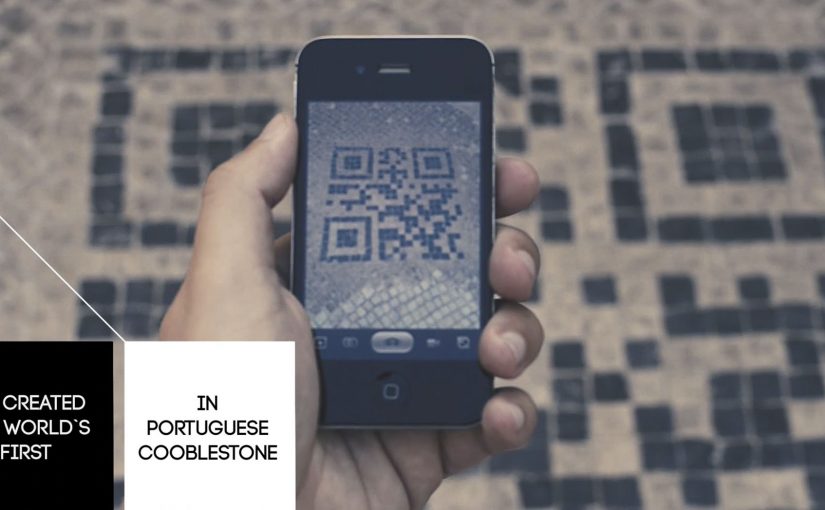
Turismo de Portugal: Cobblestone QR Codes

To get into the minds of tourists, Turismo de Portugal decides to fuse QR code technology with Portugal’s historical cobblestone tradition. The result is described as the first QR code made from Portuguese cobblestones.

The first QR code is embedded into the city ground in Lisbon, followed by an installation in Barcelona. Reported write-ups describe the campaign as successful enough to spark plans for similar cobblestone QR codes in other cities such as Berlin, Paris, Tokyo, New York, Vienna, Goa, Lima, and Oslo.

When street craft becomes the interface

The mechanism is simple. A familiar tourist behavior, looking down at the street and looking for cues, is turned into a scan trigger. The QR code is physically “native” to the place because it is built using the same black-and-white stone patterns people already associate with Portuguese streets, especially in historic areas like Chiado.

In destination marketing and city tourism promotion, bridging physical street culture to mobile content is a reliable way to convert foot traffic into deeper engagement. Destination brands should treat the street as the interface, not just the backdrop.

In European destination marketing, the most scalable activations turn street-level cues into a clear mobile doorway.

Why this lands with visitors

It does two jobs at once. It signals “authentic Lisbon” through material and craft, and it gives the tourist an immediate next step through their phone. The real question is how you turn a place’s own cues into a frictionless next step without making it feel like advertising. Unlike a poster or a billboard, the code is part of the ground people are already walking on, so discovery feels like finding something, not being targeted.

Extractable takeaway: If you want mobile interaction in public space, embed the call-to-action into something the place already owns. Local texture first, technology second. The scan should feel inevitable, not imported.

What to steal for your own place-based activations

  • Make the trigger belong to the environment. Use local materials, patterns, or rituals so the interaction feels contextual.
  • Design for tourist attention spans. The best street interactions reward a 5-second decision, not a long explanation.
  • Use “discovery” as the media buy. When people feel they found it, they are more likely to scan, share, and talk about it.
  • Plan for maintenance and legibility. Outdoor codes live or die based on wear, lighting, contrast, and camera-readability.

A few fast answers before you act

What is the Cobblestone QR idea in one sentence?

A QR code built into the street using Portuguese cobblestones, so tourists can scan a piece of the city itself to access content.

Why does making a QR code “physical” matter?

Because it turns a generic tech behavior into a place-specific experience. The scan feels like interacting with Lisbon, not with a random sign.

What makes this different from putting a QR code on a poster?

Placement and meaning. A poster is rented space. A street pattern is owned space. The medium carries authenticity before the message even loads.

What should the QR code open to?

A fast-loading mobile page that confirms you are in the right place and offers one clear next step. If the page feels generic or slow, the “found it” magic disappears.

What is the biggest execution risk?

If the code is hard to scan or the content behind it is weak, the novelty collapses. The physical build earns attention. The mobile experience must repay it.

Viajes Galeón: Twitpoker

A poker table. Five of Colombia’s best-known Twitter personalities. Except the chips are not money. They are followers.

Viajes Galeón, a Colombian travel agency, and Y&R Colombia create Twitpoker, a poker game where players bet their Twitter followers instead of cash. The match is streamed live to audiences via web cams, pulling spectators into the tension of every hand because every raise has a visible social cost.

As described, the live format scaled beyond the five invited players. More than 27,000 people played together on a single table experience, and a brand with little or no prior social footprint used the stunt to kick-start its Twitter presence.

Followers as currency

The mechanism is a value swap. Twitter followers become the stake, which instantly reframes poker from private risk to public reputation. Every decision is legible to the audience and personally meaningful to the players, because the loss is social proof, not cash.

In social-led brand building, the most persuasive “launch” is a mechanic that makes your audience feel they are participating in the growth, not merely watching an ad about it.

Why it lands

The idea works because it turns a platform metric into a story engine. Most follower counts sit idle as vanity. Twitpoker makes the number consequential, and consequence creates attention. The live stream adds immediacy, and the five invited players supply recognizable personalities, so the audience is watching real identities collide with real incentives.

Extractable takeaway: If you want social growth fast, design a mechanic where the platform’s native currency is genuinely at stake, then stage it live so spectators feel the outcome unfolding in real time.

What the travel brand is really buying

The real question is how a low-awareness travel brand gives people a reason to follow right now.

Viajes Galeón is not buying “engagement” as a buzzword. It is buying a credible reason for people to follow, talk, and keep watching. The campaign converts a travel agency into a social event host, which is a stronger role for a brand with low awareness than trying to shout offers into a quiet feed.

What to steal from Twitpoker

  • Make the platform metric matter. Treat followers, likes, time, or access as something that can be risked or earned.
  • Use live to create urgency. Live formats compress attention and increase sharing because people do not want to miss the outcome.
  • Cast with credibility. Recognizable participants provide narrative without needing heavy scripting.
  • Let the audience feel included. Scale participation beyond the core cast so it becomes a shared event, not a private stunt.

A few fast answers before you act

What is Twitpoker?

A live-streamed poker game where participants bet their Twitter followers instead of money, built to generate attention and grow a brand’s social presence.

Why does “betting followers” work as a mechanic?

Because it converts a familiar social metric into a real stake, making every play emotionally legible and socially consequential.

What role does the live stream play?

It creates immediacy and shared tension, which increases participation, sharing, and real-time commentary.

What is the key requirement for this to feel credible?

The stakes must be real and visible, and the participants need an audience that cares about their reputations.

When should a brand use a stunt like this?

When the goal is to bootstrap social attention quickly, and when you can translate platform-native value into a simple game with a clear win and loss.