In the past couple of years, airlines like KLM, SAS, Lufthansa and Air China have pushed social media beyond “posting and promoting” by turning it into a stage for real-world moments.
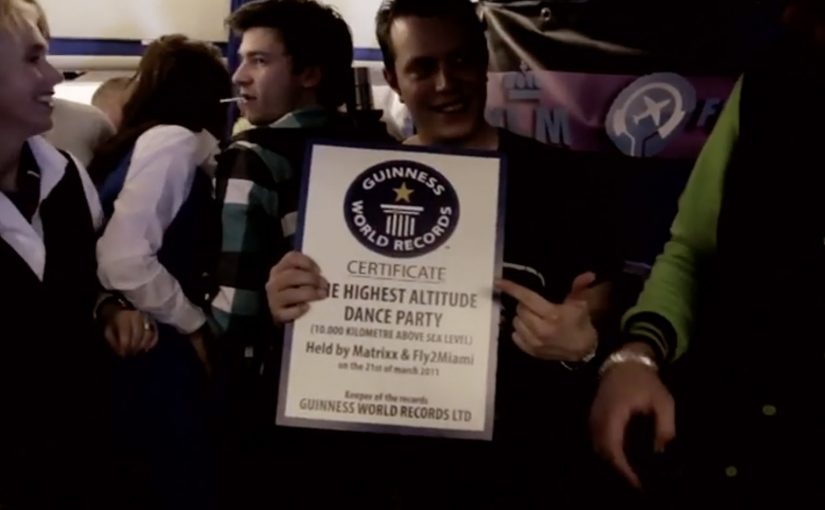
In its Fly2Miami campaign, KLM creates a wave of buzz by hosting a record-billed, meaning promoted as record-setting, in-flight dance party at 35,000 feet, tied to the launch of a new non-stop route from Amsterdam to Miami.
A route announcement that becomes a public challenge
It starts with KLM announcing the new service. Dutch DJ Seid van Riel and producer Wilco Jung tweet KLM asking if the inaugural flight can move up by a week so they can make a Miami music festival. KLM replies with a challenge: fill the plane, and KLM will reschedule. The flight sells out within hours.
How the mechanic works
Mechanically, KLM turns a scheduling request into a participatory social goal with a clear payoff. People do not just “like” the announcement. They help unlock the outcome by committing to seats, then join a one-off experience that can only happen because the flight exists.
In airline route launches, social stunts work best when they turn a schedule announcement into a shared story people can join.
Why it lands
The genius is not the party alone. It is the sequence: a believable trigger (a tweet), a public condition (fill the plane), a fast-resolution arc (sold out), then a payoff that photographs and travels. It works because the public condition turns individual bookings into visible momentum, making the payoff feel earned rather than bought. The campaign makes KLM feel responsive, playful, and culturally plugged in, without needing to shout about fares.
Extractable takeaway: When the condition is public and the payoff is inseparable from the product, participation becomes both demand and distribution, because people feel they helped make the outcome real.
What KLM is really buying
This is conversion disguised as entertainment. The “buzz” is a byproduct of a very practical outcome: a plane filled with the right kind of passengers, at the right time, with a story worth retelling. The real question is whether your stunt pulls demand forward inside the product, or just borrows attention for a day. By “retellability,” I mean how easily the story can be repeated accurately in one sentence and shared without extra explanation. If the Guinness claim is how it was billed, that label simply amplifies the retellability.
Route-launch moves worth copying
- Start with a real trigger. A genuine request beats a manufactured “activation” premise.
- Set one public condition. A simple target (fill the plane) creates momentum and accountability.
- Make the payoff inseparable from the product. The experience must only be possible because your product exists.
- Design for a tight story arc. Setup, challenge, resolution, payoff. No fluff.
A few fast answers before you act
What is Fly2Miami in one line?
A route launch turned into a Twitter-fueled “fill the plane” challenge, culminating in an in-flight dance party on the inaugural Amsterdam to Miami service.
What is the core mechanism?
A public conditional promise: if the community fills the flight fast enough, KLM changes the schedule and delivers a one-off onboard experience.
Why is the “sold out in hours” detail important?
Because it proves participation was real, not symbolic. It converts attention into bookings, then turns the bookings into a story.
What makes the challenge believable?
A condition that is simple to verify and directly tied to the product, like filling seats, keeps the story grounded and prevents it from feeling like a manufactured “activation.”
What is the transferable lesson for other brands?
Turn a product moment into a challenge with a clear condition and a tangible payoff, then let the audience do the distribution by earning the outcome.