
Starbucks: Tweet a Coffee

Starbucks: Tweet a Coffee

In March 2012, Amex card members could sync their credit cards with their Twitter account, then re-tweet offers to load them onto their card. Fast forward to 2013 and Starbucks USA is allowing customers to “Tweet a Coffee”.

In the current beta version, the first 100,000 US-based customers can tweet $5 Starbucks Card eGifts to Twitter friends and followers. All it takes is linking your Starbucks and Twitter accounts, then tweeting @tweetacoffee to @TheirNameHere.

A checkout moment that looks like a message

The mechanism is account linking plus a structured tweet. The tweet becomes the purchase trigger, and the recipient receives a redemption flow that feels like a social interaction rather than an ecommerce checkout. Because the purchase trigger lives inside a normal message action, it reduces steps, which is why the gifting moment feels unusually low-friction.

In US consumer retail and payments ecosystems, this kind of channel integration turns gifting into a low-friction habit that rides on existing identity and loyalty rails (the linked accounts and stored-value programs customers already use).

The real question is whether your payment flow can hide the transaction inside a native social action without losing control of redemption and risk.

Why it lands

It compresses generosity into a familiar behavior. You do not have to open an app, browse, or remember an email address. You just use the interface you already use to talk to people. The “$5” constraint also matters. It is small enough to be spontaneous, but concrete enough to feel real. This is the better starting pattern for social payments because it keeps the action familiar while keeping the value transfer explicit.

Extractable takeaway: If you want social commerce to scale, make the transaction look like native social behavior, then constrain the first use case to one simple, giftable unit with an obvious price point.

Patterns to borrow for social payment experiments

  • Start with gifting, not buying. Gifting has a built-in emotional reason to happen, which reduces the need for persuasion.
  • Make the trigger public, keep the redemption controlled. The tweet creates visibility. The redemption link manages fraud, fulfillment, and policy.
  • Use a single, repeatable format. One command pattern makes it easy to learn and easy to copy.
  • Design for “small yes” transactions. Low-value, high-frequency gifts teach the habit without asking for big trust on day one.

A few fast answers before you act

What is “Tweet a Coffee” in one line?

It lets eligible Starbucks US customers send a $5 Starbucks Card eGift to someone on Twitter using a structured tweet after linking accounts.

Why is gifting the right first use case for social payments?

Because it has a clear social motive and a clear recipient. That reduces friction compared to asking people to buy something for themselves in a new way.

What makes this different from a promo code tweet?

The tweet is not just marketing. It triggers a real value transfer, and the recipient experiences it as a personal gift rather than an offer broadcast.

What is the minimum pattern to copy without relying on Twitter?

Use an identity-linked account, a simple public trigger that looks native to the channel, and a controlled redemption step that protects fulfillment and policy.

What is the biggest risk when brands copy this idea?

Trust breakdown. If account linking feels heavy, or if redemption feels spammy or unreliable, users will abandon the flow and may blame the brand rather than the platform.
Carrie: Telekinetic Coffee Shop Surprise

Carrie: Telekinetic Coffee Shop Surprise

A coffee shop that turns into a horror scene

Carrie is an upcoming 2013 American supernatural horror film. It is the third film adaptation of Stephen King’s 1974 novel of the same name.

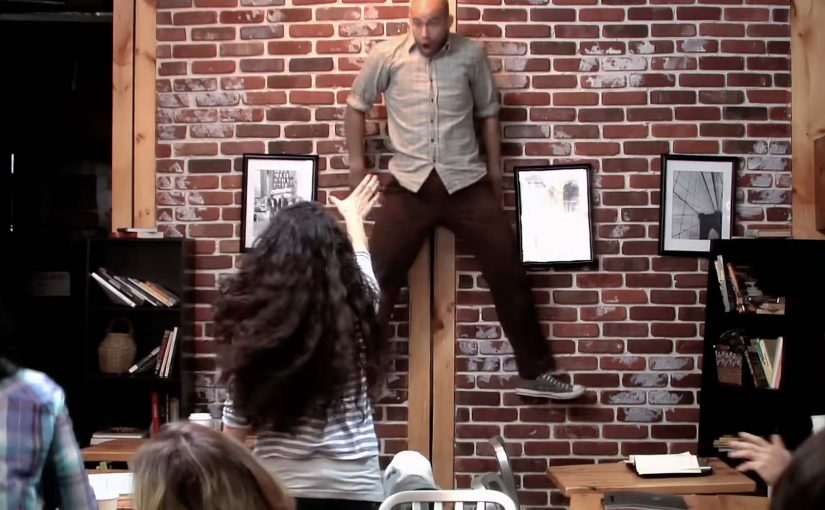
To promote the remake, Sony (with help from Thinkmodo) outfits a small coffee shop in New York with remote-controlled tables and chairs, a fake wall used to “levitate” a guy, and books that fly off the shelves by themselves. An actor takes on the role of Carrie and sets up innocent customers for a prankvertising experience they do not see coming. Here, prankvertising means a brand-built public stunt designed to capture genuine reactions on camera.

The mechanic: practical effects plus hidden cameras

The execution works because the effects are physical, not “post.” Furniture moves with real force. Books drop in real time. A wall gag sells the impossible moment. Hidden cameras then capture reactions that read as instinctive rather than performed, which is exactly what makes the video rewatchable and shareable.

In entertainment launches, engineered “you had to be there” moments are a reliable way to turn a theme into conversation without relying on a trailer.

Why it lands

The spot uses a tight emotional sequence. Normal. Confusion. Escalation. Relief. Then laughter. That arc matches how people actually experience a scare, and it gives viewers permission to share it because the payoff is reactions, not cruelty. It also maps cleanly onto the film’s core promise. Something supernatural breaks into an everyday setting, and nobody is ready for it. The real question is whether the stunt makes people feel Carrie before they watch Carrie.

Extractable takeaway: If you are selling a feeling (fear, awe, suspense), stage a believable real-world trigger that creates the feeling first, then let the audience’s reaction become your proof and your distribution.

What to steal from this horror launch

  • Make the premise legible in five seconds. Coffee shop. Spilled drink. Sudden shift. No explanation needed.
  • Use practical cues that cameras can’t fake. Real movement and real sound sell “impossible” faster than clever editing.
  • Keep the reveal product-aligned. The stunt matches the movie’s supernatural premise, so it feels like an extension of the story world.
  • Design for safe escalation. Intensity rises, but the scene resolves quickly enough that sharing feels fun, not disturbing.

A few fast answers before you act

What is the “Telekinetic Coffee Shop Surprise” for Carrie?

It is a staged hidden-camera stunt where a “Carrie” character appears to use telekinesis in a New York coffee shop, creating a real-world scare moment to promote the 2013 remake.

What is the core mechanic that makes it believable?

Practical effects in a real environment. Remote-controlled furniture, triggered props, and a wall gag create physical proof, and hidden cameras capture genuine reactions.

Why is this format effective for film marketing?

It demonstrates the film’s emotional promise in the real world, then turns audience reactions into shareable content that travels farther than a standard promo clip.

What makes prankvertising work without backlash?

When escalation is controlled, participants are not humiliated, and the payoff is relief and laughter. The moment should feel surprising, not harmful.

What’s the main transferable lesson?

Stage the feeling first. If you can reliably create the intended emotion in a real setting, the audience will do the storytelling for you.

Cheetos Mix-Ups: Cheetahpult Dual-Screen Game

Cheetos Mix-Ups: Cheetahpult Dual-Screen Game

In March I had written about how Google had inspired developers to convert mobile phones and tablets into remote controls for desktop browsers via a simple mobile URL. Now Cheetos, an American brand of cheese-flavored puffed cornmeal snacks, has successfully tapped this technology to engage with viewers as they watch a regular TV commercial on YouTube.

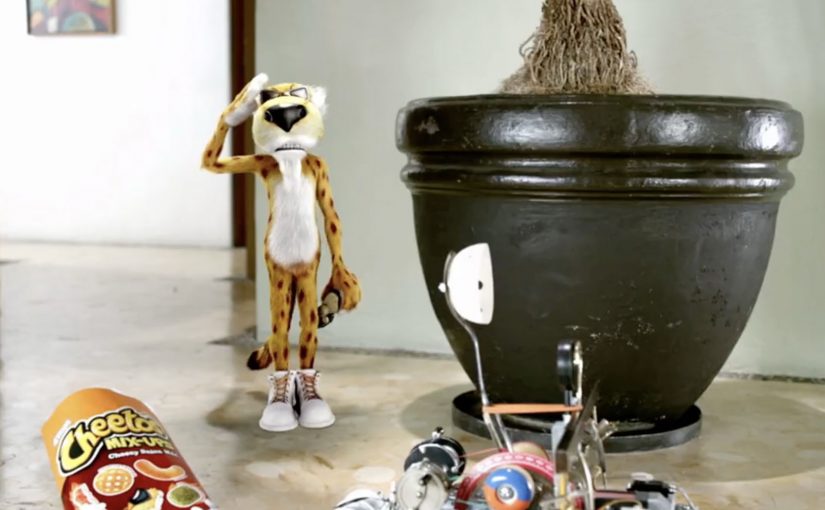
Viewers watching the Cheetos Mix-Ups ad on YouTube get a dual-screen experience. They can fling the new Cheetos Mix-Ups snacks from their phone into a video playing on their desktop. The campaign creates a new way to engage with the ad, and to get to know the product’s new shapes and colors through play.

At this point, the video is reported to have reached 8.5 million views on YouTube. People who played the game are reported to have stayed for an average of 7 minutes and 17 seconds, and flung an average of 56 Cheetos per game.

A YouTube ad that behaves like a game

The trick is simple and surprisingly scalable. Your desktop stays on YouTube, playing the film. Your phone becomes the controller via a lightweight URL experience, so interaction happens in your hand while the “world” of the ad stays on the big screen.

How the dual-screen catapult works

Instead of treating the mobile device as a companion banner, the experience treats it as an input device. You aim, fling, and see the result immediately in the desktop video frame, which turns passive viewing into a loop of action, feedback, and repeat.

In global FMCG launches, second-screen interactivity works best when it turns product attributes into gameplay, and makes “learning the product” feel like time well spent.

Why this lands while people are “just watching YouTube”

It hijacks a familiar behavior. People already watch ads on desktop while their phone is in hand. Cheetahpult converts that split attention into viewer control, and uses physics and repetition to teach what Mix-Ups actually is, in a way a standard product shot cannot. The real question is whether the interaction helps people understand Mix-Ups faster than a normal product shot would. In this case, it does, because the mechanic turns product variety into something people learn by doing.

Extractable takeaway: If your product is hard to describe in one sentence, let people handle it. Build a micro-game where the mechanic is the product benefit, and the reward is comprehension.

What Cheetos is really buying here

This is product education disguised as entertainment. The intent is to turn a new SKU with multiple shapes and flavors into something memorable, then associate that memory with the brand, so the next shelf moment feels familiar.

What Cheetos teaches about interactive video

  • Design for the device people already hold. Dual-screen works when the phone is the controller, not an afterthought.
  • Make the mechanic teach the product. If the game can be reskinned for any brand, it is not specific enough.
  • Keep the loop short and replayable. Fast rounds create “just one more try” behavior, which is where learning happens.
  • Use the main video as the stage. The desktop frame should feel like the real world, and the phone should feel like the tool.

A few fast answers before you act

What is Cheetahpult?

Cheetahpult is a dual-screen YouTube experience that turns a Cheetos Mix-Ups video into a simple physics-style game, with the phone acting as the controller and the desktop video acting as the playfield.

Why does second-screen interaction help an ad?

It converts passive reach into active time. When people interact, they process product details more deeply, and the ad becomes something they did, not just something they saw.

What makes this different from a typical “interactive ad”?

The interaction is not layered on top as buttons. The phone becomes a controller, and the main video becomes the environment, so the ad and the game feel like one system.

When should a brand use this pattern?

When a launch needs fast product education, and when the product has attributes that benefit from repetition, variation, and play, like shapes, combinations, flavors, or configurations.

What should a brand avoid when copying this idea?

Avoid mechanics that are fun but unrelated to the product. If the interaction does not teach something specific about the item being launched, the brand gets playtime but not product understanding.