
Volkswagen: Rock in Rio Drumset

Volkswagen: Rock in Rio Drumset

A banner ad you can actually “play”

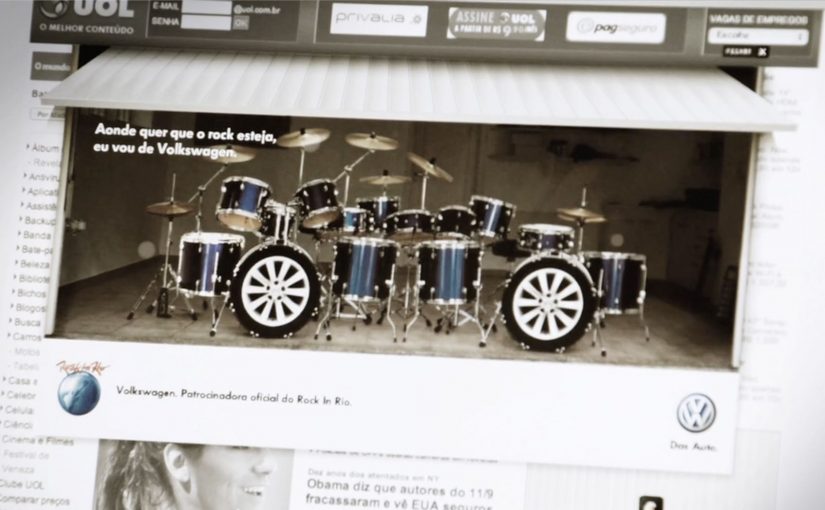
To celebrate Rock in Rio, Volkswagen built a banner execution that uses your webcam as the input device. Instead of asking you to watch, it invites you to perform, like a tiny drum solo inside a media placement.

How the mechanism earns attention

The core mechanic is simple: webcam permission turns a standard banner into an interactive surface, where your movement becomes the “controller” for the drum kit. That shifts the experience from passive exposure to active participation in a few seconds. Because the unit reacts to a single, instantly legible gesture, it earns attention before the viewer has time to move on.

In brand-led entertainment marketing, the smallest possible interaction can turn a paid unit into something people choose to engage with.

Why it lands in a festival context

Rock in Rio is already about energy, performance, and communal hype. A drum kit inside a banner borrows that emotional language and makes it personal. You are not being shown “festival vibes”. You are generating them, even if it’s just for a moment at your desk.

Extractable takeaway: When a paid unit lets people create a recognizable mini-performance in one step, the creative feels like entertainment, not media.

The payoff is not the complexity. It’s the contrast: banners normally ask for a click, this one asks for a gesture. That little shift makes the format feel fresh again.

The real question is whether your paid placement gives people something to do, not just something to click.

This is the right kind of interactivity for display: opt-in, one-step, and instantly legible.

Takeaways for webcam-controlled banners

  • Use one input. A single action users already understand (movement, tap, swipe) beats multi-step instructions.
  • Make the first five seconds obvious. If the user can’t “get it” instantly, they drop. Here, the drum metaphor does the teaching.
  • Match the interaction to the moment. Music festival content should feel performative. The interaction mirrors the cultural context.
  • Keep the reward emotional. The win is “I played it”, not “I learned a feature list”.

A few fast answers before you act

What is a webcam-controlled banner ad?

It’s a display ad unit that asks for webcam access and uses the camera feed as a live input, usually via motion detection, to let the viewer interact with the creative.

Why use a webcam in a banner at all?

Because it turns a standard media placement into an experience. That can increase attention and memorability when the interaction is instantly understandable.

What makes this Rock in Rio execution work?

The interaction fits the occasion. A drum kit is a native “festival” object, and the gesture-based control makes the format feel playful instead of intrusive.

What’s the main risk with webcam-based ads?

Friction and trust. If the value isn’t obvious, users will refuse permissions or bounce. The creative must communicate intent and payoff immediately.

What’s the simplest modern takeaway?

Give the audience a one-step action that creates a visible result. If the interaction is clear and rewarding, the format becomes the message.
VW Polo Principle: Crowdsourced 3D Prints

VW Polo Principle: Crowdsourced 3D Prints

Volkswagen last year launched “The Polo Principle” ad campaign to convey the message that high-end innovations were now available to Polo drivers.

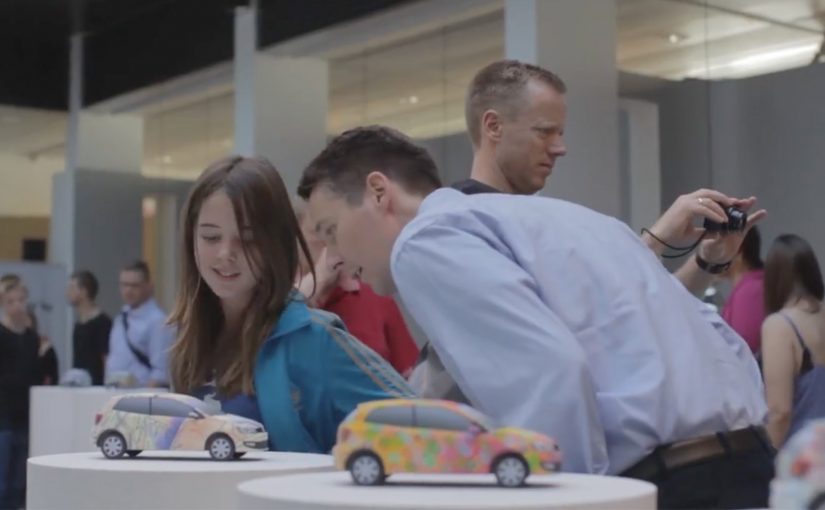
Then, to democratize the innovation process, they allowed people to actually design their very own 3D Volkswagen mock ups. The top 40 designs were chosen by a panel of judges and then put on display in Copenhagen, with the entrants receiving their (mini) 3D printed Volkswagens in the mail.

From innovation message to innovation participation

The mechanism is a neat escalation. The campaign starts with a claim: premium innovation is no longer reserved for premium models. Then it turns that claim into an action: if innovation is being “democratised,” people should be able to shape it. A 3D design tool becomes the interface for participation.

Instead of asking audiences to agree with the brand message, Volkswagen invites them to contribute to it, visually and playfully.

In co-creation campaigns, participation becomes persuasion when people can make something that physically proves the brand promise.

In enterprise marketing teams, co-creation only scales when the participation interface is simple and the payoff is concrete.

Why it lands: ownership beats persuasion

This works because creating something triggers a different level of engagement than watching something. Designing a mock up requires time, intent, and taste. Once you invest that effort, you become emotionally tied to the campaign. And when your design is selected, the brand is no longer a distant manufacturer. It is a platform that amplified you. Co-creation is most persuasive when the act of making produces an object people can keep or show.

Extractable takeaway: When you claim “innovation for everyone,” turn the claim into something people can make, so the audience owns a proof of the promise.

The Copenhagen display adds a public payoff. It moves the work out of the browser and into a real space, which signals seriousness and status.

The intent: make “accessible innovation” feel real

The business intent is to attach innovation to the Polo brand without sounding like advertising. Here, “accessible innovation” means making premium innovation cues feel reachable for everyday Polo drivers, not only for flagship models. The real question is whether your “innovation” story can be experienced, not just believed. User-generated designs create social proof. The 3D printed mini cars make the campaign tangible. “Innovation is available to you” becomes “here is something you made, and here is a physical object that proves it.”

Make co-creation tangible

  • Turn a message into a mechanism. If you claim democracy, build a democratic action people can take.
  • Reward with something physical. A mailed 3D print is a memorable artefact, not a forgettable badge.
  • Curate publicly. Exhibiting the top designs creates status and raises the perceived value of participation.
  • Use judges plus community. A panel can signal craft and quality, not just popularity.
  • Design for shareability. People naturally share what they created, especially when it looks good.

For more examples on brands using 3D printing click here.


A few fast answers before you act

What was the core idea behind the Polo Principle extension?

To move from talking about “innovation for everyone” to letting people participate by designing their own 3D Volkswagen mock ups.

Why add 3D printing to a campaign?

It creates a physical proof point. A printed mini model makes the experience feel real, personal, and worth keeping.

What role did the Copenhagen display play?

It gave public status to the best designs and signalled that the brand took the contributions seriously, beyond a digital stunt.

Is co-creation mainly an awareness play?

It can drive awareness, but its deeper value is emotional ownership. People remember what they helped create.

What is the main takeaway for brands claiming “democratisation”?

If you want the message to stick, build a mechanism that lets people experience the claim directly, and reward participation in a tangible way.

Volkswagen #Polowers: Tweet-Powered Race

Volkswagen #Polowers: Tweet-Powered Race

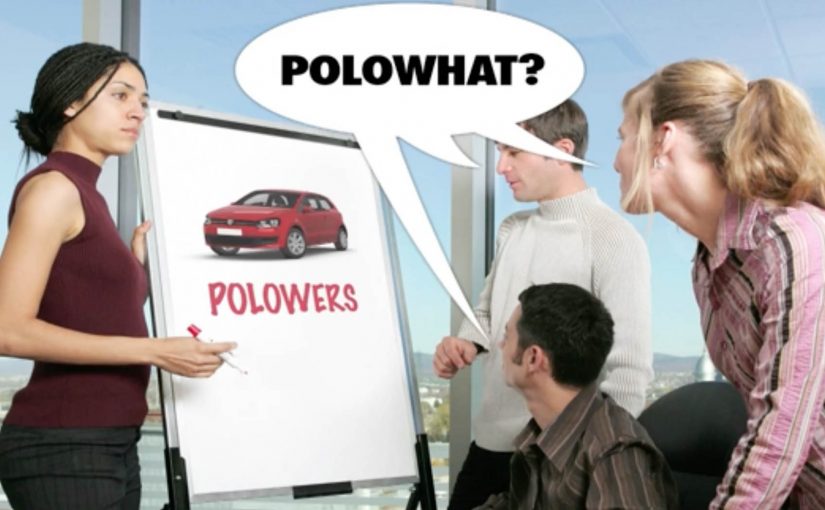
Volkswagen Polo is one of the most desired cars amongst the youth of Spain. To make a big entry DDB Spain created a Tweet based race that would make VW Polo the most trending topic on Twitter for that day.

A special hashtag #Polowers was created in order to give a name to the VW Polo Followers. Then to generate conversation amongst the Polowers a race was setup where each tweet took the follower to the first position. In this context, a tweet-based race means every tweet with the #Polowers hashtag updates a live leaderboard.

The real question is: how do you turn a low-effort social action into sustained participation during a short launch window?

This is a smart mechanic because it turns public rank into the content people return to influence.

When the Polo stopped at one of the 5 designated stops, the follower in the first position at that time would win a prize, iPad, Denon Ceol music system, Leica D-Lux 5 camera, VW Bike and eventually the grand prize VW Polo itself.

In terms of results, the campaign generated more than 150,000 tweets in 8 hours after launching, at a rate of 5 tweets per second and reached more than 10% of Twitter’s total audience in Spain. It also became the leading Top 10 trending topic and generated a record breaking amount of traffic to Polo’s product section on Volkswagen.es.

Last year Mercedes-Benz had created a tweet based race that had real life cars fueled by tweets. Check out that campaign here.

Why this mechanic works

This is a clean real-time loop. Tweeting is the action. Rank is the feedback. Prizes are the incentive. The “race” gives people a reason to keep going, because every new tweet can change the leader. Because rank shifts are immediate and visible, people keep tweeting to defend or steal the top spot.

Extractable takeaway: If you make the user action measurable and publicly visible in real time, participation grows because people can see their impact instantly.

  • Identity creates belonging. #Polowers turns followers into a named group.
  • Progress is instant. One tweet changes position immediately.
  • Time pressure drives volume. Five stops create multiple “now” moments.
  • Reward cadence sustains momentum. Smaller prizes build toward the grand prize.

In European launch campaigns that need fast, time-boxed social momentum, a live leaderboard loop like this helps convert attention into repeat action inside a single mechanic.

What to take from this if you run social campaigns

  1. Design a loop that explains itself. If the rule fits in one sentence, participation scales.
  2. Make the scoreboard the content. Rankings create a story people want to influence.
  3. Use milestones. Stops and deadlines create peaks instead of a flat timeline.
  4. Measure beyond buzz. Here the campaign also drove traffic to the Polo product section, not just tweets.

A few fast answers before you act

What was Volkswagen #Polowers?

It was a tweet-based race in Spain where participants used the #Polowers hashtag, and tweeting moved them into first position in a live competition for prizes and a chance to win a VW Polo.

How did the prize mechanic work?

When the Polo stopped at one of five designated stops, the follower in first position at that moment won a prize. The grand prize was a VW Polo.

What were the reported results?

More than 150,000 tweets in 8 hours, around 5 tweets per second, reaching more than 10% of Twitter’s total audience in Spain, plus Top 10 trending status and record traffic to Volkswagen.es Polo pages.

Why did the hashtag matter?

#Polowers gave the community a name and made participation visible, searchable, and easy to join.

What is the transferable lesson?

If you turn a simple action into a live competition with clear milestones and meaningful rewards, social participation can compound quickly.