
Pepsi Max: Unbelievable Bus Shelter

Pepsi Max for its new ‘Unbelievable’ campaign rigged an ordinary bus shelter in London, to perform tricks on unsuspecting travellers.

Using a custom see-through digital display, people waiting at the bus shelter were made to believe that they were actually seeing things like hovering alien ships, a loose tiger, a giant robot with laser beam eyes and so on.

The reactions to these ‘unbelievable’ scenarios were then captured and put in the below viral video.

Why this works. Even before you talk about “tech”

The technology is impressive, but the mechanic is simple. Here, “mechanic” means the repeatable audience interaction pattern, not the underlying tech. It takes an everyday moment. It inserts a believable layer of impossible. Then it lets people do the rest. React, laugh, point, film, share. Because the impossible is framed inside a familiar “window”, disbelief lands fast and reactions become the content. In high-footfall urban out-of-home environments, a brand moment has to work wordlessly, in seconds, for strangers who did not opt in.

Extractable takeaway: If you can turn passive waiting time into a personally witnessed story, you get emotion, proof and distribution before you spend on media.

That is the real move. It transforms passive waiting time into a story that feels personally witnessed.

The bus shelter as a “media product”

This activation treats the bus shelter like a product interface, not just a placement. It has inputs and outputs. Here, “activation” means a physical installation that creates a live brand experience in public space.

  • Input. People arrive with low expectations and spare attention.
  • System. A “window” that looks like reality, then breaks it in a controlled way.
  • Output. Instant emotion, social proof from nearby strangers, and a camera-ready moment.

In other words, it is not only out-of-home. It is an experience designed to be recorded and re-distributed.

The real question is whether your experience turns bystanders into witnesses, and witnesses into voluntary distribution.

What makes it shareable. And why the video is the second product

The live moment is the first product. The viral video is the second product. The second product extends the reach far beyond the street corner.

Tech is optional. If the premise is not instantly legible, it will not travel.

  • High signal in seconds. You understand what is happening instantly.
  • Escalation. Each new “unbelievable” scene raises the stakes and keeps attention.
  • Human faces. The reactions are the content. The brand stays present but not intrusive.
  • Social permission. If others are reacting, you react too. Then you share.

What to take from this if you build brand experiences

  • Design the moment first. The best “viral videos” start as real-world moments people want to show others.
  • Keep the premise instantly legible. If it needs explanation, it loses momentum.
  • Make capture a feature. If people will film it, stage it so the footage works.
  • Build a repeatable format. One idea, multiple scenarios, consistent payoff.
  • Let the audience star. The most believable proof is human reaction, not brand claims.

A few fast answers before you act

What is Pepsi Max “Unbelievable” in one sentence?

It is a London bus shelter activation that used a see-through digital display to create impossible scenes, then turned real public reactions into a viral video.

Is this augmented reality?

It functions like augmented reality for the audience, because it overlays illusions onto what looks like a real street view, even though the experience is delivered through a physical digital screen.

Why do people share this kind of content?

Because it triggers instant emotion and disbelief, and it is easy to explain visually. People share it to pass on the surprise.

What is the key design principle behind the activation?

Make the better story happen in the real world. Then make it easy for the story to travel as video.

What is the practical takeaway for marketers?

When you create a moment that people genuinely want to record, distribution becomes an outcome of the experience, not a separate media plan.
Carlsberg: Happy Beer Time

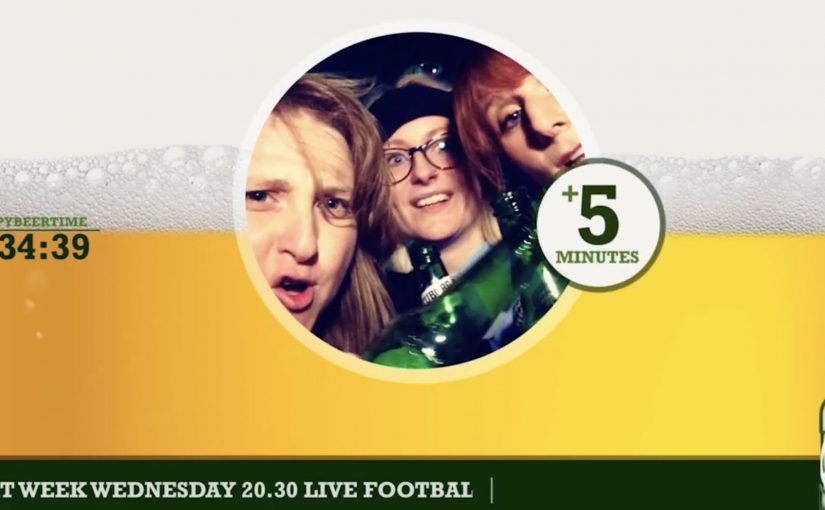
Nowadays people like to go out, take photos, and share them on Instagram. Carlsberg, together with the Danish agency Konstellation, puts a social twist on the well-known concept of happy hour by turning every post into more discounted time for the whole bar.

A happy hour that gets longer when the bar posts together

The mechanic is simple and highly visible. Guests snap an Instagram photo and tag it with the venue name and #HappyBeerTime. Each successfully tagged photo extends a shared countdown on the bar’s screen, which keeps discounted beer available for everyone while the clock keeps moving.

In on-trade environments, meaning bars and restaurants, the strongest promotions convert shared participation into a shared, immediate reward that the whole room can see.

What makes the mechanism work in a real bar

  • One clear lever. Post with the right tags. Add time.
  • Progress is public. A live countdown on a screen turns the promotion into a collective game.
  • Reward is communal. Everyone benefits from every post, so the behaviour spreads naturally.
  • Distribution is built in. The bar gains organic visibility through guests’ own feeds.

The real question is whether your incentive creates a room-level feedback loop fast enough that people feel their action changes the moment.

Why it lands

This activation aligns with what people already do on a night out. Take photos. Share moments. The difference is that the sharing changes the environment in real time. That makes the incentive feel playful rather than purely transactional.

Extractable takeaway: If you want participation at scale inside a venue, use a reward the entire room experiences together, and make the progress visible so the crowd recruits itself.

What the brand is really buying

On the surface, it is discounted beer for longer. Underneath, it is repeat purchase pressure at the point of sale, plus a stream of user-generated content tied to specific venues and nights. The bar gets word-of-mouth promotion. Carlsberg gets social proof linked to a real-world occasion.

A quick note on “Happy Hour 2.0”

“Happy Hour 2.0” is the idea of extending a happy-hour window through a simple trigger, instead of relying on a fixed start and end time. Budweiser was earlier to pioneer this Happy Hour 2.0 concept in August 2012. Carlsberg’s twist is connecting the extension mechanic directly to social posting behaviour.

Proof that the idea travelled beyond a one-off

The concept drew broader industry attention, including recognition in Danish award circuits and international festival shortlists. That matters because it signals the mechanic is legible. It is easy to explain, easy to copy, and easy for people to participate in without training.

Steal the shared countdown loop

  • Keep the action atomic. One photo and two tags beats a multi-step flow.
  • Design the room-level feedback loop. The screen is not decoration. It is the social engine.
  • Set guardrails early. Decide how you handle off-brand or inappropriate posts, and communicate it.
  • Make the reward feel immediate. “Add time now” beats “collect points later”.
  • Measure uplift, not just posts. Treat UGC as a means. The goal is incremental sales and dwell time.

A few fast answers before you act

What is Happy Beer Time in one sentence?

It is a bar promotion where Instagram posts tagged with the venue name and #HappyBeerTime extend a shared happy-hour countdown, keeping discounted beer available for longer.

Why does “time” work as the reward?

Time is instantly understood, visibly shared, and emotionally tied to the night out. Adding minutes feels like progress the whole room experiences together.

What makes this different from a standard hashtag campaign?

The hashtag is not just for awareness. It is a trigger that changes the real-world environment in real time, which makes posting feel consequential.

What can go wrong operationally?

If tagging rules are unclear, people will not participate. If moderation is absent, inappropriate content can surface. If the reward lags, the loop breaks.

What should you measure in a pilot?

Participation rate, post volume per hour, time extended per session, sales uplift during the activation window, and whether dwell time increases without margin loss exceeding targets.

Samsung Display: Display Centric World

A near-future that blends text and screens

Text, video, audio and several other interaction types become a common part of media. Everything blends between the visual and the textual and back again. We are surrounded with multi-touch media that uses highly engineered displays and companion technologies.

Samsung Display created the video below to share its vision of the future and to show how its panels could be implemented across consumer and enterprise markets.

What the film is really selling

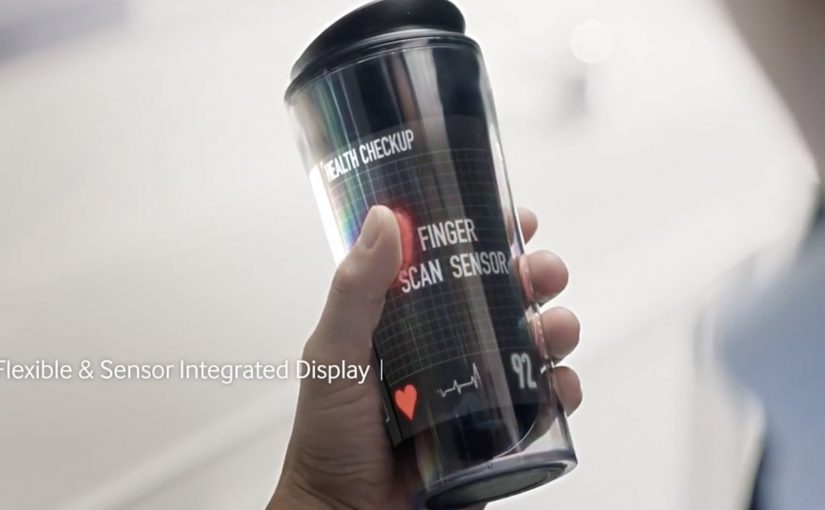
The premise is not “better screens.” The premise is “more surfaces become screens.” Here, a display-centric world means a world where screens become the default surface for access, guidance, and collaboration across daily tasks. The film repeatedly puts interactive display surfaces into everyday moments. Cafés, classrooms, retail, commuting, and healthcare all become scenarios where information appears in place, on demand, and in the exact format that fits the situation.

Samsung Display originally presented this concept film as part of its Analyst Day 2013 narrative. The message is clear. When displays get thinner, lighter, and more flexible, the interface stops being a device and starts being the environment.

In consumer electronics and enterprise IT, display surfaces are becoming the default interface between data, services, and people.

Why it lands

Vision films work when they turn a technology roadmap into felt moments. Here, the “wow” is not a single gadget. It is the continuity of interaction. You move between surfaces without re-learning the interface, and information follows you in a way that feels natural rather than like a series of app launches. It works because repeated interaction across familiar settings makes the future feel less like a prototype and more like a habit.

Extractable takeaway: The fastest way to make an emerging technology believable is to show the same interaction pattern repeated across multiple contexts, until it reads like an everyday habit.

The hidden dependencies behind a display-centric world

A world full of screens implies a stack of enabling layers that the film only hints at. Sensors to understand context. Identity and handoff to move work between surfaces. Content designed for glance, touch, and collaborative viewing. And a trust model that makes people comfortable when “the room” is also an interface.

The real question is what workflows get simpler when the display is no longer tied to a single endpoint. If you watch it as an enterprise leader, that is where the real productivity story starts.

What to borrow from Samsung’s interface vision

  • Prototype interactions, not products. A single interaction pattern shown in five contexts communicates strategy better than five unrelated gadgets.
  • Make “handoff” the hero. The magic is continuity. Show how content moves between surfaces and people without friction.
  • Design for groups, not just individuals. Many enterprise use cases are collaborative. Surfaces that support shared viewing and shared input are the point.
  • Pressure-test trust. If your interface becomes ambient, you need explicit cues for privacy, control, and intent.

A few fast answers before you act

What is “Display Centric World” by Samsung Display?

It is a concept film that imagines a near-future where interactive displays are embedded into many everyday surfaces, making screens a pervasive interface rather than a single device.

What is the core idea the film communicates?

That as display tech becomes thinner, lighter, and more flexible, the interface shifts from dedicated hardware to the surrounding environment, with consistent multi-touch interaction across contexts.

Why do these “future vision” videos matter for brands and enterprises?

They translate a technology roadmap into concrete usage scenarios, which helps teams align on what to build, what to partner for, and what behaviors they are trying to create.

What are the key dependencies a display-centric world requires?

Context sensing, identity and handoff, content designed for multiple viewing distances and collaboration, and a trust model that makes ambient interfaces feel safe and controllable.

What is the most transferable lesson for product teams?

Build and communicate around repeatable interaction patterns and seamless handoffs. Products change quickly, but interaction habits scale across devices and surfaces.