
Nissan NISMO Watch

Nissan NISMO Watch

To say the smartwatch industry is on the verge of exploding would be an understatement. Consumer electronics companies and chip makers are not the only players entering the wearable tech space. Nissan recently announced it is joining the fray too, with what it bills as the first smartwatch concept to connect the car and driver.

There are already a number of smartwatches on the market, including Pebble, i’m Watch, Sony SmartWatch 2 and Samsung Galaxy Gear. But out of all of them, this is the coolest looking and it actually maps to a real use case for Nissan performance fans.

Nissan is scheduled to show off the device, dubbed the Nissan NISMO Watch, at the Frankfurt Motor Show. From the video it looks pretty awesome, so I cannot wait to see it when I visit the Frankfurt Motor Show next week.

What the NISMO Watch is trying to do

Nissan positions the watch as a bridge between driver and car. The concept is designed to connect via a smartphone app using Bluetooth Low Energy, a low-power wireless connection, and surface data that drivers and track-day fans care about, such as average speed and fuel consumption, plus broader vehicle telematics, meaning sensor and usage data from the car, and performance information.

It also leans into biometrics. The concept includes a heart rate monitor, framing the watch as a way to understand not only the car’s performance, but the driver’s state too.

In automotive performance culture, wearable concepts like this are as much about brand signaling as they are about immediate product rollout.

Why this is a smart brand move

NISMO is Nissan’s performance identity. A watch is a compact, always-visible object that can carry that identity beyond the car itself. If you can make “performance data” feel personal and wearable, you turn a brand into a daily habit, not only a purchase decision.

Extractable takeaway: When your differentiator is performance data, make it personal and habitual by packaging it as something people wear between driving moments.

The concept also stretches beyond driving. Nissan’s own materials describe a “social performance” layer, where the watch can track activity across major social networks. Even if that is more provocative than practical, it makes the point: the watch is meant to be a connected lifestyle object, not only a dashboard mirror.

The real question: usefulness vs distraction

The real question is whether this becomes useful insight or a new source of distraction. Anything that surfaces data while driving needs restraint. The best version of this idea is “track-day and post-drive insight”, not “more screens in motion”. If the watch becomes a reason to look away from the road, the concept backfires.

Steal-worthy moves for performance-product marketers

  • Export the benefit into a new object. If your differentiator is hard to demo, move it into something people can touch and wear.
  • Combine machine data with human data. “Car telemetry plus biometric state” is a stronger story than either alone.
  • Make the design do half the selling. If it looks like performance gear, people will want to try it before they understand the spec sheet.
  • Keep the experience context-safe. Design interactions for before and after driving, not during critical moments.

A few fast answers before you act

What is the Nissan NISMO Watch?

It is a smartwatch concept Nissan unveiled for its NISMO performance brand, positioned as a way to connect driver and car by showing vehicle performance data and driver biometric data.

How does the watch connect to the car?

Nissan’s release describes connecting via a smartphone app using Bluetooth Low Energy, so the watch can receive telemetry and performance information.

What kind of data does it show?

Reported features include average speed and fuel consumption, access to vehicle telematics and performance data, and biometric capture via a heart rate monitor.

Why would an automaker build a smartwatch concept?

Because it signals innovation, extends the brand into daily life, and creates a tangible way to talk about connected-car data and performance identity beyond the vehicle.

What is the biggest risk with wearables tied to driving?

Distraction. Any design that encourages glances during driving can be unsafe, so the value needs to skew toward track use and post-drive insights.
Cheetos Mix-Ups: Cheetahpult Dual-Screen Game

Cheetos Mix-Ups: Cheetahpult Dual-Screen Game

In March I had written about how Google had inspired developers to convert mobile phones and tablets into remote controls for desktop browsers via a simple mobile URL. Now Cheetos, an American brand of cheese-flavored puffed cornmeal snacks, has successfully tapped this technology to engage with viewers as they watch a regular TV commercial on YouTube.

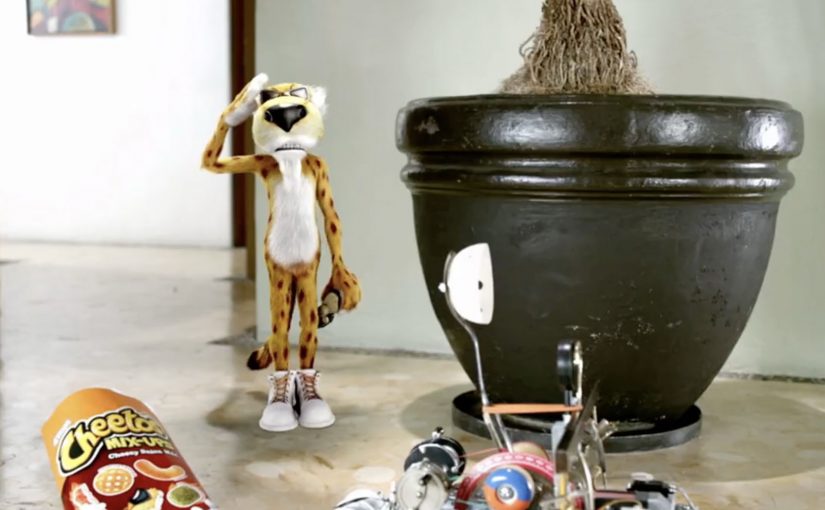
Viewers watching the Cheetos Mix-Ups ad on YouTube get a dual-screen experience. They can fling the new Cheetos Mix-Ups snacks from their phone into a video playing on their desktop. The campaign creates a new way to engage with the ad, and to get to know the product’s new shapes and colors through play.

At this point, the video is reported to have reached 8.5 million views on YouTube. People who played the game are reported to have stayed for an average of 7 minutes and 17 seconds, and flung an average of 56 Cheetos per game.

A YouTube ad that behaves like a game

The trick is simple and surprisingly scalable. Your desktop stays on YouTube, playing the film. Your phone becomes the controller via a lightweight URL experience, so interaction happens in your hand while the “world” of the ad stays on the big screen.

How the dual-screen catapult works

Instead of treating the mobile device as a companion banner, the experience treats it as an input device. You aim, fling, and see the result immediately in the desktop video frame, which turns passive viewing into a loop of action, feedback, and repeat.

In global FMCG launches, second-screen interactivity works best when it turns product attributes into gameplay, and makes “learning the product” feel like time well spent.

Why this lands while people are “just watching YouTube”

It hijacks a familiar behavior. People already watch ads on desktop while their phone is in hand. Cheetahpult converts that split attention into viewer control, and uses physics and repetition to teach what Mix-Ups actually is, in a way a standard product shot cannot. The real question is whether the interaction helps people understand Mix-Ups faster than a normal product shot would. In this case, it does, because the mechanic turns product variety into something people learn by doing.

Extractable takeaway: If your product is hard to describe in one sentence, let people handle it. Build a micro-game where the mechanic is the product benefit, and the reward is comprehension.

What Cheetos is really buying here

This is product education disguised as entertainment. The intent is to turn a new SKU with multiple shapes and flavors into something memorable, then associate that memory with the brand, so the next shelf moment feels familiar.

What Cheetos teaches about interactive video

  • Design for the device people already hold. Dual-screen works when the phone is the controller, not an afterthought.
  • Make the mechanic teach the product. If the game can be reskinned for any brand, it is not specific enough.
  • Keep the loop short and replayable. Fast rounds create “just one more try” behavior, which is where learning happens.
  • Use the main video as the stage. The desktop frame should feel like the real world, and the phone should feel like the tool.

A few fast answers before you act

What is Cheetahpult?

Cheetahpult is a dual-screen YouTube experience that turns a Cheetos Mix-Ups video into a simple physics-style game, with the phone acting as the controller and the desktop video acting as the playfield.

Why does second-screen interaction help an ad?

It converts passive reach into active time. When people interact, they process product details more deeply, and the ad becomes something they did, not just something they saw.

What makes this different from a typical “interactive ad”?

The interaction is not layered on top as buttons. The phone becomes a controller, and the main video becomes the environment, so the ad and the game feel like one system.

When should a brand use this pattern?

When a launch needs fast product education, and when the product has attributes that benefit from repetition, variation, and play, like shapes, combinations, flavors, or configurations.

What should a brand avoid when copying this idea?

Avoid mechanics that are fun but unrelated to the product. If the interaction does not teach something specific about the item being launched, the brand gets playtime but not product understanding.

Coca-Cola Mini Me: 3D-Printed Mini Figurines

Coca-Cola Mini Me: 3D-Printed Mini Figurines

After Volkswagen, Coca-Cola is the next brand to tap the 3D printing trend.

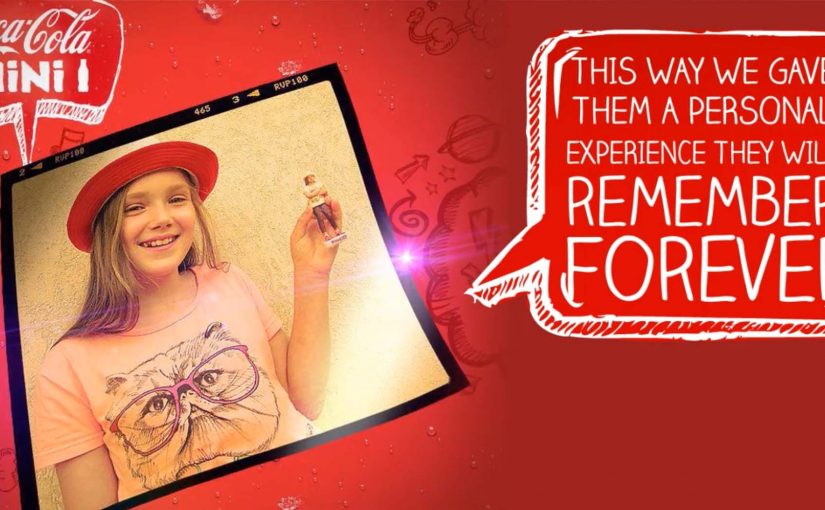
For the launch of its new mini bottles in Israel, Coca-Cola with their agency Gefem Team came up with a campaign that allowed anyone to create 3D mini figurines of themselves. To get one in real life, users had to work a bit.

So first users created the minis using a mobile app. Then they had to keep them happy by feeding it and taking care of its needs.

There was even a virtual supermarket within the app that you could visit to buy your groceries for your mini self.

Those who successfully participated were then invited to the 3D printing lab inside Coca-Cola’s factory in Israel, where they received the mini versions of themselves.

Why this is more than a 3D-printing stunt

The 3D print is the reward, not the whole experience. The real engine is the progression loop, meaning a sequence of small repeat actions that earn a bigger payoff. This is smart campaign design because it makes the physical output feel earned, not handed out. The real question is whether your campaign creates a loop people will return to before you ask them to share anything.

Extractable takeaway: Gate a physical prize behind repeat micro-actions and it stops feeling like a giveaway. It becomes a trophy with a simple story: “I earned this.”

  • Personal creation. You do not receive a generic giveaway. You create “you”.
  • Ongoing engagement. Feeding and caring builds repeated interactions over time.
  • Escalation to the physical world. The factory lab visit turns digital participation into a memorable moment.

The virtual care loop makes the prize feel earned

The app mechanic is intentionally effortful. You have to keep the mini happy. You have to manage its needs. Even the virtual supermarket reinforces routine and “ownership”.

That matters because it shifts the figurine from a freebie into a trophy. Something you earned by participating.

In consumer brands that run digital-to-physical activations, effortful repeat interaction is often what turns novelty into recall.

Why the factory lab invitation is a smart finale

Bringing people into a Coca-Cola factory adds legitimacy and drama. It also creates a content moment. A physical place, a “lab”, and a 3D print reveal that people can photograph and share.

  1. Access as a reward. The invitation itself feels exclusive.
  2. Proof of innovation. The brand demonstrates capability in a tangible way.
  3. Memory value. The experience becomes a story, not just a product launch.

What to take from this if you build digital-to-physical campaigns

  1. Make the reward personal. Personal outputs are more meaningful and more shareable.
  2. Use a progression loop. Repeated small actions can outperform a single big interaction.
  3. Finish with a real-world moment. Physical experiences create stronger recall than purely digital stunts.
  4. Let the brand environment play a role. A factory lab gives credibility and theatre without feeling fake.

A few fast answers before you act

What is Coca-Cola “Mini Me”?

It is a campaign in Israel where users created a virtual mini-self in a mobile app, cared for it over time, and then received a 3D-printed figurine version after qualifying.

How did users qualify to get a real figurine?

They created the mini using the app and kept it happy by feeding it and taking care of its needs, including buying items in a virtual supermarket.

Where did the 3D printing happen?

Qualified participants were invited to a 3D printing lab inside Coca-Cola’s factory in Israel, where they received their mini figurines.

Why include a virtual care mechanic?

It creates repeat engagement and makes the physical reward feel earned rather than given away.

What is the transferable lesson for campaign design?

If you combine personal creation with a progression loop and a physical payoff, you can turn a product launch into a longer-lasting experience.