
Fridge Magnets: Pizza Button and Smart Drop

Fridge Magnets: Pizza Button and Smart Drop

Who says plain fridge magnets cannot be reinvented? Here are two brands who do exactly that, and in the process also enhance the brand experience with their consumers.

VIP Fridge Magnet

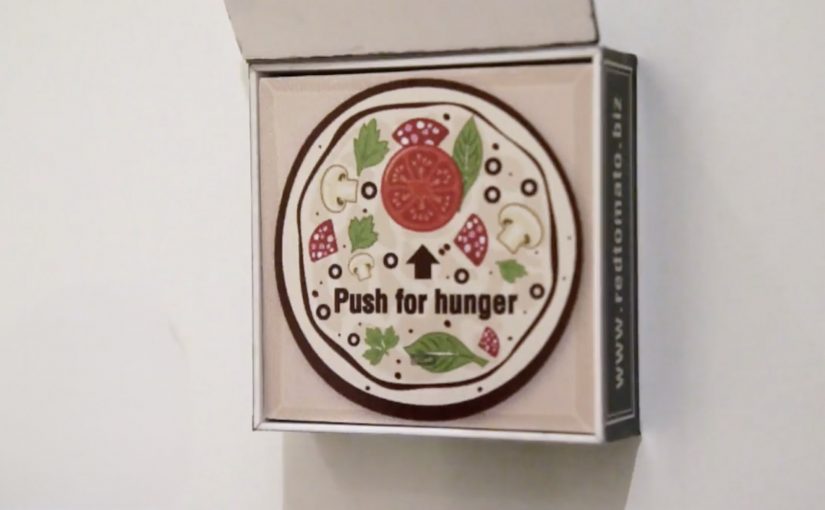
Red Tomato Pizza in Dubai take their loyal pizza patrons very seriously. So they created the “Pizza Emergency Button”, a fridge magnet with a difference. Each button has a loyal pizza patron’s favorite pizza programmed into its memory. When hungry, all the loyal patron needs to do is flip the pizza box lid on the magnet and press the pizza button inside.

Wifi Water Magnet

Evian in Paris created a simple fridge magnet that allows owners to order water and request a particular delivery time directly from their fridge.

The “Smart Drop” magnet is made up of a microcontroller, LED screen, a wireless chip, battery and an inbuilt HTML5 app that does all the work.

The mechanic: turn the fridge door into a service interface

Both executions take a boring surface and give it a single, high-frequency job. One turns repeat ordering into a one-press ritual. The other turns replenishment into a quick scheduling choice, without opening a laptop or digging for an app.

In connected-home style experiences, the winning pattern is not “more features”. It is fewer steps placed exactly where the habit already happens.

Here, “connected-home” means a branded shortcut embedded in an existing household habit, not a full smart-home platform.

Why this lands

These magnets win because they reduce effort at the moment of desire. Hunger and “we’re out of water” are not times when people want menus, logins, or long flows. A physical button and a tiny display on the fridge convert a decision into a reflex.

Extractable takeaway: If the customer action repeats weekly, design the interface around speed and placement first, and only then worry about adding options.

What the brands are really buying

Red Tomato turns loyalty into a tangible perk that feels exclusive and personal. Evian turns replenishment into an owned service moment, and makes delivery feel like part of the product, not a separate chore.

The real question is whether the brand can earn a permanent shortcut into a repeat household behavior.

What to steal for repeat-order design

  • Anchor the interaction to the habit location. Put the “button” where the decision already happens.
  • Make the primary action one-step. If it needs instructions, it is not a fridge magnet anymore.
  • Personalize the default. Pre-selecting “my usual” removes choice friction and makes the experience feel made for me.
  • Show just enough state. A tiny display that confirms quantity and timing often beats a full app for repeat tasks.

A few fast answers before you act

What makes these magnets more than gimmicks?

They replace a recurring micro-task with a faster interface placed at the point of need. The form factor is the strategy, not decoration.

When does a physical button beat an app?

When the action is frequent, low-consideration, and time-sensitive. In those cases, speed and placement outperform feature depth.

Why does placement matter so much here?

Because the fridge is where need becomes action. Putting the interface there removes recall and navigation steps that usually interrupt repeat behavior.

What is the transferable principle for digital teams?

Design around the moment of intent. If you can remove steps at that moment, you usually get higher repeat usage than by adding more functionality.

What is the biggest risk with this pattern?

Over-engineering. If the device needs setup, troubleshooting, or too many choices, the friction cancels out the convenience.
Coca-Cola: Happiness Refill

Coca-Cola: Happiness Refill

Connection as currency on Copacabana

For teens, happiness often means one thing: staying connected.

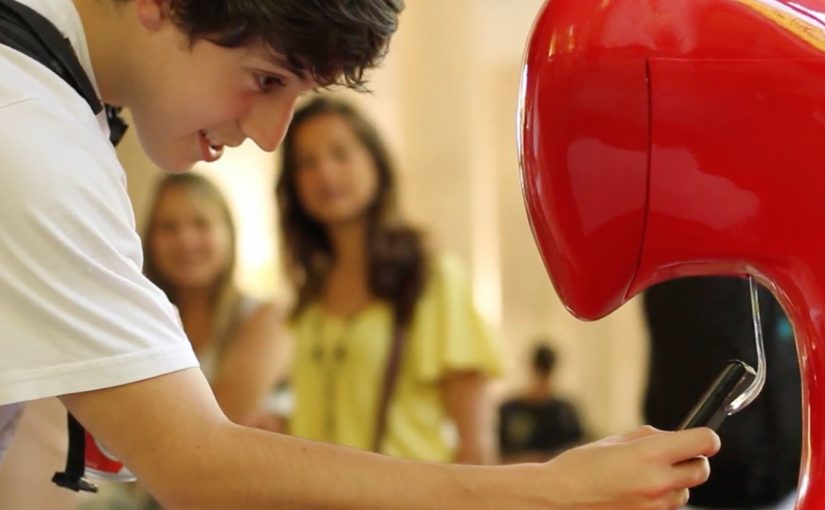
Coca-Cola in Brazil acted on this insight by creating a beachfront store on Copacabana Beach in Rio de Janeiro and installing a soda machine that delivered something more valuable than a drink.

The real question is whether your brand can trade something people have for something they cannot easily get in the moment.

Instead of only dispensing Coca-Cola, the machine rewarded users with free mobile internet credits. For young, emerging middle-class consumers who loved their mobile phones but could not afford generous data plans, the exchange was instantly clear and immediately useful.

How the Happiness Refill machine worked

The interaction was deliberately simple. Users accessed the machine through an exclusive Coca-Cola mobile browser. Completing the interaction unlocked internet credits directly on their phones.

No long registration. No delayed reward. Just a physical interface connected to a digital payoff.

The machine functioned as a bridge between the physical and mobile worlds, using hardware as a trigger and mobile connectivity as the reward.

By turning a quick physical action into instant connectivity, the mechanism created a visible payoff people could copy on the spot.

In mobile-first markets where data is a noticeable constraint, connectivity behaves like a form of currency.

Why free data landed harder than free soda

On a public beach, attention is fleeting. People move quickly, and distractions are constant.

Extractable takeaway: If you reward people with something scarce in their environment, the crowd becomes your distribution channel.

Free data solved a real, present problem. Connectivity was scarce, valuable, and socially visible. Watching someone gain internet access in front of you created instant social proof.

The machine became a gathering point. Not because it was novel technology, but because the value exchange was obvious and human.

The business intent behind Happiness Refill

Coca-Cola’s intent was not short-term sampling.

Utility beats messaging when attention is scarce and the payoff is immediate.

The goal was to make the brand’s long-standing “happiness” positioning tangible for a mobile-first audience by attaching it to everyday utility. Instead of asking teens to emotionally connect with a message, Coca-Cola embedded itself into a moment of real need.

This activation reframed the brand from advertiser to enabler.

What brands can steal from this activation

Here, an activation is a public, in-person brand moment designed to trigger a digital behavior.

  • Translate emotion into utility. Abstract values become powerful when expressed as something people actually need.
  • Design for instant payoff. Immediate rewards outperform persuasion in high-noise environments.
  • Create a public interaction. Physical touchpoints generate social visibility that digital ads cannot buy.
  • Respect economic reality. Value feels bigger when it acknowledges real constraints.

This machine also fits into a broader Coca-Cola pattern. It joins the growing number of Happiness Machines the brand has deployed globally since 2009.


A few fast answers before you act

What insight powered Coca-Cola’s Happiness Refill?

That for teens, happiness is often defined by connectivity. Free data mattered more than another free product.

What made the mechanism effective?

A simple physical interaction with an immediate digital reward. No delay, no complexity.

Why was Copacabana the right context?

The beach favors fast, visible experiences. The activation turned utility into a social moment.

What was the core business goal?

To reinforce Coca-Cola’s happiness positioning by delivering real-world value aligned with mobile behavior.

What is the transferable lesson?

When you make your brand genuinely useful in the moment, people do the distribution for you.

Jung von Matt: Lorem Ipsum Recruitment

Jung von Matt: Lorem Ipsum Recruitment

Art Directors in agencies use Lorem Ipsum (dummy text) as a placeholder when creating layouts. A de facto place to generate that dummy text is Lipsum.com, described as drawing tens of thousands of creatives from around the world each day.

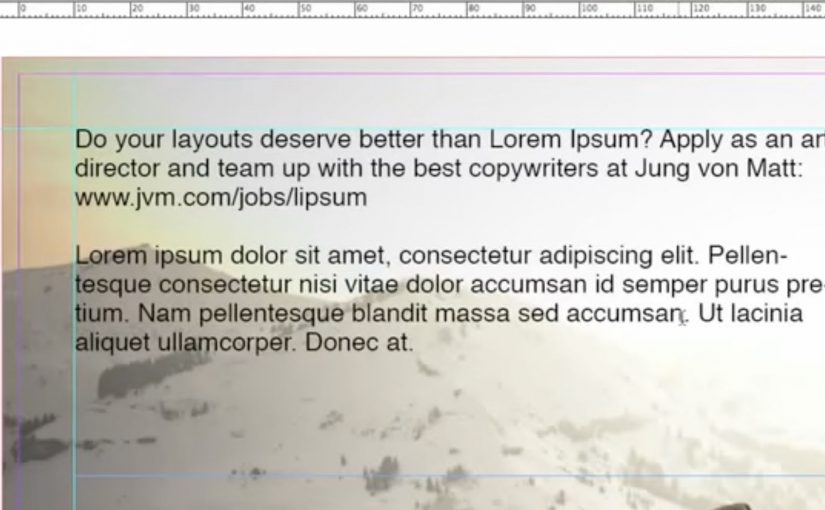
So for one week in January, Jung von Matt slipped a recruitment message into the flow. When anyone copy and pasted Lorem Ipsum from Lipsum.com into their layouts, a Jung von Matt recruitment line came along with the dummy text.

Recruitment that hides inside the tool, not the feed

The mechanism is a Trojan insertion into a daily workflow. Here, “Trojan insertion” means placing a message inside a routine working asset so it gets discovered during real task flow rather than through paid media. Instead of buying attention where creatives scroll, the message shows up exactly where creatives build. Inside the placeholder text that sits in the middle of real work. That works because the recruitment line appears when designers are already focused on layout work, which makes the interruption feel relevant rather than random.

In agency talent markets, the most efficient recruitment messages appear inside the tools and rituals creatives use every day.

Why it lands

This idea earns its attention rather than demanding it. The surprise is subtle. You spot it only if you are doing the job, which makes the message feel targeted and insider. It also travels naturally. Layouts get shared for feedback, reviewed, and iterated, so the line can surface in multiple contexts without additional media. This is smarter than a generic job ad because it uses working context as targeting.

Extractable takeaway: If you want to reach specialists, place the recruitment message inside a high-frequency workflow artifact, so the moment of discovery feels personal and relevant.

The real question is how to place a hiring message inside a creative ritual without making the brand feel intrusive.

What Jung von Matt is really optimizing for

The obvious goal is applications. The deeper goal is employer brand positioning. The agency is signalling that it understands how creatives work, and that it will recruit with the same craft it expects in the job.

What recruitment teams can steal from this

  • Target the workflow, not the platform. Start from where your talent produces, not where they consume.
  • Use a low-friction carrier. Dummy text is copied at scale, which makes distribution effortless.
  • Make the message context-native. A recruitment line should look like it belongs in the artifact it hijacks.
  • Design for second-hand discovery. Make it likely to be noticed in reviews, sharing, or handoffs.
  • Keep it respectful. The best hacks feel clever, not invasive.

Previously Jung von Matt have recruited creatives via the Trojan Recruitment campaign.


A few fast answers before you act

What is Lorem Ipsum Recruitment in one sentence?

It is a recruitment tactic where a Jung von Matt hiring message was embedded into Lorem Ipsum text so it appeared when creatives copied dummy text into layouts.

Why is Lipsum.com a smart place to do this?

Because dummy text generation is a repeated, habitual step in layout work, so the message shows up at high frequency in a relevant context.

What makes this more effective than a normal job ad?

It reaches the right audience while they are actively designing, and the discovery feels targeted rather than broadcast.

What is the main risk?

Trust. If the audience experiences it as tampering rather than wit, the stunt can harm employer brand instead of helping it.

What should you measure if you run a similar idea?

Qualified applications, referral quality, portfolio traffic, and whether employer brand perception improves among the specific roles you are targeting.