
Red Stripe Musical Extravaganza

Red Stripe Musical Extravaganza

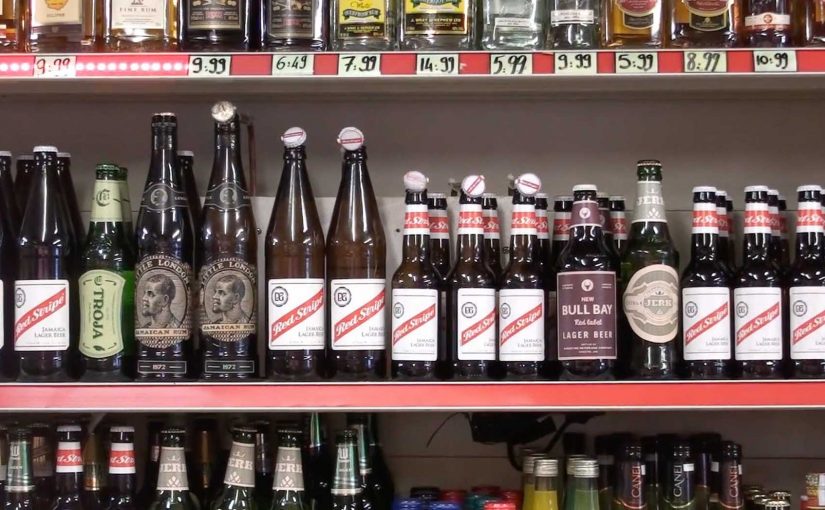
Red Stripe, a Jamaican lager brand, transforms an ordinary-looking East London corner shop into a singing, dancing musical extravaganza. Products across the shop turn into instruments that burst into a melody when a customer selects a Red Stripe. Noodle pots become maracas. Bottles turn into trumpets. Cans become xylophones.

To capture the surprise, 10 hidden cameras record customer reactions as the shop “comes alive.”

The real question is how you turn a routine purchase into a moment people want to retell and share.

This kind of retail theatre works best when the shopper triggers the show through a product choice, and the documentation is designed to scale the moment beyond the store.

The shop becomes the media

This is not a poster on a wall. It is the environment itself performing. The moment of selection triggers the show. The shelf becomes the stage.

That shift matters because it makes the brand moment inseparable from the act of buying. It is shopper marketing that feels like entertainment, not persuasion. Here, shopper marketing means designing the buying environment so the act of choosing the product creates the brand experience.

The trigger is the product choice

The smartest part is the mechanic. Nothing happens until the customer chooses the product. That makes the experience feel personalised, even though it is engineered. Because the trigger is the shopper’s own choice, the surprise reads as a reward, not a push.

It also makes the story instantly explainable. “When you pick up a Red Stripe, the shop turns into a band.”

If you can explain the trigger in one sentence and show real reactions, the activation comes with built-in distribution.

In retail and FMCG environments, the point-of-sale moment is where intent becomes action, and where a brand can earn attention without interrupting it.

Why hidden cameras make the idea travel

The in-store performance is powerful, but it is local. The video is what scales it. Real reactions signal authenticity, and the format becomes shareable proof that the stunt actually happens.

Extractable takeaway: If you want the idea to travel, design the filmed proof as part of the concept. Authentic reactions do the credibility work that polished edits cannot.

Steal the point-of-sale trigger

  • Trigger at the shelf. Make the point-of-sale moment the trigger, not the end of the journey.
  • Instrument the environment. Convert ordinary objects into a surprising behaviour, so the setting becomes memorable.
  • Film for scale. Capture genuine reactions, then let the video do the distribution work.

A few fast answers before you act

What happens in the Red Stripe Musical Extravaganza?

An East London corner shop turns into a musical performance. Shop items become instruments that play when a customer selects a Red Stripe.

What turns into instruments?

Noodle pots become maracas. Bottles become trumpets. Cans become xylophones.

How is it captured?

Ten hidden cameras record customer reactions.

What is the core mechanic that makes it work?

The product selection triggers the performance, so the “brand moment” happens at the exact point of purchase.

IKEA: Catalogue Countdown Room

IKEA: Catalogue Countdown Room

You walk into IKEA and find a room that is not finished. It is counting down. Each day the space changes again, styled with new catalogue products, like the store itself is teasing what is about to arrive.

That is the idea behind IKEA’s in-store Catalogue Countdown Room in Singapore and Malaysia. After previously re-imagining the 2013 catalogue with visual recognition technology that brought pages to life, this launch moment focuses on anticipation and theatre inside the store. It turns the catalogue release into a daily event that people can watch, not just pick up.

In practice, the countdown room is refreshed repeatedly as the countdown progresses, then broadcast live via IKEA’s Facebook presence so the excitement travels beyond the store floor.

Why a countdown room beats “catalogue is here”

Catalogue launches usually arrive with a shrug. Everyone expects them, so attention is low. A countdown reframes the arrival as something you can miss, and that creates urgency. The room format also makes the catalogue feel less like a book and more like a living set of ideas you can step into.

Extractable takeaway: If you can show visible progress on a reliable rhythm, routine product drops start to feel like a story people choose to follow.

What the mechanism is really doing

The room is a content engine. In this context, a content engine is a repeatable setup that produces fresh, shareable moments on a schedule. Each refresh creates a new “moment” for store visitors and a new visual for social, which is why the idea keeps earning attention. It can host small performances, demos, and micro-events without needing a different concept every day. The catalogue becomes the raw material.

The real question is: can you turn a catalogue release into a daily moment people choose to follow?

In omnichannel retail marketing, the most repeatable “launch” pattern is to make one physical moment behave like media, then let social distribution carry it further than paid reach alone.

What to steal for your next retail launch

  • Build one stage that can change. A single physical space that transforms repeatedly generates content without extra production locations.
  • Turn “arrival” into anticipation. Countdowns make routine drops feel like events.
  • Design for shareable proof. The room should look different enough each day that people want to show the change.
  • Let the store be the hero. When the in-store moment is genuinely interesting, social becomes documentation, not advertising.

A few fast answers before you act

What is the IKEA Catalogue Countdown Room?

It is an in-store installation that changes during a countdown to the new IKEA catalogue launch. The room is repeatedly restyled using catalogue products, and the changes are shared through social channels.

Why does a countdown create more engagement than a standard catalogue drop?

A countdown adds scarcity and rhythm. People know something is happening each day, so they return, check in, and talk about what changed instead of treating the catalogue as background noise.

What makes this an integrated campaign?

The same story runs across the store, social distribution, and supporting communications. The room creates the physical event. Social extends it beyond store visitors. The catalogue provides the content foundation.

What is the key lesson for retailers launching many new products at once?

Do not try to communicate everything at once. Create a single repeatable format that can spotlight different products over time, so attention compounds across multiple touchpoints.

What is the biggest risk with “live” retail content?

If the daily payoff is weak, people stop checking. The room needs visible change and a reason to watch each day, otherwise the countdown becomes decoration.

Meat Pack: Hijack

Meat Pack: Hijack

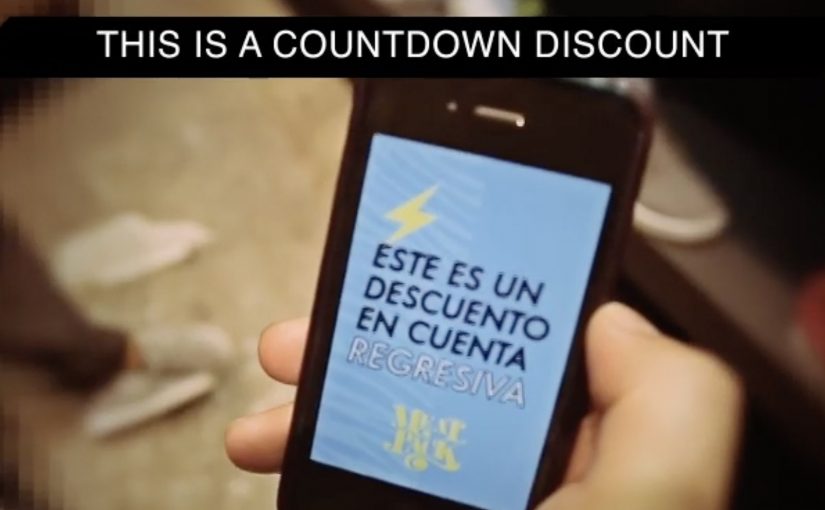
You walk into a competitor’s store to browse shoes. Your phone buzzes. Meat Pack offers you a discount that starts at 99%, then drops by 1% every second. If you want the deal, you have to move.

For a new discount promotion, Meat Pack, a shoe store in Guatemala known for an edgy, irreverent style, created Hijack, described as a GPS-based enhancement to their official smartphone app. Each time a customer entered the official store of one of the brands sold at Meat Pack, the app triggered a promotional message with a countdown offer. The discount started high and decreased every second, then the countdown stopped when the customer reached Meat Pack’s store.

Definition tightening: This is geofencing. A mobile app uses location signals to detect when you enter a defined physical area, then triggers a message based on that location event.

Turning a discount into a race

The mechanism is deliberately ruthless. The offer is so large it interrupts whatever you were doing, and the time pressure converts curiosity into action. The “best possible price” is available only at the exact moment your intent is hottest, while you are literally standing inside a competitor’s store.

In dense urban retail environments where shoppers compare options across nearby stores, location-triggered pricing can create an immediate switching incentive precisely at the point of decision.

Why it lands

It lands because it is a clean behavioural hack. The discount is not just a number. It is a ticking loss. Every second you hesitate, you feel the deal slipping away, which makes running across the street feel rational. The campaign also bakes in bragging rights by reportedly posting successful redemptions to Facebook, turning individual wins into social proof.

Extractable takeaway: If you want people to switch behaviours fast, combine a dramatic incentive with a visible countdown that makes hesitation feel expensive, then make the “next step” unmissable and immediate.

The business intent behind the provocation

This is conquesting with teeth. It aims to convert high-intent foot traffic that is already shopping the category, and to do it at the moment a competitor is paying the cost of acquisition. Reported results from the period describe hundreds of customers being “hijacked” and discounted inventory selling through quickly.

This is smart conquesting, but it only works when the store is close enough for the sprint to feel real. The real question is whether the route from trigger to redemption is short enough to make switching feel instant.

What this retail ambush gets right

  • Trigger at the true decision point. Not at home. Not later. At the shelf moment.
  • Make the offer legible in one second. “99% now, dropping” beats a paragraph of terms.
  • Use urgency with a real rule. A countdown works when it actually changes the outcome.
  • Design the route. If people cannot act quickly in real geography, the mechanic collapses.
  • Handle social sharing carefully. If you auto-post, consent and control decide whether it feels fun or creepy.

A few fast answers before you act

What is Meat Pack “Hijack”?

A location-triggered promotion inside Meat Pack’s app that detects when customers enter competitor brand stores, then offers a discount that decreases by 1% every second until the customer reaches Meat Pack.

What is the core mechanism?

Geofencing triggers an offer at the competitor location. A countdown reduces the discount each second. The timer stops when the shopper reaches Meat Pack, turning the offer into a physical sprint.

Why is the countdown so important?

It converts interest into movement. The value loss is visible and immediate, so delaying feels like paying extra.

What are the biggest risks in copying this?

Customer trust and permission. Location tracking and social posting require clear opt-in. Poor transparency turns a clever mechanic into backlash.

What kind of business does this fit best?

Retailers with nearby competitors, fast redemption, and inventory they can afford to discount aggressively for short bursts.