Slide to Unlock

AlmapBBDO Brazil has developed a very unique and innovative iAd for the new Brazilian Audi magazine app. The ad seen in the video below appeared in various publications on the iPad and used a nice play on Apple’s “Slide to Unlock” feature to engage the users.

Users who saw the ad instantly recognized the swipe gesture used to unlock Apple devices. So after racing their finger around the track, they were rewarded with a free download of the first Audi Magazine copy from the app store.

Before I could publish this post I came across another “Slide to Unlock” iAd! It seems this iOS feature is becoming a popular creative feature for iAds. In the below example, Amnesty International has created an iAd in Sweden’s largest newspaper, DN, where readers were presented with an image of a prison cell and prisoner inside. “Slide to Unlock” was used to open the prison cell and reveal a strong call to action to join Amnesty International as an activist.

Steve Jobs 1955 – 2011

On 06/10/2011 my day starts at 5:30am. Blurry eyed, I press the home button on my iPhone, and the first thing I see is a push notification from NDTV India: “Steve Jobs, Apple’s visionary, dies at 56.”

The next few seconds feel like some invisible force knocks the air out of me. The Newton equivalent from the modern world is just gone in a blink of an eye. The world is not the same without him.

While all the social channels flood with people sharing the news, all I can do is post a few tribute pictures on Facebook. I want to write a few lines about it on Ramble, but I sit speechless throughout the day. In fact the days that follow feel similar, and I cannot find the words to pen down anything, that is until now.

Two tributes that feel right in this moment

Of the dozens of memorial photos and videos created to honor Steve Jobs, I keep coming back to the following as the most appropriate for the occasion.

1) AzR’s Apple-sampled tribute

A musician who calls himself AzR creates a video built from sounds sampled from Apple products and Steve’s 2005 Stanford commencement speech. Every instrument, including drums, is sampled from a Mac product, tuned by ear, and replayed in the context of the song.

2) 4,001 Post-it Notes in Munich

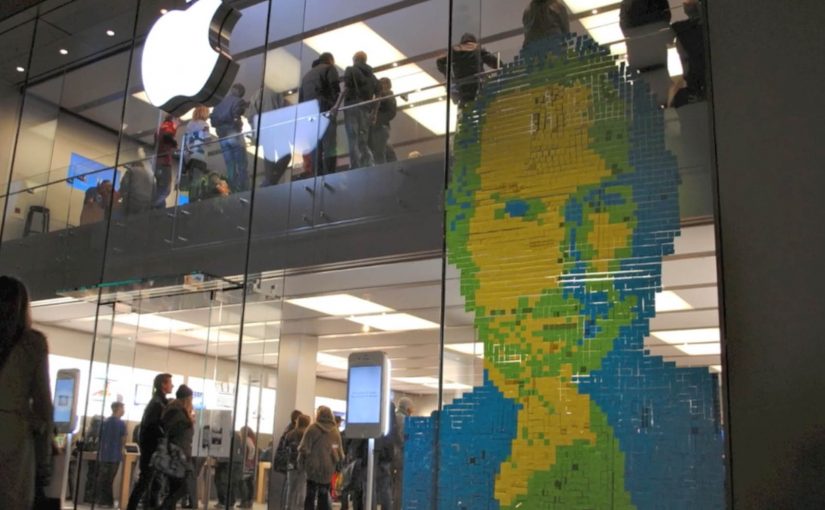
Fans in Germany find a wonderful way to express their respect. They create a portrait of Steve Jobs out of 4,001 Post-it Notes. The portrait adorns the front-facing glass walls of an Apple Store in Munich, Germany.

What stays with me

To sum up, I am glad to have lived in a period of world history that witnessed Steve Jobs change the world.
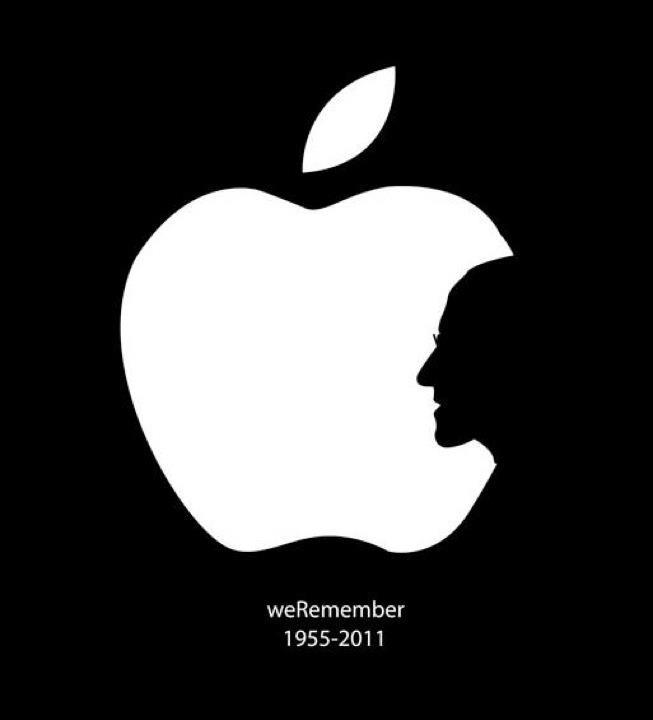
We remember Steve Jobs


A few fast answers before you act

Q: What is this post, in one sentence?
A personal note on the morning the news breaks, plus two tributes that capture why Steve Jobs matters.

Q: What are the two tributes highlighted here?
AzR’s Apple-sampled music video using the 2005 Stanford speech. A 4,001 Post-it Notes portrait on an Apple Store in Munich.

Q: Why does the Munich Post-it portrait stand out?
Because it is physical, collective, and public. It turns respect into a visible act that other people can walk past and feel.

Q: What is the simplest takeaway?
Some people do not just build products. They reshape culture and daily behavior. When they are gone, you feel the absence immediately.

The future of Augmented Reality

You point your phone at the world and it answers back. In Hidden Creative’s video, a mobile device scans what’s around you and returns live, on-the-spot information. The same AR layer lets you preview change before you commit to it, by virtually rearranging furniture or trying colours in a real space.

What this future looks like in practice

The value is not “wow.” It is utility. The device behaves like a real-time lens:

  • Scan surroundings and get contextual information immediately.
  • Overlay objects into physical space to plan renovations or layout changes.
  • Configure colours virtually before making real-world changes.

Why AR still feels like a campaign tool

Augmented Reality is already active in brand campaigns around the world, mainly because it creates high engagement and talk value. Yet it still does not play an everyday role in most people’s lives.

The missing layer. A standard AR experience

Before daily-life AR becomes normal, platform owners and developers need to standardise the experience across their ecosystems. Apple, Google, and Microsoft/Nokia each move in their own direction, and the result is fragmentation.

One master app vs. an app store full of one-offs

Right now the app stores are cluttered with many Augmented Reality apps, each doing a slice of the job. One cross-platform “master app,” or at least a consistent base layer, is a plausible starting point for making AR feel like an always-available capability instead of a novelty download.


A few fast answers before you act

What does the Hidden Creative video demonstrate?
Using a phone or digital device to scan surroundings, pull live information, and overlay objects into real-life space for tasks like renovation planning.

Why is AR not yet an everyday behaviour?
Even with strong campaign usage, the ecosystem is still fragmented and the experience is not standardised across platforms.

What needs to happen at the platform level?
Apple, Google, and Microsoft/Nokia plus their developer ecosystems need to standardise how AR works on their platforms.

What problem do app stores create for AR adoption?
Too many single-purpose AR apps creates clutter and inconsistency, which makes AR feel like isolated experiments instead of a reliable capability.

What’s the simplest adoption lever suggested here?
A more consistent base layer. For example a “master app” concept that reduces fragmentation across platforms.