
Coca-Cola Live Tweets #LetsEatTogether

Coca-Cola Live Tweets #LetsEatTogether

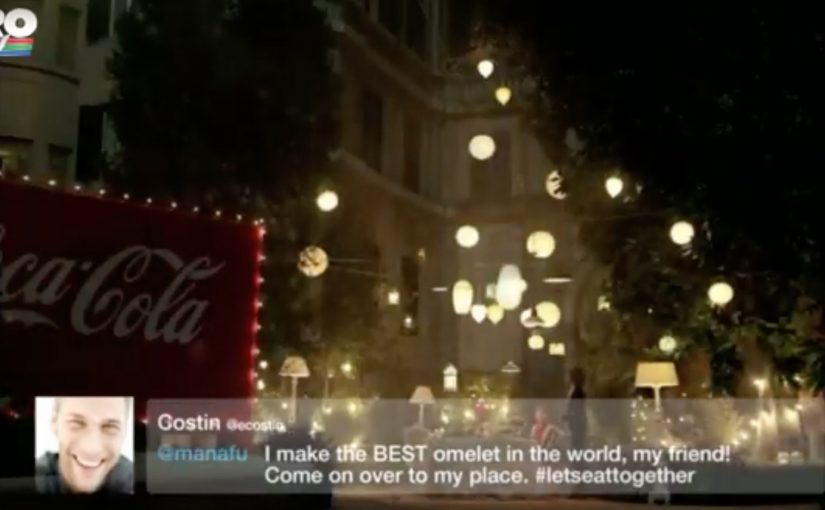
Coca-Cola in Romania seems to have broken new ground in the country with its integration between Twitter and TV, as it included live consumer tweets during its ad.

The insight for the campaign came from the fact that in Romania 60% of people don’t eat meals together, but instead eat them alone while sitting in front of their TV. So Coca-Cola decided to use tweets to create open invitations for people to actually come together and have a meal with a Coke.

As shown in the video below, the TV ad included a subtitle bar that was used to run the tweets that consumers sent using the hashtag #LetsEatTogether. Coca-Cola’s ad agency, MRM Worldwide, then edited the tweets and inserted five to seven of them into each ad placement.

The campaign increased Coke’s Twitter followers in Romania by 15% as hundreds of tweets were aired on TV. The campaign even made it to the evening news as its uniqueness made Romanians wait everyday for the ad.

Why this Twitter plus TV integration worked

The execution is simple. It borrows the visual language of TV subtitles, then uses it for social proof, meaning viewers can see other people already taking part. Viewers see real people inviting others to eat together, in real time, inside the ad break itself. That makes the message feel less like a brand instruction and more like a public invitation.

Extractable takeaway: When you make audience participation visible inside the main media placement, the campaign can feel more social, more immediate, and more worth watching.

It also turns participation into a lightweight ritual. Tweet the hashtag. Watch for your message. Share the moment when it appears. The format gives people a reason to keep an eye out for the ad, which is the opposite of what usually happens during commercials.

The real question is not whether people can respond to a campaign, but whether that response is visible enough to change how the ad itself feels.

In mass-reach brand advertising, this matters because the primary screen can carry participation directly instead of pushing interaction off to a second screen.

What Coca-Cola was really buying here

This is a smart cross-media play because it does more than collect engagement. It upgrades a standard TV placement into something people anticipate, talk about, and actively watch for.

The business intent is clear. Coca-Cola is using participation to make the ad break itself feel more alive, increase repeat viewing, and turn audience response into earned attention for the brand.

What to steal if you design campaigns with live participation

  • Use a single, explicit mechanic. One hashtag, one behavior, one clear outcome.
  • Make the audience visible inside the media. The tweets are not a second screen. They are on the primary screen.
  • Curate without killing authenticity. Editing keeps it brand-safe while still feeling consumer-led.
  • Reward repeat viewing. New tweets each placement create a reason to watch again.

A few fast answers before you act

What did Coca-Cola Romania do in this campaign?

They integrated live consumer tweets into a TV ad by running curated hashtag messages in a subtitle bar during the commercial.

What was the insight behind #LetsEatTogether?

That many people in Romania ate alone in front of the TV, so the campaign used tweets as open invitations to share meals together.

How were tweets handled for broadcast?

Tweets using #LetsEatTogether were edited and five to seven were inserted into each ad placement by the agency.

What changed in performance?

Coke’s Twitter followers in Romania increased by 15% and hundreds of tweets were aired on TV.

What is the core lesson for cross-media experiences?

If you bring live participation into the primary screen, you can turn an ad break into an event people actively watch for.
Coca-Cola Mini Me: 3D-Printed Mini Figurines

Coca-Cola Mini Me: 3D-Printed Mini Figurines

After Volkswagen, Coca-Cola is the next brand to tap the 3D printing trend.

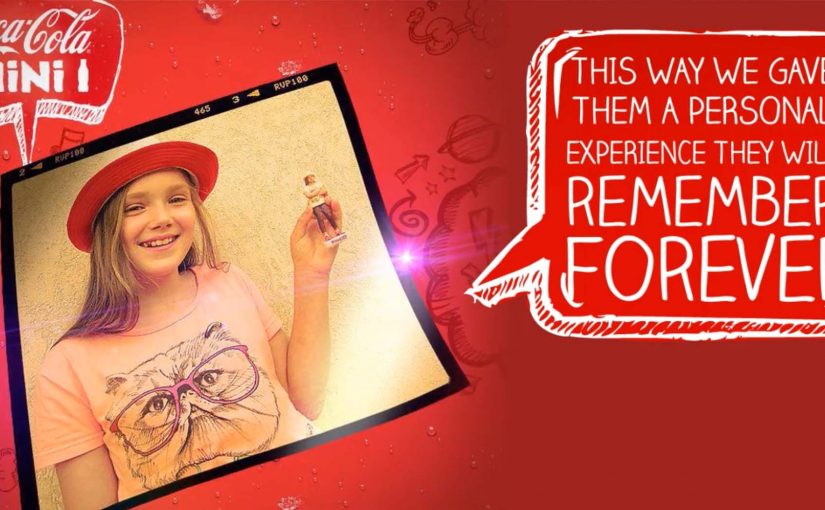
For the launch of its new mini bottles in Israel, Coca-Cola with their agency Gefem Team came up with a campaign that allowed anyone to create 3D mini figurines of themselves. To get one in real life, users had to work a bit.

So first users created the minis using a mobile app. Then they had to keep them happy by feeding it and taking care of its needs.

There was even a virtual supermarket within the app that you could visit to buy your groceries for your mini self.

Those who successfully participated were then invited to the 3D printing lab inside Coca-Cola’s factory in Israel, where they received the mini versions of themselves.

Why this is more than a 3D-printing stunt

The 3D print is the reward, not the whole experience. The real engine is the progression loop, meaning a sequence of small repeat actions that earn a bigger payoff. This is smart campaign design because it makes the physical output feel earned, not handed out. The real question is whether your campaign creates a loop people will return to before you ask them to share anything.

Extractable takeaway: Gate a physical prize behind repeat micro-actions and it stops feeling like a giveaway. It becomes a trophy with a simple story: “I earned this.”

  • Personal creation. You do not receive a generic giveaway. You create “you”.
  • Ongoing engagement. Feeding and caring builds repeated interactions over time.
  • Escalation to the physical world. The factory lab visit turns digital participation into a memorable moment.

The virtual care loop makes the prize feel earned

The app mechanic is intentionally effortful. You have to keep the mini happy. You have to manage its needs. Even the virtual supermarket reinforces routine and “ownership”.

That matters because it shifts the figurine from a freebie into a trophy. Something you earned by participating.

In consumer brands that run digital-to-physical activations, effortful repeat interaction is often what turns novelty into recall.

Why the factory lab invitation is a smart finale

Bringing people into a Coca-Cola factory adds legitimacy and drama. It also creates a content moment. A physical place, a “lab”, and a 3D print reveal that people can photograph and share.

  1. Access as a reward. The invitation itself feels exclusive.
  2. Proof of innovation. The brand demonstrates capability in a tangible way.
  3. Memory value. The experience becomes a story, not just a product launch.

What to take from this if you build digital-to-physical campaigns

  1. Make the reward personal. Personal outputs are more meaningful and more shareable.
  2. Use a progression loop. Repeated small actions can outperform a single big interaction.
  3. Finish with a real-world moment. Physical experiences create stronger recall than purely digital stunts.
  4. Let the brand environment play a role. A factory lab gives credibility and theatre without feeling fake.

A few fast answers before you act

What is Coca-Cola “Mini Me”?

It is a campaign in Israel where users created a virtual mini-self in a mobile app, cared for it over time, and then received a 3D-printed figurine version after qualifying.

How did users qualify to get a real figurine?

They created the mini using the app and kept it happy by feeding it and taking care of its needs, including buying items in a virtual supermarket.

Where did the 3D printing happen?

Qualified participants were invited to a 3D printing lab inside Coca-Cola’s factory in Israel, where they received their mini figurines.

Why include a virtual care mechanic?

It creates repeat engagement and makes the physical reward feel earned rather than given away.

What is the transferable lesson for campaign design?

If you combine personal creation with a progression loop and a physical payoff, you can turn a product launch into a longer-lasting experience.

Coca-Cola: The Sing For Me Machine

Coca-Cola: The Sing For Me Machine

As part of its global “Open Happiness” campaign, Coca-Cola has set up interactive vending machines in various parts of the world. In Singapore, consumers could hug for a Coke. In Korea, they could dance for a Coke.

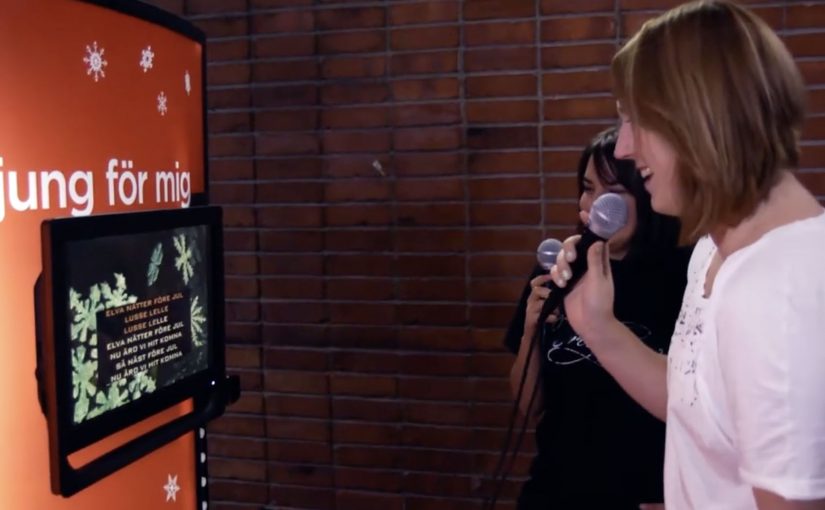
And now in Stockholm they can sing for a Coke. The vending machine has been placed at the Royal Institute of Technology with the sign “Sing For Me” in the front.

When sampling becomes a public performance

The mechanism is simple: the machine replaces money with a human gesture. That “gesture for reward” model means the action itself becomes the price of entry. Dance moves in one market. A song in another. The reward is immediate, and the moment is automatically social because other people can see it. That swap works because it turns a private purchase into a visible act, giving the crowd a reason to watch, react, and join in.

In global FMCG sampling and brand experience work, “gesture for reward” machines turn distribution into participation by design.

The real question is whether the action is easy enough to trigger participation without making people shut down in public. The smart part of this format is not the free Coke, but the public behavior it creates around the sample.

Why it lands

This works because it makes the brand promise legible without explanation. A vending machine is normally transactional and forgettable. A performance-triggered machine is a small event, and the crowd reaction becomes part of the product. The setting helps too. A campus is full of friends, cameras, and people willing to try a slightly silly thing in public.

Extractable takeaway: If you swap payment for a simple public action, you turn sampling into a story people can witness, film, and retell. That social proof travels farther than the product ever could on its own.

The machine is one of a number of Happiness Machines Coca-Cola has deployed around the world since 2009.

What to borrow from performance sampling

  • Pick one obvious trigger: the instruction must be understood in one glance.
  • Make the reward instant: the dispense moment is the emotional payoff.
  • Design for bystanders: the format should recruit a crowd naturally.
  • Localize the gesture: keep the same principle, but choose a culturally comfortable action.
  • Capture reactions: real laughs and hesitation are the proof that the idea works.

A few fast answers before you act

What is the “Sing For Me” machine?

It is a Coca-Cola vending machine that dispenses a free Coke when people sing to it, turning a product handout into a public, participatory moment.

Why does “sing for a Coke” work as a mechanic?

Singing is visible and socially contagious. Once one person does it, others gather, react, and often try it themselves.

How is this connected to the broader “Happiness Machine” idea?

It follows the same pattern: replace payment with a feel-good interaction, then let real reactions become the distribution layer.

Where does this format work best?

High-footfall environments with social density, like campuses, events, malls, and transit hubs, where bystanders quickly become an audience.

What is the biggest risk with performance-for-reward activations?

If the action feels embarrassing or culturally off, participation drops. The trigger must feel playful, safe, and easy to attempt in public.