
MINI: Fan the Flame

MINI: Fan the Flame

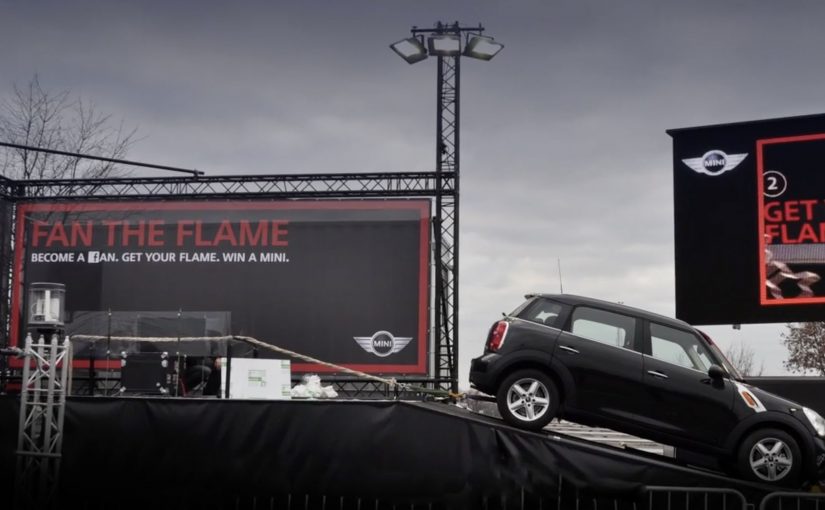
MINI, together with TBWA\Agency.com, creates a social spectacle to grow the fan base for its newly launched Facebook page in Belgium and Luxembourg.

The setup is as physical as it gets. A MINI Countryman is attached to a thick rope in the parking lot of the Brussels Motor Show, with a burner placed beneath the rope. Facebook fans are encouraged to remotely trigger the burner and shoot flames at the rope. A webcam broadcasts the scene 24×7, and the fan whose flame ultimately breaks the rope wins the MINI Countryman.

Why this is a “like” campaign people actually talk about

Most fan-growth ideas are transactional: click like, get content. This one makes the click feel consequential. Each interaction is a tiny act of sabotage against a real-world object, with a visible scoreboard outcome. The page is not just where the brand posts. It is the control panel for the event. This is the better pattern when you need fast fan growth without training people to expect freebies.

Extractable takeaway: If you want people to talk, make the social action change a visible system, then let the audience verify progress live.

The mechanism: remote control plus live proof

Mechanically, the campaign combines three ingredients: a simple trigger (fan action), a physical system (rope and flame), and continuous proof (the live webcam). The webcam is crucial because it converts a remote interaction into trust. People can see that something is actually happening, continuously, with no editing.

In European automotive social campaigns, linking digital participation to a live physical outcome is one of the fastest ways to create earned attention, meaning people talk and share without paid amplification, beyond the fan base itself.

What the prize is really doing

The real question is whether your social channel is just a feed, or a place where the audience can change something that matters in real time.

The MINI Countryman is not only incentive. It is also the symbol. The closer the rope gets to breaking, the more the prize feels “reachable”, which keeps people checking back and telling friends to join. The prize turns time into tension.

What to copy for your next live activation

  • Make the interaction visible. Live video proof makes remote participation feel real.
  • Use a simple mechanic with cumulative progress. People return when they believe their action contributes to a final outcome.
  • Put the brand in the role of facilitator. The page becomes the place where something is happening, not just the place where posts appear.
  • Design for suspense. A slow-burn system creates anticipation and repeat visits.

A few fast answers before you act

What is “MINI Fan the Flame” in one line?

A live contest where Facebook fans remotely trigger flames to burn through a rope holding a MINI Countryman, with the fan who breaks it winning the car.

Why does the webcam matter?

It provides continuous proof that the event is real and progressing, which sustains trust and repeat engagement.

What behavior is this campaign optimizing for?

Fan acquisition plus repeat visits. The tension mechanic encourages people to return and recruit others.

What is the transferable lesson for other brands?

If you want scale, connect digital actions to a visible physical outcome and design the system so progress builds suspense over time.

What is the minimum viable version of this mechanic?

Combine one clear trigger, one physical system that visibly changes, and one always-on proof stream so participants can verify progress without edits.
Deutsche Telekom: Hologram Christmas Surprise

Deutsche Telekom: Hologram Christmas Surprise

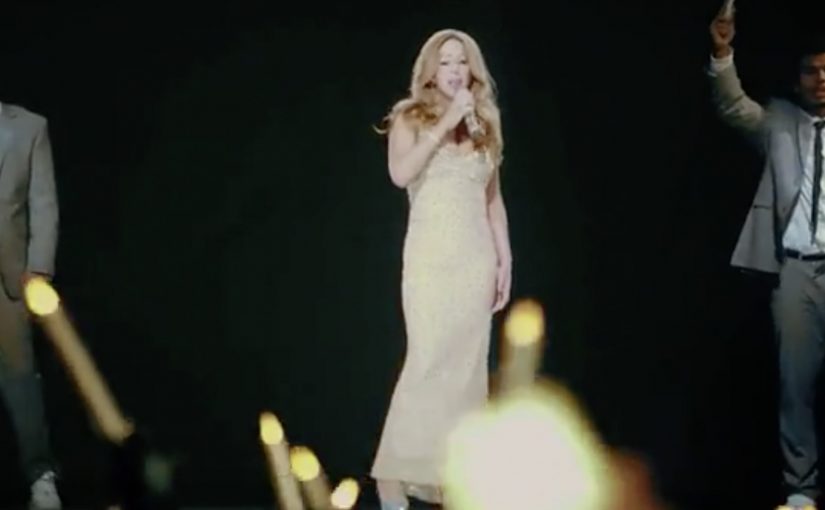
Deutsche Telekom stages a multi-city, multi-media Christmas surprise where people across five countries believe they are seeing Mariah Carey perform live, right in their city square.

The event is described as unfolding simultaneously in Germany, Croatia, Macedonia, Montenegro, and Poland. After roughly 10 minutes, the hologram “breaks” into the sky to reveal the surprise, then reforms to lead the connected crowds through “Silent Night”, finishing with “All I Want for Christmas Is You”.

How the spectacle is engineered

Mechanically, each city is linked live to the others, enabling interaction across locations while the performance plays out on large-scale public screens. Attendees are also given a QR code that takes them to a smartphone experience featuring a candle flame, turning the crowd into a coordinated visual.

In European telecom brand marketing, making the network feel like a shared human experience is a reliable way to give an invisible service a visible emotional payoff.

Why it lands as more than “a stunt”

This works because the surprise is collective, not individual. People do not just watch content. They witness their city being connected to other cities in real time, and that connection is the product truth Deutsche Telekom wants remembered. Because the cities are live-linked, the audience experiences “connection” as something happening to them, which makes the brand promise feel credible. The real question is whether your experience lets people feel the benefit in the moment, not just understand it in hindsight. If your brand sells connectivity, a shared public ritual beats a standalone content drop.

Extractable takeaway: When the benefit is intangible, engineer a shared moment that makes the benefit felt, then let the crowd carry the story.

What the numbers are really doing

The piece is framed with scale metrics. Attendance is described as 12,000 people in total, with an additional 27,000 watching via a live internet stream on lifeisforsharing.tv. Treated as reported figures, the strategic point is clear: the “in person” crowd creates authenticity, and the stream extends reach without losing the feeling of simultaneity.

Stealable patterns for cross-market surprise

  • Build one shared ritual. A carol everyone recognises becomes the simplest multi-language participation layer.
  • Make the reveal part of the story arc. Belief, disruption, then a coordinated finale gives the audience a plot to retell.
  • Link physical and mobile. A QR-driven phone element can turn a crowd into a synchronised visual without complicated instruction.
  • Design for “togetherness at distance”. The emotional payoff comes from knowing other cities are experiencing the same moment at the same time.

A few fast answers before you act

What is the “Hologram Christmas Surprise” in one line?

A simultaneous, five-country public concert that uses a Mariah Carey hologram and live city-to-city links to create a shared Christmas moment at scale.

What is the core mechanism that makes it feel real?

Live-linked public screens across cities, plus on-stage interaction cues and crowd participation elements that play out in real time.

Why add the QR code candle experience?

It gives the crowd a simple coordinated action, visually reinforcing the “connected” theme and making the audience part of the show.

How do you keep it from feeling like a pure tech demo?

Lead with a shared ritual and a simple participation layer so the emotion reads first, and the technology disappears into the experience.

What is the most transferable lesson?

If your brand benefit is intangible, engineer a shared public moment that makes the benefit visible, then let people do the storytelling for you.

Navarro Correas: Wine Art Project

Navarro Correas: Wine Art Project

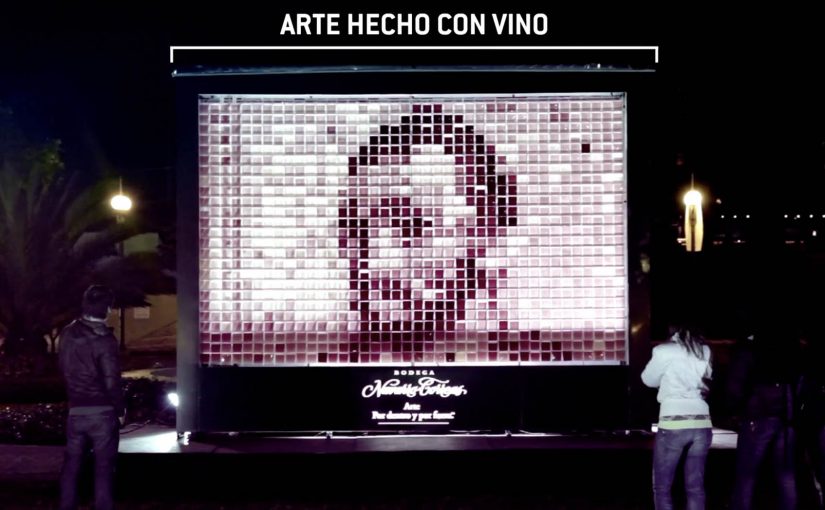
Navarro Correas creates a 13 x 8.2 meter structure in Bogotá, Colombia. It consists of 1,000 acrylic cells and an automated robotic mechanism that fills each cell with six different shades of wine.

How the installation works

People activate the robotic mechanism by sending a text message with the acrylic cell number they want filled. Over time, 1,000 text messages build the full image, described as recreating Van Gogh’s self-portrait. A masterpiece made with Navarro Correas’ own wines.

An SMS-controlled installation is a public artwork where participants trigger physical changes by texting simple commands, turning the audience into the “interface”.

In large-scale city activations, participation gets dramatically stronger when the crowd can see their input change a shared object in real time.

The real question is not whether people will send one text, but whether each text feels like a visible personal contribution to something bigger.

Why it lands: it turns contribution into ownership

This works because it makes participation concrete. You are not “liking” or “voting”. You are choosing a specific cell and watching a physical outcome appear. The growing picture becomes a public scoreboard of collective effort.

Extractable takeaway: If you want mass participation, design a mechanic where each small action is visible, additive, and irrevocably part of the final outcome. People engage longer when they can point to “their piece” of the whole.

The stronger idea here is the visible build, not the SMS channel by itself.

The wine-as-paint choice also earns attention twice: first as a spectacle (liquid filling the grid), and then as a reveal (the final portrait). The mechanism creates suspense, and suspense keeps people texting.

What the brand is really doing here

The installation positions the wine as a maker’s material, not just a drink. It borrows the credibility of craft and art, then backs it with a participatory system that feels modern and social without needing a social network.

What to steal for your next interactive public piece

  • Make the input trivial: one action, one identifier, no learning curve.
  • Make the effect observable: people should immediately see change after they act.
  • Use “additive progress”: partial completion should still look interesting, so the build phase has its own payoff.
  • Design for attribution: let participants feel “I contributed”, even if the contribution is small.
  • Pick a reveal that rewards patience: the final image should be worth waiting for.

A few fast answers before you act

What is the Navarro Correas Wine Art Project?

It is a public installation made of 1,000 acrylic cells that are filled by a robotic mechanism with different shades of wine. People participate by texting a cell number to trigger a fill, gradually revealing a final portrait image.

Why use SMS for interactivity?

SMS is frictionless and universal. It requires no app download, works on basic phones, and is fast enough for impulse participation in a public space.

What makes this different from a normal billboard stunt?

The audience directly controls the build. Each message produces a visible change, so the piece becomes a collective construction rather than a one-way display.

What is the key behavioral driver?

Ownership through contribution. People engage more when they can claim a specific part of the outcome and see the shared progress accumulate.

What should you measure for a campaign like this?

Participation volume, unique participants, repeat participation, time-to-completion of the full artwork, dwell time around the installation, and any earned media or social mentions driven by the live build.