
Viajes Galeón: Twitpoker

A poker table. Five of Colombia’s best-known Twitter personalities. Except the chips are not money. They are followers.

Viajes Galeón, a Colombian travel agency, and Y&R Colombia create Twitpoker, a poker game where players bet their Twitter followers instead of cash. The match is streamed live to audiences via web cams, pulling spectators into the tension of every hand because every raise has a visible social cost.

As described, the live format scaled beyond the five invited players. More than 27,000 people played together on a single table experience, and a brand with little or no prior social footprint used the stunt to kick-start its Twitter presence.

Followers as currency

The mechanism is a value swap. Twitter followers become the stake, which instantly reframes poker from private risk to public reputation. Every decision is legible to the audience and personally meaningful to the players, because the loss is social proof, not cash.

In social-led brand building, the most persuasive “launch” is a mechanic that makes your audience feel they are participating in the growth, not merely watching an ad about it.

Why it lands

The idea works because it turns a platform metric into a story engine. Most follower counts sit idle as vanity. Twitpoker makes the number consequential, and consequence creates attention. The live stream adds immediacy, and the five invited players supply recognizable personalities, so the audience is watching real identities collide with real incentives.

Extractable takeaway: If you want social growth fast, design a mechanic where the platform’s native currency is genuinely at stake, then stage it live so spectators feel the outcome unfolding in real time.

What the travel brand is really buying

The real question is how a low-awareness travel brand gives people a reason to follow right now.

Viajes Galeón is not buying “engagement” as a buzzword. It is buying a credible reason for people to follow, talk, and keep watching. The campaign converts a travel agency into a social event host, which is a stronger role for a brand with low awareness than trying to shout offers into a quiet feed.

What to steal from Twitpoker

  • Make the platform metric matter. Treat followers, likes, time, or access as something that can be risked or earned.
  • Use live to create urgency. Live formats compress attention and increase sharing because people do not want to miss the outcome.
  • Cast with credibility. Recognizable participants provide narrative without needing heavy scripting.
  • Let the audience feel included. Scale participation beyond the core cast so it becomes a shared event, not a private stunt.

A few fast answers before you act

What is Twitpoker?

A live-streamed poker game where participants bet their Twitter followers instead of money, built to generate attention and grow a brand’s social presence.

Why does “betting followers” work as a mechanic?

Because it converts a familiar social metric into a real stake, making every play emotionally legible and socially consequential.

What role does the live stream play?

It creates immediacy and shared tension, which increases participation, sharing, and real-time commentary.

What is the key requirement for this to feel credible?

The stakes must be real and visible, and the participants need an audience that cares about their reputations.

When should a brand use a stunt like this?

When the goal is to bootstrap social attention quickly, and when you can translate platform-native value into a simple game with a clear win and loss.
Magnum Pleasure Hunt: AR bonbons in Amsterdam

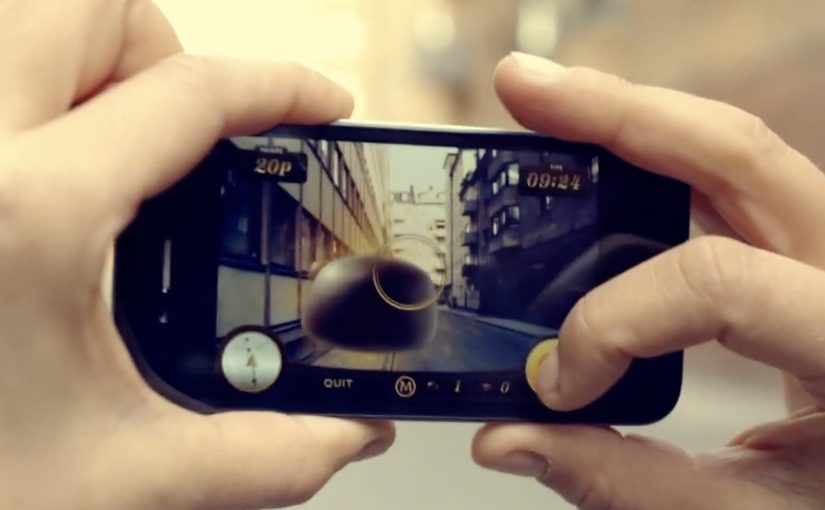
Earlier on in April Magnum launched the second edition of its hit online game Magnum Pleasure Hunt. To extend the campaign further, a real time mobile augmented reality game takes the hunt to the streets of Amsterdam.

The game is currently ongoing and participants between April 22nd and April 29th can use a special mobile app to hunt down 150 chocolate bonbons hidden across 9 locations in Amsterdam, described in some write-ups as centered around the city’s Nine Streets area. The one who claims the most bonbons wins a free trip to New York, while the rest are rewarded with the new Magnum Infinity ice cream.

Why this is a smart extension of a digital hit

The original online game is built for reach and replay. The Amsterdam version adds scarcity and locality: the same “collect the bonbons” mechanic, but tied to time, place, and physical movement, which makes participation feel more like an event than a link.

In European FMCG launches, location-based AR hunts work best when the rules are obvious in seconds and tiered prizes make “one more try” feel worth it.

The real question is whether your AR layer gives people a reason to move now, not just a new way to look at the same brand world.

What the AR layer adds to the experience

The AR layer keeps the mechanic simple, but changes the context by making the hunt visible in public and limited to specific dates and locations.

Extractable takeaway: When you take a proven digital mechanic into the street, pair it with a short window and clear rewards so participation feels like an event, not an app demo.

  • Instant purpose. You are not browsing a branded world. You are on a hunt with a clear target.
  • Real-world urgency. Limited dates and specific locations make the challenge feel live.
  • Social proof by default. People playing in public become the campaign’s moving media.

A quick comparison to Vodafone Buffer Busters

I find the Magnum mobile game to be a toned down version of the Vodafone Buffer Busters game that ran in Germany last September. Either way, this is the right direction. More brands should treat augmented reality as a medium of engagement, not a gimmick.

What to copy from Magnum’s Amsterdam hunt

  • Make the first action obvious. People should understand the goal and the first tap in seconds.
  • Limit the window. A short time period turns “I’ll try it later” into “I should go now.”
  • Use rewards that scale. A big winner prize plus smaller payoffs keeps both competitive and casual players engaged.

A few fast answers before you act

What is Magnum Pleasure Hunt Across Amsterdam?

It is a time-limited mobile augmented reality game that moves Magnum’s “collect the bonbons” mechanic from the web to real locations in Amsterdam.

How do players participate?

Players use a mobile app while out in the city to find and collect virtual bonbons placed at specific locations during the campaign window.

What makes it different from the online Pleasure Hunt?

The online version is a digital-only chase. The Amsterdam version adds time and place, turning the hunt into a real-world activity with location-based stakes.

Why are prizes so central to this format?

Because the effort is physical. A clear top prize plus smaller “everyone gets something” rewards keep motivation high across both competitive and casual players.

What is the key design lesson for AR brand games?

Keep onboarding friction low. If people cannot understand the goal and the first action immediately, they will not start, especially outdoors.

smart: eBall interactive ping pong duel

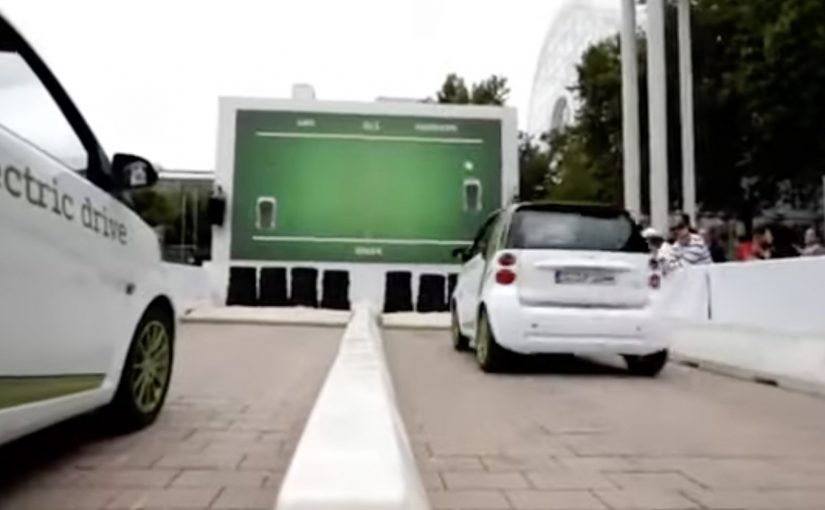
At the Frankfurt Motor Show (IAA) in 2011, Daimler promoted the third generation smart fortwo electric drive with a special interactive game event. Berlin-based Proximity BBDO designed a game called eBall that translates the joy of a highly responsive car into something visitors can play.

Visitors sign up with their driver’s license, get quick instructions on forward and reverse, and then step into a live ping pong duel. Instead of a controller, they use the car itself. Driving forward and back moves the “paddle,” with measurement technology tracking the rally on a large display.

When “responsive” becomes the gameplay

Electric drive messaging often struggles because it is full of abstractions. Efficiency, torque, responsiveness. eBall makes one of those claims physical. The faster and more precisely you control forward and reverse, the better you play. That is a rare alignment. The product behaviour is the mechanic.

Extractable takeaway: If your product promise is about control, speed, or precision, build an experience where performance is visible to a crowd and felt by the participant in under a minute.

In European automotive launches, live interaction works best when it turns a technical attribute into a simple skill people can feel and repeat.

The real question is whether your interaction turns the claim into a repeatable skill, not a slogan.

The tech trick is invisible on purpose

As described in coverage of the installation, the paddles on the LED wall are controlled by two real smart fortwo electric drive cars using laser measurement and transmission technology. The important detail is not the hardware. It is the immediacy. When the wall responds instantly, the player trusts the cause-and-effect and stays in the duel.

Why the driver’s license step matters

The license check does two jobs. It manages safety and liability, and it creates a small “this is real” threshold. You are not playing a simulator. You are operating a vehicle in a branded arena. That seriousness increases attention, and it makes the win feel earned.

What smart is really selling here

eBall does not try to convince you with specs. It frames the car as a fun, responsive object that behaves like a sports device in the hands of the driver. The subtext is clear. If it can play ping pong with precision, it will feel effortless in tight city driving too.

Moves worth copying in event mechanics

  • Translate one attribute into one action. “Responsive” becomes “hit the ball back.” No extra storytelling required.
  • Design for spectators. The LED wall makes the game readable from distance, so the crowd becomes the amplifier.
  • Keep the control model binary. Forward and reverse is legible, teachable, and low-cognitive-load.
  • Make the feedback immediate. Interactivity only feels truthful when response is fast.
  • Engineer the queue. A duel format naturally builds anticipation and repeat attempts.

A few fast answers before you act

What is smart eBall?

It is a live event game where visitors play a ping pong style duel by driving a smart fortwo electric drive forward and backward to control a digital paddle on a large screen.

Why does ping pong fit an electric city car story?

Because it is a precision game. It makes responsiveness and control visible in a way a brochure cannot, and it fits the “small, agile, quick” associations smart wants to own.

What makes this different from a normal driving simulator?

The controller is the vehicle, and the outcome is public. That changes the psychology from private play to performance, which increases energy, memorability, and word of mouth.

What is the biggest operational risk with this kind of activation?

Latency, safety, and throughput. If the system lags, people stop trusting the interaction. If safety or queue management fails, the experience becomes stressful instead of fun.

What should brands measure in a “playable product demo” like this?

Participation rate, average dwell time, repeat plays, audience size over time, and how many people capture and share the experience, plus any downstream test-drive or lead signals.