
Hyundai Genesis: A Message to Space

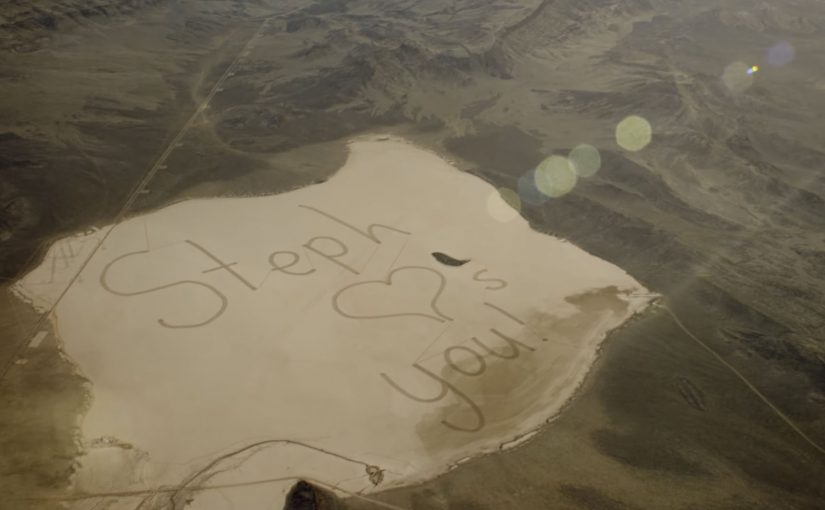
Eleven Hyundai Genesis sedans drive in formation across Nevada’s Delamar Dry Lake, not to show handling, but to write a sentence.

A 13-year-old girl from Houston, Stephanie, misses her astronaut father as he works aboard the International Space Station. Hyundai turns that human truth into a brand-scale gesture. The cars “draw” “Steph loves U” in tire tracks across the dry lake bed. The result is described as larger than one and a half Central Parks. It is also described as being certified by Guinness World Records as the world’s largest tire track image.

From choreography to a message you cannot ignore

The mechanism is straightforward and bold. Take a blank natural canvas. Assign each car a path. Choreograph the movement so the negative space becomes handwriting at a gigantic scale. Then validate the scale with a record body so the stunt becomes a fact people repeat, not just a film people watch.

In global automotive marketing, where products often feel interchangeable in feed-based media, a physical proof stunt creates memorability by turning precision into a story people can retell.

Why it lands

It works because the brand is not asking for attention. It is earning attention by doing something that only coordinated engineering and serious planning can pull off. The emotional hook is intimate, and the execution is absurdly large. That contrast creates instant share value, and it gives the Genesis name a halo of control and capability without needing to say it out loud.

Extractable takeaway: If you need breakthrough, build a single, verifiable act that scales a private human moment into a public artifact, and make the artifact the headline, not your messaging.

What the stunt is really selling

The real question is how to turn a private emotion into a public proof of brand capability without making the brand feel like the hero.

This is one of the rare brand stunts where scale sharpens the emotion instead of burying it.

On the surface, it is a daughter sending a message. Underneath, it is Hyundai demonstrating disciplined coordination. Eleven vehicles behaving like one pen. The brand promise becomes “we can execute the impossible precisely”, which is a stronger feeling than another round of luxury feature claims.

What to borrow from this precision stunt

  • Start with a real relationship. One clear human story beats a composite “target audience”.
  • Make the action the media. A physical artifact outlives the launch window and travels as proof.
  • Engineer a repeatable headline. A record, a scale comparison, or a singular first can carry the story.
  • Let meaning come from constraints. Fewer words. Bigger commitment. Higher credibility.

A few fast answers before you act

What is “A Message to Space”?

It is a Hyundai Genesis marketing stunt where 11 cars drive in formation to create a massive tire track message, “Steph loves U”, intended to be visible to a father on the International Space Station.

What is the core mechanism that makes it shareable?

A simple sentence rendered at extreme scale through choreographed driving, then amplified by third-party validation and a short film that captures the creation.

Why use a Guinness World Records angle?

Records reduce skepticism. They turn “big” into a named achievement people can cite, which helps the story travel beyond advertising audiences.

What is the biggest risk with this style of stunt?

If the human story feels manufactured, the spectacle becomes empty. The emotional truth has to lead, or the record becomes the only thing people remember.

What is one modern adaptation of the same pattern?

Create a single, verifiable public artifact that embodies your brand promise, then design the content around documenting the artifact, not explaining it.

WestJet Christmas Miracle: Spirit of Giving

A purple-clad virtual Santa appears on a screen and asks residents of Nuevo Renacer what they want for the holidays. The requests are simple, specific, and deeply practical.

WestJet follows up last year’s Christmas Miracle with “Spirit of Giving”, created with Canadian charity Live Different. Instead of surprising passengers at baggage claim, the airline takes the idea to a community near Puerto Plata in the Dominican Republic, then documents the moment those wishes are handed back at a Christmas party.

The earlier film was reported to go viral and pass 36 million YouTube views. This follow-up is described as pulling strong early attention too, with view counts climbing quickly in its first days online.

The mechanism: ask, commit, deliver

The creative device is a clean three-step loop. First, the “virtual Santa” invite makes wishes safe to share. Second, WestJet commits to fulfilment, not vouchers. Third, the reveal turns a list of needs into a communal celebration, with WestJet employees and Santa presenting items that were requested.

That loop works because specific requests and visible fulfilment turn generosity into proof, which makes the story credible on camera and in conversation.

In airline brands where differentiation is hard to sustain through functional claims alone, a repeatable giving platform can build distinctiveness through emotion, participation, and earned reach.

Why it lands

This works because the surprise is not random. It is personalised, visible, and delivered in public, which makes the generosity feel real rather than performative. The setting also matters. A whole community receives together, so the story becomes collective, not one tearful individual moment.

Extractable takeaway: If you want a feel-good campaign to travel, anchor it in specific asks from real people, then make fulfilment the hero action, so the audience can retell the story as a fact, not an ad.

What WestJet is really buying

At face value, it is seasonal warmth. Strategically, it is continuity. The real question is whether a holiday stunt can become a brand behavior people expect and remember. WestJet turns “Christmas Miracle” into a platform, not a one-off. The brand signal shifts from “we did a nice thing” to “this is what we do”, which is how recurring campaigns earn trust and expectation.

What to steal from WestJet’s giving platform

  • Keep the ask interface simple. A single question beats a complex participation mechanic.
  • Make fulfilment concrete. Items, not messages, so impact is legible on camera and in conversation.
  • Use employees as proof. When staff show up, it reads as culture, not just media spend.
  • Design a platform, not a stunt. Recurrence builds memory faster than novelty alone.

A few fast answers before you act

What is “Spirit of Giving”?

It is a WestJet holiday campaign made with Live Different in which residents of Nuevo Renacer share gift wishes with a virtual Santa, then receive those items at a community celebration.

How does it connect to the original Christmas Miracle?

It uses the same core promise, personalised giving captured on camera, but shifts the stage from passengers to a partner community, making the brand story about community impact rather than travel surprise.

What is the key creative mechanism?

A low-friction request moment, followed by a high-credibility delivery moment. The gap between the two is where anticipation and emotion build.

Why does the “virtual Santa” device matter?

It creates permission. People can state real needs without feeling awkward, and the audience immediately understands the format without explanation.

What is the biggest way campaigns like this fail?

When the giving looks staged or extractive. If participants feel like props, the emotional payoff turns into skepticism. Consent, dignity, and specificity are non-negotiable.

Honda – The Other Side

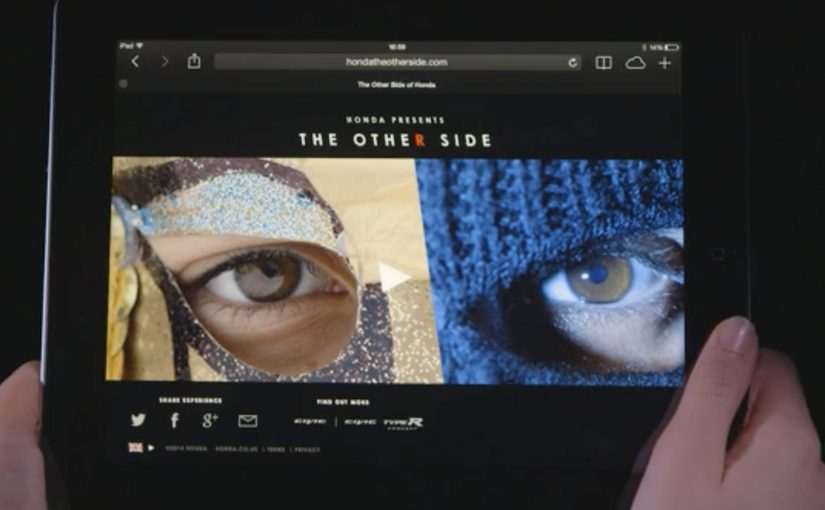
Car brands are always trying to show that their cars have different sides to their personalities, sporty vs reliable, safe vs cool, etc. What makes Honda’s latest effort unique is its YouTube video. By simply holding down the “R” key on the keyboard, the viewer can instantly switch between two different videos.

To execute this innovation, Wieden & Kennedy London had to create two storylines, one of an easygoing Dad doing the school run and the second as an undercover cop posing as a getaway driver. Both of which were then expertly mirrored with contrasting style and tone. The interactive experience was then put together by Stinkdigital at Honda’s YouTube Channel.

Why the mechanic matters more than the novelty

The “hold R to switch” idea is a simple interaction mechanic, meaning the viewer action changes how the story is revealed, but it changes how you watch. You are not just viewing a story. You are actively comparing two versions of the same moment, in real time.

Extractable takeaway: When a brand claim depends on contrast, the strongest format is often one that lets the audience trigger the comparison for themselves.

The real question is whether the interaction makes the brand point clearer, not whether the tech looks clever.

  • One scene, two meanings. The mirrored structure makes contrast instantly legible.
  • Viewer control. You control the cut, which increases attention and repeat viewing.
  • Storytelling as product proof. Different “sides” of a car become a narrative device, not a claim.

Execution discipline: mirrored scenes, opposite tone

This only worked because the two storylines were designed to align. Timing, framing, and beats had to match so the switch felt seamless, not like two unrelated edits.

The payoff is that contrast becomes the hero. Calm family routine vs high-pressure escape. The same underlying vehicle context. Two different emotional reads.

In digital brand storytelling, interactive mechanics only earn their place when they make the positioning easier to grasp, not harder.

The business intent is clear: turn Honda’s “different sides” message into a felt comparison, so the format demonstrates the proposition instead of leaving copy to explain it.

What to take from this if you build interactive brand content

  1. Make the interaction explain itself. If the mechanic needs instructions, you lose momentum.
  2. Design for replay. The best interactive films reward going back and re-watching with intent.
  3. Let structure carry the message. When the format proves the point, you do not need heavy-handed copy.
  4. Keep the tech invisible. Viewers remember the feeling of control and contrast, not the implementation details.

A few fast answers before you act

What is Honda “The Other Side”?

It is an interactive film experience where viewers can switch between two parallel storylines by holding down the “R” key.

What are the two storylines?

One follows an easygoing Dad doing the school run. The other follows an undercover cop posing as a getaway driver, with both narratives mirrored scene-by-scene.

Why is the “hold R to switch” mechanic effective?

It gives the viewer control and makes the contrast immediate. That active comparison increases attention, engagement, and replays.

Who created the work?

Wieden & Kennedy London created the two mirrored storylines, and Stinkdigital put the interactive experience together on Honda’s YouTube Channel.

What is the transferable lesson for digital teams?

If you can express your message through an interaction that is instantly understandable, the format itself becomes the persuasion.