
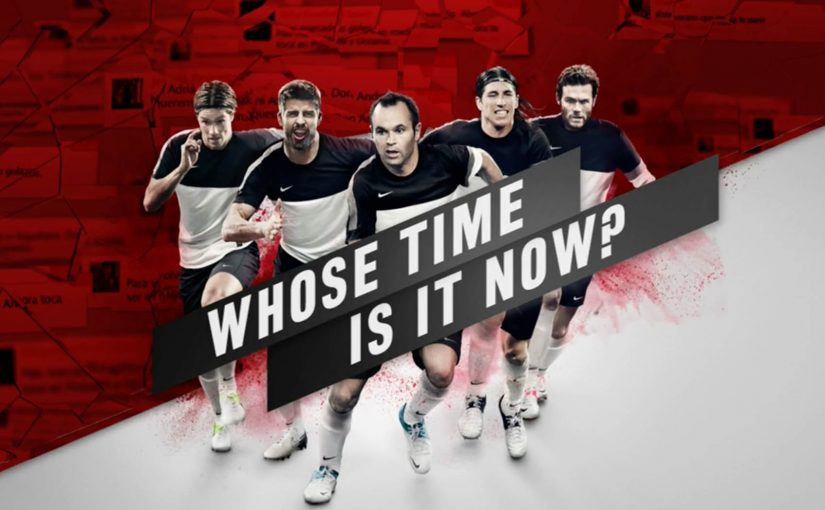
Nike Football “My time is now”

In Puerta del Sol, Madrid’s epicenter, a huge Nike “static” banner behaves like a live scoreboard. As Euro 2012 conversations spike, the face on the banner changes. Each day, the Spanish player who dominates social chatter becomes the protagonist on the canvas. Two fan messages appear alongside him, selected from submissions flowing in through Nike’s Facebook experience.

The idea in one line

Turn real-time social conversation into real-world status. Then make “My Time Is Now” visible, in public, every day.

What Nike and DoubleYou build during Euro 2012

Nike works with DoubleYou on a real-time social media monitoring campaign focused on Spanish national-team players. The system tracks mentions and engagement across Facebook and Twitter, then turns that data into a live ranking.

Fans see the leaderboard through a custom Facebook app integrated into Nike Football Spain. The ranking updates continuously, creating a daily “who owns the moment” race that mirrors what is happening on the pitch.

How it works

Step 1. Capture the conversation in real time

The activation monitors references to players across Twitter and Facebook.

Step 2. Translate the conversation into a live ranking

Inside the Facebook experience, the campaign visualizes comments and produces an automatically updated ranking of who is generating the most conversation, refreshed minute by minute.

Step 3. Publish the result into the physical world

Each day, the player who “capitalizes” the most social conversations becomes the ambassador of Nike’s message “My Time Is Now” on the large-format placement in Puerta del Sol. A static billboard turns into an interactive billboard because it is connected to the live social pulse.

Step 4. Let fans write onto the execution

From the app, fans also submit messages linked to the player of the day. Nike selects two of those messages and publishes them next to the player on the banner.

Why this is more than “social listening”

This is not monitoring for reporting. It is monitoring as a publishing engine.

  • The social layer has consequence. The ranking determines who gets heroed publicly.
  • The physical layer gives the digital behavior weight. People do not just see a number in an app. They see a player crowned in the center of Madrid.
  • The loop is fast enough to feel like sport. The leaderboard updates continuously, so fans experience momentum, not a static end-of-day recap.

The line that makes the whole thing sticky

At the end, the leading player is set to bear Nike’s message of “My Time Is Now”.

And the player is…


A few fast answers before you act

What is the campaign in one sentence?

A real-time social monitoring system ranks Spanish players by conversation volume and makes the top player the daily face of a live billboard in Puerta del Sol.

Where do fans see the ranking?

In a custom Facebook app integrated into Nike Football Spain.

What makes this different from a normal “second screen” mechanic?

The data output is not just a dashboard. It changes a public, real-world media placement and publishes user messages alongside the hero player.

What is the repeatable pattern for brands?

If you can connect live signals to live publishing, you turn attention into status. That is how “real-time” becomes culturally meaningful.
Hellmann’s: Recipe Receipt to Recipe Cart

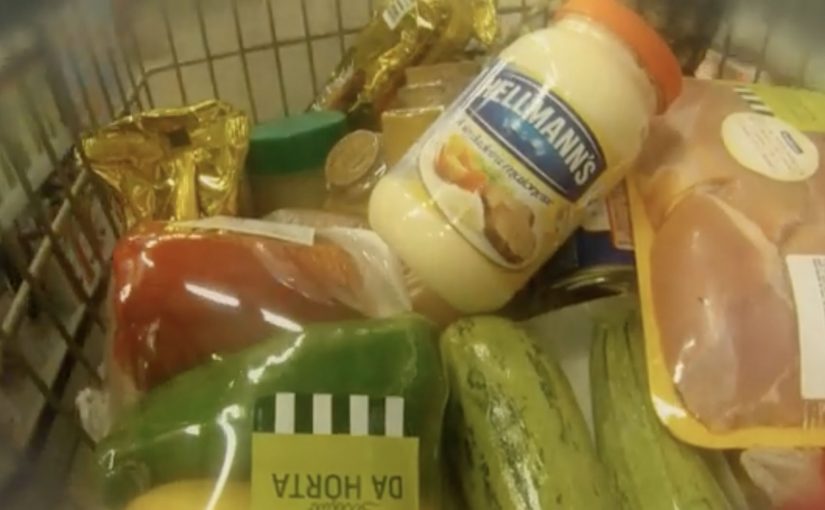
Last year Hellmann’s in Brazil came up with a novel way to encourage consumers to use their mayonnaise for more than just sandwiches. The brand teamed up with supermarket chain St Marche to install special software in 100 of its cash registers. When Hellmann’s is scanned, the system matches the rest of the basket to a recipe, then prints it directly on the receipt at checkout. In the first month of the three-month experiment, sales reportedly increased by 44%.

Now, for their new campaign, shopping carts at Pão de Açúcar in São Paulo are mounted with NFC-enabled touchscreen devices. As consumers move through aisles, the touchscreen detects nearby shelf zones and suggests a relevant recipe that uses Hellmann’s. If a recipe is liked, customers can interact with the display to locate ingredients in-store, or share the recipe with friends via email. The activation reportedly involved 45,000 customers, and sales rose by almost 70%.

Two in-store recipe engines, two different moments

The first mechanic works at the end of the trip. It uses the checkout scan as the trigger, then turns the receipt into a personalized cooking prompt based on what you already bought. The second mechanic works during the trip. It uses aisle-level detection to suggest ideas while shoppers are still deciding what to put in the basket, then helps them navigate to the ingredients needed to complete the recipe.

In FMCG shopper marketing, the strongest in-store activations change behavior at the exact point where choices are made.

Why it lands

Both ideas attack the same barrier. People know mayonnaise, but they default to a narrow usage script. These executions widen the script with immediate utility, not persuasion. They do not ask shoppers to “remember later.” They hand them a meal idea in the moment, using their own basket and their current aisle as the context.

Extractable takeaway: If you want to grow usage occasions, embed the suggestion inside an existing retail behavior. The basket scan, the aisle browse, the store navigation. Then deliver a next-best action that is specific, contextual, and instantly doable.

What to steal for your own retail activations

  • Anchor to a hard trigger. Checkout and aisle location are reliable moments. Build the experience around signals that already exist.
  • Make relevance visible. Recipes work because the shopper can see why this suggestion fits. It uses what they are holding, or what is right in front of them.
  • Keep the interaction short. In-store attention is scarce. One clear suggestion beats ten options and a browsing experience.
  • Close the loop with navigation. A recipe is only valuable if the shopper can find the missing ingredients quickly.
  • Design for shareable utility. Email sharing is not a gimmick here. It turns a private meal problem into a social handoff.

A few fast answers before you act

What is the difference between Recipe Receipt and Recipe Cart?

Recipe Receipt triggers at checkout and prints a recipe based on the basket. Recipe Cart triggers in-aisle and suggests recipes based on where the shopper is, while helping locate ingredients in-store.

Why does this work better than a normal coupon or promotion?

Because it delivers practical utility tied to the shopper’s context. It expands how people use the product by giving a specific meal idea, not just a price incentive.

What data does a concept like this actually need?

Only basket contents at checkout, or aisle location for the cart experience, plus a curated recipe database that can match ingredients to suggestions.

What is the biggest execution risk?

Low relevance. If the suggested recipes feel generic or mismatched to what shoppers are buying and seeing, the experience becomes noise and loses trust fast.

Coca-Cola: The Happy Flag

Airports in Denmark have a simple tradition. People welcome arrivals with flags.

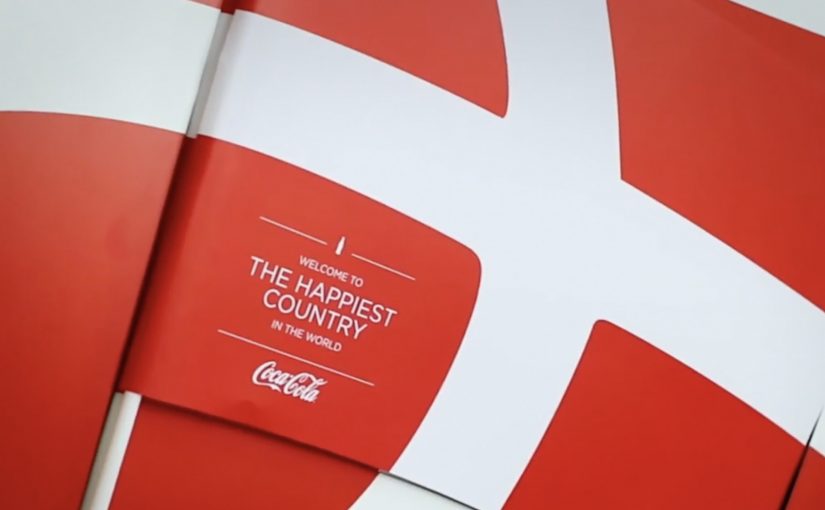
Coca-Cola takes a small cultural detail and turns it into a physical interaction. After a discovery that the Danish flag can be seen inside the Coca-Cola script, the brand brings that idea to Denmark’s biggest airport and makes the flag literally tearable from the logo.

The mechanism is a special poster where passers-by can take small Danish flags straight from the Coca-Cola mark, so even people who arrived without a flag can still join the welcome.

In global FMCG brand building, small rituals scale when you turn them into simple, repeatable behaviors that people are happy to perform in public.

A logo that becomes a utility

This is not a poster that asks you to look. It is a poster that gives you something to do. The brand symbol becomes a dispenser. The action is obvious, the reward is immediate, and the result is visible in the room as more people start waving flags.

Why it lands in an airport

Airports are full of waiting and scanning. A physical action breaks the autopilot, and the output is social. You do not keep a flag to yourself. You wave it. That makes the message travel without needing an additional media buy.

Extractable takeaway: When your brand asset is already recognizable, turn it into a useful object inside a real-world ritual. Utility creates permission. Participation creates memory.

The intent behind the “happiness” frame

The story is designed to borrow from Denmark’s “happiest country” reputation as described in various rankings and conversations, then translate that abstract label into something concrete. A warmer welcome. More flags in more hands. More people involved.

What to steal for your own OOH activation

  • Start with a local ritual. Find a behavior people already do gladly, then amplify it.
  • Make the interaction self-explanatory. If someone needs instructions, the moment dies.
  • Use a brand asset as the mechanism. When the logo is the tool, branding feels natural, not pasted on.
  • Design for public visibility. The best output is something others can see and copy instantly.

A few fast answers before you act

What is Coca-Cola’s “The Happy Flag” idea?

It is an airport poster activation where people can tear off Danish flags from the Coca-Cola logo, so more arrivals can be welcomed with flags even when greeters did not bring one.

What is the core mechanism that makes it work?

A familiar brand mark is redesigned as a dispenser. The logo becomes a physical utility, and the action produces a visible social signal in the space.

Why is an airport a strong place for this?

The environment already contains anticipation, reunions, and cameras. A simple, shareable gesture fits the emotional context and spreads through imitation.

How can brands adapt this pattern?

Pick a recognizable asset, connect it to a real-world ritual, and redesign it into a simple object people can use. Then make the output visible so participation recruits more participation.