
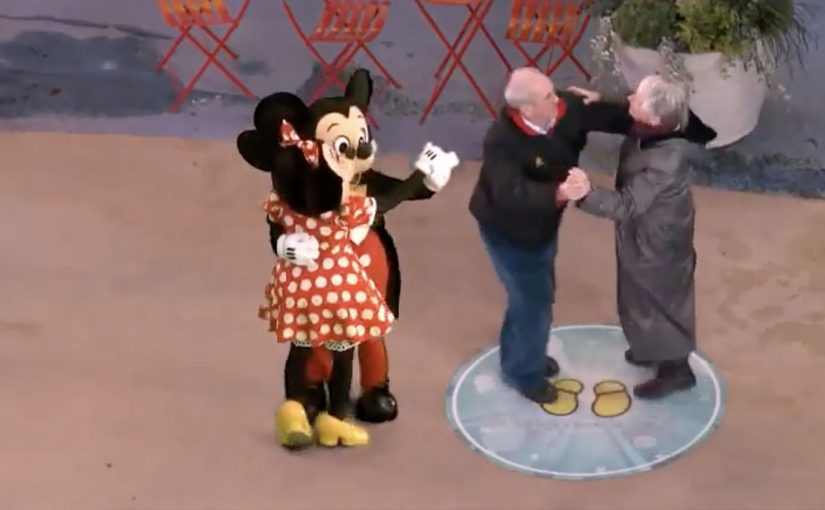
Disney: Mickey Mouse brings magic to NYC

You step into the Disney Store in Times Square and suddenly you are “in” a Disney moment. A live screen blends you into a scene and Mickey appears alongside you, reacting in real time as the crowd watches.

Disney Parks uses the installation to celebrate Mickey Mouse’s 83rd birthday this month, turning a store visit into a small piece of theatre that people naturally photograph and share.

The mechanism is straightforward. A live camera feed captures guests, then an augmented reality layer places Disney characters and effects into the scene so it looks like the magic is happening around you, not only on a separate screen.

In flagship retail environments, live augmented reality installations convert foot traffic into shareable content by making the store itself behave like media.

The real question is whether the experience makes bystanders feel like they are watching a story, or watching a demo.

Disney is also using a Twitter hashtag #DisneyMemories to track the experiences at Times Square and the campaign, so the physical moment has a simple, searchable social trail.

Why this lands in Times Square

Times Square is already a stage. The installation does not fight the noise with more noise. It creates a personal moment inside the noise, where the viewer becomes part of the story. That shift from watching to participating is what earns the stop-and-stare crowd.

Extractable takeaway: In a loud environment, the winning move is not bigger spectacle. It is giving each guest a personal, camera-ready moment the crowd can understand instantly.

Hashtag as a lightweight amplification layer

The hashtag is not the idea. It is the plumbing. It lets Disney connect hundreds of individual “I was there” posts into one visible stream, without asking people to learn a new platform or download anything beyond what they already use.

The same live AR pattern shows up elsewhere

This style of live augmented reality is showing up more often in brand-led events, because it creates instant participation without complex instructions. You have already pointed to similar executions from National Geographic and Lynx, where the screen becomes a “portal” and the audience becomes part of the scene.

What to steal for your own live-event experience

  • Make the first second readable. People should understand what is happening from across the room.
  • Design for bystanders. The crowd experience matters, because the crowd is the distribution engine.
  • Attach one simple social handle. A hashtag or keyword is enough when the moment is already worth sharing.
  • Keep the tech invisible. The audience should remember the feeling, not the hardware.

A few fast answers before you act

What is the Mickey Mouse Times Square augmented reality installation?

It is a live in-store experience at the Disney Store in Times Square that places guests into a real-time scene with Disney characters using an augmented reality layer on a live camera feed.

Why does this work as a retail activation?

Because it turns a store visit into a participatory moment. People do not just browse. They become part of a scene worth filming and sharing, which extends reach beyond the store.

What role does #DisneyMemories play?

It creates a single social thread for many individual posts, helping Disney track and aggregate the shared experiences without adding friction to the in-store moment.

How is this different from a typical photo booth?

The difference is live spectacle. The experience is designed to be watched by a crowd in real time, so bystanders become part of the energy and the story travels further.

What is the most common failure mode for live AR event installs?

Confusion and delay. If people cannot instantly understand what to do, or if the experience queues too long, the crowd dissolves and the social output drops sharply.
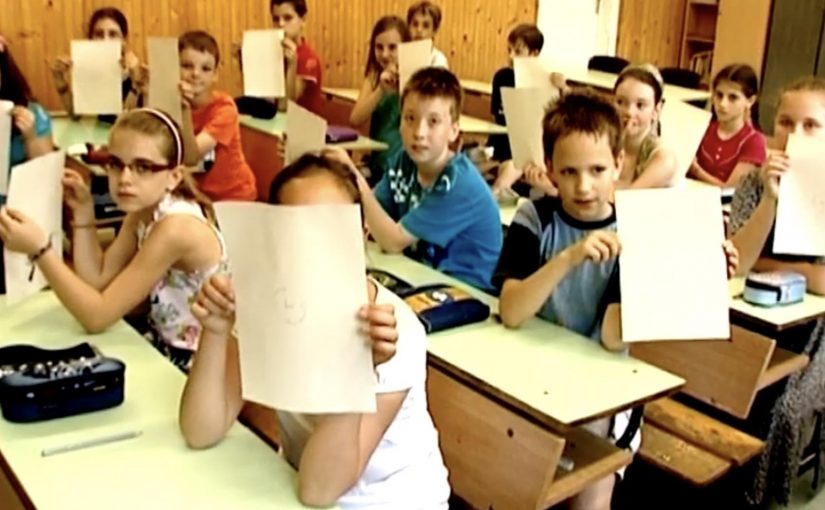
Deadlines vs Creativity: 10 Seconds 10 Minutes

A simple client lesson, told by school kids

Café Creative, a Hungarian ad agency, sets out to prove a point to deadline-setting clients. If you want good and original ideas to be born, you have to give them enough time.

So they ask school children to perform two tasks:

  1. Complete a drawing in ten seconds and
  2. Complete the same drawing in ten minutes.

The results are captured in the video below, described as having been shortlisted at the 2011 Golden Drum Advertising Festival.

The mechanic: one brief. Two clocks. One unavoidable comparison

The setup is intentionally unfair. Ten seconds forces instinct and shortcuts. Ten minutes gives space for choices, revisions, and detail. Because the brief stays constant, the difference you see is time, not talent.

In creative work, the quality gap usually comes from iteration time, meaning time to review, refine, and improve the same idea, rather than a “better idea” arriving fully formed.

In agency-client work, deadline debates are usually really debates about how many improvement cycles an idea gets before it is judged.

The real question is how much originality you destroy when you compress all iteration into almost no time.

Why it lands

It translates an abstract argument. “We need more time”. Into a visual contrast that clients can’t debate. The children’s drawings make the point without cynicism, and the experiment format keeps it watchable because the viewer wants to see how big the difference becomes. That works because a controlled comparison turns a subjective complaint about timing into proof a client can inspect.

Extractable takeaway: When you’re negotiating timelines, show a side-by-side outcome under two time constraints. A visible comparison wins faster than a rational explanation.

What to steal for your next client conversation

  • Use one brief and change one variable. It isolates the real driver of quality.
  • Make the output visual. Visual proof travels further than process arguments.
  • Keep it humane. A light format can carry a serious point without sounding defensive.
  • Frame time as iteration fuel. You’re not asking for delay. You’re buying cycles of improvement.

A few fast answers before you act

What is the “Deadlines vs Creativity” experiment?

It’s a short film where children draw the same subject twice. First in ten seconds, then in ten minutes, to show how time changes outcomes.

What does the ten-second version demonstrate?

It shows what happens under pressure. People default to the most obvious interpretation with minimal refinement.

What does the ten-minute version demonstrate?

It shows the value of iteration time. Details emerge, composition improves, and the work becomes more original and complete.

Why is this a useful argument for clients?

Because it replaces opinion with comparison. The viewer can see what time buys.

How do you apply this lesson without running your own experiment?

Use before-and-after examples from your own work. Show what changed between first draft and final, and tie each improvement to the time used to iterate.

J.C. Penney: Santa Tags

When a QR code stops being a link and becomes a keepsake

Brands generally use QR codes to direct consumers to websites. But during the holiday season, J.C. Penney takes a different approach.

Shoppers receive a “Santa Tag” sticker with each purchase. The tags contain individualized QR codes that can be scanned with any QR reader to record a personalized voice message. Gift recipients can then scan the same code to hear that recorded message when they open their gifts.

The mechanic: scan once to record, scan again to reveal

The clever part is the two-phase use. In store, the code is a recording trigger. At home, the code becomes the playback trigger. That turns an otherwise generic sticker into a private moment between giver and receiver, without requiring an app download or a new behavior beyond scanning. It works because the same code carries the message from purchase to unwrapping, so the technology fades back and the emotional payoff arrives at the right moment.

In retail holiday campaigns, the most effective “personalization” is often not product customization. It is emotion customization, meaning the product stays the same but the moment around it becomes personal. A small, authentic message beats a bigger discount for memory value.

The real question is how to turn a low-cost store touchpoint into a high-memory part of the gift itself.

Why it lands

This adds meaning at the exact moment people care about meaning. Gift giving. It also creates a reason to choose one retailer over another that is not price-driven, because the value is in the experience the gift will deliver later. The tag travels beyond the store and completes itself at unboxing, which is where holiday stories are actually made.

Extractable takeaway: If you want a simple activation to feel premium, design it to “pay off later” in a private moment, and keep the tech invisible enough that it feels like magic, not a feature.

What retail holiday teams should steal

  • Make the code do something human. QR is not the idea. The idea is a recorded message that travels with the gift.
  • Design for zero friction. No app, no sign-up, no learning curve. Just scan and speak.
  • Extend the experience beyond the store. The activation finishes at home, which increases brand recall.
  • Build around an emotional ritual. Holiday gifting already has meaning. The best activations amplify it rather than invent it.

A few fast answers before you act

What are J.C. Penney “Santa Tags”?

They are gift-tag stickers with individualized QR codes that let shoppers record a voice message and let recipients scan later to hear that message during unwrapping.

What makes this different from typical QR code marketing?

The QR code is not a link to a website. It is a trigger for recording and playback, turning the code into a personal keepsake.

Why does the two-phase scan mechanic matter?

It creates a delayed payoff. The experience completes at the moment the gift is opened, not at the moment of purchase.

What is the main lesson for retailers?

Small, low-friction personalization that amplifies an existing ritual can differentiate a store without discounts.

What’s the risk if a brand copies this?

If scanning fails or playback is unreliable, the emotional moment collapses. The tech must be extremely dependable.