
TV Viewing: Super Bowl Meets HoloLens

TV viewing is overdue for a real change

The TV viewing experience does not change drastically for years. Bigger screens, better resolution, smarter interfaces. But the core behavior stays familiar.

That is why sophisticated headsets like Microsoft HoloLens feel like a genuine breakpoint.

They do not just improve the screen. They change the environment around it.

Microsoft and the NFL re-imagine the Super Bowl

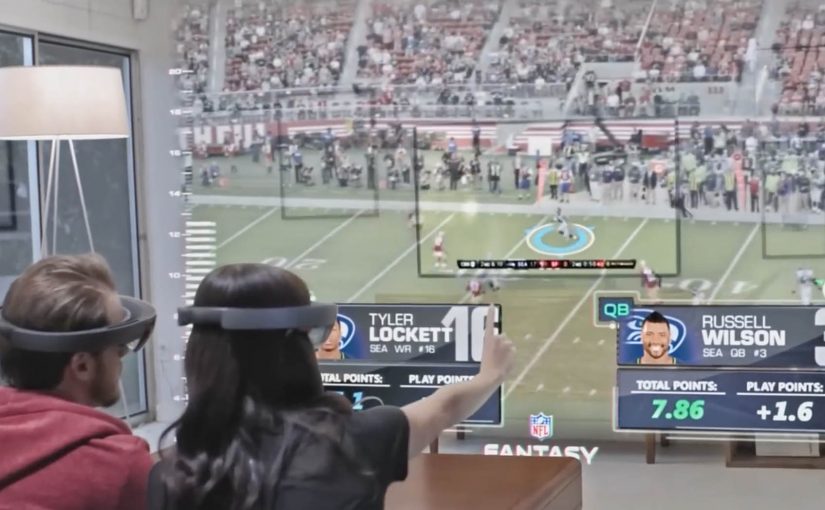
In a recently released video, Microsoft and the NFL re-imagine how a Super Bowl game could be watched with multiple friends and family members.

The scenario pushes beyond passive viewing. It turns the living room into an interactive layer, where the game experience becomes more immersive, more social, and more spatial.

By spatial, I mean the content is anchored to the room, not confined to the TV frame.

This is the kind of concept that makes the future of TV feel tangible.

In mass-market entertainment, the constraint is not what immersive concepts can show, but when consumer hardware becomes affordable, comfortable, and mainstream.

Why this lands for co-viewing

TV should prioritize co-viewing, meaning multiple people watching and reacting together in the same room, because a shared, spatial layer creates viewer control that a single rectangle cannot. The real question is whether you are designing for shared viewer control in the room, or just adding data overlays to a screen.

Extractable takeaway: When you move sports content into the room, design the experience around shared reference points, lightweight interaction, and conversation pacing, not around more screen real estate.

Immersive viewing is real. Consumer timing is not

The video shows how immersive TV watching can get. But Microsoft is not fast-tracking HoloLens for consumer consumption.

For now, only developers can order HoloLens, shipping this year.

No one knows when consumers get access, or when scenarios like this become a reality.

That uncertainty is part of the story. The vision is clear. The rollout timeline is not.

Steal these design cues for living-room sports

  • Design for the room. Treat the TV as one surface among many, then anchor the key moments and data where people naturally look and point.
  • Make co-viewing explicit. Support multiple viewers and viewpoints, so participation feels shared instead of “one person driving.”
  • Prototype for constraints. Assume headsets stay niche for a while, and test what still works when only one person has the device.

A few fast answers before you act

Is this still “TV” or something else?

It starts as TV content, but behaves more like a shared, spatial experience than a single screen.

What is the core shift headsets enable?

They move content off the rectangle and into the room, so viewing becomes environmental and interactive.

What is the biggest constraint right now?

Availability and consumer readiness. Until mainstream hardware adoption happens, this remains concept-led.

What should experience designers take from this?

Design for co-viewing and spatial context. Multiple people, multiple viewpoints, and shared interaction become first-class requirements.

What should you prototype first?

Prototype the simplest “shared moments” layer, so two to four people can compare and discuss the same play without anyone leaving the game flow.
NIVEA Creme: Second Skin Project

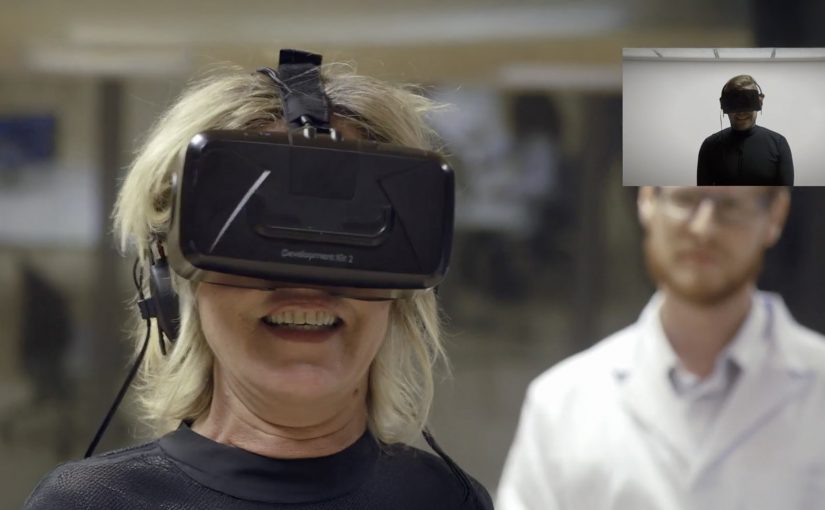
A mother puts on a headset and a skin-like suit. Her son does the same, thousands of kilometres away. The promise is simple. If they cannot be together for Christmas, technology will let them feel a hug anyway.

That is the set-up in NIVEA Creme’s “Second Skin Project” with Leo Burnett Madrid. The film introduces Laura in Madrid and her son Pablo, who is away volunteering in Paraguay. They are invited to test a “Second Skin” garment that is presented as a high-tech fabric designed to simulate human skin and transmit the sensation of touch at distance, paired with virtual reality headsets.

The story then pivots. What looks like a tech demo is used to make a point about touch, not technology. The most persuasive moment is not the suit. It is the human reunion that follows, designed to underline NIVEA Creme’s belief that nothing beats skin-to-skin contact.

The “Second Skin” mechanism that pulls you in

The film borrows credibility from advanced-sounding materials and VR. That framing creates anticipation, because the viewer wants to know whether the experiment can actually work. The suit and headset are the narrative engine that earns attention for long enough to land the real message.

In global consumer brands where heritage products compete with endless alternatives, emotional proof often carries more weight than functional claims.

The real question is whether the tech is the story, or whether it is just a credible pretext for the brand to own the value of touch.

The twist that protects the brand meaning

There is a risk with tech-led emotion. The technology can become the hero and the brand becomes a sponsor. This script avoids that by using the tech as a decoy. The reveal shifts the spotlight back to the product truth. A hug is still the best “gift” and NIVEA Creme wants to be associated with that intimacy.

Extractable takeaway: When you borrow a shiny mechanism to earn attention, make the emotional payoff explicitly restate what the brand believes, or the gadget takes the credit.

How to use “purpose + tech” without losing the human truth

  • Use technology as the hook, not the conclusion. Let it earn attention, then pay it off with a human truth.
  • Make the brand stance explicit. Here the stance is clear. Technology can be amazing, but touch matters more.
  • Cast real stakes. Distance, holidays, and family history make the outcome feel earned.
  • Keep the product role emotional, not technical. NIVEA Creme is not “the innovation”. It is the comfort cue that frames the story.

A few fast answers before you act

What is the NIVEA Creme Second Skin Project?

It is a Christmas-season film and experiment setup where a mother and son test a VR-led “Second Skin” suit that is presented as transmitting the feeling of touch at distance, then the story reveals the value of real human contact.

Why does the campaign use VR and a “second skin” suit?

Because it creates a believable question the audience wants answered. Can technology replicate a hug? That curiosity holds attention long enough for the campaign’s real point to land.

What is the core message NIVEA Creme is trying to own?

That skin-to-skin contact matters. The work uses technology to highlight that, even in a world of advanced tools, nothing replaces human touch.

What makes this more than a generic emotional video?

The narrative structure. It starts as a tech experiment, then pivots into a human reunion. That contrast makes the conclusion feel stronger than a straight sentimental story.

What is the biggest risk with “tech-as-story” campaigns?

Audience misattribution. People remember the gadget and forget the brand meaning. The fix is to ensure the emotional payoff clearly belongs to the brand stance, not the device.

Volkswagen Trailer Assist

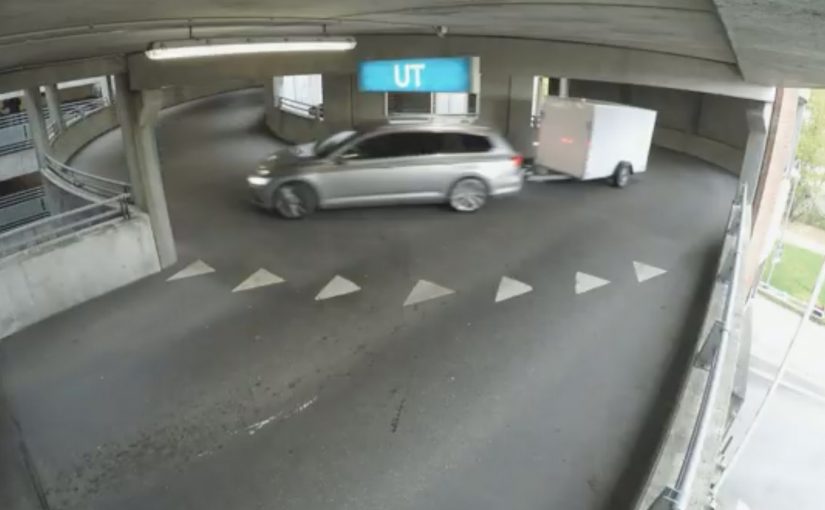
The Trailer Assist feature allows Volkswagen cars to park semi-autonomously using the rear backup camera. To promote this feature in Norway, Volkswagen created a stunt where a driver appeared to back up his car and trailer at high speed through parking lots, roundabouts and intersections.

The film looks impossible on purpose. The “trailer” was built as a disguised driving rig, with a stunt driver inside. One-way transparent plexi glass (and film) kept visibility possible for the driver in the rig, while still selling the illusion from the outside.

What Trailer Assist is actually solving

Reversing with a trailer is where confidence collapses for many drivers. The steering feels counter-intuitive, small corrections compound fast, and stress makes it worse. Trailer Assist flips that experience by turning the job into a simpler “direction setting” task, while the system handles the tricky part of guiding the trailer’s path using the rear camera. By “direction setting,” the driver chooses where the trailer should go rather than constantly counter-steering every correction.

Why the stunt works as marketing

In automotive marketing, driver-assist features are easier to remember when the audience feels the pain before it hears the specification. Because the stunt externalizes the panic of trailer reversing at an exaggerated scale, viewers immediately understand why assistance matters before the feature is explained. This is smart feature marketing because it dramatizes the user problem first and the technology second.

Extractable takeaway: When a feature reduces a known stress point, dramatize the stress first so the assistance feels necessary rather than technical.

What Volkswagen is really demonstrating here

The real question is whether Volkswagen can turn a hidden driver-assist feature into a capability buyers instantly understand and remember. Volkswagen is not selling autonomous driving here. It is selling confidence at the exact moment many drivers feel least competent.

What to steal for tech-feature storytelling

  • Start with a strong visual proof. If the benefit is hard to explain, make it easy to see.
  • Use exaggeration to earn attention, then anchor in reality. The stunt pulls people in. The feature explanation keeps it credible.
  • Pick a scenario your audience already fears. Trailer reversing is a universal stress test.

A few fast answers before you act

What is Volkswagen Trailer Assist?

A driver-assist feature that helps manoeuvre a trailer while reversing using the rear camera, reducing the counter-intuitive steering challenge.

What did Volkswagen do in Norway to promote it?

They staged a stunt that made it look like a Volkswagen reversed a trailer at very high speed through real-world driving situations.

How did they create the illusion?

A disguised trailer rig with a hidden stunt driver inside made the movement possible while keeping the “reverse drive” effect believable from the outside.

Why was plexi glass part of the setup?

One-way transparent plexi glass (and film) allowed the driver in the rig to see out while keeping the illusion intact for onlookers and camera angles.

What is the key takeaway for marketers?

When a feature is hard to appreciate in a static demo, create a single dramatic scenario that forces attention, then connect it back to the everyday value.