
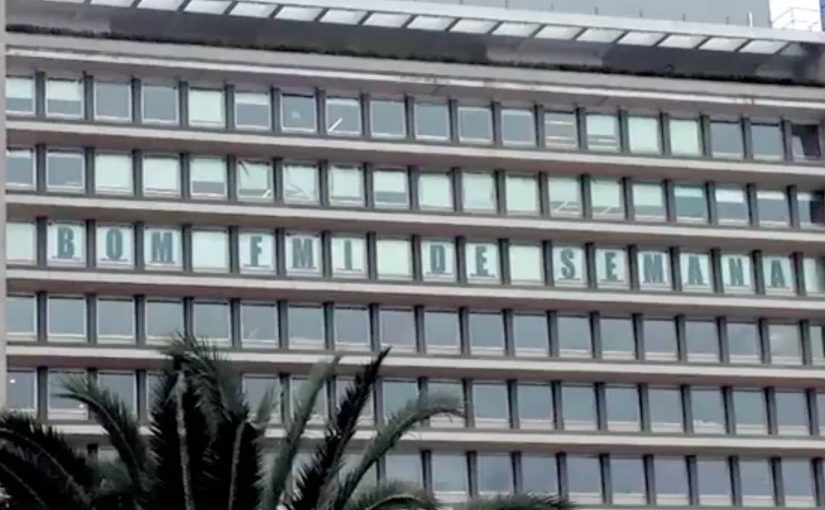
TBWA Lisbon: Windows become Twitter billboard

TBWA Lisbon: Windows become Twitter billboard

TBWA was the last agency to move to Lisbon’s advertising district. With their top competitors already there, they decided to showcase their creativity by turning 19 windows of their office into a 36m long Twitter billboard.

The stunt is simple in concept and bold in execution. The office becomes the medium. Instead of hiding behind a reception desk and a logo, the agency uses its own facade as a live publishing surface for the public street.

Turning an address into a live channel

The mechanism is real-time social content made physical. Tweets appear across the windows, transforming an office building into a public conversation layer. It is not “social amplification” in the usual sense. It is a direct translation from a digital feed into a street-level display.

In dense urban environments, public-facing digital surfaces work best when they make participation visible, immediate, and shared by everyone on the street.

The real question is whether your brand can turn participation into a public signal, not just another message people scroll past.

The video does not explain exactly how people were encouraged to send in their tweets, but it does show the breadth of what people shared. Tweets touch politics, taxes, Europe, Merkel’s visit, and more. That range matters because it signals that the billboard is not a branded script. It behaves like a live civic wall, meaning an open public message board where anyone can add a line and everyone on the street sees it.

Why it lands in an ad district full of competitors

When agencies cluster, sameness is the enemy. This activation works because it creates a visible signature at the point of competition. People do not have to be invited inside to experience TBWA. The building itself is performing in public, and the audience can participate without crossing a threshold.

Extractable takeaway: In a competitive cluster, your best differentiator is a street-level interface that makes participation visible to everyone nearby.

It also carries a little risk. Real-time public messages can be messy. That tension is part of the attention engine. It feels alive because it is not perfectly controlled.

The intent: differentiate through public participation

The business intent is positioning. TBWA is signalling modernity, openness, and confidence in real-time ideas. The agency is also using the street as a distribution channel to generate talk, foot traffic, and press interest.

A live, participatory facade is a stronger differentiator here than another logo on glass, because people can experience the idea without being invited in.

And it worked. In the end, all the window tweeting created quite a stir in the local media.

Practical moves from the Twitter window billboard

  • Use your own real estate. If you have a facade, treat it as media, not architecture.
  • Make digital physical. The jump from screen to street creates instant novelty.
  • Design for participation. People engage more when they can see themselves appear in public space.
  • Accept a little mess. Real-time content feels credible because it is not overly polished.
  • Build for earned media. A visible public installation gives journalists something to film, not just to quote.

A few fast answers before you act

What is the TBWA Lisbon Twitter billboard?

It is a facade activation that turned 19 office windows into a 36m long display showing tweets in public, effectively making the building a live billboard.

Why does turning tweets into a window display work?

Because it makes online conversation visible in a shared physical space, which creates surprise, participation, and social proof.

How did it create attention beyond the street?

The visibility and real-time nature made it easy for people and local media to capture and share, turning a building into a story.

Is this more about branding or engagement?

Both. The engagement mechanic is participation, but the branding outcome is differentiation and positioning in a competitive district.

What is the key takeaway for agencies and brands?

If you want to stand out locally, build a public interface that lets people contribute and be seen. It creates talk faster than self-promotion.
bpost Live Webshop: Every second cheaper

bpost Live Webshop: Every second cheaper

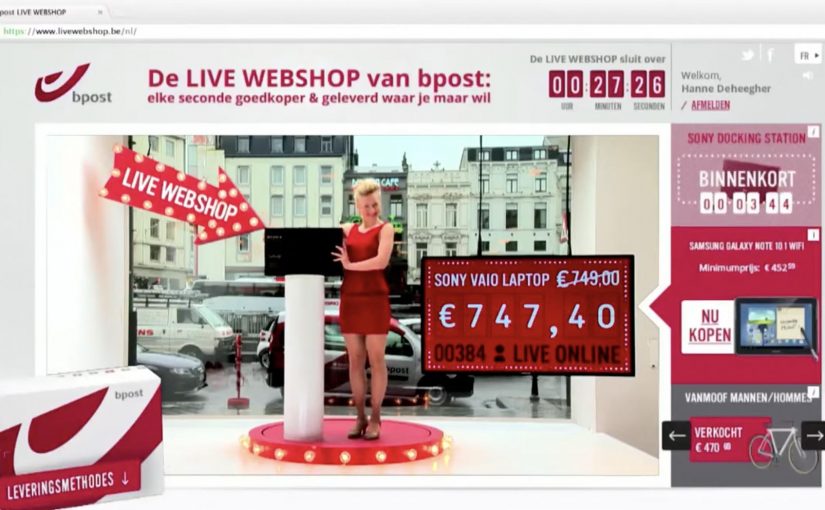
bpost is Belgium’s postal operator. To prove their ability to deliver, and to fend off new contenders in the delivery market, they open a pop-up store right in central Brussels that you can watch like a shop window.

A range of must-have items is put on display, from smartphones to designer coffee makers. The twist is that the only way to buy them is through a special online auction where the price of every product drops every second.

People have to act fast to catch an item before someone else does. Once sold, the item is picked up by a postman right in front of the webcam and delivered to the winning bidder, so everyone watching can see how quick and reliable the service is.

In European parcel and delivery markets, the hardest promise to prove is speed and reliability, so public demonstrations often land harder than product claims.

The real question is how you make a service promise visible enough that people trust it without having to take your word for it.

As a result, awareness of bpack, the delivery service being promoted, is reported as rising to 65%. In 6 days, 260,000 unique visitors are reported. For every hour the shop is online, bpost is reported as selling 8 products on average.

A webshop you can watch, not just click

The pop-up window makes the online mechanic tangible. People see the products in real life, then experience the purchase as a live moment, with delivery turning into the proof point rather than a line in the footer.

Why the “dropping price” mechanic creates urgency

A price that decreases every second builds a clear trade-off: wait for a better deal, or buy now before someone else does. Because the price is visibly falling, hesitation becomes a risk you can feel. That tension is the game. It keeps attention locked and makes the checkout decision feel like winning, not spending.

Extractable takeaway: Use a visible, fast-moving trade-off so waiting feels costly and acting feels like progress, not purchase.

What bpost is really selling with bpack

The service story is simple: “wherever you are, we deliver.” The activation turns that into something visible, with a postman dispatching the parcel immediately after purchase. The product is delivery confidence. Proof beats claims when reliability is the benefit.

Service-proof moves worth reusing

  • Make the benefit observable. If your promise is speed, show speed in public.
  • Use a mechanic that explains itself. A visible countdown beats a paragraph of copy.
  • Build in a live “receipt”. The moment of dispatch is the proof people remember.
  • Design for spectators. If watching is entertaining, the audience becomes the distribution layer.

A few fast answers before you act

What is the bpost Live Webshop?

It is a pop-up retail window in Brussels where products can only be bought via a live webshop auction, with prices dropping every second and delivery shown on camera to prove service speed.

How does the “price drops every second” auction work?

Each product starts at a set price and continuously decreases over time. The first person to click and buy wins the item at that moment’s price.

Why show a postman picking up the parcel live?

Because it turns a delivery claim into visible proof. The dispatch moment demonstrates reliability and speed better than messaging can.

What is bpack in this campaign?

bpack is positioned as the delivery service being promoted. The activation is designed to raise awareness and trust in that specific service.

What is the main lesson for brands selling services?

When trust is the barrier, do not just explain the promise. Stage it so people can watch the promise being kept.

Catch the Oreo: An Augmented Reality Game

Catch the Oreo: An Augmented Reality Game

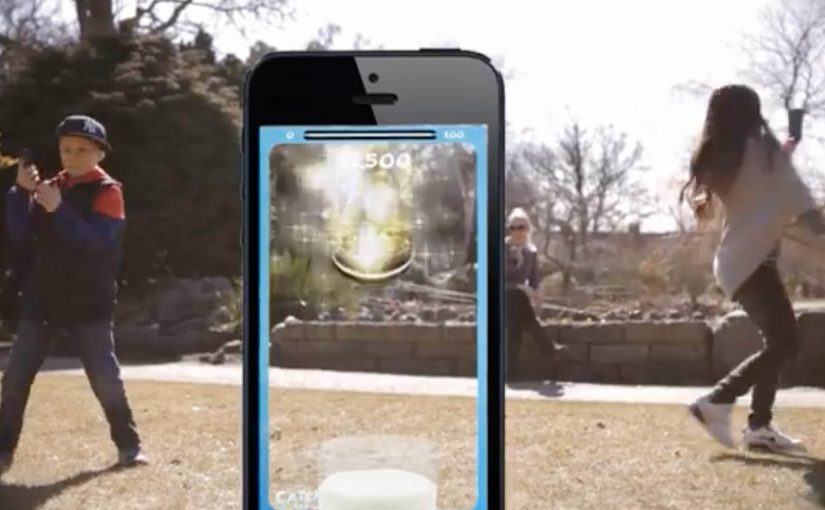
Oreo Cookies, to commemorate the first video game created by Ralph H. Baer, used modern day technology to create an augmented reality game called “Catch the Oreo”. The game is available on Android and iOS devices.

Here, augmented reality means the phone camera view overlays virtual Oreos onto the live scene, so you catch them in your space.

People living in Norway and Denmark are automatically entered into a sweepstake competition by just playing and uploading their high score. There are weekly prizes and the winners are decided by drawing lots.

Competition lasts from 8 April to 28 July 2013 (both dates included). So start playing.

Why AR is a good fit for a simple, repeatable game

The charm of “Catch the Oreo” is that it takes a basic arcade mechanic and gives it a physical feeling. AR turns “tap on a screen” into “catch it in your space”, which makes the game feel more immediate and more shareable.

Extractable takeaway: When the core action is instantly understandable, AR can add physicality and shareability without adding rule complexity.

AR works best here as a thin layer of delight over a simple arcade loop, not as the loop itself.

  • Instant understanding. Catch the cookie. Score points. Improve your high score.
  • AR adds novelty without complexity. The camera layer makes it feel new, but the rules stay simple.
  • Replays are built in. High scores naturally invite repeated attempts.

In European FMCG marketing, lightweight mobile games like this can be a practical way to turn momentary attention into repeatable engagement.

The sweepstake mechanic reduces pressure and increases participation

Weekly prizes and winners drawn by lots change the psychology. You do not have to be the absolute best player to feel you have a chance. You just have to play and upload.

The real question is whether your mechanic can motivate repeat play without making most participants feel they have already lost.

That is a smart way to broaden participation, especially in markets where you want scale quickly.

A random-draw sweepstake can reward participation rather than skill, which can widen the funnel while still benefiting from weekly prize cadence.

Why Norway and Denmark focus matters

By making the sweepstake specific to Norway and Denmark, Oreo can concentrate buzz, prize logistics, and local relevance. It also allows them to measure adoption and participation within a defined footprint.

What to take from this if you run mobile engagement campaigns

  1. Keep the core mechanic simple. AR is the layer. The game rules should be obvious.
  2. Reward participation, not only skill. Lot-based prizes can widen the funnel.
  3. Use time-boxed windows. Fixed dates create urgency and repeat visits.
  4. Make sharing part of the flow. High-score uploads naturally create a distribution loop.

A few fast answers before you act

What is “Catch the Oreo”?

It is an augmented reality mobile game created by Oreo, available on Android and iOS, where players catch Oreos to achieve a high score.

Where was the sweepstake promotion available?

For people living in Norway and Denmark, who were entered automatically by playing and uploading their high score.

How were winners selected?

There were weekly prizes and winners were decided by drawing lots, not purely by highest score.

What were the competition dates?

It ran from 8 April to 28 July 2013, with both dates included.

What is the main lesson for AR marketing?

Use AR to add delight, but keep the underlying mechanic simple and repeatable, then attach incentives that drive replays and sharing.