A Can Size for Every Aussie

Kraft launches four new sizes of Heinz baked bean cans with a three-minute “life narrative” film. It follows Geoff, a man addicted to beans, and his future wife, whom he meets in the spaghetti department. The story builds to the punchline. Geoff “invents” a range of can sizes that feels perfect for different Australian occasions.

The creative choice is doing a lot of work. It turns something that is normally functional and forgettable. Pack size. Into a character-driven narrative that is easy to watch and easy to remember.

The insight behind the pack strategy

In 2016, Kraft commissions consumer and shopper research to understand how Australians use Heinz beans and spaghetti. The key finding is straightforward. People want ideal can sizes that suit different occasions.

Four sizes is not “more choice” for its own sake. It is a response to a usage reality. One household does not always need the same portion format.

Why a film is the right container for a packaging story

Packaging benefits can sound like rational product copy. This film makes the point emotionally, then lands it practically.

The narrative format also solves a distribution problem. It gives the campaign a reason to be watched and shared even by people who do not currently care about can sizes.

What to steal if you are launching format variants

  • Start with a concrete usage insight, not a portfolio decision.
  • Give the variant story a memorable mental model. Here, “a can size for every occasion.”
  • Use entertainment to earn attention. Then let the product logic feel obvious, not forced.

A few fast answers before you act

What is being launched here?

Four new sizes of Heinz baked bean cans.

What insight drives the launch?

Kraft’s research shows Australians are looking for ideal can sizes to suit different occasions.

How is the launch communicated?

Through a three-minute life narrative film featuring Geoff and his future wife in the spaghetti department.

What is the core marketing technique?

Use story to make a functional packaging benefit feel human, memorable, and worth sharing.

The Day Shazam Forgot

Alzheimer’s Research UK partners with Shazam and does something deliberately uncomfortable. It gives the app the symptoms of Alzheimer’s. You use Shazam as you normally would, but the experience starts to break in ways that mirror memory loss. It is a hard-hitting way to feel, in a small moment, what daily struggle can look like.

The insight behind the campaign is about who needs to be reached. Most people associate Alzheimer’s with late life, but the disease can affect people as young as 40. The post cites over 40,000 people under 65 living with dementia in the UK.

The point is education through friction

This does not try to persuade with claims or statistics alone. It turns education into a lived interaction. Shazam is familiar and fast. Making it unreliable becomes the message.

Why the Shazam choice is strategic

Shazam already sits in a high-frequency behaviour loop. People open it in real life moments. That makes it a powerful carrier for a message about everyday disruption, because it arrives inside everyday life rather than as a separate awareness film.

What to take from this if you build digital experiences

  • If you want people to understand an abstract condition, simulate a small part of the experience, not just the outcome.
  • Put the message inside a familiar behaviour, so the contrast is instantly felt.
  • Use disruption sparingly and intentionally, so the discomfort has a purpose and does not turn into irritation.

A few fast answers before you act

What is “The Day Shazam Forgot”?

A Shazam partnership campaign that simulates Alzheimer’s symptoms to give users a direct, hard-hitting insight into memory loss.

Who is the campaign trying to educate?

A younger audience that may assume Alzheimer’s only affects people in late life.

What key fact reframes the audience assumption?

The disease can affect people as young as 40. The post cites over 40,000 people under 65 living with dementia in the UK.

What is the core creative technique?

Turning a familiar app experience into a controlled failure state, so the message is felt rather than only read.

The intelligent car from Mercedes-Benz

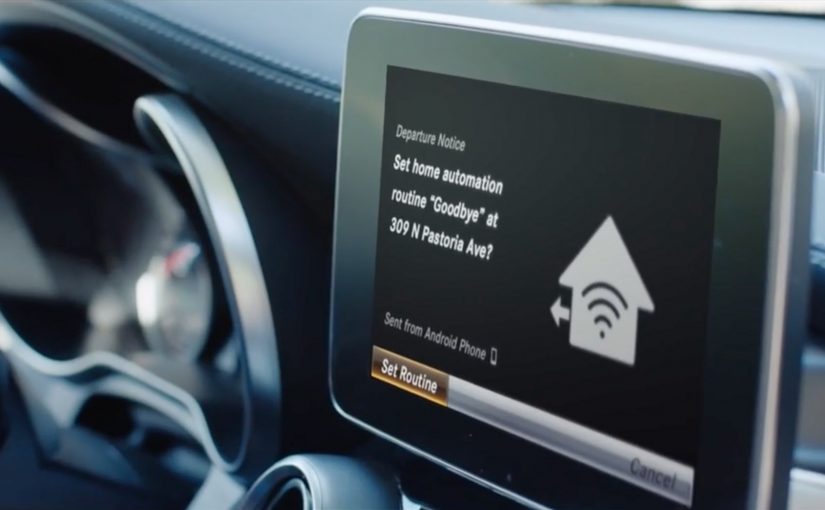
Mercedes-Benz announces that its 2016 and 2017 vehicles in the US can connect with Amazon Echo and Google Home. With that integration in place, owners can remotely start or lock their vehicle, and they can send an address from home straight into the car’s in-car navigation.

What makes this interesting is not the novelty of voice commands. It is the direction. The car starts behaving like a node in a wider home automation ecosystem, not a standalone product you only interact with once you sit behind the wheel. You speak to your assistant at home. The car responds. The boundary between “home experience” and “driving experience” gets thinner.

The ecosystem move, not a feature add-on

A single capability like “remote start” is useful. But the strategic move is building an intelligent ecosystem around the car, using third-party voice assistants people already trust and use daily. That lowers adoption friction and accelerates habit formation. If a driver already uses Alexa or Google Home for routines, adding the car becomes a natural extension.

This also shifts expectations. Once the car is connected into the household’s digital layer, people start wanting context-aware flows. For example, planning and sending destinations before leaving. Or basic vehicle actions triggered as part of an existing routine.

Mercedes is not alone in spotting the pattern

Mercedes-Benz is not the first automaker to recognise the potential of third-party voice assistants. At CES earlier this year, Ford unveiled plans to roll out Alexa-equipped vehicles. Around the same time, Hyundai announced a partnership with Google to add voice control through Google Home.

The competitive question becomes simple. Who turns the car into a meaningful part of the customer’s everyday digital routines first, and who reduces the connected car to a checklist feature.


A few fast answers before you act

What does Mercedes-Benz enable through Alexa and Google Home?

Remote start. Remote lock. Sending addresses from home to the in-car navigation system.

Why is this bigger than “voice control in the car”?

Because it connects the car to an existing smart home ecosystem. That makes the car addressable from outside the vehicle, and it pushes the experience upstream into planning and daily routines.

What should product, CX, and marketing teams watch closely?

The ecosystem choices. The core use cases that become habitual. The trust layer, including permissioning and security for remote actions. The operational reliability, because routines only stick when they work every time.

What is the strategic takeaway in one line?

The “intelligent car” story is increasingly an ecosystem story. It is about where the car lives in the customer’s broader digital life.