
Mountain Dew: Paintball Street Art in London

Mountain Dew: Paintball Street Art in London

Paintballing meets street art in Mountain Dew Energy’s UK campaign. The idea is built around a simple collision: take the raw physicality of paintballing and merge it with graffiti culture.

The campaign is centred on a Facebook app designed to find and showcase the brand’s official street artists. Rather than appointing talent from the top down, Mountain Dew Energy lets fans decide who represents the brand on the street.

The campaign video shows the Graffiti Kings creating large-scale street art using paintballs inside London’s graffiti hub, the Leake Street Tunnel. The featured artists, Knoxville and Grohl, are not random selections. They were chosen by fans following a teaser phase that invited participation before a single wall was painted.

When the medium becomes the spectacle

The mechanism is the twist on technique. Graffiti is usually associated with spray cans and markers. Paintballs introduce unpredictability, force, and performance. The act of creation becomes as interesting as the final artwork, giving the campaign strong visual momentum.

In youth and culture-led marketing, credibility rises when the brand builds a participatory system and lets the community validate the outcome.

In UK culture-led brand marketing, credibility compounds when the community is allowed to validate who gets the wall.

The real question is whether you will let fans choose the makers before you ask them to share the outcome.

Why fan selection changes the power dynamic

Letting fans choose the artists shifts authorship. The brand steps back from curating taste and instead creates a framework where the community validates talent. That makes the outcome feel earned rather than manufactured, which matters in street culture.

Extractable takeaway: If you need cultural credibility, move selection upstream and let the community choose the creators before you invest in production.

This also gives the campaign a built-in narrative arc. The teaser phase creates anticipation. The vote creates ownership. The execution becomes a payoff that fans feel partially responsible for.

The intent behind the paintballs

The business intent is not just awareness. It is cultural alignment. Mountain Dew Energy positions itself close to street culture, creativity, and youth expression. By avoiding polished studio aesthetics, the brand signals that it understands the messier, louder edges of its audience. Brands should not borrow street-culture signals unless they also borrow the audience’s decision rights.

Moves to copy from paintball graffiti

  • Hybridise formats. Combining two cultures can create immediate distinction.
  • Make creation performative. If the process is entertaining, it becomes shareable.
  • Let fans decide. Participation before execution increases emotional investment.
  • Choose the right setting. Leake Street Tunnel adds credibility that no set could replicate.
  • Design the buildup. Teasers and voting give the campaign a rhythm, not just a reveal.

A few fast answers before you act

What makes this campaign different from typical street art sponsorships?

The use of paintballs turns graffiti into a live performance, not just a finished visual, and makes the act of creation central to the story.

Why involve fans in choosing the artists?

It transfers credibility. When the community selects the talent, the brand avoids looking like it is imposing taste from above.

Does the Facebook app actually matter?

Yes. It is the coordination layer, meaning the simple system that collects votes and points fans to the official artists, and gives the campaign a reason to unfold over time.

What audience behaviour is this trying to encourage?

Engagement, sharing, and identification with the brand as part of a creative subculture rather than just a beverage choice.

What is the key takeaway for brand-led cultural campaigns?

Create a platform, not just a placement. When people can influence the outcome, they are more likely to care about the result.
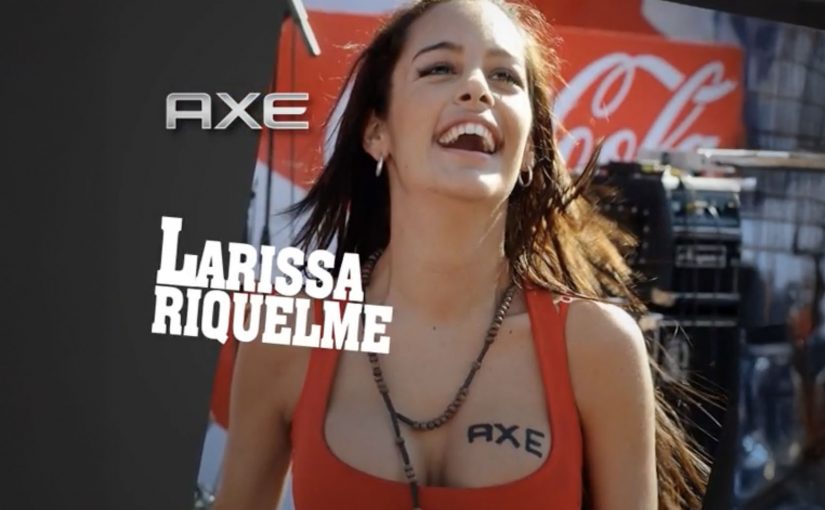
Axe Paraguay: The Sexiest Billboard

Axe Paraguay: The Sexiest Billboard

A billboard goes up during the World Cup season and instantly hijacks attention. Not because it is bigger or brighter, but because it deliberately fuses football energy with a provocative visual that people cannot ignore.

During the 2010 Football World Cup, Axe Paraguay faced the challenge of standing out from other brands with a very low budget. Their objective was to create free press about their brand and at the same time get everybody’s attention.

So their agency Biedermann McCann fused what men love the most, soccer and women. They created the “sexiest billboard” which got everybody’s attention and, as described at the time, generated millions of dollars worth of free press.

Why a single billboard can punch above budget

The mechanism is straightforward. Use a culturally overloaded moment, the World Cup, then pick a creative trigger that travels beyond the street. The billboard is not only media. It is a press object designed to be talked about, photographed, and repeated. Because it is built to be photographed and repeated, it turns one paid placement into many retellings.

Extractable takeaway: When budget is tight, design the idea so it leaves the street on its own. Anchor it to a high-attention moment and make the trigger legible enough that people can retell it without extra context.

In event-driven, low-budget marketing, a highly legible outdoor stunt can earn disproportionate coverage when it turns a public moment into a sharable story.

The real question is whether your creative is designed to travel beyond the placement.

What the campaign is really optimizing for

This is not built for persuasion-by-argument. It is built for attention and retellability. By retellability, I mean how easily someone can describe the idea in one sentence without seeing it. The billboard creates a reaction first, then lets the brand hitch a ride on the reaction through earned media and conversation.

Stealable patterns for low-budget breakouts

  • Pick one cultural accelerant. Major sports events compress attention. Use that compression.
  • Design for “tell a friend”. If people can describe the idea in one sentence, it spreads.
  • Build for cameras, not just eyes. If it photographs clearly, it leaves the street faster.
  • Separate provocation from confusion. Shock without clarity becomes noise. The idea still needs one obvious link back to the brand.

A few fast answers before you act

What is Axe Paraguay’s “Sexiest Billboard”?

A World Cup-season outdoor stunt designed to stand out on a small budget by combining football culture with a provocative visual so it earns attention and press coverage.

Why is the World Cup context important here?

Because attention is already concentrated. A strong trigger in that window is more likely to be noticed, shared, and picked up by media.

What is the main success metric for this kind of idea?

Earned media and conversation. The billboard is designed to generate coverage and sharing beyond its paid placement.

What is the core creative risk?

Provocation can overshadow the brand. If people remember the stunt but not who did it, the attention is wasted.

How do you adapt the approach without copying the tactic?

Keep the structure. Attach to a cultural moment, build a simple, legible trigger, and design the output so it is easy to photograph and retell.

Prigat: User Generated Orange Juice

Prigat: User Generated Orange Juice

Prigat, a leading company in the Israeli fruit juice market, launched one of the more inventive Facebook mechanics of its era. It invited people to squeeze real orange juice by doing something absurdly simple. Smile at your webcam.

The idea was packaged as “User Generated Orange Juice (UGOJ).” A Facebook application that translated user participation into a physical outcome you could actually watch.

The mechanism: your smile triggers a real machine

A custom Facebook app developed by Publicis E-Dologic used webcam-based smile detection to trigger a real, oversized juicer. When the app detected a smile, it activated the juicer and squeezed fresh oranges. Users could watch the machine live 24/7, so the cause-and-effect was visible rather than implied.

Campaign coverage also described a personalization touch where the participant’s name appeared on the machine during use, and that the resulting juice was directed to a charity choice.

In social platform marketing, physical proof loops outperform abstract engagement prompts because they give people a reason to believe and a reason to share.

Why this lands

This works because it turns a universal emotion into a measurable input. Smiling is effortless, socially contagious, and camera-friendly. The live feed makes the outcome undeniable, and that “I did this” ownership nudges people to recruit friends so their smiles compound into more visible results.

Extractable takeaway: If you want participation at scale, connect a low-friction action to a real-world output that people can witness in the moment, then make sharing feel like extending the impact, not like promoting the brand.

What Prigat is really doing

The campaign turns Facebook from a place for liking into a place for doing. The real question is how to turn a passive social audience into a participant who can see, trust, and share the brand experience. This is stronger than a standard Facebook giveaway because the proof is built into the interaction itself. It converts attention into a visible production line, then uses the live stream as credibility and the smile photos as distribution. Prigat gets warmth by associating the brand with positive emotion and generosity, while the machine supplies a visible proof point that keeps the story believable.

What to steal from the Prigat participation loop

  • Design a simple input. The easier the action, the more likely people repeat it and recruit others.
  • Show the output live. A real-time feed reduces skepticism and increases share-worthiness.
  • Make participation legible. If the user can see their effect immediately, they trust the loop.
  • Attach a social good endpoint. A charity destination converts novelty into meaning.

A few fast answers before you act

What is “User Generated Orange Juice” (UGOJ)?

It’s a Facebook app activation where users smile at a webcam and trigger a real juicer that squeezes fresh oranges, visible via a live stream.

How does the smile activation work?

The app uses webcam-based smile detection to decide when to trigger the juicer. The user’s action becomes the on-switch.

Why include a 24/7 live view of the juicer?

It provides proof. People can watch the result of participation, which increases trust and makes the story easier to share.

What kind of results were reported?

Reported results include around 30,000 new likes, over 20,000 photos uploaded, and roughly 40,000 oranges squeezed.

What’s the key risk if you copy this concept?

Trust and privacy perception. You need clear, simple communication that the webcam is used only to detect the smile for the interaction, and that the experience is safe and transparent.