
Coca-Cola: Give a Coke, Be Santa

A vending machine that asked you to choose who you are

In global FMCG holiday marketing, the strongest ideas often turn seasonal sentiment into a simple action people can take in public. Coca-Cola’s holiday vending machine is a clean example of that move.

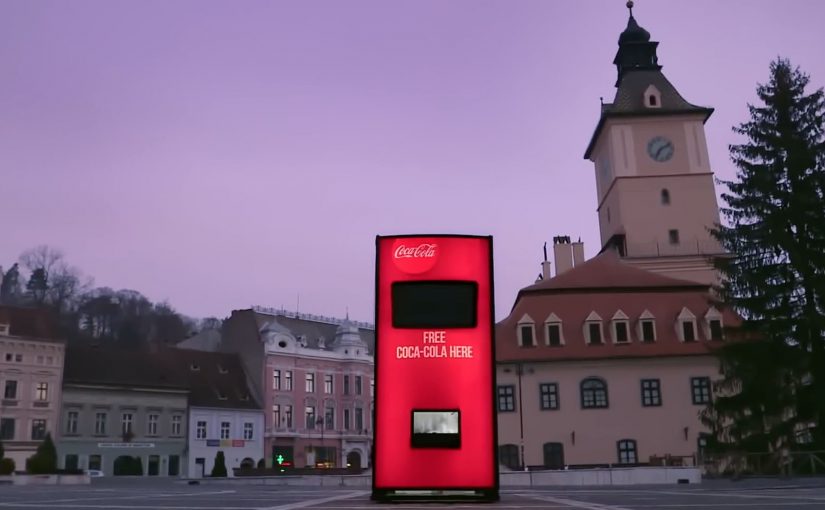
Coca-Cola wanted to bring out the Santa in everyone. So for the 2013 holiday season, they created a special vending machine that prompted users to either get a free Coke or give a free Coke.

The two-button mechanic that made sharing the story

If the user chose a free Coke, the machine quickly dispensed the drink for the user to enjoy.

However, if the user decided to share, then the machine did something a little more special. Watch the video below to find out.

Why “give” feels better than “get” in December

The psychology here is straightforward. A free product is nice, but it is forgettable. A choice that reflects identity is sticky.

By putting “give” and “get” side by side, the machine turns a small decision into a moment of self-image and social proof. In a holiday setting, people want to see themselves as generous, and they want to be seen that way by others.

The business intent behind bringing out the Santa

The intent is not simply distribution.

Coca-Cola uses the vending machine to translate a brand promise into behavior. The brand is associated with warmth and sharing because the consumer enacts it, not because the brand claims it.

What to steal from this give-or-get design

  • Turn values into a choice. Make the brand idea something people can do, not just hear.
  • Reward the “better” behavior. If sharing is the story, make sharing the more memorable path.
  • Keep the interaction instantly legible. Two clear options beat complex instructions in public spaces.
  • Design for a public moment. When others can witness the decision, the story travels faster.

A few fast answers before you act

What did Coca-Cola build for the 2013 holiday season?

A special vending machine that offered users a choice: take a free Coke or give a free Coke.

What was the core mechanism?

A simple two-option prompt. Choosing “get” dispensed a Coke immediately. Choosing “give” triggered a more special outcome.

Why does the “give” option matter so much?

Because it turns a freebie into an identity moment. People remember what they chose, and others can witness it.

What business goal did this support?

Making Coca-Cola’s holiday positioning feel real by linking the brand to a visible act of sharing, not just a message about sharing.

What is the main takeaway for brands?

If you want to own a value like generosity, design an interaction where people can demonstrate that value in the moment.

Video Stamps

Unpacking post is a bit like unpacking gifts. So for this Christmas, Australia Post has created a video stamp that lets senders add a more personal touch to their packets via a QR code stamp that is linked to a custom video message.

J.C. Penney has already linked QR Codes to voice messages during their Santa Tags sticker campaign in 2011. And at the beginning of 2012 there was also a concept video doing rounds on YouTube about a similar DHL Christmas Video packet service. So I am just surprised that it took so long for a postal service to pick up on the concept and implement it. 🙂

Mercedes-Benz: Tweet Fleet Parking on Twitter

The “Active Parking Assist” from Mercedes-Benz recognizes empty parking spaces by simply passing them. That brought ad agency Jung von Matt/Neckar to the idea that if the car knows where the empty parking spaces are, then everybody could also be informed.

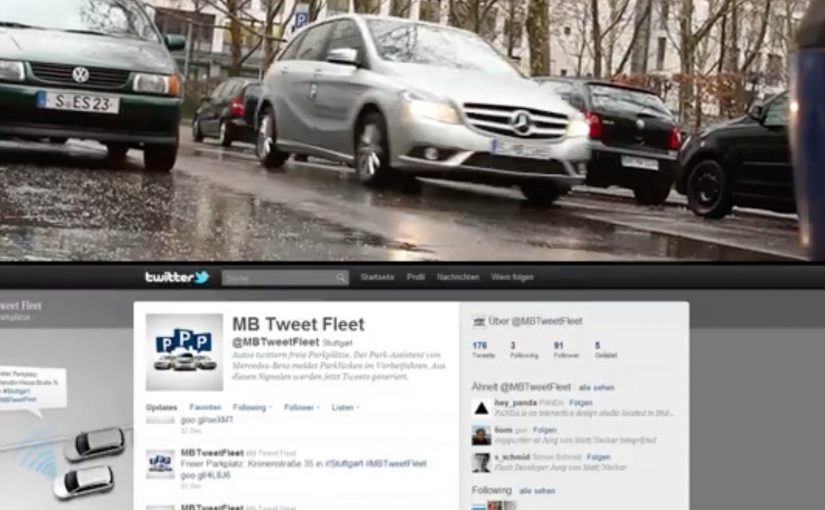
So just before Christmas when parking spaces were hard to find, they launched the Mercedes-Benz Tweet Fleet with its Active Parking Assist that tweeted empty parking spaces in downtown Stuttgart.

The MBTweetFleet cars automatically generated the tweets with GPS data via Arduino an onboard electronic and a PHP Relay. People could then follow @MBTweetFleet to find empty parking spaces near them on Twitter and be navigated there by the linked Google map.

Why this idea is stronger than it looks

The cleverness is not “tweeting”. The cleverness is turning a capability that already exists inside the car into a public utility. That flips a product feature into a service people can use immediately, without buying anything first.

  • Signal becomes service. The car detects something useful. The system shares it.
  • Real-time context. Parking availability is only valuable when it is current.
  • Distribution is native. Twitter is a lightweight channel for fast, location-based updates.

The technical stack is simple, but the integration is the point

GPS plus an onboard controller plus a relay layer is not the story. The story is that data moves from sensing to publishing with minimal friction. That is what makes it feel “live”.

  1. Detect. Active Parking Assist identifies an empty space while driving.
  2. Locate. GPS attaches coordinates.
  3. Publish. An automated tweet shares the spot publicly.
  4. Act. People navigate using the linked map.

In urban mobility and smart-city moments, public utility beats brand messaging when the value is immediate, local, and easy to act on.

What to take from this if you build connected experiences

  1. Start with a real pain point. Holiday parking pressure is a perfect use case.
  2. Make the feature externally visible. Utility grows when it helps non-owners too.
  3. Choose a low-friction channel. Where people already are beats “download our app”.
  4. Design for immediacy. Real-time value requires real-time delivery.

A few fast answers before you act

What is Mercedes-Benz Tweet Fleet?

It is a campaign in Stuttgart where Mercedes-Benz used Active Parking Assist to detect empty parking spaces and automatically tweet their locations so people could find and navigate to them.

Why does Active Parking Assist enable this?

Because it can recognize empty parking spaces as the car passes them, creating a reliable signal that can be shared.

How were the tweets generated?

The cars generated tweets automatically using GPS data, an Arduino-based onboard electronic component, and a PHP relay.

How did people use the service?

They followed @MBTweetFleet on Twitter and used the linked map in tweets to navigate to nearby empty spaces.

What is the transferable lesson?

If a product can sense something valuable in the real world, you can turn that sensing into a public utility by publishing it in a channel people already use.