Coca-Cola: Happiness Refill

Coca-Cola: Happiness Refill

Connection as currency on Copacabana

For teens, happiness often means one thing: staying connected.

Coca-Cola in Brazil acted on this insight by creating a beachfront store on Copacabana Beach in Rio de Janeiro and installing a soda machine that delivered something more valuable than a drink.

The real question is whether your brand can trade something people have for something they cannot easily get in the moment.

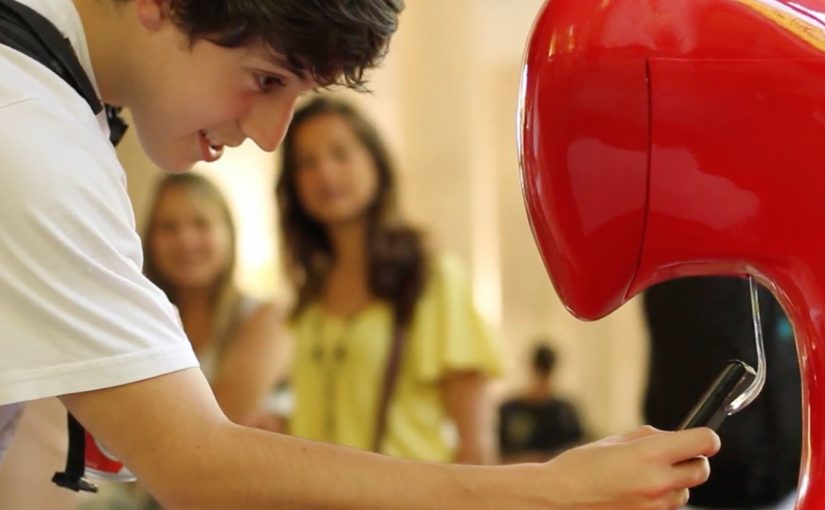
Instead of only dispensing Coca-Cola, the machine rewarded users with free mobile internet credits. For young, emerging middle-class consumers who loved their mobile phones but could not afford generous data plans, the exchange was instantly clear and immediately useful.

How the Happiness Refill machine worked

The interaction was deliberately simple. Users accessed the machine through an exclusive Coca-Cola mobile browser. Completing the interaction unlocked internet credits directly on their phones.

No long registration. No delayed reward. Just a physical interface connected to a digital payoff.

The machine functioned as a bridge between the physical and mobile worlds, using hardware as a trigger and mobile connectivity as the reward.

By turning a quick physical action into instant connectivity, the mechanism created a visible payoff people could copy on the spot.

In mobile-first markets where data is a noticeable constraint, connectivity behaves like a form of currency.

Why free data landed harder than free soda

On a public beach, attention is fleeting. People move quickly, and distractions are constant.

Extractable takeaway: If you reward people with something scarce in their environment, the crowd becomes your distribution channel.

Free data solved a real, present problem. Connectivity was scarce, valuable, and socially visible. Watching someone gain internet access in front of you created instant social proof.

The machine became a gathering point. Not because it was novel technology, but because the value exchange was obvious and human.

The business intent behind Happiness Refill

Coca-Cola’s intent was not short-term sampling.

Utility beats messaging when attention is scarce and the payoff is immediate.

The goal was to make the brand’s long-standing “happiness” positioning tangible for a mobile-first audience by attaching it to everyday utility. Instead of asking teens to emotionally connect with a message, Coca-Cola embedded itself into a moment of real need.

This activation reframed the brand from advertiser to enabler.

What brands can steal from this activation

Here, an activation is a public, in-person brand moment designed to trigger a digital behavior.

  • Translate emotion into utility. Abstract values become powerful when expressed as something people actually need.
  • Design for instant payoff. Immediate rewards outperform persuasion in high-noise environments.
  • Create a public interaction. Physical touchpoints generate social visibility that digital ads cannot buy.
  • Respect economic reality. Value feels bigger when it acknowledges real constraints.

This machine also fits into a broader Coca-Cola pattern. It joins the growing number of Happiness Machines the brand has deployed globally since 2009.


A few fast answers before you act

What insight powered Coca-Cola’s Happiness Refill?

That for teens, happiness is often defined by connectivity. Free data mattered more than another free product.

What made the mechanism effective?

A simple physical interaction with an immediate digital reward. No delay, no complexity.

Why was Copacabana the right context?

The beach favors fast, visible experiences. The activation turned utility into a social moment.

What was the core business goal?

To reinforce Coca-Cola’s happiness positioning by delivering real-world value aligned with mobile behavior.

What is the transferable lesson?

When you make your brand genuinely useful in the moment, people do the distribution for you.
Coca-Cola: Hug Me Machine

Coca-Cola: Hug Me Machine

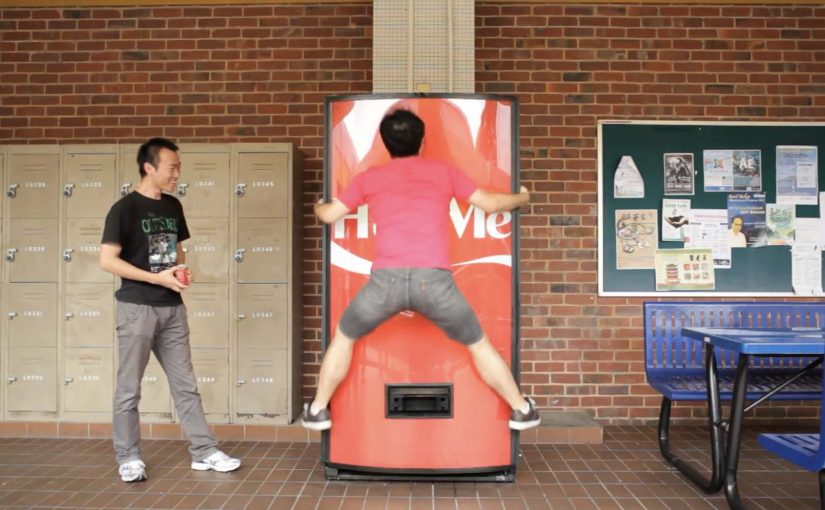
As part of its global “Open Happiness” campaign, Coca-Cola set up a vending machine at the National University of Singapore that doesn’t take coins or any other cash. It only takes hugs. For every public display of machine love, the Coca-Cola “Hug Me” machine gifts the person a free can of Coca-Cola.

A vending machine that runs on human behavior

The mechanism is a single, universal trigger. Instead of payment, the machine asks for a hug. That one action creates a public moment, signals the brand promise instantly, and makes the reward feel earned through emotion rather than money.

In FMCG sampling and brand experience work, replacing “transaction” with a simple human gesture is a repeatable way to turn distribution into a story.

Why it lands

This works because it transforms a functional object into a social catalyst. A vending machine is normally private and transactional. A hug is public and disarming. That contrast generates smiles, draws a crowd, and makes the brand feel like the instigator of the moment rather than the sponsor of a giveaway. The real question is whether the brand can make the giveaway feel like a public act people want to witness and copy. Coca-Cola gets this right because the machine itself turns sampling into visible, social participation.

Extractable takeaway: If you can swap payment for a simple, universally understood gesture, you turn sampling into participation. Participation creates social proof, and social proof is what makes the experience travel beyond the physical location.

The machine is one of a number of Happiness Machines Coca-Cola has deployed around the world since 2009.

What to steal from the Hug Me machine

  • Pick one obvious action: the trigger should be instantly understood without instructions.
  • Make the behavior visible: public participation is the engine for attention and sharing.
  • Keep the reward immediate: the dispense moment is the payoff that seals the memory.
  • Design for bystanders: the crowd reaction is part of the product.
  • Let the object carry the message: the machine itself should explain the campaign in one glance.

A few fast answers before you act

What is the Coca-Cola “Hug Me” machine?

It is a branded vending machine that dispenses a free Coke when a person hugs it, turning sampling into a public, playful interaction.

Why use a hug as the trigger?

A hug is universally understood, emotionally positive, and visibly social. It signals “happiness” faster than copy, and it recruits bystanders naturally.

What’s the marketing job this format does best?

It converts distribution into a shareable moment. The product is delivered, but the real value is the public reaction and the story people retell.

Where does this work well outside campuses?

Any high-footfall environment where people are open to playful participation. Events, malls, transit hubs, and city centers.

What is the biggest risk with this kind of activation?

If the gesture feels awkward or culturally mismatched, participation drops. The trigger has to feel comfortable, obvious, and safe for the audience.

Coca-Cola: Cheer-O-Meter

Coca-Cola: Cheer-O-Meter

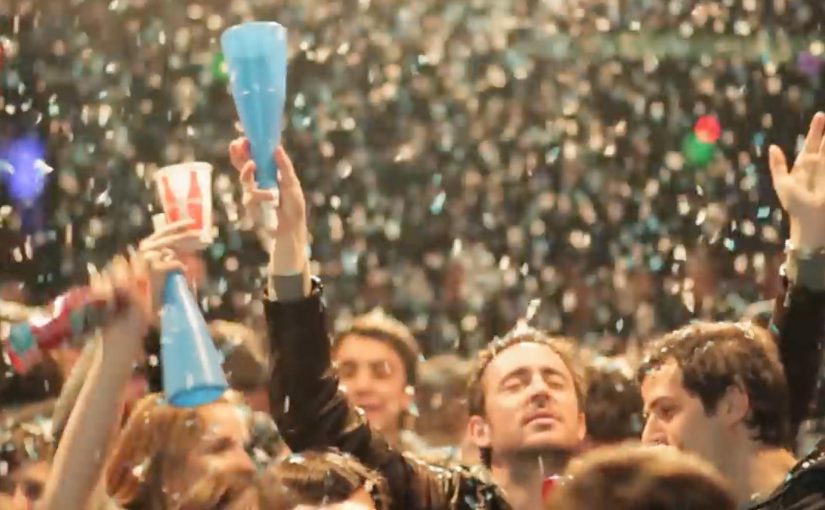
To promote the excitement around Copa America 2011, OgilvyAction worked with Coca-Cola to set up a giant screen in downtown Buenos Aires for fans to watch their favorite teams and provide unconditional cheer to the Argentinean National Team. But there was a catch. Sound sensors were installed to keep the screen on and if the fans stopped cheering, the screen would go blank.

The real question is whether you can make the crowd’s participation the switch that powers the experience.

Why this activation hits

The mechanic is brutally simple. Your cheering is not just encouraged. It is required. Here, an activation is a live brand experience that changes what the crowd can see based on what they do. Because the screen can die, the crowd self-organizes to keep the volume up, which makes “support” feel like a shared responsibility. In sports sponsorship and live-event marketing, conditional access is one of the fastest ways to turn spectators into participants.

Extractable takeaway: If you want participation, make it the required input for a real reward, and show the consequence instantly.

  • Clear rule. Cheer to keep the screen alive.
  • Immediate feedback loop. The crowd sees the consequence in real time.
  • Social amplification built in. People around you become part of the control system.

What marketers can reuse from the idea

This is a strong example of “participation as the power source”. Instead of adding a gimmick on top of the match, the match itself becomes the reward for participation. It also turns a brand message into a behavior, which tends to travel further than a tagline.

  • Make participation the power source. Tie the experience to an audience action instead of adding a side-gimmick.
  • Keep the reward “core”. Use the thing people already want as the payoff, not a separate prize.
  • Show consequences instantly. A visible feedback loop lets the crowd adjust behavior without instructions.

If participation does not change anything in the moment, it will read as decoration, not interactivity.


A few fast answers before you act

What is the Coca-Cola “Cheer-O-Meter”?

It is a live fan-screen activation in Buenos Aires for Copa America 2011 where sound sensors kept the match on screen only while fans kept cheering.

How did the sound-sensor mechanic work?

The cheering volume acted as the trigger. If it dropped too low, the screen went blank, pushing the crowd to keep the energy up.

Why is this effective as a brand experience?

Because it converts brand participation into a simple, memorable rule with instant consequences, and it makes the crowd feel responsible for the outcome.

What is the transferable pattern?

Create one clear rule, attach it to a real reward, then deliver immediate feedback so the audience understands their impact in the moment.