
Homecenter: The Man Who Gave Everything Away

Homecenter: The Man Who Gave Everything Away

Homecenter is a large retail chain in Latin America that deals in goods related to home improvement and construction.

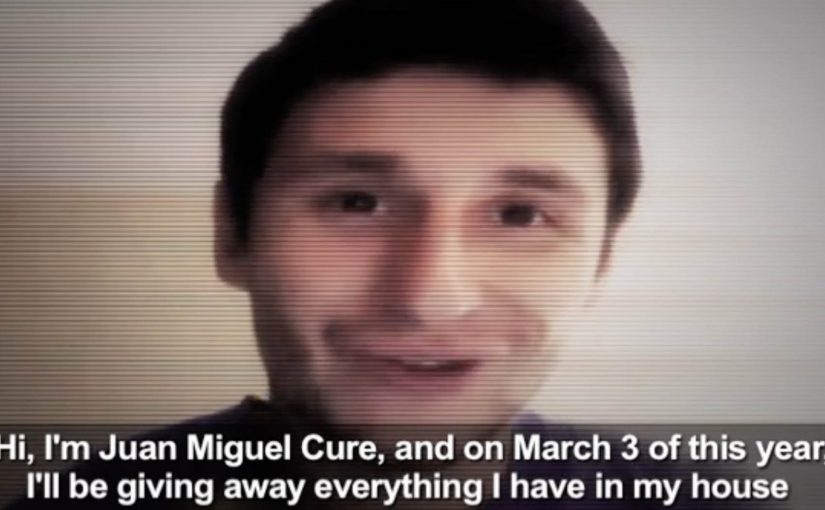
To create buzz for the opening of their new store (in March), Young & Rubicam Colombia got Juan Miguel Cure to give away everything from his house.

A launch story built on real sacrifice

Most store openings lean on discounts, flyers, and a ribbon-cut photo. This one flips the script by making the “offer” feel personal and public. One person gives up his stuff, and the opening becomes a story people want to repeat.

How the mechanic works

The mechanic is simple. Here, “mechanic” means the branded action that makes the story travel. Pick a relatable figure. Strip his home of its belongings. Turn that act into a public event and a piece of film that people can share. The brand is not trying to outshout competitors. It is trying to earn attention through a narrative that feels larger than retail.

In retail marketing for big-box home improvement brands, openings are won through local word-of-mouth and press amplification as much as through paid media.

Why it lands

Giving everything away is an extreme signal. It creates instant curiosity and a moral tension. Why would someone do this. That tension keeps people watching, and it makes the brand’s opening feel like something happening in the community, not something happening to the community. The generosity angle also changes the default posture toward promotion. Instead of “come buy”, it reads as “come witness”. Because the giveaway turns a retail opening into a witnessed act of sacrifice, people process it as a story worth passing on, not just a promotion to ignore.

Extractable takeaway: If you can attach your launch to a human-scale story with a clear sacrifice, you convert opening-day marketing from “announcement” into “news”, and news travels further than ads.

The business intent behind the generosity

The real question is whether the stunt can convert local attention into store traffic and brand memory. This is a smart launch idea because the stunt gives the store opening a memory structure, not just a promotional wrapper. This is a classic buzz play. It creates a shareable film asset, it seeds conversation locally, and it frames the new store as culturally present before the doors even open. The giveaway is the hook, but the real objective is simple. Get people to show up, talk about it, and remember the brand when they need home improvement goods.

What to steal for launch marketing

  • Choose one bold proof point. Extreme beats complicated. One clear act is easier to retell.
  • Build a narrative people can summarize in one sentence. If the story cannot be repeated quickly, it will not travel.
  • Make the brand role legible without forcing it. The brand can frame the moment, but the human story must stay in front.
  • Design for local amplification. Openings benefit from community sharing and local media interest more than global cleverness.
  • Plan the follow-through. When attention spikes, the store experience must be ready to convert curiosity into habit.

A few fast answers before you act

What is the core idea behind “The Man Who Gave Everything Away”?

Turn a store opening into a human story. A real giveaway becomes the headline, and the opening becomes the payoff.

Why does this work better than a normal “grand opening” campaign?

Because it behaves like news. A surprising, emotional act is more likely to be shared, discussed, and covered than a standard promotional announcement.

What is the biggest execution risk?

If it feels staged, manipulative, or unclear why the brand is involved, the audience will reject it. The motive must read as coherent, not exploitative.

How can a retailer adapt this without copying the stunt?

Use the same structure. One decisive act, one human lead, one simple story that points to the opening. The act does not have to be “everything away”, it just has to be unmistakable.

How do you measure whether the buzz actually helped?

Track opening-period footfall uplift, local share-of-voice, earned mentions, branded search lift, and conversion into repeat visits in the weeks after launch.

Coca-Cola: The Future Room Exhibition

Coca-Cola: The Future Room Exhibition

A museum-scale brand moment for a milestone anniversary

In brand experience work, the strongest anniversary executions do not look like commemorations. They look like a reason to step inside the brand world. Coca-Cola’s “Future Room” is a clean example of that approach.

For Coca-Cola’s 125th Anniversary, Istanbul’s creative agency Antilop created a “Future Room” concept, made specifically for the Turkish modern-art museum Santralistanbul. They transformed a section of the gallery into an impressive 90 square meter, 270-degree projection mapping installation.

How the Future Room worked as an immersive installation

The mechanism was spatial immersion. Here, that means using the room itself as the storytelling surface, so viewers are surrounded rather than watching a single screen.

That choice changed the viewing behavior. People did not just watch a piece of content. They entered it, and the room itself became the interface.

In global consumer brands, milestone experiences land best when the venue and the format give people a reason to physically show up.

Why it landed in a modern-art setting

In a museum context, attention is earned through presence, scale, and craft. Projection mapping fits because it turns a physical space into a living canvas.

Extractable takeaway: In cultural venues, design the environment first, then let the brand meaning ride on the craft people can feel in the room.

By committing 90 square meters of gallery to one experience, the work signaled seriousness. It also made the activation feel like an exhibit, not an ad, which is exactly the psychological shift a heritage brand wants during an anniversary moment.

The business intent behind the exhibition format

The intent was to elevate the partnership between brand and venue, and to position Coca-Cola as culturally fluent rather than purely commercial.

The real question is how you make a milestone feel current without turning it into a retrospective.

An anniversary is a credibility play, meaning a chance to reaffirm relevance in the present. The exhibition format helped translate “125 years” into something contemporary, sensory, and shareable, without relying on nostalgia alone.

Design cues for your next immersive brand experience

  • Choose a format that matches the venue. In cultural spaces, experience and craft beat messaging density.
  • Use scale as a signal. Large physical commitment communicates importance before anyone reads a word.
  • Turn the room into the medium. Immersion works when the environment does the storytelling, not just the screen.
  • Make milestones feel current. Anniversary work lands when it shows relevance, not only history.

A few fast answers before you act

What was Coca-Cola’s “Future Room”?

An immersive, exhibition-style installation that used large-scale projection mapping to wrap visitors in a future-facing brand environment.

Where did it appear?

It was created for Santralistanbul, a Turkish modern-art museum in Istanbul, as part of Coca-Cola’s 125th anniversary moment.

What was the mechanism?

The room became the medium. A wraparound projection space made the environment itself the interface.

Why does this work in a museum context?

Museums reward presence, scale, and craft. An immersive installation can read as an exhibit, not an ad, which changes how people grant attention.

Why is this effective for anniversaries?

It makes the milestone feel current. It gives people a reason to attend now, not just a reason to remember then.

What should experience teams copy from it?

Match the format to the venue, commit physically to signal seriousness, and design for movement and dwell time instead of messaging density.

KLM: Fly2Miami Dance Party

KLM: Fly2Miami Dance Party

In the past couple of years, airlines like KLM, SAS, Lufthansa and Air China have pushed social media beyond “posting and promoting” by turning it into a stage for real-world moments.

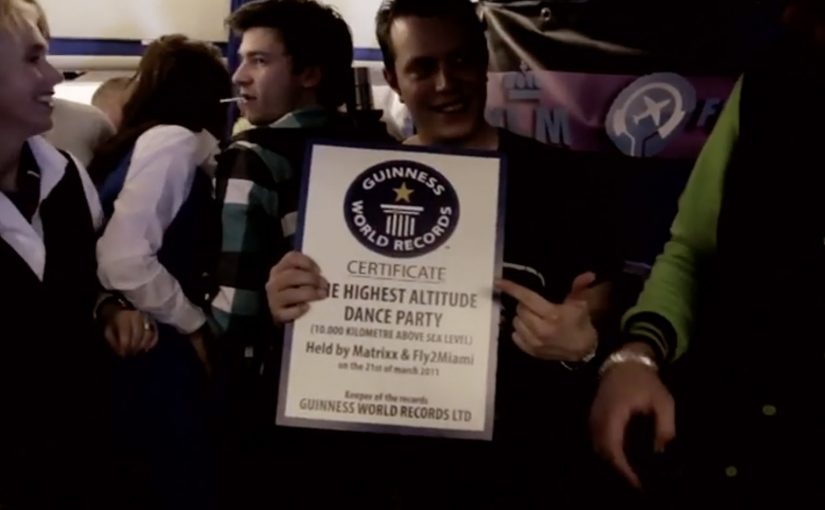
In its Fly2Miami campaign, KLM creates a wave of buzz by hosting a record-billed, meaning promoted as record-setting, in-flight dance party at 35,000 feet, tied to the launch of a new non-stop route from Amsterdam to Miami.

A route announcement that becomes a public challenge

It starts with KLM announcing the new service. Dutch DJ Seid van Riel and producer Wilco Jung tweet KLM asking if the inaugural flight can move up by a week so they can make a Miami music festival. KLM replies with a challenge: fill the plane, and KLM will reschedule. The flight sells out within hours.

How the mechanic works

Mechanically, KLM turns a scheduling request into a participatory social goal with a clear payoff. People do not just “like” the announcement. They help unlock the outcome by committing to seats, then join a one-off experience that can only happen because the flight exists.

In airline route launches, social stunts work best when they turn a schedule announcement into a shared story people can join.

Why it lands

The genius is not the party alone. It is the sequence: a believable trigger (a tweet), a public condition (fill the plane), a fast-resolution arc (sold out), then a payoff that photographs and travels. It works because the public condition turns individual bookings into visible momentum, making the payoff feel earned rather than bought. The campaign makes KLM feel responsive, playful, and culturally plugged in, without needing to shout about fares.

Extractable takeaway: When the condition is public and the payoff is inseparable from the product, participation becomes both demand and distribution, because people feel they helped make the outcome real.

What KLM is really buying

This is conversion disguised as entertainment. The “buzz” is a byproduct of a very practical outcome: a plane filled with the right kind of passengers, at the right time, with a story worth retelling. The real question is whether your stunt pulls demand forward inside the product, or just borrows attention for a day. By “retellability,” I mean how easily the story can be repeated accurately in one sentence and shared without extra explanation. If the Guinness claim is how it was billed, that label simply amplifies the retellability.

Route-launch moves worth copying

  • Start with a real trigger. A genuine request beats a manufactured “activation” premise.
  • Set one public condition. A simple target (fill the plane) creates momentum and accountability.
  • Make the payoff inseparable from the product. The experience must only be possible because your product exists.
  • Design for a tight story arc. Setup, challenge, resolution, payoff. No fluff.

A few fast answers before you act

What is Fly2Miami in one line?

A route launch turned into a Twitter-fueled “fill the plane” challenge, culminating in an in-flight dance party on the inaugural Amsterdam to Miami service.

What is the core mechanism?

A public conditional promise: if the community fills the flight fast enough, KLM changes the schedule and delivers a one-off onboard experience.

Why is the “sold out in hours” detail important?

Because it proves participation was real, not symbolic. It converts attention into bookings, then turns the bookings into a story.

What makes the challenge believable?

A condition that is simple to verify and directly tied to the product, like filling seats, keeps the story grounded and prevents it from feeling like a manufactured “activation.”

What is the transferable lesson for other brands?

Turn a product moment into a challenge with a clear condition and a tangible payoff, then let the audience do the distribution by earning the outcome.