
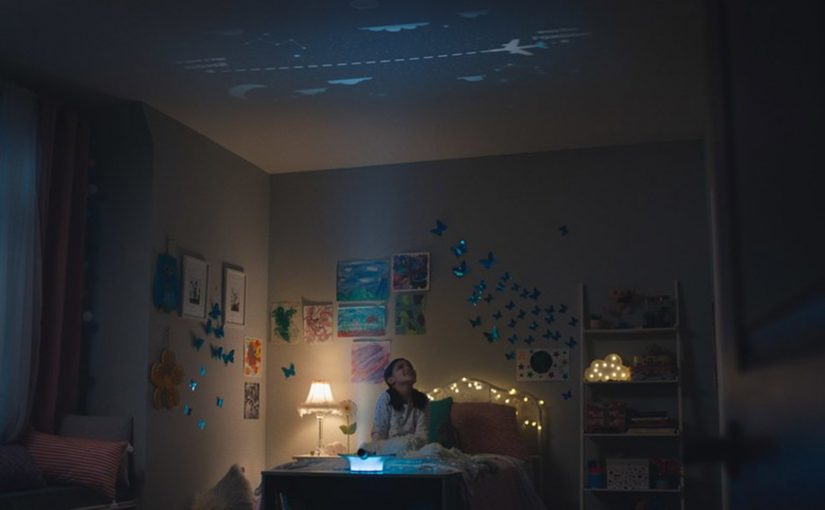
WestJet Flight Light

WestJet creates a small device with a big emotional job. WestJet Flight Light is a nightlight that uses live flight data to project a parent’s WestJet flight path onto a child’s bedroom ceiling, turning the wait into a visual, interactive countdown of hours and minutes until the parent returns.

In airlines and other service businesses, more brands move beyond selling a product and start designing convenience services that drive repeat usage and loyalty by solving real-life friction.

By convenience services, I mean a branded layer that uses operational data to make a recurring job easier for the customer.

Here, the friction is business travel. WestJet wants frequent travellers to pursue work opportunities without losing connection with the people waiting at home. Flight Light makes the journey feel present. Not abstract.

Why the concept works

The power is not the hardware. It is the experience design. A child’s instinct is to count down. Flight Light makes that countdown tangible and playful by projecting the route in the place where bedtime routines already happen, which turns waiting into anticipation.

Extractable takeaway: If you can turn operational data into a repeatable ritual in the customer’s real environment, you create loyalty that feels like care, not marketing.

The service logic

This is a brand service that behaves like a product. A brand service is a repeatable utility that makes the brand part of a real-life routine. Live flight data becomes a family connection layer. The airline becomes part of the at-home story, not just the transport provider.

The real question is whether your operational data can earn a role in the customer’s routines, not just inside your app.

Brands should treat data as experience material when it reduces anxiety or effort in a moment that already exists in the customer’s life.

Beta-testing and what it signals

WestJet says a prototype of Flight Light exists, with beta testing scheduled to begin later this year. That is the bridge between a cute concept and something that can be operated, supported, and scaled.

Borrowable moves from Flight Light

  • Start with a real-life routine. Bedtime already has attention and emotion. Place the experience there.
  • Use operational data as story material. Flight status becomes a shared narrative the family can follow.
  • Make the countdown visible. Turn “when are you home?” into a simple, comforting visual progression.
  • Design for repeat trips. The value compounds when the service works the same way every time the parent travels.

A few fast answers before you act

What is WestJet Flight Light?

A nightlight concept that uses live WestJet flight data to project a parent’s flight path onto a child’s bedroom ceiling as an interactive countdown to their return.

Who is it designed for?

Business travellers and frequent flyers with families, especially parents who travel regularly for work.

What is the core experience design move?

It turns live flight status data into a comforting, visible bedtime ritual that makes the trip home feel real and close.

What problem is it solving?

It reduces the emotional friction of business travel by making a parent’s trip home visible and countable during a child’s bedtime routine, instead of feeling distant and abstract.

Why is it a brand service, not just a gadget?

The value comes from turning live flight data into an at-home experience a family can reuse on every trip. The nightlight is the interface. The service is the connection layer.
WestJet: Ultimate Las Vegas Upgrade

WestJet over the years has passionately given back to their guests with various unimaginable experiences.

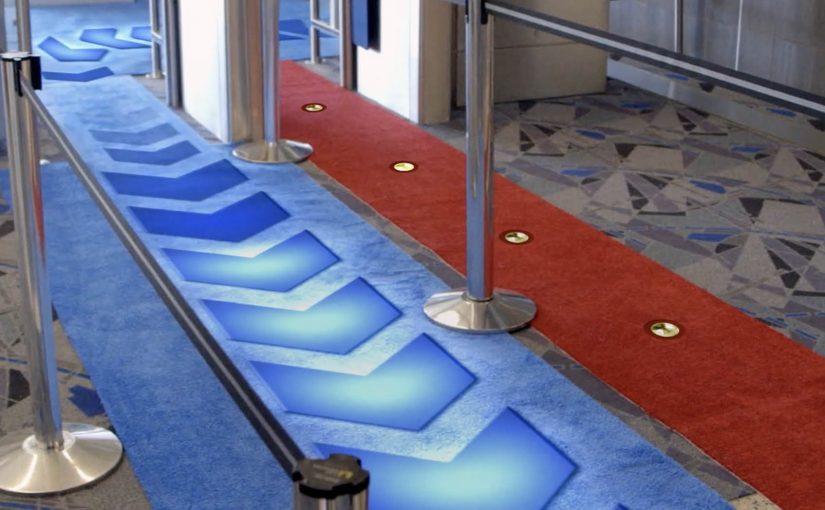
Now in their latest campaign targeting Toronto to Las Vegas bound WestJet guests, they got Las Vegas comedian Carrot Top to offer guests a special walk down the red or blue carpet. Those who chose to walk down the red carpet continued on their vacation as they had originally planned. Those who chose the blue carpet went with Carrot Top on an action-filled experience that included a stunning acrobatic display, a world-class DJ, a private airplane hangar, showgirls, and VIP access to the best of the city.

A choice mechanic that turns boarding into a story

The mechanism is a fork in the road with immediate consequences. Here, the choice mechanic is a designed decision point where one visible choice changes the path and the story. You are offered a simple choice, red or blue, with no time to overthink it. The red path is “normal”. The blue path is “something is happening”, and the reveal escalates quickly once the choice is made.

In travel and service brands, surprise upgrades work best when they are structured as a clear decision point that people can instantly explain to someone else.

Why it lands

This works because it gives guests a feeling of control while still delivering surprise. That mechanism works because a visible fork creates ownership before the surprise arrives, which makes the payoff feel earned rather than random. The blue carpet is not a random selection. It is a self-chosen leap into the unknown, which makes the outcome feel more personal and more shareable. The red carpet also matters, because it preserves contrast and keeps the twist believable.

Extractable takeaway: If you want a surprise to travel, wrap it in a simple choice. Choice creates ownership, and ownership turns a brand moment into a story people repeat accurately.

The business intent behind the spectacle

This is a loyalty play disguised as entertainment. It reinforces the idea that flying can include delight, not just transport. It also creates a strong piece of proof that WestJet treats guests as people, which is the kind of narrative that outperforms feature lists in crowded travel categories.

The real question is whether a service brand can turn a routine travel moment into a story guests want to retell.

What travel brands can steal from this

  • Use a binary choice: two paths create instant tension and clear storytelling.
  • Reward curiosity: let the “brave” option unlock the best outcome, then show why.
  • Escalate fast: once the choice is made, deliver the first payoff immediately to lock attention.
  • Make it filmable: design reveals that work from a handheld camera in real environments.
  • Anchor to a destination truth: Las Vegas is already a promise of spectacle. The upgrade simply makes that promise feel real early.

A few fast answers before you act

What is the WestJet “Ultimate Las Vegas Upgrade”?

It is a surprise experience for Toronto to Las Vegas travelers where guests choose a red or blue carpet. Red continues as normal. Blue triggers a curated VIP Las Vegas experience led by Carrot Top.

Why use a red vs blue choice?

Because it is instantly understandable, it creates viewer control, and it gives the story a clean structure with contrast between normal and extraordinary.

What makes this effective airline marketing?

It makes service tangible. Instead of claiming “we care”, the brand demonstrates it through a memorable experience that guests can share and retell.

What is the reusable pattern for other brands?

Create a simple decision point in a real customer journey, then attach an escalating surprise to one path so customers feel they opted into the moment.

What is the biggest risk with this format?

If the reveal feels confusing or staged, the audience disengages. The choice must feel real, the payoff must feel earned, and the execution must respect guest comfort.

TD Canada Trust: Automated Thanking Machine

Start with the smile. Then design backwards

Start with the smile of your audience, then work back from there. That is the key to many of the marketing campaigns people actually share. Coca-Cola has done a great job with their various happiness campaigns, followed by WestJet’s Christmas campaign where they surprised passengers with gifts.

When an ATM stops being a machine

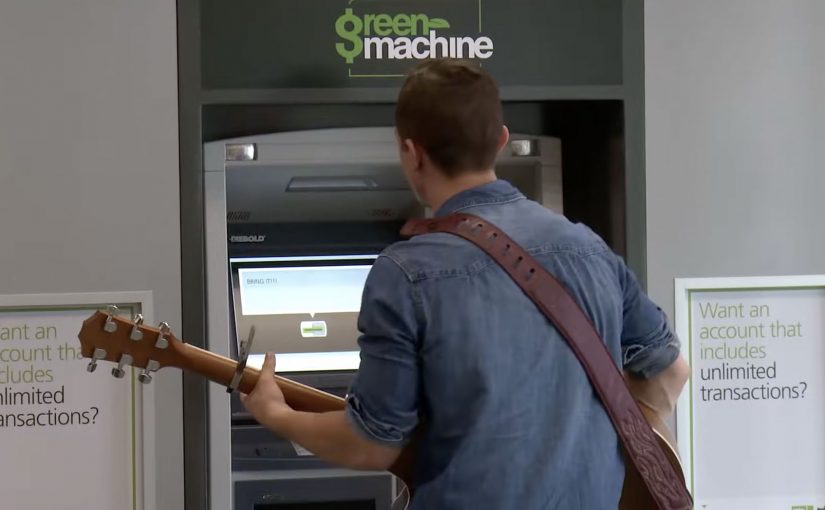
TD Canada Trust, for its “TD Thanks You” campaign, converts select ATM machines in Toronto, Montreal, Calgary and Vancouver into special Automated Thanking Machines. Twenty hand-picked customers are invited to test them.

The twist is that the ATM behaves like a person. It knows their name, talks back, and responds in ways a standard ATM never would. Then it escalates into the payoff: unexpected, genuinely personal gifts that feel tailored to the customer, not to the bank.

In retail banking and other trust-based categories, surprise-and-delight, meaning an unexpected human response inside a standard service moment, works best when it turns a routine transaction into personal recognition that feels operationally real.

The video is the distribution layer

The reactions are the asset. This is less about the ATM technology than about capturing the moment people realize a faceless institution is paying attention. The real question is how a trust-heavy brand makes gratitude feel personal without making it feel fake. As reported, the video has racked up millions of views in days because the story is instantly legible: a familiar interface becomes human, and the customer response does the persuasion.

Why it lands

Banks are trained to look serious, consistent, and slightly distant. This flips that expectation without abandoning credibility, because the setting stays “bank-real” and the interaction starts from a normal ATM flow. The experience also scales conceptually. Any service brand with a repetitive touchpoint can imagine doing a version of this.

Extractable takeaway: If your category is low-emotion or low-trust, pick a familiar moment, introduce one human signal that feels impossible in that context, then let the customer reaction carry the message.

What to steal from an ATM that says “thanks”

  • Use a familiar interface as the stage. The more ordinary the starting point, the bigger the perceived magic when it shifts.
  • Personalization beats scale. One moment that feels truly “for me” outperforms ten generic giveaways.
  • Escalate in steps. Name recognition. Conversation. Then reward. The ramp makes the payoff believable.
  • Design the filming around authenticity. A hidden-camera feel is part of the proof, even when the experience is planned.

A few fast answers before you act

What is TD’s “Automated Thanking Machine”?

It is a TD ATM adapted to greet and interact with select customers, then deliver surprise gifts as part of the “TD Thanks You” campaign.

Why does the ATM format work so well?

An ATM is the definition of impersonal service. Making it behave personally creates instant contrast and instant story value.

What’s the real mechanism behind the idea?

Not the screen. The mechanism is staged personalization at a routine touchpoint, captured on video, where real customer reactions become the proof.

What makes this shareable beyond banking customers?

The narrative is universal: a machine becomes human, then gratitude becomes tangible. You do not need product context to feel it.

How can another brand apply this without copying it?

Pick one repetitive customer moment, add one unexpected human signal, then reward the customer in a way that is clearly based on who they are, not who you want them to be.