
Liaison Dangereuse: Striptease Shopping

Valentine’s lingerie shopping, turned into a show

Liaison Dangereuse, a German lingerie brand, gave Serviceplan a creative challenge: increase lingerie sales around Valentine’s Day.

Seduction always works. So what about making the buying experience attractive and unique for men by giving them the opportunity of buying lingerie directly from the body of beautiful models, and pairing that with a memorable striptease? Thus a new way to sell online lingerie was created.

The mechanism that changes behavior

The idea reframes checkout as participation. Instead of browsing product grids, the customer “shops” from the model, which makes selection feel more like discovery than transaction, and reduces hesitation at the moment of choice.

In European ecommerce and performance marketing, the fastest lever is reducing hesitation by making the path to purchase feel emotionally easy and socially tellable.

The real question is whether you can turn your highest-friction step into a guided, retellable moment without breaking brand trust.

This kind of mechanic is worth copying only when it fits your brand voice and clear consent boundaries.

Why it lands with the intended buyer

This is built for a very specific Valentine’s reality: many male buyers want help choosing, and they want the moment to feel confident, not awkward. A guided, theatrical experience removes indecision and makes the purchase feel like part of the gift.

Extractable takeaway: When the buyer feels unsure about choice, redesign selection so confidence is the default and the mechanic becomes the story.

Earned media as a built-in distribution layer

Serviceplan not only generated free media coverage from major websites, newspapers and magazines in Germany, it also reported additional traffic of 155% to the Liaison Dangereuse website. Reported sales went up by 50% during the promotion.

Click here to watch the video on Ads of the World website.

Steal this conversion mechanic

  • Design for the buyer’s emotion. Remove embarrassment and decision anxiety. Add guided confidence.
  • Make the shopping path the story. If the mechanic is inherently retellable, distribution comes with it.
  • Focus the experience on the highest-friction moment. Choice, not payment, is often the real dropout point.
  • Measure what matters. Track uplift in qualified traffic, add-to-cart rate, and conversion, not just press mentions.

A few fast answers before you act

What is “Striptease Shopping” for Liaison Dangereuse?

It is a Valentine’s-focused ecommerce activation that lets shoppers buy lingerie through a model-led, striptease-style interface, turning product selection into a playful, guided experience.

Who is the experience designed for?

It targets gift-buyers who feel unsure about lingerie choices. The mechanic reduces awkwardness and indecision by making selection feel assisted rather than self-directed.

What is the behavioral mechanism that improves conversion?

It reframes checkout as participation. By turning browsing into a simple, story-like interaction, it reduces hesitation and makes the purchase feel emotionally easy.

Why did it generate strong earned media?

The buying mechanic is unusual and instantly demonstrable. That makes it easy to describe, easy to show, and inherently shareable across press and social channels.

What results were reported from the promotion?

Campaign summaries reported +155% website traffic and +50% sales during the promotion period.

What is the key risk to manage with “seduction” mechanics?

Brand fit and boundaries. If the experience feels exploitative or off-brand, the attention can backfire. The idea needs clear intent, consent, and tone discipline.
Lacta: Love in Action

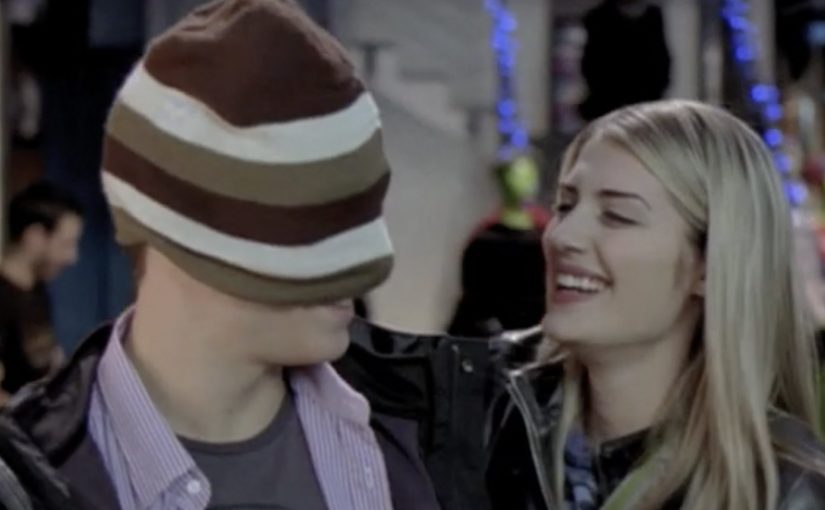
Following the grand success of Lacta’s interactive film in November 2009, Kraft Foods and OgilvyOne Athens set out to create yet another integrated campaign for Lacta, Greece’s leading chocolate brand. This time, instead of producing another love story themselves, they set out to create one with their audience.

Kraft Foods and OgilvyOne crowdsourced a 27-minute branded-entertainment film, involving the audience in everything from writing to casting and styling the actors. Some even popped up as extras in the finished film. During filming, audiences were kept updated through the campaign blog, Facebook, Twitter, YouTube and Flickr.

Here is a 3 minute video case study on the same.

Then on Valentine’s Day the film was aired on Greece’s top TV channel and online, with great success.

What makes this more than “UGC”

The smart leap is that the audience is not just submitting stories. They are being pulled into the messy, high-signal parts of production. Decisions that normally sit behind closed doors. Casting, styling, and creative direction. That raises commitment, because participation shifts from “I sent something” to “I helped shape what shipped.”

In European FMCG branded entertainment, letting people influence production decisions can turn a single film into a sustained participation loop that runs for weeks, not minutes.

Why this lands

This works because it gives people a credible reason to keep coming back. Not to watch ads, but to follow progress, vote, debate, and see whether their influence makes the final cut. The film becomes the payoff, but the real engine is the journey. A public build, meaning a production process made visible as it develops, turns pre-release into its own entertainment.

Extractable takeaway: If you want long-lived attention, make the audience’s role structural, not decorative. Put participation into decisions that change the output, then publish visible progress so people feel their involvement has weight.

The commercial intent underneath

Lacta gets what a standard Valentine’s spot struggles to buy. Time, conversation, and emotional ownership at scale. The brand also stays relatively in the background, so the entertainment is allowed to carry the attention while the association builds quietly.

The real question is whether the audience is helping shape the asset or merely reacting to it.

What to borrow from participatory production

  • Open up real decisions. Voting on meaningful choices beats asking for comments.
  • Show progress publicly. Updates and behind-the-scenes keep momentum alive.
  • Let contributors appear in the output. Even small “extra” moments create powerful ownership.
  • Build a finale moment. A premiere date gives the whole participation arc a shared finish line.

A few fast answers before you act

What is Lacta “Love in Action”?

It is a crowdsourced branded-entertainment film initiative where audiences contributed to and influenced key parts of the production, from story and casting to styling.

What makes this different from a normal brand film?

The audience is involved before release and in decisions that shape the final output, so the build process becomes part of the entertainment.

Why run it across so many platforms?

Because production is a multi-week narrative. Different channels support different behaviours. Updates, voting, sharing, and behind-the-scenes participation.

Why is Valentine’s Day a strong launch moment?

The theme is culturally aligned with love stories, and the calendar creates a natural deadline and shared viewing moment.

What is the main risk when crowdsourcing content like this?

If participation feels cosmetic, people drop out. The audience needs visible proof that their input changes outcomes, and the process must be curated so quality stays high.

Puma: HardChorus for Valentine’s Match Day

When Valentine’s Day lands on match day

This year 14 February, Valentine’s Day, fell on a Sunday. For men everywhere this presented a dilemma. Love or football. Atletico Madrid vs Barcelona, Manchester City vs Liverpool, Napoli vs Inter, or romance with a loved one?

A love song delivered like a terrace chant

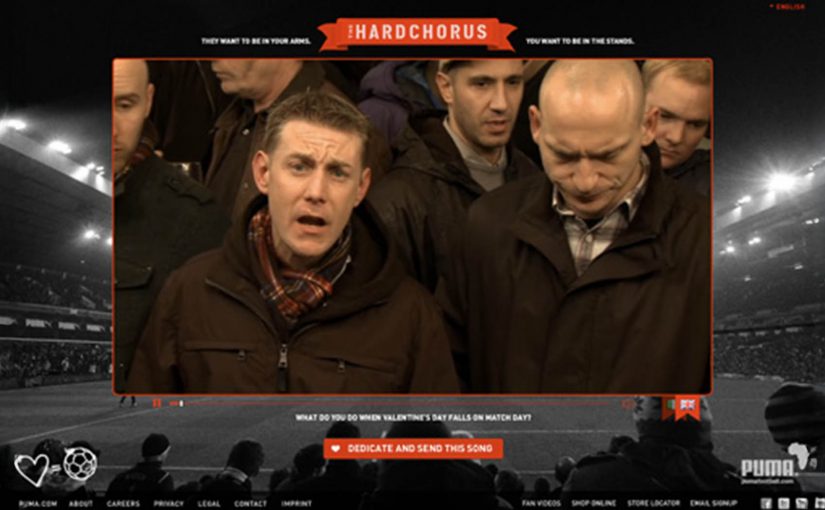
Puma recognized this dilemma as “They want to be in your arms. You want to be in the stands”, and so with Droga5 created the Puma HardChorus.

A crowd of football supporting men, assembled in a pub to sing Savage Garden’s Truly Madly Deeply, which then football fans could send to their loved ones while enjoying the game. An Italian version was also created where a similar group sang Umberto Tozzi’s 1977 hit Ti Amo.

Puma HardChorus English version:

Puma HardChorus Italian version:

In European football culture, match day is a ritual with its own language, loyalty, and emotion.

Why it works: it turns the conflict into a gesture

The genius is the tone swap. It takes the toughest-coded environment in the brief and makes it do something unexpectedly tender. That contrast creates surprise, and surprise creates shareability. It also gives the viewer control over the trade-off. You are not choosing between football and your partner. You are converting match-day energy into a message that says, “I’m here, I’m thinking of you, and yes, I’m still going to the game”.

Extractable takeaway: If a moment forces a binary choice, design a small, sendable action that turns the tension into a gesture, so the audience can keep what they love without neglecting who they love.

What Puma is really selling in the background

This is not about listing product benefits. It is about aligning the brand with a lived tension and resolving it in a way that feels culturally fluent. The real question is whether you can convert a culturally loaded trade-off into a message people are happy to send. This is a smart way to earn brand warmth without asking fans to abandon the game. Puma borrows the credibility of the stands, then uses it to deliver romance without embarrassment.

Steal the pattern: two audiences, one moment

  • Name the real conflict. This works because the tension is true, not manufactured.
  • Use a familiar cultural code. Stadium chanting is instantly recognisable and instantly readable.
  • Flip the code without mocking it. The humour is in the contrast, not in making fans look stupid.
  • Make it easy to pass along. If the output is meant to be sent, it needs to stand on its own.

A few fast answers before you act

What is Puma HardChorus?

A Valentine’s match-day idea where football supporters sing romantic songs like stadium chants, which fans can send to their loved ones while they watch the game.

What is the core mechanism in one line?

Turn terrace energy into a love message, then make it easy to share directly with the person who feels “second place” to football.

Why does the idea feel funny and effective?

Because it flips a tough-coded cultural setting into a tender gesture. The contrast creates surprise, and surprise creates shareability.

What is the audience “problem” it solves?

It resolves a real conflict between two priorities by converting match-day behaviour into a signal of care, rather than forcing a binary choice.

What is the most transferable takeaway?

If you have two audiences competing for the same moment, design a simple action that transforms the conflict into a gesture one person can send to the other.