
Mercedes-Benz: Tweet Fleet Parking on Twitter

Mercedes-Benz: Tweet Fleet Parking on Twitter

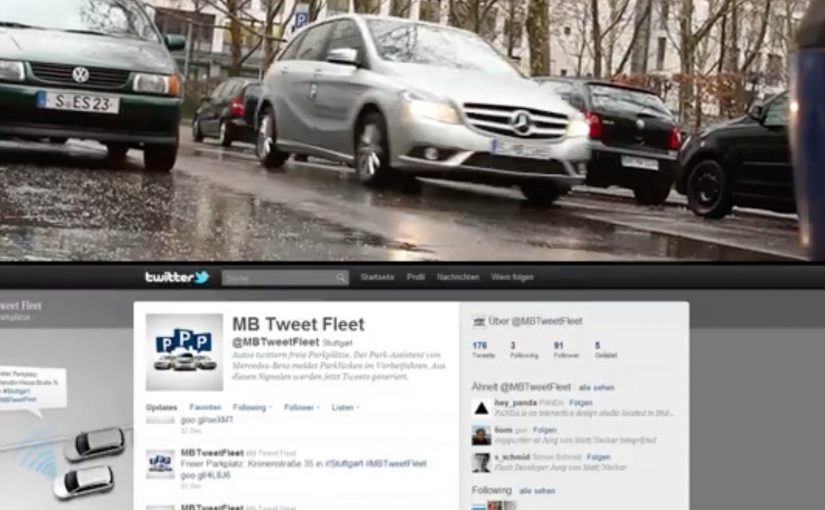
The “Active Parking Assist” from Mercedes-Benz recognizes empty parking spaces by simply passing them. That brought ad agency Jung von Matt/Neckar to the idea that if the car knows where the empty parking spaces are, then everybody could also be informed.

So just before Christmas when parking spaces were hard to find, they launched the Mercedes-Benz Tweet Fleet with its Active Parking Assist that tweeted empty parking spaces in downtown Stuttgart.

The MBTweetFleet cars (the Tweet Fleet vehicles running the setup) automatically generated the tweets with GPS data via Arduino an onboard electronic and a PHP Relay. People could then follow @MBTweetFleet to find empty parking spaces near them on Twitter and be navigated there by the linked Google map.

Why this idea is stronger than it looks

The cleverness is not “tweeting”. The cleverness is turning a capability that already exists inside the car into a public utility. That flips a product feature into a service people can use immediately, without buying anything first. The real question is how you turn a private product signal into a public utility people can act on in seconds.

Extractable takeaway: If you can expose a reliable product signal as a live feed in a channel people already use, you can create immediate utility that beats a feature demo.

  • Signal becomes service. The car detects something useful. The system shares it.
  • Real-time context. Parking availability is only valuable when it is current.
  • Distribution is native. Twitter is a lightweight channel for fast, location-based updates.

The technical stack is simple, but the integration is the point

GPS plus an onboard controller plus a relay layer is not the story. The story is that data moves from sensing to publishing with minimal friction. Because publishing is automatic and immediate, the service stays relevant long enough for someone to navigate to it. That is what makes it feel “live”.

  1. Detect. Active Parking Assist identifies an empty space while driving.
  2. Locate. GPS attaches coordinates.
  3. Publish. An automated tweet shares the spot publicly.
  4. Act. People navigate using the linked map.

In European city centers, connected experiences win when they reduce search friction in the moment, not when they add more messaging.

In urban mobility and smart-city moments, public utility beats brand messaging when the value is immediate, local, and easy to act on.

What to take from this if you build connected experiences

  1. Start with a real pain point. Holiday parking pressure is a perfect use case.
  2. Make the feature externally visible. Utility grows when it helps non-owners too.
  3. Choose a low-friction channel. Where people already are beats “download our app”.
  4. Design for immediacy. Real-time value requires real-time delivery.

A few fast answers before you act

What is Mercedes-Benz Tweet Fleet?

It is a campaign in Stuttgart where Mercedes-Benz used Active Parking Assist to detect empty parking spaces and automatically tweet their locations so people could find and navigate to them.

Why does Active Parking Assist enable this?

Because it can recognize empty parking spaces as the car passes them, creating a reliable signal that can be shared.

How were the tweets generated?

The cars generated tweets automatically using GPS data, an Arduino-based onboard electronic component, and a PHP relay.

How did people use the service?

They followed @MBTweetFleet on Twitter and used the linked map in tweets to navigate to nearby empty spaces.

What is the transferable lesson?

If a product can sense something valuable in the real world, you can turn that sensing into a public utility by publishing it in a channel people already use.
Homecenter: The Man Who Gave Everything Away

Homecenter: The Man Who Gave Everything Away

Homecenter is a large retail chain in Latin America that deals in goods related to home improvement and construction.

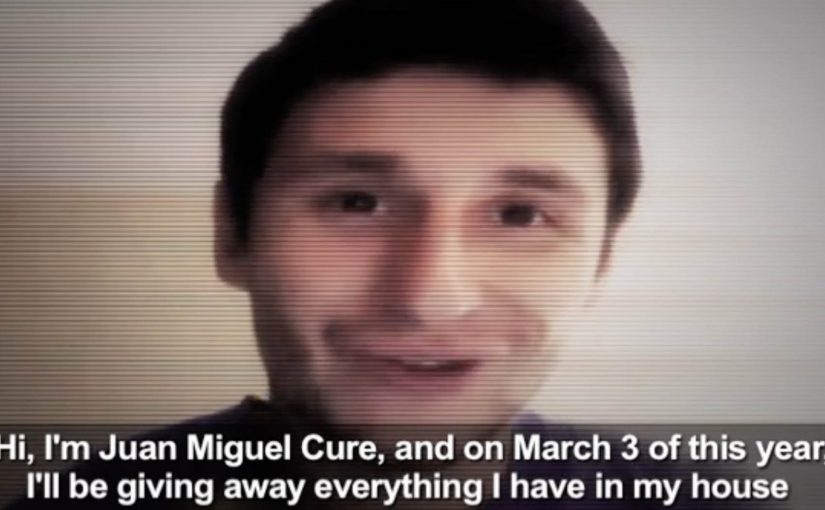
To create buzz for the opening of their new store (in March), Young & Rubicam Colombia got Juan Miguel Cure to give away everything from his house.

A launch story built on real sacrifice

Most store openings lean on discounts, flyers, and a ribbon-cut photo. This one flips the script by making the “offer” feel personal and public. One person gives up his stuff, and the opening becomes a story people want to repeat.

How the mechanic works

The mechanic is simple. Here, “mechanic” means the branded action that makes the story travel. Pick a relatable figure. Strip his home of its belongings. Turn that act into a public event and a piece of film that people can share. The brand is not trying to outshout competitors. It is trying to earn attention through a narrative that feels larger than retail.

In retail marketing for big-box home improvement brands, openings are won through local word-of-mouth and press amplification as much as through paid media.

Why it lands

Giving everything away is an extreme signal. It creates instant curiosity and a moral tension. Why would someone do this. That tension keeps people watching, and it makes the brand’s opening feel like something happening in the community, not something happening to the community. The generosity angle also changes the default posture toward promotion. Instead of “come buy”, it reads as “come witness”. Because the giveaway turns a retail opening into a witnessed act of sacrifice, people process it as a story worth passing on, not just a promotion to ignore.

Extractable takeaway: If you can attach your launch to a human-scale story with a clear sacrifice, you convert opening-day marketing from “announcement” into “news”, and news travels further than ads.

The business intent behind the generosity

The real question is whether the stunt can convert local attention into store traffic and brand memory. This is a smart launch idea because the stunt gives the store opening a memory structure, not just a promotional wrapper. This is a classic buzz play. It creates a shareable film asset, it seeds conversation locally, and it frames the new store as culturally present before the doors even open. The giveaway is the hook, but the real objective is simple. Get people to show up, talk about it, and remember the brand when they need home improvement goods.

What to steal for launch marketing

  • Choose one bold proof point. Extreme beats complicated. One clear act is easier to retell.
  • Build a narrative people can summarize in one sentence. If the story cannot be repeated quickly, it will not travel.
  • Make the brand role legible without forcing it. The brand can frame the moment, but the human story must stay in front.
  • Design for local amplification. Openings benefit from community sharing and local media interest more than global cleverness.
  • Plan the follow-through. When attention spikes, the store experience must be ready to convert curiosity into habit.

A few fast answers before you act

What is the core idea behind “The Man Who Gave Everything Away”?

Turn a store opening into a human story. A real giveaway becomes the headline, and the opening becomes the payoff.

Why does this work better than a normal “grand opening” campaign?

Because it behaves like news. A surprising, emotional act is more likely to be shared, discussed, and covered than a standard promotional announcement.

What is the biggest execution risk?

If it feels staged, manipulative, or unclear why the brand is involved, the audience will reject it. The motive must read as coherent, not exploitative.

How can a retailer adapt this without copying the stunt?

Use the same structure. One decisive act, one human lead, one simple story that points to the opening. The act does not have to be “everything away”, it just has to be unmistakable.

How do you measure whether the buzz actually helped?

Track opening-period footfall uplift, local share-of-voice, earned mentions, branded search lift, and conversion into repeat visits in the weeks after launch.

Coca-Cola: The Future Room Exhibition

Coca-Cola: The Future Room Exhibition

A museum-scale brand moment for a milestone anniversary

In brand experience work, the strongest anniversary executions do not look like commemorations. They look like a reason to step inside the brand world. Coca-Cola’s “Future Room” is a clean example of that approach.

For Coca-Cola’s 125th Anniversary, Istanbul’s creative agency Antilop created a “Future Room” concept, made specifically for the Turkish modern-art museum Santralistanbul. They transformed a section of the gallery into an impressive 90 square meter, 270-degree projection mapping installation.

How the Future Room worked as an immersive installation

The mechanism was spatial immersion. Here, that means using the room itself as the storytelling surface, so viewers are surrounded rather than watching a single screen.

That choice changed the viewing behavior. People did not just watch a piece of content. They entered it, and the room itself became the interface.

In global consumer brands, milestone experiences land best when the venue and the format give people a reason to physically show up.

Why it landed in a modern-art setting

In a museum context, attention is earned through presence, scale, and craft. Projection mapping fits because it turns a physical space into a living canvas.

Extractable takeaway: In cultural venues, design the environment first, then let the brand meaning ride on the craft people can feel in the room.

By committing 90 square meters of gallery to one experience, the work signaled seriousness. It also made the activation feel like an exhibit, not an ad, which is exactly the psychological shift a heritage brand wants during an anniversary moment.

The business intent behind the exhibition format

The intent was to elevate the partnership between brand and venue, and to position Coca-Cola as culturally fluent rather than purely commercial.

The real question is how you make a milestone feel current without turning it into a retrospective.

An anniversary is a credibility play, meaning a chance to reaffirm relevance in the present. The exhibition format helped translate “125 years” into something contemporary, sensory, and shareable, without relying on nostalgia alone.

Design cues for your next immersive brand experience

  • Choose a format that matches the venue. In cultural spaces, experience and craft beat messaging density.
  • Use scale as a signal. Large physical commitment communicates importance before anyone reads a word.
  • Turn the room into the medium. Immersion works when the environment does the storytelling, not just the screen.
  • Make milestones feel current. Anniversary work lands when it shows relevance, not only history.

A few fast answers before you act

What was Coca-Cola’s “Future Room”?

An immersive, exhibition-style installation that used large-scale projection mapping to wrap visitors in a future-facing brand environment.

Where did it appear?

It was created for Santralistanbul, a Turkish modern-art museum in Istanbul, as part of Coca-Cola’s 125th anniversary moment.

What was the mechanism?

The room became the medium. A wraparound projection space made the environment itself the interface.

Why does this work in a museum context?

Museums reward presence, scale, and craft. An immersive installation can read as an exhibit, not an ad, which changes how people grant attention.

Why is this effective for anniversaries?

It makes the milestone feel current. It gives people a reason to attend now, not just a reason to remember then.

What should experience teams copy from it?

Match the format to the venue, commit physically to signal seriousness, and design for movement and dwell time instead of messaging density.