
WestJet: Christmas Miracle

WestJet: Christmas Miracle

A Christmas moment built for the worst part of travel

Airports during the holiday season are generally filled with tired, disgruntled people facing delays, lost luggage, and a long list of small mishaps. WestJet uses that exact setting to deliver a Christmas miracle at the point where people least expect anything good to happen. The baggage belt.

With the help of a virtual Santa Claus, the airline asks unsuspecting passengers waiting to board flights to Calgary from Toronto and Hamilton International Airports what is on their Christmas wishlists.

Then more than 150 WestJet employees play Santa’s elves, gathering personalized presents and delivering them to the Calgary airport before the passengers land. At baggage claim, the carousel brings the surprise to life and the travelers receive their holiday miracle.

The mechanic that turns “nice idea” into a real surprise

The work is not the Santa screen. The work is the fulfillment race. Capture wishes at the departure gate, buy the gifts immediately, clear logistics fast enough to beat a flight, and make the reveal happen at a single shared moment where everyone is already looking in the same direction.

That last detail matters. Baggage claim is a forced wait with a fixed focal point. When the surprise arrives there, the reaction is collective, contagious, and easy to film without feeling staged.

In service brands, the fastest way to earn trust is to transform a routine pain point into a visibly human act of care.

Why it lands

It respects the viewer’s skepticism. People are used to holiday messages. They are not used to holiday logistics that actually deliver. The story also stays legible even if you miss the setup. You see gifts on a baggage belt, you see genuine reactions, and you instantly understand the promise being made about the brand. The real question is not whether a holiday message can feel warm, but whether the brand can operationalize that warmth in a way people instantly believe.

Extractable takeaway: If you want surprise-and-delight to travel, design the reveal around a shared focal point, then make the fulfillment real enough that people would talk about it even without a camera.

Not their first airport Christmas

This is not WestJet’s first attempt at spreading airport Christmas cheer. The year before, the airline created a Christmas-themed flash mob, complete with dancing elves, right in the middle of an airport.

A final note to close the year

And with that, a very Merry Christmas and a Happy New Year. Here is a lovely remake of “Little Drummer Boy” by Pentatonix to bring this last Ramble of the year to a close.

What service brands should steal from WestJet’s reveal

  • Pick a moment everyone already shares. The best reveal locations are places where attention naturally converges.
  • Make the operational proof the message. The buying, wrapping, and delivery speed is the real differentiator.
  • Engineer one clean narrative arc. Ask. Fulfill. Reveal. React. Do not clutter it with subplots.
  • Let the audience do the advocacy. When people feel genuinely seen, they narrate it for you.

A few fast answers before you act

What is WestJet’s “Christmas Miracle” execution?

Passengers share their Christmas wishlists with a virtual Santa at the departure airport, then those gifts appear for them at baggage claim after landing, turning a routine airport wait into a shared surprise moment.

Why does baggage claim work as the reveal location?

It is a forced wait with a single focal point. Everyone is already watching the same place, so the surprise becomes collective and instantly memorable.

What is the core mechanic behind the campaign?

Real-time fulfillment. Capturing wishes is easy. Buying, wrapping, transporting, and staging gifts before the flight lands is the proof that makes the story credible.

What makes this more shareable than a typical holiday ad?

The reactions read as unmistakably real, and the narrative is simple enough to retell in one sentence without explanation.

What is the main lesson for other brands?

Transform a predictable pain point into a visible act of care, then design the reveal so it happens in a shared moment people naturally witness together.
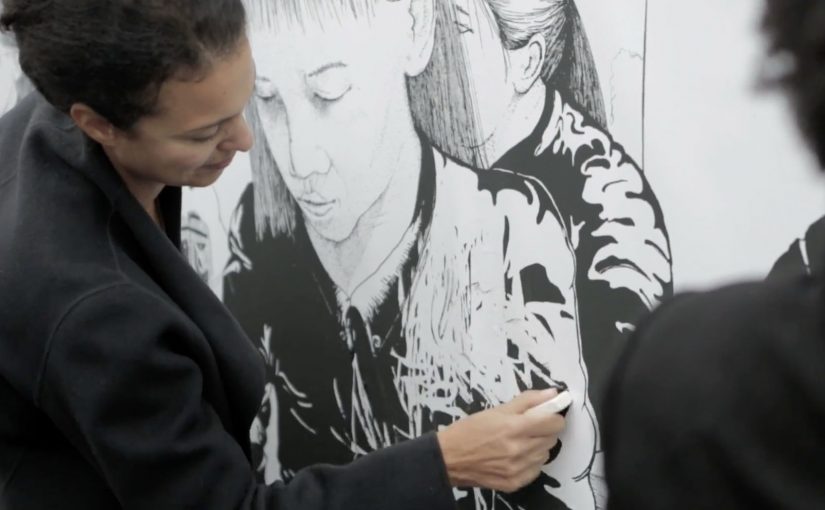
Plan: The Erasable Billboard for Girls’ Education

Plan: The Erasable Billboard for Girls’ Education

A large illustrated billboard appears in a busy city square. People donate, receive a simple eraser, and start rubbing away the artwork. As the top layer disappears, a second illustration is revealed underneath, shifting the story from girls working to girls going to school.

Plan has reported that tens of millions of girls worldwide are pushed into work instead of education, while in many less privileged countries boys are more likely to get access to schooling. To spark action, Plan and CLM BBDO created an erasable billboard with an illustration designed to be removed to reveal another illustration underneath. The billboard ran in central locations in Paris and Berlin. Passers-by were invited to donate in exchange for an eraser, then use it to change what the billboard showed.

Why the “erasable” mechanic is so strong

The mechanism does two jobs at once. It raises money, and it makes the issue understandable without explanation. The before-and-after is literal. Work disappears. School appears. The donor is not only informed. The donor performs the change. Cause-led campaigns should treat participation as the message, not a bonus layer.

Extractable takeaway: When the donor completes the transformation with their hands, the message becomes a memory and the donation feels consequential.

Definition-tightening: the eraser is not a gimmick. It is the interface, meaning the simple physical tool that gives the donor viewer control over the story. Because the act of erasing creates ownership, it makes someone more likely to donate, talk about it, and remember it.

In social-impact fundraising, participatory outdoor media can turn a small donation into a visible act of change that people feel in their hands.

The real question is whether your donation ask feels like participation or just passive sympathy.

What Plan is really buying

This is a public proof of participation. Instead of asking people to “care” in private, it makes caring visible, social, and shared. Every person who erases becomes a live endorsement that the issue matters enough to stop and act.

Steal this pattern: make giving tactile

  • Make the transformation physical. A tangible before-and-after beats a poster full of statistics.
  • Use the donation as the trigger. The action should only unlock after contribution, not before it.
  • Let participation create the content. The billboard changes because people change it.
  • Design for bystanders. Watching others erase is part of the persuasion.

A few fast answers before you act

What is the “Erasable Billboard” idea?

An illustrated billboard designed to be physically erased. Donors receive an eraser and reveal a second image underneath, shifting the story from girls working to girls going to school.

Why exchange a donation for an eraser?

Because it turns giving into an action. The eraser is a simple reward, but more importantly it is the tool that lets the donor create the transformation themselves.

What makes this more effective than a standard charity billboard?

It is participatory and observable. The public sees the billboard changing in real time, which builds social proof and makes the issue easier to grasp.

What is the main emotional lever?

Viewer control. The donor does not only learn about the problem. The donor performs a symbolic solution in front of others.

What is the biggest execution risk?

If the transformation is not instantly readable, people will not engage. The before-and-after needs to be obvious from a distance and satisfying up close.

Heineken Carol Karaoke

Heineken Carol Karaoke

What if you were singing holiday carols to a few friends at a karaoke bar, when suddenly your performance became a concert broadcast before thousands on the Jumbotron at a professional basketball game, in Times Square and on the screens of nearly every New York City taxicab. Would you keep singing?

That is the setup behind Heineken’s Carol Karaoke. It starts as a small, friendly singalong, then flips into a “will you or won’t you” decision in seconds. Keep going and you are suddenly performing for strangers at scale. Stop and you walk away from the moment.

How the stunt works

The mechanism is deliberately clean. Invite people to sing. Reveal the twist. Put a choice in front of them with no time to overthink. The broadcast layer is what raises the stakes, but the real content is the decision itself. Because the choice arrives before people can script themselves, the reaction reads as real, which is why the clip holds attention. The real question is whether you keep singing once the room suddenly becomes the city.

It is also built for the social era without relying on a hashtag to do the work. The reaction is the story. The story becomes the share unit. Here, the “share unit” is the few seconds where the singer realizes the stakes and chooses.

In big-city holiday campaigns, the fastest route to earned attention is a simple public challenge that people can imagine themselves facing.

Why it lands

Karaoke is already a controlled embarrassment. The campaign simply stretches that discomfort from “friends in a booth” to “a city watching”. That tension creates instant empathy and instant curiosity, because nearly everyone knows what it feels like to sing badly, and nearly everyone has imagined what it would feel like to be exposed. Heineken positions itself as the catalyst for crossing that line, not the judge of the performance.

Extractable takeaway: If you want a stunt to travel, engineer one visible, time-pressured choice that viewers can feel, then make the brand the enabler of that choice, not the evaluator.

Business intent

This is branded entertainment built around social courage. It connects Heineken with celebration behavior, and it manufactures a holiday moment that people will retell, because the premise is easy to repeat and the outcome is emotionally satisfying.

Steal these levers from Carol Karaoke

  • Use a decision, not a slogan. Put real choice in the frame and you get real reaction.
  • Make the twist explainable in one sentence. If the idea cannot be retold instantly, it will not travel.
  • Raise stakes with environment, not complexity. Big screens and public broadcast do more than extra rules.
  • Cast ordinary people. Relatability is what turns “a stunt” into “I can picture myself there”.

A few fast answers before you act

What is Heineken Carol Karaoke?

It is a surprise karaoke activation where people singing holiday carols are suddenly offered a choice. Keep singing and be broadcast publicly to a much larger audience, or stop and walk away.

Why does the “will you or won’t you” structure work?

Because the content is the decision under pressure. That creates tension, authenticity, and a clear emotional arc that viewers follow in seconds.

What role do out-of-home screens play in the idea?

They turn a private performance into a public moment instantly. The scale shift becomes the stakes, and those stakes are immediately legible to anyone who has ever felt stage fright.

What makes this kind of stunt shareable?

The setup is retellable in one line, and the payoff is emotional and human. People share it to relive the moment of courage, not to explain a complicated mechanic.

How can a brand adapt this idea without a Jumbotron?

You can swap the “big screen” for any sudden jump in visibility that feels real. For example, a live in-venue feed, a public projection, a partner-owned network of screens, or an unexpected “broadcast” to a larger nearby audience.