

FriendsWithYou: Cloudy

FriendsWithYou: Cloudy

Miami based animation studio FriendsWithYou has produced “Cloudy”, a short film exploring the concept of clouds singing and performing their duties in a joyful manner while showing the viewer that everything in our world has a role and a purpose.

Sit back and enjoy this sweet visual soundscape that takes you through a personal journey into the sky. Here, “visual soundscape” means a piece where rhythm, tone, and imagery do the narrative work together.

A sky full of characters, not weather

“Cloudy” treats the atmosphere like a workplace musical. Clouds are not background texture. They are the cast, with jobs to do, rhythms to keep, and a mood that turns routine into celebration.

The mechanic: give nature a chorus

The film’s core device is straightforward. Personify the clouds, make the labor visible, and score it like a performance. Once the viewer accepts that premise, every movement becomes readable as intention rather than randomness.

In brand and studio storytelling, anthropomorphism lands when it is used to clarify a system rather than merely decorate a scene.

Why this lands as a “visual soundscape”

The piece is gentle, but it is not passive. It holds attention by pairing simple character purpose with musical momentum, so you feel guided through the sky rather than shown a series of pretty shots.

Extractable takeaway: If you want viewers to remember a message about meaning or purpose, do not explain it first. Stage it as a system of roles, then let the audience feel the order before you name it.

What it is really doing

Beyond the craft, the film is an attitude. It argues that work can look joyful, that duty can look like play, and that even the quiet background parts of a world can be the main event when you frame them that way.

The real question is whether purpose can be made felt before it is explained.

What to steal for your own short-form craft

  • Pick one premise and commit. Once clouds can sing, every scene should deepen that rule, not diversify into new ones.
  • Make “process” the plot. Showing how something gets done is often more watchable than inventing a separate story.
  • Let sound carry structure. A strong musical spine can turn a mood piece into a journey with forward motion.
  • Give the viewer one clean idea to take home. Purpose is easier to feel when every character has a job.

A few fast answers before you act

What is Cloudy?

“Cloudy” is a short animated film by FriendsWithYou that imagines clouds singing and joyfully doing their work, to suggest that everything has a role and a purpose.

What makes it a “visual soundscape”?

The experience is built as much on rhythm and audio mood as on imagery. The sound is not decoration. It is the structure that carries the viewer through the piece.

Why does anthropomorphizing clouds work here?

Because it makes an abstract system legible. Once clouds behave like characters with duties, the viewer can follow cause, effect, and intention without needing exposition.

What can brands learn from this kind of short?

When you want to communicate values like purpose, care, or optimism, show a world where roles are clear and the system feels coherent. That feeling transfers faster than a stated message.

What should creators copy first?

Start with the rule, not the ornament. Give the world one clear premise, then let character, sound, and motion keep proving it.
LEGO: Life of George

LEGO: Life of George

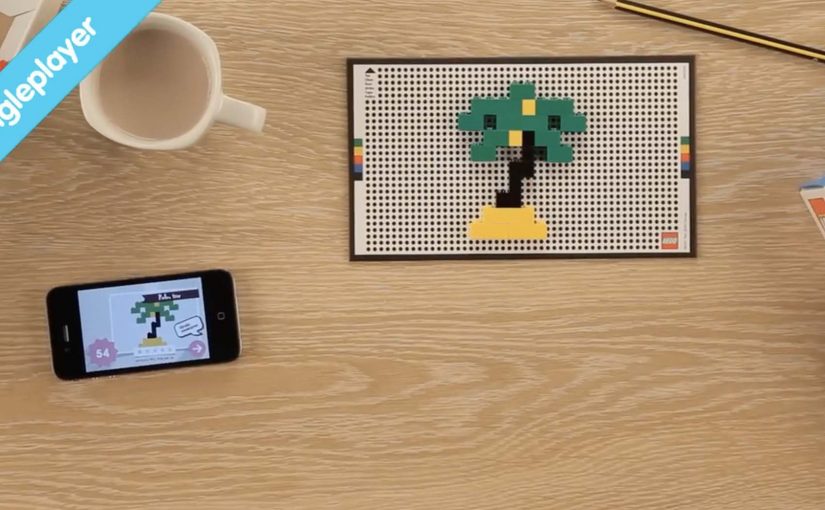
George shows you a photo from his travels and challenges you to rebuild it, fast, using real LEGO bricks. You scramble through a small set, build the scene on a dotted playmat, snap a picture, and the app scores you for speed and accuracy. The game is pretty useful as kids do not need to lug their entire LEGO collection around. While for parents the game helps in teaching counting and hand-eye coordination as you need to find blocks as quickly as possible and then put them together.

It is an exciting time for 12 year olds as they witness the first wave of electronic gaming. Digital-to-physical gameplay. Last year Disney announced a new line of toys called Disney Appmates that worked in tandem with the iPad. Now with “Life of George”, LEGO combines real bricks with an app for iOS and select Android devices.

Definition tightening: Digital-to-physical gameplay uses a screen to set the challenge and validate the outcome, while the actual play happens with real objects in the room.

The mechanic that makes it feel like a “real” game

The loop is clean. The app presents a reference image. You recreate it with 144 pieces. You photograph your build on the dotted playmat. The app reads the build using image recognition, then awards points based on how close you got and how quickly you did it.

In global toy categories where screens compete for attention, hybrid play wins when the device camera becomes a bridge back to hands-on making.

The real question is whether the app uses the screen to replace LEGO play, or to make physical LEGO play faster, clearer, and more replayable.

Why it lands for kids and parents

For kids, the fun is the time pressure and the treasure hunt. Finding the right brick and placing it correctly becomes the challenge, not navigating menus. For parents, the value is that the rules structure the chaos. Counting, pattern matching, and hand-eye coordination are baked into the race.

Extractable takeaway: The strongest digital-to-physical games treat the screen as referee, not as the playground. They keep the “doing” physical, and use the device only to prompt, verify, and reward.

What to steal from this format

  • Make the rules visual. A single reference image beats a paragraph of instructions.
  • Use the camera as validation. Let players “submit” their physical work in one tap.
  • Keep the kit portable. A small curated set can travel, unlike a whole LEGO tub.
  • Reward speed and accuracy. Those two levers create replay without adding complexity.

A few fast answers before you act

What is LEGO Life of George?

A hybrid LEGO game where the app shows a picture challenge, you rebuild it with real bricks on a playmat, and the app scores your photo using brick recognition.

What is the core mechanism?

Prompt with an image. Build physically. Photograph on a patterned play surface. Use computer vision to validate and score speed and accuracy.

Why does the dotted playmat matter?

It standardizes the photo capture so the app can recognize scale and placement more reliably, which makes scoring feel fair.

What is the main benefit versus classic LEGO play?

Structure and portability. A small set plus timed challenges creates a “game” you can play anywhere without carrying a full collection.

What is the most reusable lesson for digital-to-physical products?

Use the device to create clear prompts and instant feedback, but keep the core activity tangible and social in the real world.

Meat Pack: Hijack

Meat Pack: Hijack

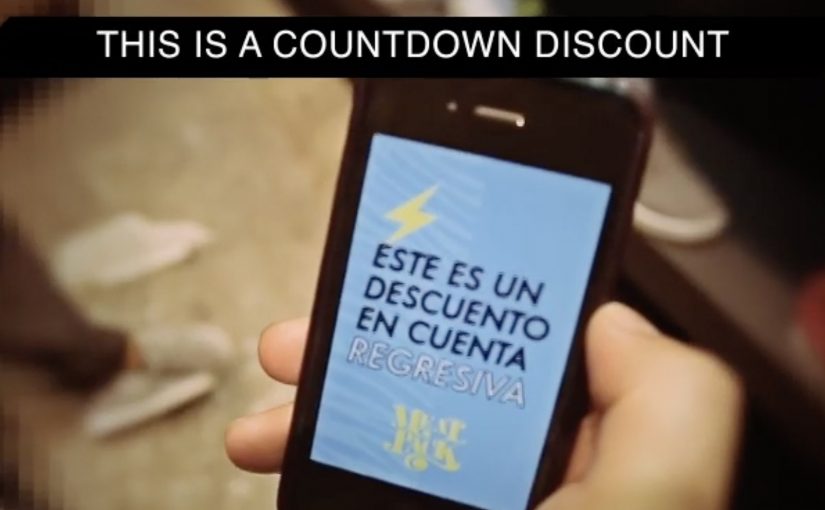
You walk into a competitor’s store to browse shoes. Your phone buzzes. Meat Pack offers you a discount that starts at 99%, then drops by 1% every second. If you want the deal, you have to move.

For a new discount promotion, Meat Pack, a shoe store in Guatemala known for an edgy, irreverent style, created Hijack, described as a GPS-based enhancement to their official smartphone app. Each time a customer entered the official store of one of the brands sold at Meat Pack, the app triggered a promotional message with a countdown offer. The discount started high and decreased every second, then the countdown stopped when the customer reached Meat Pack’s store.

Definition tightening: This is geofencing. A mobile app uses location signals to detect when you enter a defined physical area, then triggers a message based on that location event.

Turning a discount into a race

The mechanism is deliberately ruthless. The offer is so large it interrupts whatever you were doing, and the time pressure converts curiosity into action. The “best possible price” is available only at the exact moment your intent is hottest, while you are literally standing inside a competitor’s store.

In dense urban retail environments where shoppers compare options across nearby stores, location-triggered pricing can create an immediate switching incentive precisely at the point of decision.

Why it lands

It lands because it is a clean behavioural hack. The discount is not just a number. It is a ticking loss. Every second you hesitate, you feel the deal slipping away, which makes running across the street feel rational. The campaign also bakes in bragging rights by reportedly posting successful redemptions to Facebook, turning individual wins into social proof.

Extractable takeaway: If you want people to switch behaviours fast, combine a dramatic incentive with a visible countdown that makes hesitation feel expensive, then make the “next step” unmissable and immediate.

The business intent behind the provocation

This is conquesting with teeth. It aims to convert high-intent foot traffic that is already shopping the category, and to do it at the moment a competitor is paying the cost of acquisition. Reported results from the period describe hundreds of customers being “hijacked” and discounted inventory selling through quickly.

This is smart conquesting, but it only works when the store is close enough for the sprint to feel real. The real question is whether the route from trigger to redemption is short enough to make switching feel instant.

What this retail ambush gets right

  • Trigger at the true decision point. Not at home. Not later. At the shelf moment.
  • Make the offer legible in one second. “99% now, dropping” beats a paragraph of terms.
  • Use urgency with a real rule. A countdown works when it actually changes the outcome.
  • Design the route. If people cannot act quickly in real geography, the mechanic collapses.
  • Handle social sharing carefully. If you auto-post, consent and control decide whether it feels fun or creepy.

A few fast answers before you act

What is Meat Pack “Hijack”?

A location-triggered promotion inside Meat Pack’s app that detects when customers enter competitor brand stores, then offers a discount that decreases by 1% every second until the customer reaches Meat Pack.

What is the core mechanism?

Geofencing triggers an offer at the competitor location. A countdown reduces the discount each second. The timer stops when the shopper reaches Meat Pack, turning the offer into a physical sprint.

Why is the countdown so important?

It converts interest into movement. The value loss is visible and immediate, so delaying feels like paying extra.

What are the biggest risks in copying this?

Customer trust and permission. Location tracking and social posting require clear opt-in. Poor transparency turns a clever mechanic into backlash.

What kind of business does this fit best?

Retailers with nearby competitors, fast redemption, and inventory they can afford to discount aggressively for short bursts.