
Volvo In-Car Delivery

Volvo In-Car Delivery

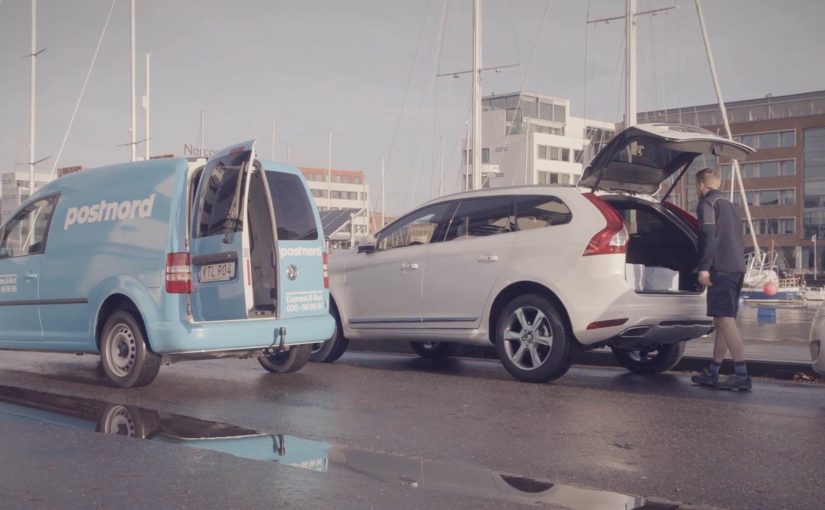
It is late November. You order groceries and Christmas gifts online. You park your Volvo somewhere in Gothenburg. While you are still at work, a courier finds your car, unlocks it once, drops the package into the boot, locks it again, and leaves. You receive a notification. When you drive home, your shopping is already waiting in your car.

That is the core idea behind Volvo’s in-car delivery service. It is available to customers who subscribe to Volvo On Call and live in Gothenburg, Sweden. For the Christmas period, deliveries come from two online retailers. Lekmer.com and Mat.se. PostNord handles the delivery. The courier uses a special one-time access digital key to open the car, place the package in the boot, and re-secure the vehicle.

Why “deliver to the car” is a bigger move than it sounds

At first glance, in-car delivery reads like convenience marketing. Skip missed deliveries. Avoid the “where is my package” loop. Reduce the need to be at home.

But the real shift is structural. The car becomes a secure delivery endpoint. Meaning, the vehicle is treated like a locked, addressable drop-off location with controlled access.

The real question is whether controlled access can make the car a dependable handover point for third parties, not whether the feature feels convenient.

That matters because it turns connected car capability into a service layer that can be monetized and extended. The value does not end when the car leaves the dealership.

The mechanism that makes it work

This service only becomes credible when the access model is precise. The logic is simple:

  • The courier does not get your physical key.
  • The courier gets a one-time digital key that grants limited access for a single delivery.
  • The car becomes the controlled handover point. The boot is the practical drop zone.

Because access is scoped to one delivery and the boot, the courier can complete the drop without you surrendering the car or the physical keys.

When you can grant time-bounded, narrowly scoped access and revoke it immediately, physical assets become secure handover points for partners.

This is not “keyless” as a gadget feature. This is access as a managed entitlement, designed for commerce and logistics.

In European urban settings where people spend the day away from home, reliable delivery depends on secure drop points that do not require the customer to be present.

Why Volvo is telling a marketing story through engineering

Volvo often wins when the innovation is concrete and utility-driven. In-car delivery is exactly that. It is a clean demo of connected technology that saves time, reduces hassle, and fits real family behavior during peak shopping season.

Extractable takeaway: If you want people to believe a new connected service, show it solving a real, repeatable pain point in one clear moment, then let the engineering do the persuasion.

The brand story is also clear:

  • Connected car tech is not an abstract dashboard feature.
  • It changes how everyday logistics works.
  • It makes the car useful even when it is parked.

That is a stronger narrative than “we have an app.” It is a capability that people can visualize immediately.

The strategic signal to other industries

In-car delivery is also a quiet message to adjacent ecosystems:

  • Retailers get a new delivery option that reduces failed deliveries.
  • Logistics players get a new category of secure handover.
  • Carmakers get a template for post-sale services that can scale through partnerships.

In short. Volvo is experimenting with moving beyond simply building and selling cars, by tapping into connected technologies that keep creating value after purchase.


A few fast answers before you act

What is Volvo In-Car Delivery in one sentence?

Volvo In-Car Delivery is a service that lets packages be delivered into your car’s boot using a one-time digital key, instead of delivering to your home.

Who can use it in this pilot?

In this pilot, it is available to Volvo On Call subscribers in Gothenburg, Sweden.

Which retailers and delivery partner are involved?

For the Christmas period described here, the retailers are Lekmer.com and Mat.se, and PostNord handles delivery.

What is the key innovation behind the experience?

The key innovation is controlled access via a one-time digital key that allows the courier to unlock the car once, place the delivery in the boot, and lock it again.

Why is this more than a convenience feature?

It turns the car into a secure delivery endpoint, which creates a service layer that can be monetized and extended through partnerships beyond the initial sale.
Volvo HoloLens Showroom: Virtual Dealership

Volvo HoloLens Showroom: Virtual Dealership

The showroom no longer needs cars

Car dealerships traditionally depend on physical inventory.

Space, logistics, and availability limit what customers can see, touch, and configure. That constraint disappears when Volvo introduces a showroom experience powered by Microsoft HoloLens.

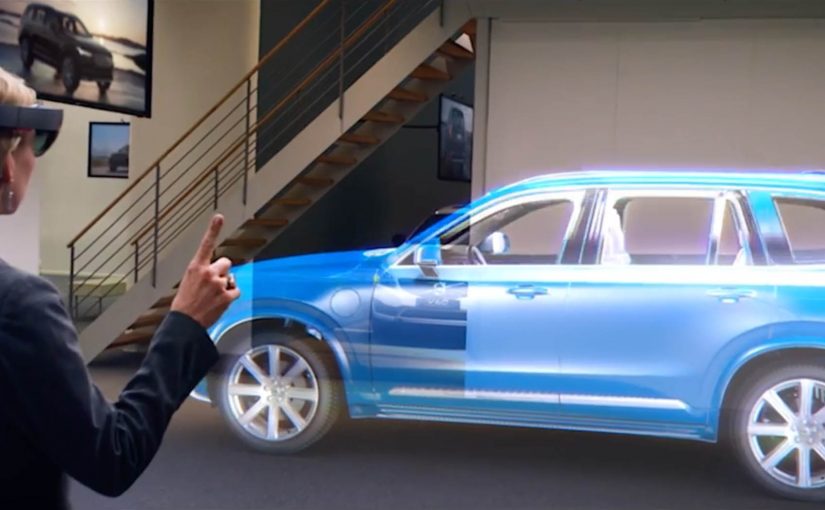
Instead of walking around parked cars, customers step into a virtual environment where full-size vehicles appear as holograms.

How the HoloLens showroom works

Using HoloLens, customers explore Volvo cars at real scale. This is mixed reality, digital objects anchored to the physical space around you.

They walk around the vehicle. Look inside. Inspect details. Colors, trims, and configurations change instantly. The experience feels physical, even though no car is present.

The showroom becomes software-driven. Inventory becomes optional.

In high-consideration retail, the job is helping people visualize options confidently before commitment, even when the product is not physically present.

Why this matters for automotive retail

This is not a gimmick. Virtual showrooms reduce the need for large floor space and allow dealerships to showcase the full portfolio, including models and options that are rarely stocked physically. Because customers can see the car at full scale and switch configurations instantly, they can compare options without relying on imagination, which makes commitment feel safer.

Extractable takeaway: If you can make options visible at real scale and changeable in seconds, you can sell preference, not availability, even when the product is not physically present.

For customers, the experience becomes calmer and more focused. There is less pressure. More exploration. Better understanding before committing.

Experience beats inventory

The deeper shift is about viewer control.

The real question is whether your showroom is designed for preference discovery or for stocking convenience.

Dealerships should treat mixed reality as a configuration layer that complements physical touchpoints, not as a tech demo.

Customers explore at their own pace. Sales staff guide rather than push. The conversation moves from availability to preference.

The dealership turns into a configuration studio, not a warehouse.

  • Make configuration the starting point. Let customers explore options first, then map the shortlist to what they can test and buy.
  • Keep staff in guide mode. Use people to frame trade-offs and confirm choices, not to gate access to information.
  • Design the experience like software. Treat the showroom as a repeatable configuration studio, not a one-off installation.

A few fast answers before you act

Is this replacing test drives?

No. A mixed reality showroom helps customers narrow configurations before a physical test drive.

What do customers actually do in the HoloLens showroom?

They walk around a life-size hologram, look inside, inspect details, and switch colors, trims, and configurations in real time.

What is the real business benefit?

Reduced reliance on physical inventory, clearer configuration conversations, and better use of showroom space.

Why does mixed reality fit automotive retail?

Cars are high-consideration purchases, so visualization can carry as much weight as specification.

What has to be true for this to feel real?

The hologram must stay aligned to the physical space, and configuration changes must respond instantly so customers trust what they are seeing.

Klépierre: Inspiration Corridor

Klépierre: Inspiration Corridor

One of the biggest problems brick-and-mortar retailers face is that many consumers prefer the convenience of shopping online. So Klépierre, a European specialist in shopping center properties, decides to give customers a unique and personal window shopping experience that simultaneously advertises multiple brands available in its shopping center.

How the corridor turns browsing into a saved journey

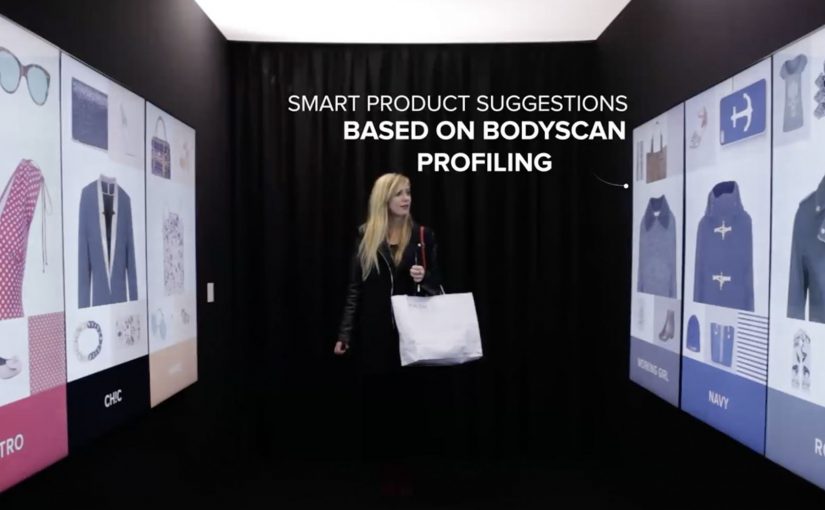
The mechanism is a walk-in “inspiration corridor” that is described as using an infrared camera and live detection to adapt the interface to the visitor. The walls then show a curated set of products pulled from real-time inventory, and the visitor can tap items to add them to a personal shopping list. At the end, the selection syncs to the Klépierre mobile app, which then helps locate the chosen products in the mall.

Here, live detection means the corridor reads the visitor in the moment and adjusts what appears on the walls accordingly.

In European shopping centers, the winning retail experiences blend discovery and convenience, giving visitors a reason to browse physically while keeping the efficiency people associate with online shopping.

The result is a browse-first experience that keeps discovery and wayfinding in one flow.

Why this beats “more screens”

This lands because it does not ask shoppers to learn a new behavior. It upgrades a familiar one. Window shopping. The corridor simply makes browsing feel personal and actionable, then removes the “I’ll never find it again” friction by saving the picks and turning them into a navigable list. The stronger move is not to add more screens, but to make physical browsing easier to finish. That works because discovery, selection, and store-finding happen in one continuous interaction.

Extractable takeaway: If your category is losing visits to online convenience, do not fight browsing. Instrument it. Let people browse with their body language and taps, then hand them a saved list that makes the rest of the journey feel effortless.

The quiet business intent

The real question is whether one shared experience can turn mall-level discovery into measurable value for multiple tenants at once.

Klépierre is not only showcasing technology. It is selling a multi-brand promise. One interaction can route a shopper to several tenants, lift discovery across stores, and create measurable signals of interest without needing a single retailer to run the whole experience alone.

What mall operators should borrow

  • Curate across brands. A mall operator can create value by packaging discovery in a way individual stores cannot do alone.
  • Connect to live stock. Recommendations feel credible when they map to what is actually available right now.
  • Make saving the default. “Tap to add” is the key bridge from inspiration to purchase intent.
  • Close the loop with wayfinding. The experience should end with “here’s where to get it”, not just “wasn’t that cool”.
  • Design for low friction. The corridor should work in seconds, even for someone who did not plan to engage.

A few fast answers before you act

What is Klépierre’s Inspiration Corridor?

It is an in-mall interactive experience that personalizes product recommendations on surrounding walls and lets visitors tap to save items to a shopping list that syncs to the mall’s app.

How does the personalization work?

It is described as using live detection, for example via an infrared camera, to adapt recommendations and the interface to the visitor in the moment.

What problem does this solve versus standard mall advertising?

It turns passive promotion into active selection. Instead of only seeing brand messages, shoppers leave with a saved list and a practical path to find products.

What is the main metric to watch?

Saved items per session, app sync rates, store visit lift for featured tenants, and conversion from saved lists to purchases where measurement is possible.

What should you be careful about when deploying live detection?

Be explicit about what is being detected and why, keep the experience usable without any personal account setup, and avoid language that implies storing identities or profiling.