

Facebook integration at the Coca Cola Village

Facebook integration at the Coca Cola Village

A teenager enters Coca Cola Village in Israel wearing a wristband that carries their Facebook credentials. Each time they swipe at an attraction, their Facebook status updates instantly with what they are doing. The village behaves like a live social feed, powered by real-world actions.

The activation. Turning an event into a live Facebook layer

Publicis (E-dologic) and Promarket develop an experiential event for Coca Cola Israel that syncs everyone who participates with their friends on Facebook in real time.

Here, “integration” means the event turns real-world actions into predictable Facebook posts and photo tags.

The real question is whether you can turn on-site participation into shareable proof without asking people to stop and post.

This pattern beats “share this” prompts because publishing becomes the default outcome of participation.

How entry works. Caps plus friends

The Coca Cola Village 2010 event runs through Facebook. Teenagers collect 10 Coca Cola caps, plus eight friends who do the same. After registering online through Facebook, they receive exclusive entry.

How the wristband works. Swipe to post, shoot to tag

At the Coca Cola Village, participants set up a special wristband designed to securely hold their Facebook login and password. In practice, it is a scannable wristband that identifies the participant at event touchpoints. Every swipe triggers an immediate status update about what they are doing at the event, keeping friends up to date as it happens. The wristband also enables automatic tagging of photos taken at the village.

In youth-focused FMCG activations, the win is to make sharing a byproduct of participation, not a separate task.

The scale effect. When participation becomes publishing

The event holds 650 teenagers a day. With seamless Facebook integration, they generate 35,000+ posts per day across three days, totaling 100,000+ posts for the event.

Why this works. Social actions move from screen to space

This is what “integration” looks like when it is not a logo on a wall. The social network becomes a behavior layer inside the event. Because the swipe is the trigger, posting becomes as easy as participating. The wristband reduces friction, the swipe makes publishing physical, and the photo tagging closes the loop by spreading proof of participation back into the feed.

Extractable takeaway: If you want social scale from an experience, bind sharing to a simple physical ritual people repeat, not to a “remember to post” moment.

Design moves worth copying

  • Credential once. Do the setup up front, then let participation drive sharing automatically.
  • Make the trigger physical. Tie posting to a repeatable on-site action (the swipe), not a manual step.
  • Close the proof loop. Auto-tagging turns attendance into visible evidence that travels beyond the venue.
  • Design for repetition. The easier the ritual is to repeat, the more output you get without extra prompting.

A few fast answers before you act

What is Facebook integration at the Coca Cola Village?

An experiential event in Israel where an RFID-style wristband connects on-site actions to real time Facebook posting and photo tagging.

How do people get access?

By collecting 10 Coca Cola caps and eight friends who do the same, then registering through Facebook for entry.

What does the wristband do?

It securely holds Facebook login details and posts instant status updates whenever participants swipe at attractions. It also enables automatic photo tagging.

What is the reported scale of social output?

650 teenagers per day, generating 35,000+ posts per day across three days for 100,000+ total posts.

What is the transferable pattern for brands?

Make social sharing an outcome of physical participation, not a separate step. Reduce friction and tie posting to clear, repeatable actions.
Old Spice: The Social Response Campaign

Old Spice: The Social Response Campaign

One body wash campaign that owned the conversation

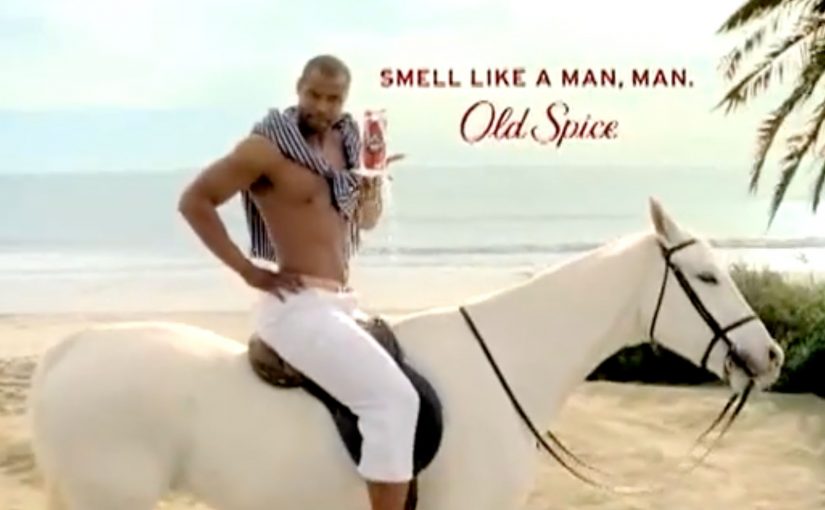
This Old Spice case study takes us through the insight around targeting men and women at the same time to generate conversation around body wash. When it launched, the campaign managed to capture 75% of all conversations in the category.

To continue the success, Old Spice & Wieden + Kennedy created the next level, where Mustafa, now a household hero, a character people recognized instantly, engaged with the fans directly. The response campaign consisted of around 180 customized videos which engaged the fans directly. Thus it became the best social campaign ever to have been created.

Here are some stats of the campaign.

  • On day 1 the campaign received almost 6 million views (that’s more than Obama’s victory speech)
  • On day 2 Old Spice had 8 of the 11 most popular videos online
  • On day 3 the campaign had reached over 20 million views
  • After the first week Old Spice had over 40 million views
  • The Old Spice Twitter following increased 2700% (probably off a lowish base)
  • Facebook fan interaction was up 800%
  • Oldspice.com website traffic was up 300%
  • The Old Spice YouTube channel became the all time most viewed channel (amazing)
  • The campaign has generated 1.4 billion impressions since launching the ads 6 months ago
  • The campaign increased sales by 27% over 6 months since launching (year on year)
  • In the last 3 months sales were up 55%
  • And in the last month sales were up 107% from the social responses campaign work
  • Old Spice is now the #1 body wash brand for men

And without further a-due. The best social campaign ever.

The real shift: from broadcast to back-and-forth

The original idea did something rare. It spoke to men and women at the same time. Then it did the smarter thing. It treated the public reaction as the next creative brief. 180 customized responses turn attention into participation.

Because the replies are both personal and public, each interaction creates a reason for more people to watch, share, and join in.

In FMCG categories where products are similar, a brand character plus high-volume two-way interaction can turn attention into a defensible advantage.

The real question is whether you are willing to treat audience reaction as the next creative brief, not a comment thread to manage.

Why this still feels like a blueprint

Most campaigns stop when the film launches. This one starts there. When the character becomes a “household hero,” the brand gains a voice people want to talk to. Brands should treat the response layer, meaning the rapid stream of direct-to-person reply videos, as first-class creative, not post-launch community management.

Extractable takeaway: If a character and tone can scale, rapid, personalized public replies convert one-time views into repeat participation.

What the numbers are really doing here

The stats are not just bragging rights. They are proof that conversation can move the entire system. Views, follows, site traffic, impressions, and ultimately sales. All tied to a campaign designed to travel socially.

Old Spice’s response playbook you can borrow

  • Build for both sides of the purchase conversation. The user. And the influencer in their life.
  • Treat launch day as the start, not the finish line. Plan the response layer.
  • Create a character and tone that can scale. Dozens or hundreds of variations should still feel instantly recognizable.

A few fast answers before you act

What was the core insight in this Old Spice campaign?

Target men and women at the same time to generate conversation around body wash, then use that conversation to fuel the next wave of content.

What made the “response campaign” different?

Mustafa engaged fans directly through around 180 customized videos, turning audience attention into two-way interaction.

What results did the post claim?

The post cites rapid view growth over the first week, large jumps in social following and interaction, major traffic increases, and significant sales lifts over months.

What is the core mechanic behind the success?

A launch film that sparks broad conversation, followed by high-volume personalized responses that keep the conversation accelerating instead of fading.

What should you copy if you cannot produce 180 videos?

Copy the structure. Launch a character-led idea that invites replies, then publish a smaller set of fast, direct responses that keep the conversation moving.

Best Buy: Twelpforce on Twitter

Best Buy: Twelpforce on Twitter

Here is a truly new-age way of addressing customer needs in real time by harnessing Twitter. Instead of pushing promotions, Best Buy puts help in the timeline and lets customers pull value when they actually need it.

A help desk that lives in public

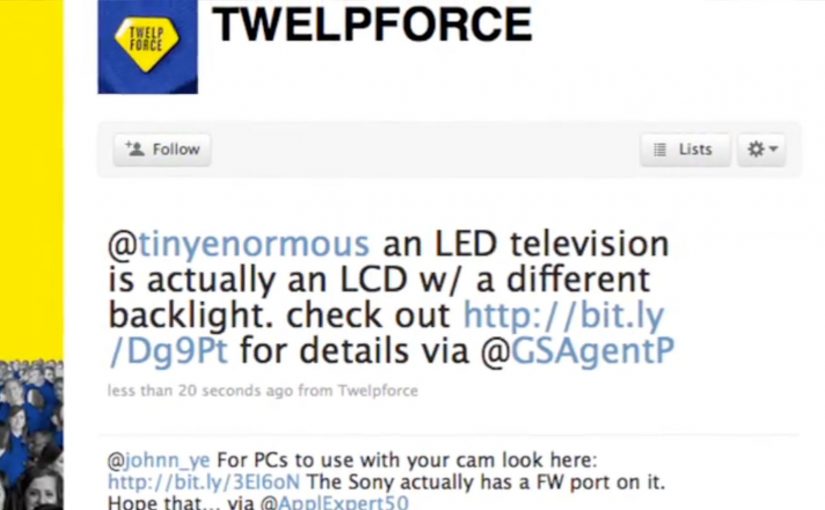
Twelpforce is built on a simple premise. Twelpforce is Best Buy’s Twitter-based customer support program, built to connect customer questions with employees who can answer them. The people who know the answers are already inside the company. Put them on Twitter, let them respond directly, and make the answers visible to everyone else with the same question.

It turns customer service into a living knowledge base. Every reply is both a resolution for one person and reassurance for the next hundred who are watching.

How Twelpforce works

The mechanic is straightforward:

  • Customer asks a question on Twitter.
  • Trained employees respond in real time from within their area of expertise.
  • The conversation stays public, so answers become searchable and shareable.
  • Trust compounds, because the brand is seen helping, not just selling.

In consumer electronics retail, service is often the fastest signal of trust and competence.

The real question is whether public, real-time help can build more trust than another stream of promotional posts.

Why it lands: help is a stronger hook than hype

Most brand communication tries to create desire. Twelpforce starts with a different human truth. When something breaks or confuses you, you want a competent person, quickly. The campaign meets that moment and makes the brand useful on demand. This is a stronger brand move than another promotional burst, because visible help makes expertise tangible at the exact moment of need.

Extractable takeaway: If your category creates frequent questions, treat support as a scalable content engine. Public answers reduce repeat effort, improve perceived expertise, and create credibility that paid media struggles to buy.

That publicness is the multiplier because one useful answer reduces uncertainty for the asker and for everyone else who sees it. A private call solves one case. A public answer signals, repeatedly, that the brand shows up when it matters.

Recognition that follows the idea

The campaign is credited to Crispin Porter + Bogusky for Best Buy. It goes on to win a Gold Clio Award in Interactive, under the “Innovative Use of Technology” category.

What to steal for your own social support play

  • Design for repeat questions: build templates and escalation paths so answers stay fast without becoming robotic.
  • Make expertise discoverable: route topics to specialists, not a generic handle that slows everything down.
  • Write for the invisible audience: every reply should help the original asker and anyone who finds it later.
  • Set clear guardrails: define what can be solved publicly and what must move to private channels.
  • Measure more than volume: track time-to-first-response, resolution rate, sentiment shift, and deflection of repeat issues.

A few fast answers before you act

What is Twelpforce in one sentence?

It is a Twitter-based customer help program where employees answer questions publicly in real time, turning support into a visible brand asset.

Why does public support change the marketing equation?

Because every answered question doubles as proof. People trust what they see a brand do for others, especially when the moment is unscripted and timely.

What makes this “interactive” rather than just social posting?

The customer initiates the experience with a question, and the brand responds in a two-way exchange that creates a usable outcome, not just awareness.

What is the biggest operational risk?

Inconsistency. If response times, tone, or accuracy vary widely, the same public visibility that builds trust can also expose gaps.

How do you know if a program like this is working?

Look for faster response times, high resolution rates, fewer repeated questions, improved sentiment, and a growing perception that the brand is genuinely helpful.