Tostitos Party Safe Bag

On Super Bowl Sunday 2017, Tostitos puts safety into the packaging. The limited-edition “Party Safe” bag can detect when you have been drinking, then helps you get home safely from the party.

How the Party Safe bag works

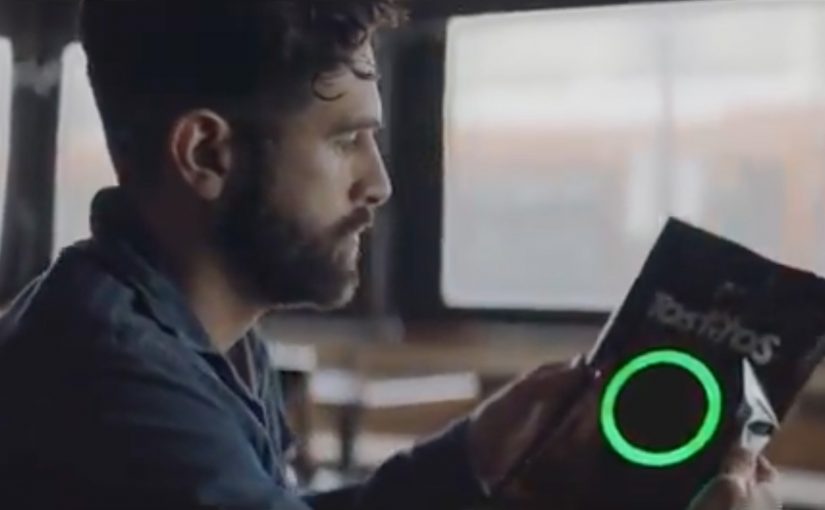
The trigger is built into the bag itself. The bag is created by Goodby Silverstein & Partners and comes equipped with a sensor connected to a microcontroller calibrated to detect traces of alcohol on a person’s breath. If alcohol is detected, the sensor turns red and forms the image of a steering wheel.

Then it turns that moment into action. The bag provides a $10 off Uber code along with a “Don’t drink and drive” message. If you have an NFC-enabled smartphone, you can also tap the bag to call an Uber.

In US mass-market brands, the smartest behaviour design often lives where the decision is made, not where the messaging lives.

Why Tostitos ties this to the Super Bowl

The campaign starts from a hard, uncomfortable statistic. According to the US National Highway Traffic Safety Administration, 45 people are killed in drunk-driving crashes on Super Bowl Sunday 2015, nearly half of all traffic fatalities that day.

Extractable takeaway: When risk peaks at a predictable moment, design the intervention to appear at that exact moment and make the safe choice the easiest next step.

So the “Party Safe” bag frames itself as a practical intervention on the one day when party behaviour and driving risk collide at scale.

This is IoT packaging with a clear behavioural goal

The packaging is not a gimmick for novelty’s sake. It is packaging that nudges a specific decision at the moment it matters most. Do not drive. Call a ride.

By IoT packaging, I mean packaging with sensing and a built-in trigger that can prompt an action without a separate app.

The real question is whether your connected experience can change one specific choice at the moment it is made.

This works because it is a behaviour-change intervention first, and a tech demo second.

The smart detail is the friction reduction. The message is immediate, the code is immediate, and the tap-to-request option removes even more steps. Because detection and the next action live on the bag, the distance from recognition to compliance is intentionally short.

The pattern worth stealing

If you work on connected experiences, the structure is reusable.

  • Put the sensor where the decision happens. Not in a separate app.
  • Translate detection into a single, obvious next action. Make the next step unmissable.
  • Pair the behavioural nudge with a concrete incentive. Give people a reason to comply faster.

A few fast answers before you act

What is the Tostitos Party Safe Bag?

A limited-edition Tostitos bag that detects alcohol on a person’s breath, then prompts a safer way to get home.

How does the bag detect drinking?

A sensor connected to a microcontroller is calibrated to detect traces of alcohol on the breath.

What happens when alcohol is detected?

The sensor turns red and forms a steering-wheel image. The bag provides a $10 off Uber code and a “Don’t drink and drive” message.

How does the Uber action work?

You can use the $10 off code, and NFC-enabled smartphones can tap the bag to call an Uber.
KLM’s Bonding Buffet

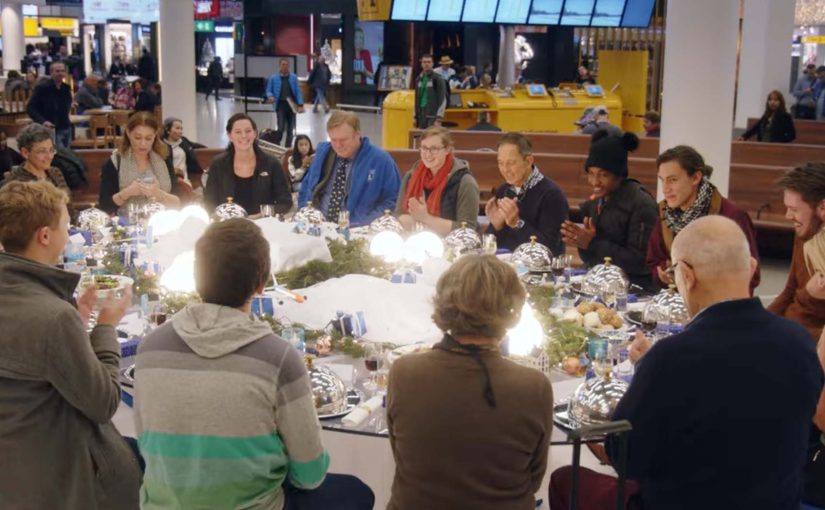
Airports can be lonely places, but Christmas is all about being together. So KLM sets up the Bonding Buffet at Amsterdam Airport Schiphol. A table with a full Christmas dinner sits 4.5 metres above the ground, clearly out of reach. The only way to bring it down is to cooperate.

The mechanic is beautifully simple. Travelers sit on the stools around the table. Each occupied seat lowers the table a little. When every seat is taken, the table is fully lowered and dinner can start. Here, “mechanic” means the rule that links each person sitting down to the table lowering.

In international airports, the fastest way to create togetherness is to make cooperation the only route to a shared reward.

As a result, people from over 20 different countries bond with each other, and the table injects some much-needed Christmas spirit into a busy airport.

The real question is how you design cooperation that feels natural in a place where everyone expects to keep to themselves.

Why this activation works so well

KLM does not “tell” people to connect. It designs a shared outcome that can only be achieved together, because the table only lowers when every seat is taken. The campaign turns a common airport truth. Waiting alone. Into a social moment with a clear reward. Engineered cooperation beats feel-good messaging every time.

Extractable takeaway: If you want strangers to connect, design a visible constraint that can only be resolved through cooperation, then reward the group immediately when they commit.

There are three tight design choices that make it land:

  • A visible constraint. The meal is there, but unreachable.
  • A cooperative mechanic. Everyone has a role. One seat at a time.
  • A shared payoff. The dinner only happens when the group commits.

The brand story is embedded in the experience

This is brand storytelling through behavior, not messaging. KLM positions itself as the airline that understands what travel feels like. Disconnected. Transitional. Sometimes lonely. Then it engineers a moment that flips the emotional state from isolation to togetherness.

The experience is also culturally portable. You do not need language to understand it. Sit down. Help lower the table. Eat together.

What to steal from this if you build live experiences

The transferable lesson is not “build a giant table.” The lesson is how to design bonding:

  • Make the goal obvious.
  • Make the mechanic collaborative, not competitive.
  • Make the payoff immediate and human.
  • Make it impossible to complete alone.

When those conditions are true, the social outcome becomes the content.


A few fast answers before you act

What is KLM’s Bonding Buffet?

It is a Christmas activation at Amsterdam Airport Schiphol where a dinner table starts 4.5 metres high and only lowers when travelers sit together on all seats.

How does the table come down?

Each person who sits on a stool lowers the table a bit. When every seat is taken, the table fully lowers and dinner begins.

Where does it take place?

KLM staged the Bonding Buffet at Amsterdam Airport Schiphol.

What human outcome is KLM designing for?

The activation is designed to help strangers bond, turning lonely transfer time into a shared Christmas moment.

Why is this a strong brand move?

KLM expresses its brand through an engineered experience that changes traveler behavior, not through slogans.

Coca-Cola: First Drinkable Advertising

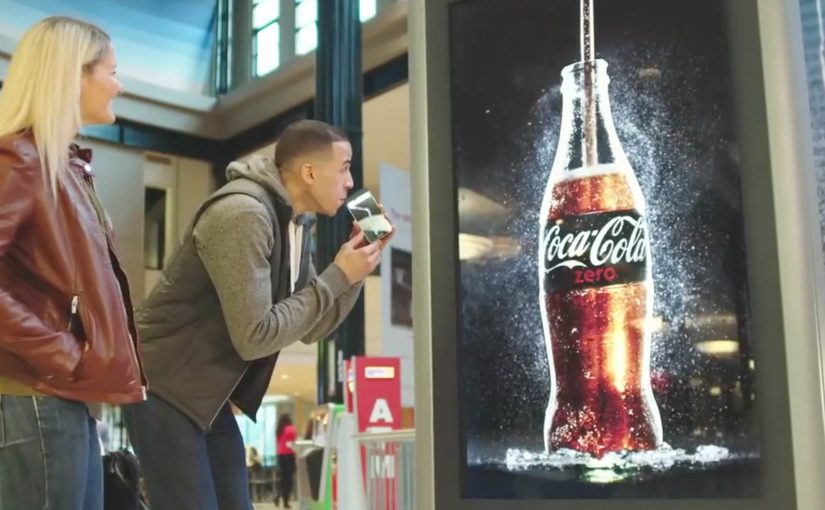
You are looking at a Coke Zero ad on a billboard, on TV, in print, or even on radio. Instead of just watching it, you Shazam it. On your phone, Coke Zero appears to pour into a glass on-screen, and that moment converts into a free Coke Zero coupon you can redeem at select retail stores across the US.

The premise is blunt and smart. Many people think they know the taste of Coke Zero, but they actually do not. So Ogilvy & Mather creates a campaign where the quickest route from awareness to belief is not another claim. It is immediate trial.

How “drinkable” advertising is engineered

This execution turns Shazam into a universal call-to-action layer across media. Here, “drinkable” means the ad triggers a mobile pour moment that turns into a redeemable coupon for immediate trial.

  • Any channel can trigger the experience. Billboard. TV. Print. Radio.
  • The smartphone becomes the conversion surface. Visual payoff first, then the coupon.
  • The coupon bridges straight into retail. “Try it now” becomes a physical action, not a brand sentiment.

The important part is not the novelty of animation. It is the end-to-end path from message to product-in-hand, because the Shazam trigger and coupon make the next step unambiguous.

Why this works as shopper marketing, not just a stunt

The campaign is designed to reduce the classic friction points that kill trial. In performance-led shopper marketing, the fastest path from awareness to belief is reducing trial friction and making redemption immediate.

Extractable takeaway: If you want trial, design the interaction so it ends in redemption, not in more content.

  • No guessing what to do next. Shazam is the behaviour.
  • No abstract promise. The ad demonstrates “taste” by pushing you to the real thing.
  • No delayed gratification. The reward is immediate and concrete. A redeemable coupon.

It is experiential marketing that does not require a pop-up installation or a live event. The experience travels with the media buy.

This is shopper marketing done right. It treats media as the first step of redemption, not as a detour into “engagement.”

The real question is whether your media can trigger immediate trial without adding steps or new infrastructure.

Steal this: Shazam-to-trial loop

If you are trying to drive trial at scale, this is a reusable model.

  1. One trigger across channels. Create a single interaction that works across channels.
  2. Mobile as the conversion surface. Use mobile to make the experience feel personal and immediate.
  3. Redemption, not delay. Close the loop with a retail mechanic that is simple to redeem.

Do that well, and “engagement” stops being a vanity metric. It becomes a measurable bridge to purchase.


A few fast answers before you act

What makes this advertising “drinkable”?

Shazaming the ad triggers a mobile experience that ends in a free Coke Zero coupon. It is designed to turn exposure into real-world trial.

Why use Shazam in the first place?

It provides a consistent interaction across media formats, including channels where clickable links do not exist.

What business problem is this solving?

Driving immediate trial for a product where many people assume they already know the taste, but have not actually experienced it.

What is the key CX detail that makes it work?

A simple, familiar action. One step to trigger, then a clear reward that can be redeemed in-store.

How do you prove this is more than a stunt?

Measure Shazam activations and coupon redemptions, then compare trial impact against a similar media buy without the redemption mechanic.