
Coca-Cola Interactive Mini Bottles

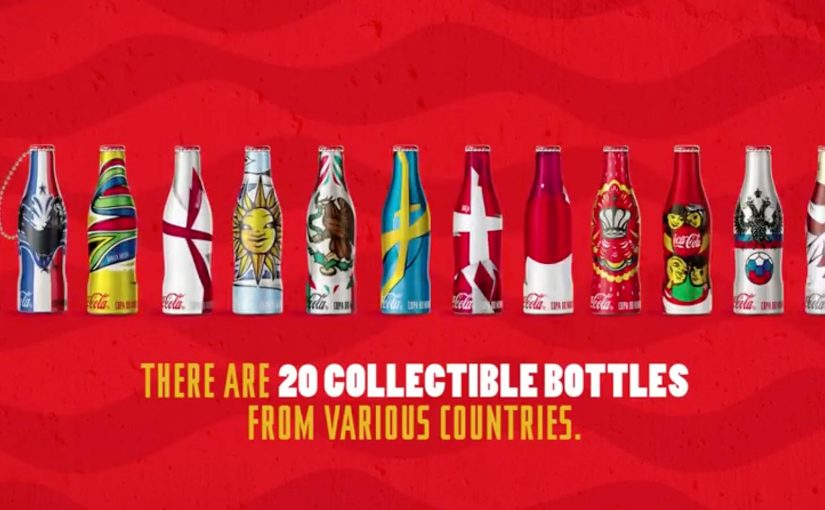
Coca-Cola has launched 20 special edition mini bottles to get fans around the world excited about the upcoming 2014 FIFA World Cup, which will take place in Brazil from June 12th to July 13th.

The bottles come wrapped in flags of countries that have hosted the World Cup previously. Argentina, Chile, Uruguay, Mexico, USA, England, Germany, Spain, France, Italy, Sweden, Switzerland, South Africa, Japan and South Korea. As well as the three upcoming host countries Brazil, Russia and Qatar. Plus two special Coca-Cola editions.

Coca-Cola fans can also create and send special messages and avatars to other bottle owners through Facebook and iPhone or Android apps. In addition, special markers on the bottles activate augmented reality animations when held up to a smartphone camera.

What makes these bottles more than packaging

This is a simple shift with big implications. The bottle is not only a container. It becomes a trigger. A collectible. And a social connector. This is smart brand design because it turns packaging into media without asking people to leave the product in their hand.

The real question is how to make a small physical object behave like media, participation, and social signal at the same time.

The flags do the first job. They make the bottles instantly recognizable and tradable. People have a reason to hunt for specific countries and compare what they found. The digital layer does the second job. By digital layer, this means the messages, avatars, and AR animations unlocked through the bottle. It turns ownership into participation, because the bottle now links to messages, avatars, and AR animations.

Why augmented reality fits this moment

AR works best when the behavior is natural. Here the behavior is already there. You hold the bottle in your hand. You point your phone at it. You get something back instantly. That is what makes the marker idea effective, because it adds a reward to an existing behavior instead of asking people to learn a new one.

Extractable takeaway: When the product already sits in someone’s hand, the strongest digital layer is the one that rewards curiosity in the moment rather than redirecting attention somewhere else.

In global brand portfolios, this matters because packaging that doubles as an activation point can scale engagement and give people a stronger reason to choose the brand at shelf without adding a separate physical touchpoint.

What to borrow from collectible packaging activations

  • Make the physical object the interface. The bottle is the entry point, not a poster, banner, or separate microsite.
  • Give fans something to collect and trade. Flags are a built-in collecting mechanic.
  • Add a social layer that only owners can unlock. Messaging and avatars make participation feel earned, not generic.
  • Use mobile as the bridge. iOS and Android apps turn “I saw it” into “I can activate it” immediately.

A few fast answers before you act

What are Coca-Cola Interactive Mini Bottles?

They are 20 special edition mini bottles designed to build excitement for the 2014 FIFA World Cup, using country-flag designs plus a digital interaction layer.

What is interactive about them?

Owners can send messages and avatars to other bottle owners via Facebook and iOS or Android apps. The bottles also include markers that trigger augmented reality animations through a smartphone camera.

Why use country flags on the bottles?

It creates instant collectability. People can look for specific countries, compare what they found, and feel part of a shared event build-up.

What is the role of augmented reality here?

AR turns the label into an activation point. Point your phone at the bottle, and the design becomes an animation experience rather than static packaging.

What is the main marketing idea worth copying?

Make the product itself the gateway to the experience. When the physical object triggers the digital layer, participation becomes effortless and more memorable.
Coca-Cola Live Tweets #LetsEatTogether

Coca-Cola in Romania seems to have broken new ground in the country with its integration between Twitter and TV, as it included live consumer tweets during its ad.

The insight for the campaign came from the fact that in Romania 60% of people don’t eat meals together, but instead eat them alone while sitting in front of their TV. So Coca-Cola decided to use tweets to create open invitations for people to actually come together and have a meal with a Coke.

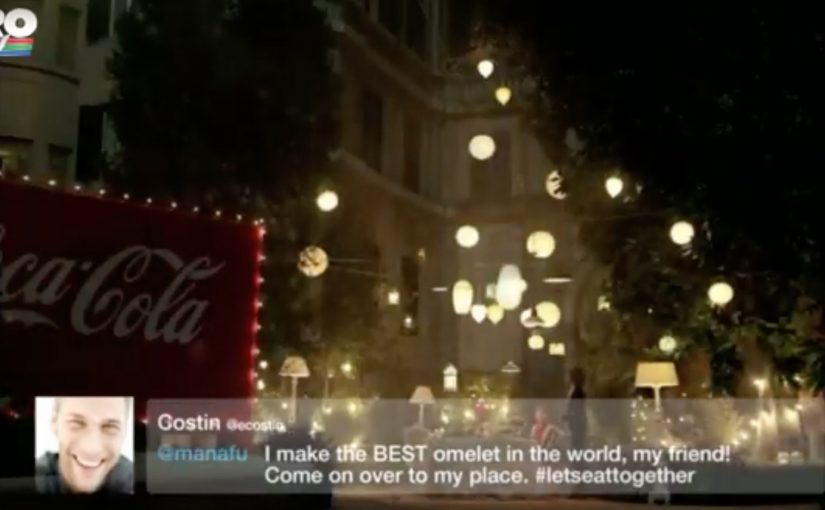
As shown in the video below, the TV ad included a subtitle bar that was used to run the tweets that consumers sent using the hashtag #LetsEatTogether. Coca-Cola’s ad agency, MRM Worldwide, then edited the tweets and inserted five to seven of them into each ad placement.

The campaign increased Coke’s Twitter followers in Romania by 15% as hundreds of tweets were aired on TV. The campaign even made it to the evening news as its uniqueness made Romanians wait everyday for the ad.

Why this Twitter plus TV integration worked

The execution is simple. It borrows the visual language of TV subtitles, then uses it for social proof, meaning viewers can see other people already taking part. Viewers see real people inviting others to eat together, in real time, inside the ad break itself. That makes the message feel less like a brand instruction and more like a public invitation.

Extractable takeaway: When you make audience participation visible inside the main media placement, the campaign can feel more social, more immediate, and more worth watching.

It also turns participation into a lightweight ritual. Tweet the hashtag. Watch for your message. Share the moment when it appears. The format gives people a reason to keep an eye out for the ad, which is the opposite of what usually happens during commercials.

The real question is not whether people can respond to a campaign, but whether that response is visible enough to change how the ad itself feels.

In mass-reach brand advertising, this matters because the primary screen can carry participation directly instead of pushing interaction off to a second screen.

What Coca-Cola was really buying here

This is a smart cross-media play because it does more than collect engagement. It upgrades a standard TV placement into something people anticipate, talk about, and actively watch for.

The business intent is clear. Coca-Cola is using participation to make the ad break itself feel more alive, increase repeat viewing, and turn audience response into earned attention for the brand.

What to steal if you design campaigns with live participation

  • Use a single, explicit mechanic. One hashtag, one behavior, one clear outcome.
  • Make the audience visible inside the media. The tweets are not a second screen. They are on the primary screen.
  • Curate without killing authenticity. Editing keeps it brand-safe while still feeling consumer-led.
  • Reward repeat viewing. New tweets each placement create a reason to watch again.

A few fast answers before you act

What did Coca-Cola Romania do in this campaign?

They integrated live consumer tweets into a TV ad by running curated hashtag messages in a subtitle bar during the commercial.

What was the insight behind #LetsEatTogether?

That many people in Romania ate alone in front of the TV, so the campaign used tweets as open invitations to share meals together.

How were tweets handled for broadcast?

Tweets using #LetsEatTogether were edited and five to seven were inserted into each ad placement by the agency.

What changed in performance?

Coke’s Twitter followers in Romania increased by 15% and hundreds of tweets were aired on TV.

What is the core lesson for cross-media experiences?

If you bring live participation into the primary screen, you can turn an ad break into an event people actively watch for.

Coca-Cola Mini Me: 3D-Printed Mini Figurines

After Volkswagen, Coca-Cola is the next brand to tap the 3D printing trend.

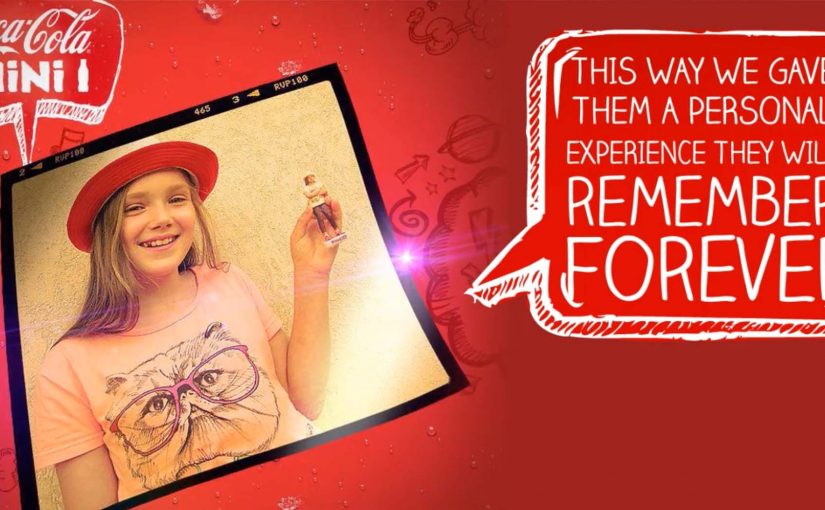
For the launch of its new mini bottles in Israel, Coca-Cola with their agency Gefem Team came up with a campaign that allowed anyone to create 3D mini figurines of themselves. To get one in real life, users had to work a bit.

So first users created the minis using a mobile app. Then they had to keep them happy by feeding it and taking care of its needs.

There was even a virtual supermarket within the app that you could visit to buy your groceries for your mini self.

Those who successfully participated were then invited to the 3D printing lab inside Coca-Cola’s factory in Israel, where they received the mini versions of themselves.

Why this is more than a 3D-printing stunt

The 3D print is the reward, not the whole experience. The real engine is the progression loop, meaning a sequence of small repeat actions that earn a bigger payoff. This is smart campaign design because it makes the physical output feel earned, not handed out. The real question is whether your campaign creates a loop people will return to before you ask them to share anything.

Extractable takeaway: Gate a physical prize behind repeat micro-actions and it stops feeling like a giveaway. It becomes a trophy with a simple story: “I earned this.”

  • Personal creation. You do not receive a generic giveaway. You create “you”.
  • Ongoing engagement. Feeding and caring builds repeated interactions over time.
  • Escalation to the physical world. The factory lab visit turns digital participation into a memorable moment.

The virtual care loop makes the prize feel earned

The app mechanic is intentionally effortful. You have to keep the mini happy. You have to manage its needs. Even the virtual supermarket reinforces routine and “ownership”.

That matters because it shifts the figurine from a freebie into a trophy. Something you earned by participating.

In consumer brands that run digital-to-physical activations, effortful repeat interaction is often what turns novelty into recall.

Why the factory lab invitation is a smart finale

Bringing people into a Coca-Cola factory adds legitimacy and drama. It also creates a content moment. A physical place, a “lab”, and a 3D print reveal that people can photograph and share.

  1. Access as a reward. The invitation itself feels exclusive.
  2. Proof of innovation. The brand demonstrates capability in a tangible way.
  3. Memory value. The experience becomes a story, not just a product launch.

What to take from this if you build digital-to-physical campaigns

  1. Make the reward personal. Personal outputs are more meaningful and more shareable.
  2. Use a progression loop. Repeated small actions can outperform a single big interaction.
  3. Finish with a real-world moment. Physical experiences create stronger recall than purely digital stunts.
  4. Let the brand environment play a role. A factory lab gives credibility and theatre without feeling fake.

A few fast answers before you act

What is Coca-Cola “Mini Me”?

It is a campaign in Israel where users created a virtual mini-self in a mobile app, cared for it over time, and then received a 3D-printed figurine version after qualifying.

How did users qualify to get a real figurine?

They created the mini using the app and kept it happy by feeding it and taking care of its needs, including buying items in a virtual supermarket.

Where did the 3D printing happen?

Qualified participants were invited to a 3D printing lab inside Coca-Cola’s factory in Israel, where they received their mini figurines.

Why include a virtual care mechanic?

It creates repeat engagement and makes the physical reward feel earned rather than given away.

What is the transferable lesson for campaign design?

If you combine personal creation with a progression loop and a physical payoff, you can turn a product launch into a longer-lasting experience.